
Paris & Rome — two capitals in a week
- 7 days, 2 cities
- Balanced pace
- About 40 min walking a day
The classic first-Europe pairing: museums and boulevards in Paris, ruins and piazzas in Rome, joined by a two-hour hop between CDG/Orly and Fiumicino. Four Paris days cover the Louvre quarter, the Marais, the Left Bank and Montmartre; three Rome days take the Centro Storico, the Colosseum's ancient heart and the Vatican. Every stop below is human-verified — hours, closing days, booking windows like the Uffizi-style timed entries and the Vatican's Sunday closures — and the whole plan works offline once saved.
Day by day
Day 1Montmartre & nearby — a sights dayParis, 9 stops
A hilltop artists' village of steep cobbled stairways and café terraces, crowned by the Sacré-Cœur's white domes and Paris's finest skyline view.
- 08:30Rue de l'Abreuvoir & the Montmartre Vineyard
Widely considered Montmartre's prettiest lane: a cobbled slope of ivy-covered walls and old street lamps leading past La Maison Rose, with Sacré-Cœur's dome visible over the rooftops. The Clos Montmartre vineyard runs along the parallel Rue des Saules — its vines are visible over the fence but the plot itself is locked and only opens to visitors during the October grape-harvest festival or on Heritage Days, otherwise via a paid guided tour booked through the Musée de Montmartre. The cobbles and slope make this a walk best done in flat shoes; there's no step-free route.
- 09:05
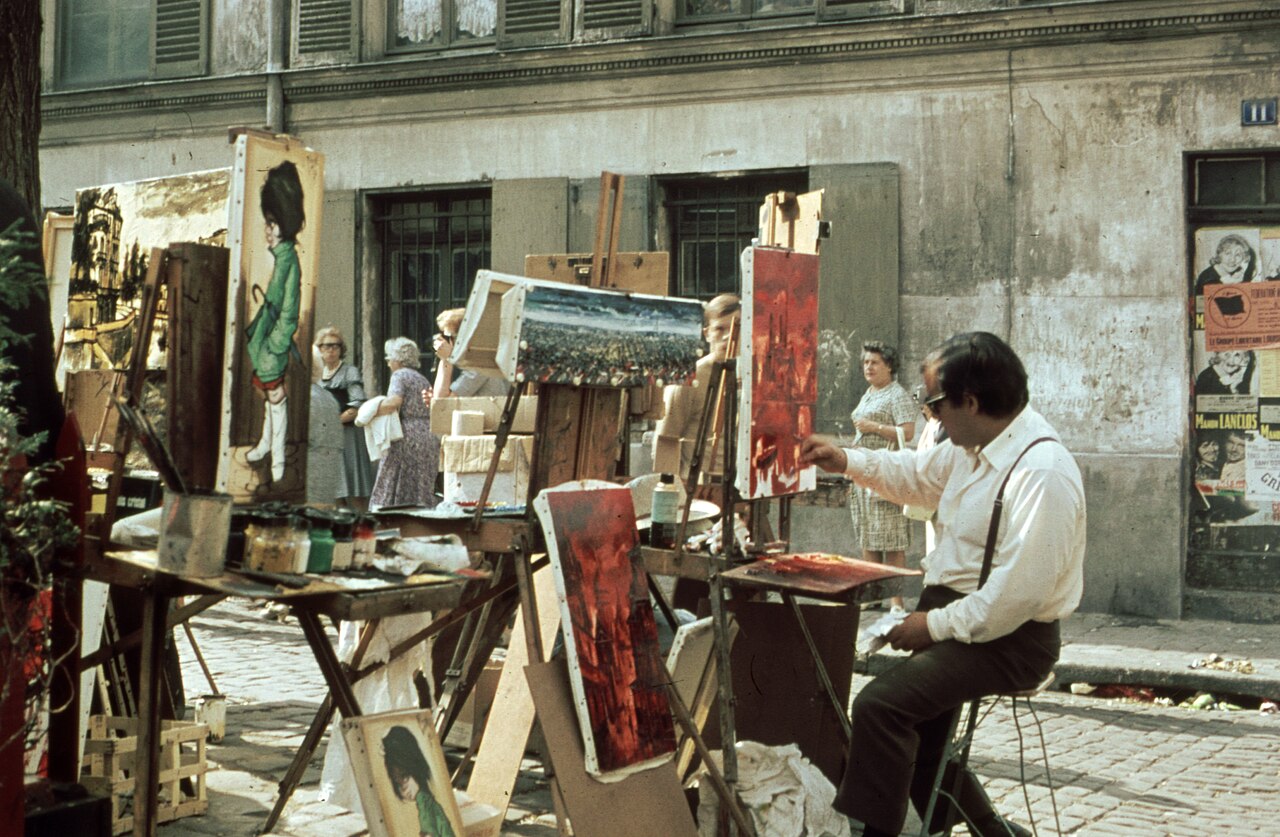
Montmartre's old village square, ringed by around 140 licensed street artists sketching portraits and painting canvases at their easels, much as they have since the Belle Époque. Go early morning to see the artists set up before the tour groups and restaurant touts take over the square.
- 09:50
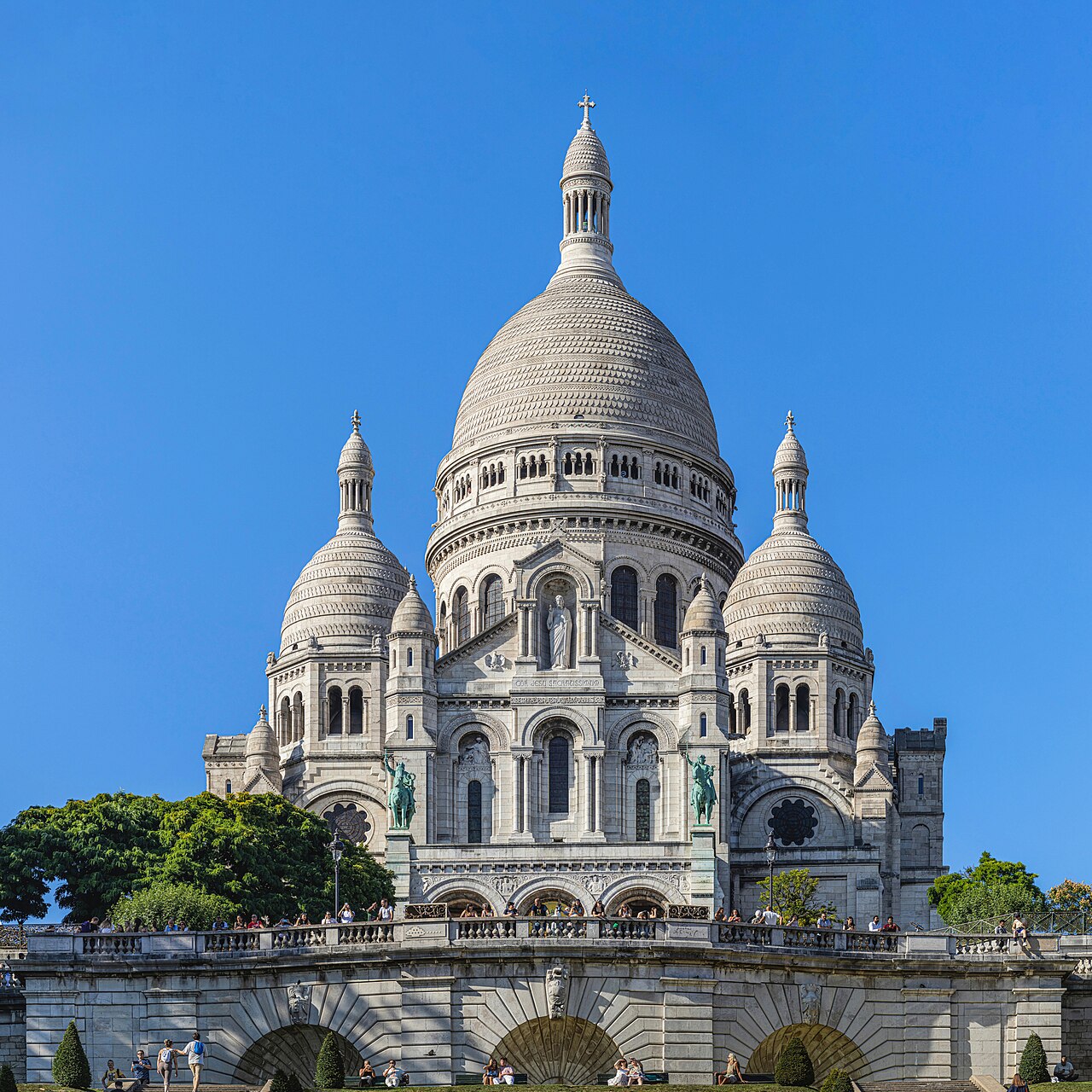
Paris's second-most-visited landmark, its white travertine domes crowning the Butte de Montmartre with a free panorama over the whole city from the front steps. Entry to the basilica itself is free; climbing the 300 steps to the dome costs extra and keeps separate, shorter seasonal hours.
- 11:00
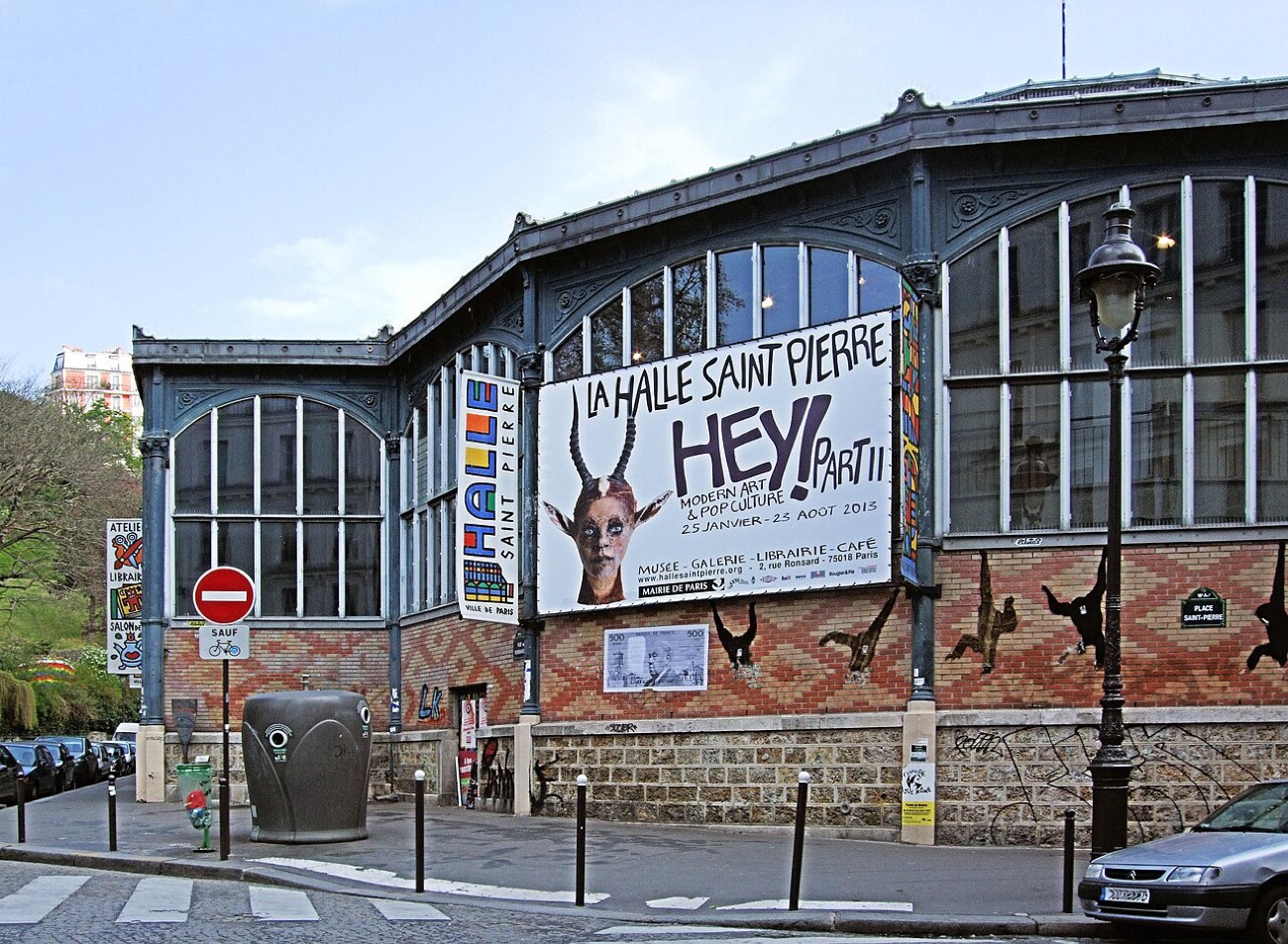
An iron-and-glass 19th-century market hall at the foot of the Montmartre butte, now Paris's home for art brut (outsider art), naive art and pop-culture-themed exhibitions — a striking contrast to the neighbourhood's Impressionist-tourist image. Unusually for a Paris museum it opens every day of the year with no weekly closure; the ticket desk and café stop serving an hour before closing time, so arrive with that in mind. Step-free access and an accessible restroom are available, and disabled visitors get a reduced rate.
- 12:45Lunch Le Valentin
An old-fashioned tea room tucked into the Passage Jouffroy, with a team of pastry chefs baking everything on-site — the thick, spoon-worthy hot chocolate and the seasonal fruit tarts are why regulars keep coming back, at prices well below the grander salons de thé near the Opéra. Weekend mornings bring a full brunch menu; arrive outside the lunchtime rush for a table.
- 13:45
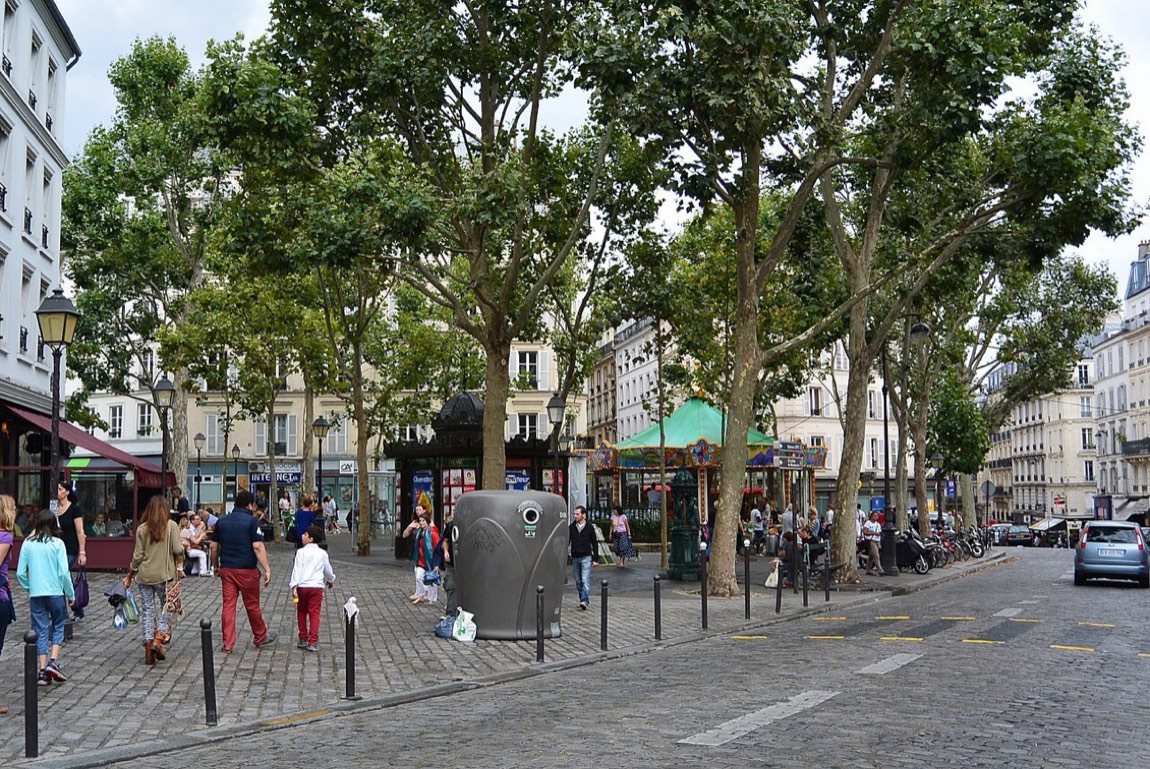
The square at the foot of the Montmartre hill, framed by one of only two surviving original Hector Guimard Art Nouveau glass canopies on the whole Paris Métro network (Abbesses station) — instantly recognisable from countless postcards and from the film Amélie. A vintage carousel, a Wallace drinking fountain and café terraces make it an easy, free spot to pause on the way up or down the Butte. The square itself is flat and paved and reachable step-free from street level; the Métro platforms below are among the deepest in Paris and only reachable by the two lifts, not the spiral stairs.
- 14:20
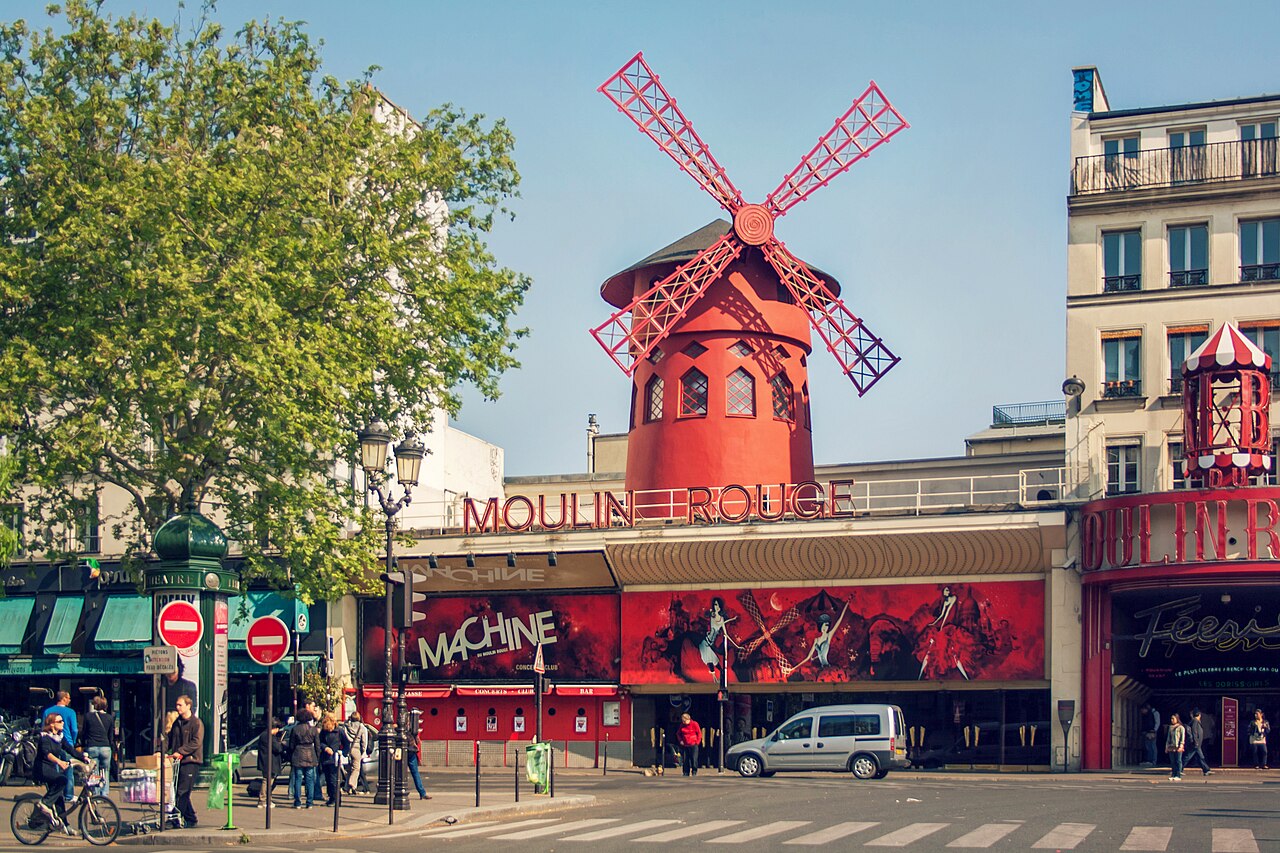
The red windmill and can-can cabaret that has anchored Pigalle's nightlife since 1889 — most visitors just photograph the illuminated facade from the boulevard. The dinner-and-show inside is a separate, pricey, book-ahead affair (from around €100 per person; doors from 19:00, shows at 21:00 and 23:00).
- 15:00
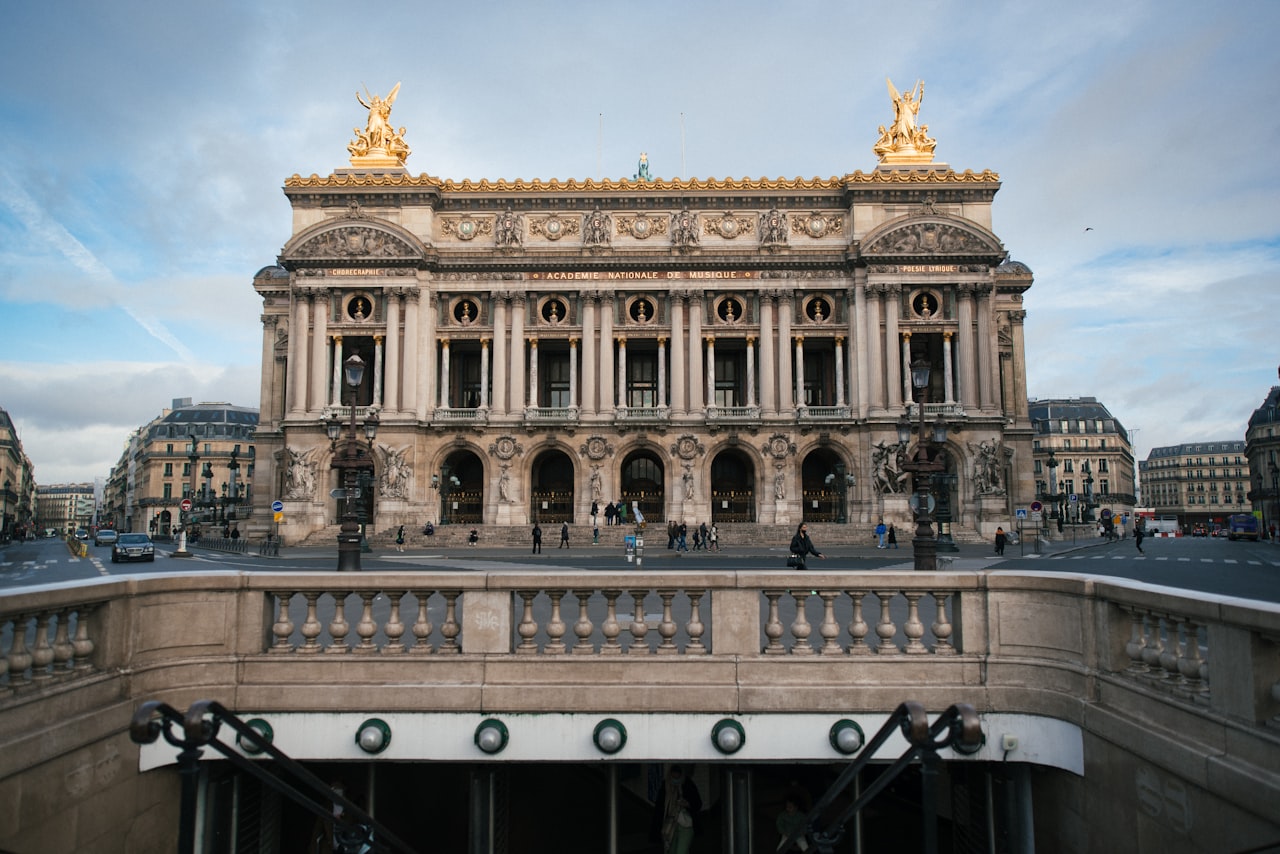
Charles Garnier's opulent 1875 opera house — climb the Grand Staircase, wander the mirrored Grand Foyer, and look up at Marc Chagall's 1964 ceiling mural above the auditorium's giant chandelier. The self-guided day visit covers all public areas but not performances; book the timed ticket online ahead. The auditorium is sometimes closed to visitors during rehearsals, so access isn't guaranteed even with a ticket, and last entry is an hour before closing.
- 17:30Dinner Chez Georges
A wood-panelled, mirror-lined classic bistro near Place des Victoires, serving rich standards like veal head, herbed poultry liver terrine, and a well-known grilled turbot — best paired from the deep wine list. Reserve ahead, as tables are tight and the small dining room fills fast; closed Saturday and Sunday, plus roughly three weeks every August.


Day 2Île de la Cité & Latin Quarter — an old-town dayParis, 10 stops
Two Seine islands cradle Notre-Dame's rebuilt spire and Sainte-Chapelle's stained glass, while the steep, market-lined lanes of the Left Bank climb past the Panthéon's dome to Rue Mouffetard's crêpe stands and the Sorbonne's oldest bookshops.
- 08:00Breakfast Shakespeare and Company Café
Tucked beside the legendary English-language bookshop facing Notre-Dame across the Seine, this small café pairs specialty coffee with a mostly vegetarian and vegan menu of soups, salads and daily-changing lunch specials. Grab a window seat for a view of the cathedral, or carry your coffee upstairs to read among the shop's stacks.
- 08:30
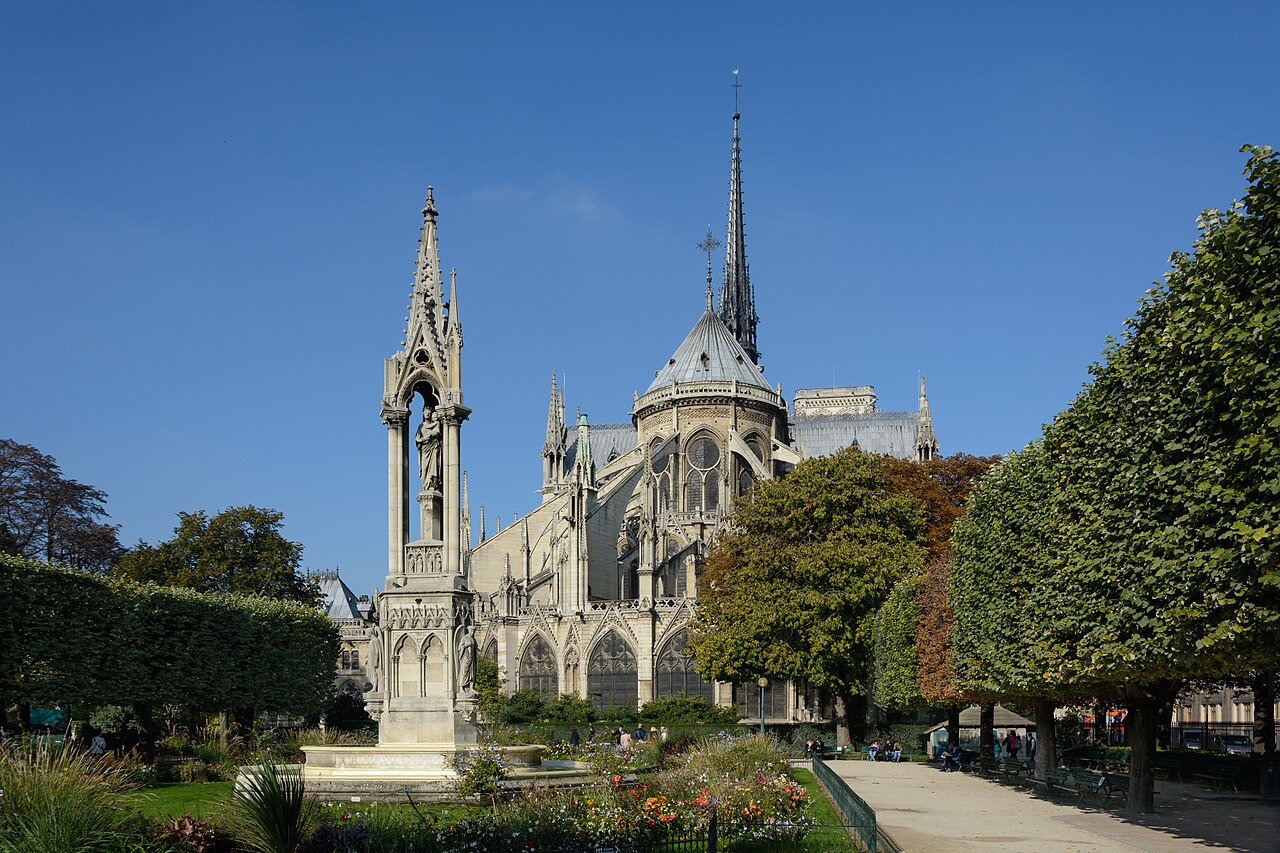
Reopened in December 2024 after the 2019 fire and five years of restoration, the cathedral's stone and stained glass look brighter than they have in generations. Entry is free but requires a timed slot booked online or on-site the same day — arrive early or come Thursday evening, when it stays open until 10pm.
- 09:45
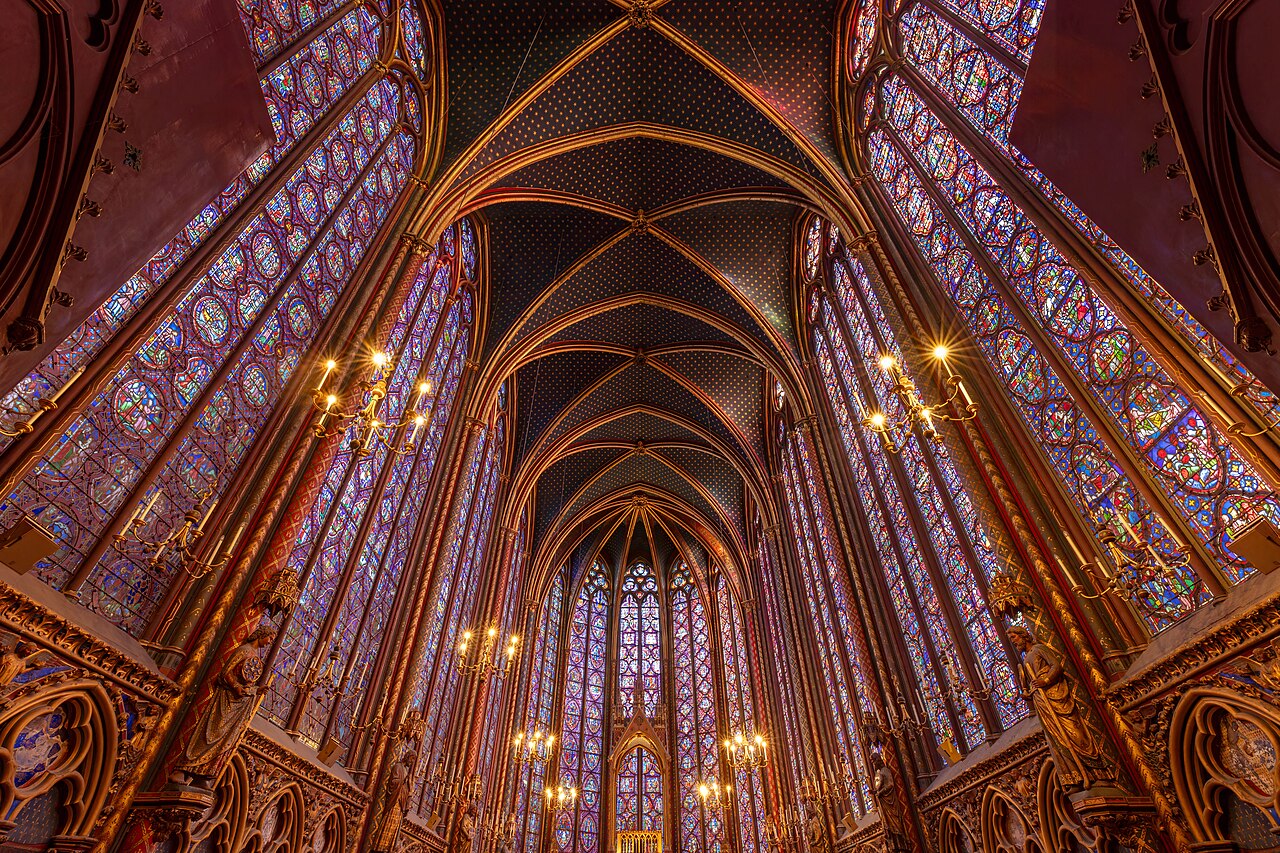
Fifteen towering stained-glass windows depicting over a thousand biblical scenes wrap the upper chapel in jewel-toned light — best on a sunny morning. Book a timed slot in advance; the chapel sits inside the working Palais de Justice, so every visitor passes through airport-style security.
- 10:45Musée de Cluny (National Museum of the Middle Ages)
Home to the six 'Lady and the Unicorn' tapestries in a purpose-built rotunda, plus a Gallo-Roman frigidarium — one of the best-preserved Roman bath halls in France — built right into the medieval mansion. Closed Mondays; the ticket desk shuts at 17:30 though the galleries stay open to 18:15, and the museum stays open until 21:00 on the first and third Thursday of each month. Full price is €12 (free the first Sunday of the month and for under-18s). The frigidarium closes for a few weeks in July–August 2026 for an exhibition changeover — check ahead if that hall is your main draw.
- 12:30Lunch Au P'tit Grec
A walk-up window on Rue Mouffetard turning out oversized savory galettes since 1981 — try the feta-and-eggplant or the classic ham-egg-cheese, folded thick enough to eat one-handed while you keep browsing the market street. Cash only, and there's almost always a short queue after dark.
- 13:30
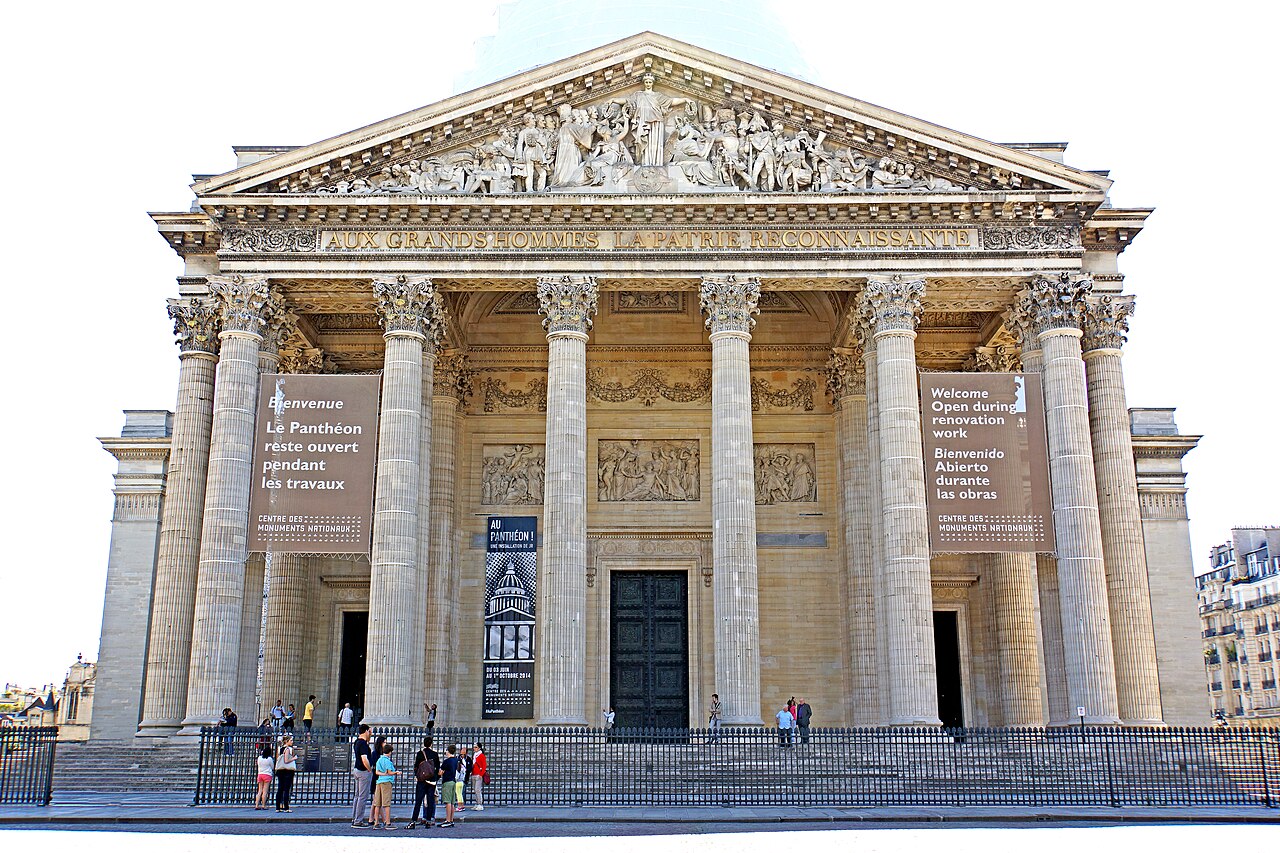
Voltaire, Rousseau, Curie and Hugo rest in the crypt beneath Soufflot's neoclassical dome, reached via a steep spiral or monumental staircase that isn't wheelchair-friendly. The rooftop colonnade view is currently closed for restoration work, but the nave and crypt alone are worth the visit.
- 15:00
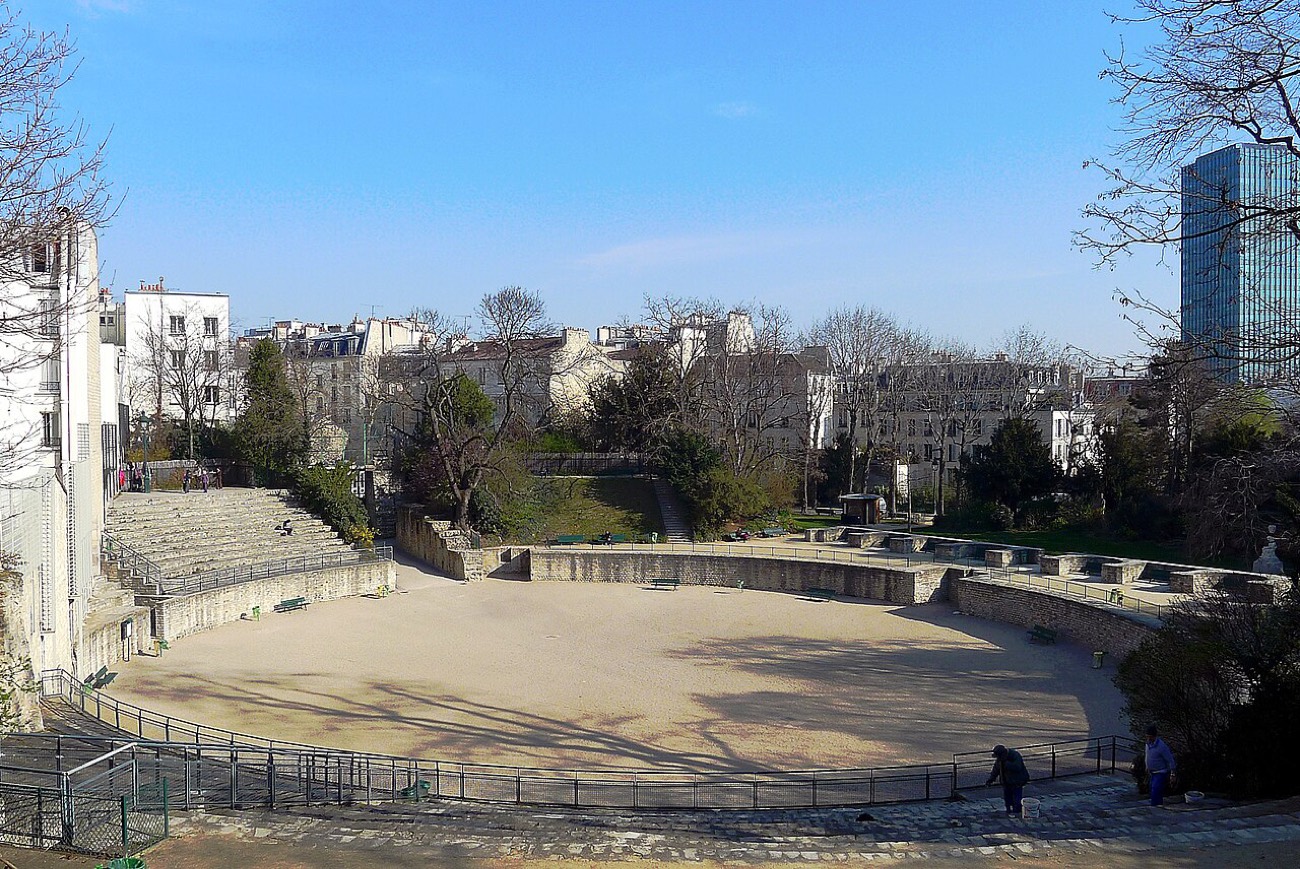
Paris's oldest structure — a 1st-century Roman amphitheatre that once seated 15,000 for gladiator fights — sits genuinely free and unfenced inside a quiet garden (Square Capitan), complete with a children's playground and pétanque pitches where locals play most afternoons. Gate hours shift with the season: as early as 08:00 on weekdays / 09:00 weekends, closing as early as 17:30 in winter and as late as 21:30 in high summer, so check the posted board if visiting at the edges of the day. There's no on-site signage explaining the history, so a quick read-up beforehand helps.
- 15:40
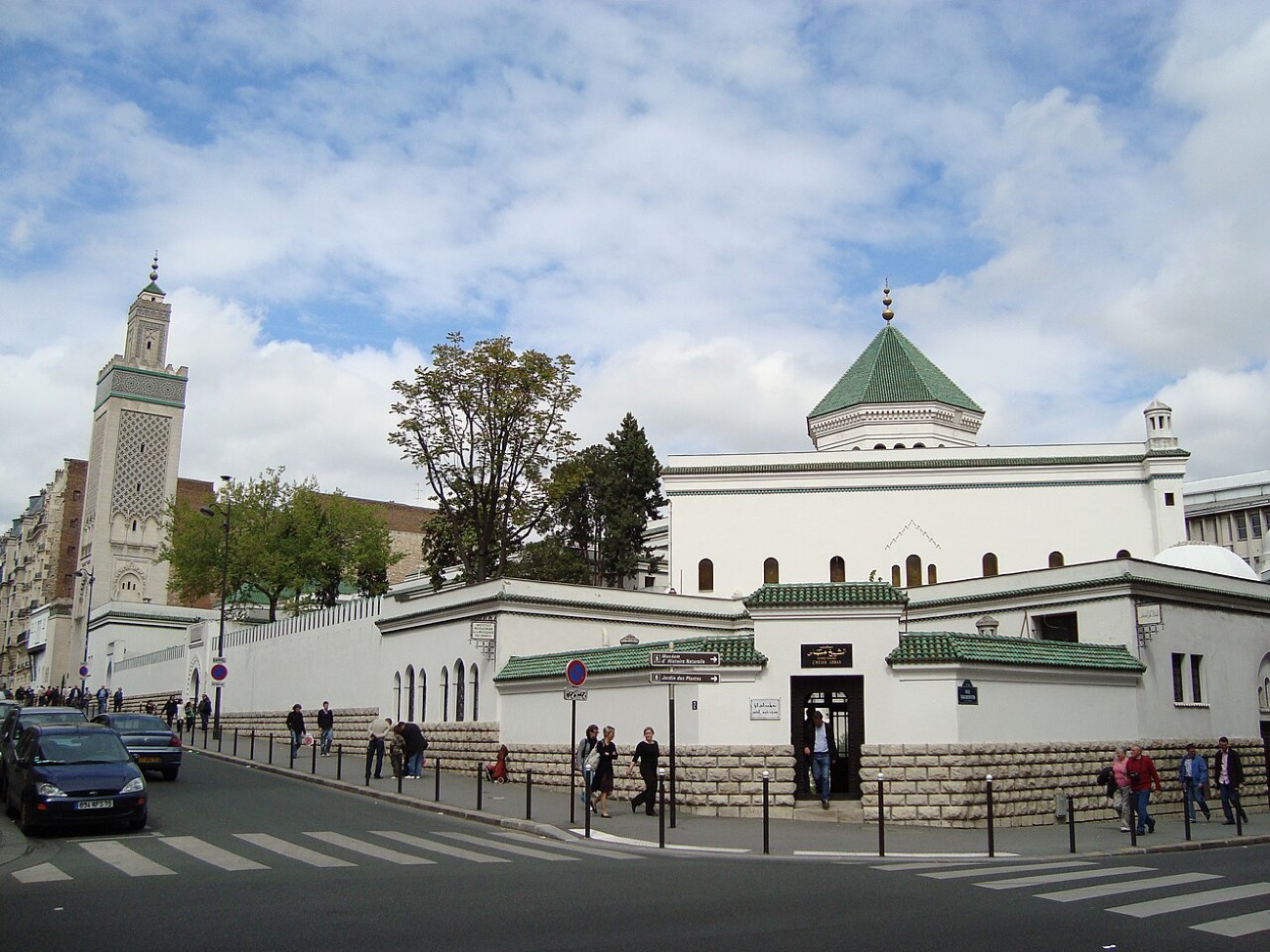
Non-Muslim visitors can walk the marble Grand Patio and the gardens daily 9:00–18:00 (closed Fridays and Muslim holidays) for a small entry fee (€5, €3 reduced); cover shoulders and knees, and women should bring a headscarf. The mint-tea salon and hammam sit around the corner at 39 Rue Geoffroy-Saint-Hilaire and run on their own separate hours: the tea room serves mint tea and pastries like baklawa daily until midnight, no booking needed. The hammam (10:00–21:00 daily, walk-in only, no reservations) is women-only most days — men only Tuesday afternoon and Sunday. 2026 is the mosque's centenary year (inaugurated July 1926), so expect occasional extra closures around anniversary events on top of the usual Friday/holiday closures.
- 16:45
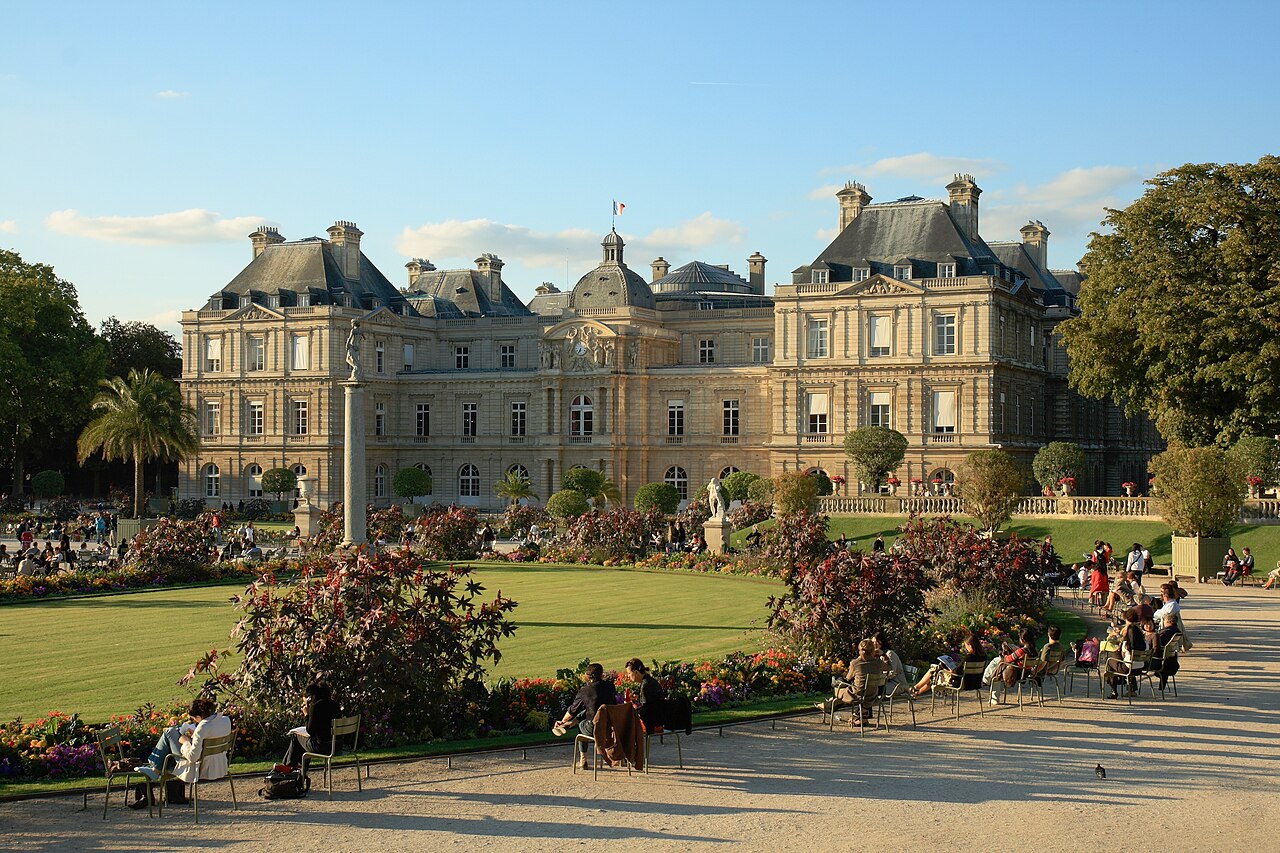
Gravel paths, the octagonal Grand Bassin where kids sail toy boats, and the shaded Medici Fountain make this 23-hectare garden the Left Bank's favourite escape. Gates open and close with the season — in July that's roughly 7:30am to 9:15pm — and the free green metal chairs can be dragged anywhere for people-watching.
- 18:30Dinner Brasserie Balzar
An Art Nouveau brasserie steps from the Sorbonne, serving daily since 1894 — order the choucroute (from €25) or a grilled entrecôte (from €26), and expect the house's famously brusque-but-fond waiter banter as part of the experience. Continuous service from 08:00 to 23:45 every day of the week, so it's a reliable fallback outside the usual French lunch/dinner windows. A vegetarian plate (€15) is on the menu, but this is classic Alsatian-brasserie cooking built around pork and cured meats, so options are narrow. Reserve ahead, especially for dinner and weekends.


Day 3Le Marais — a museum dayParis, 8 stops
The historic aristocratic quarter turned Paris's hippest district — 17th-century mansions, Picasso's private townhouse, and the Pletzl's falafel counters packed into a few walkable, car-light blocks straddling the 3rd and 4th arrondissements.
- 08:30
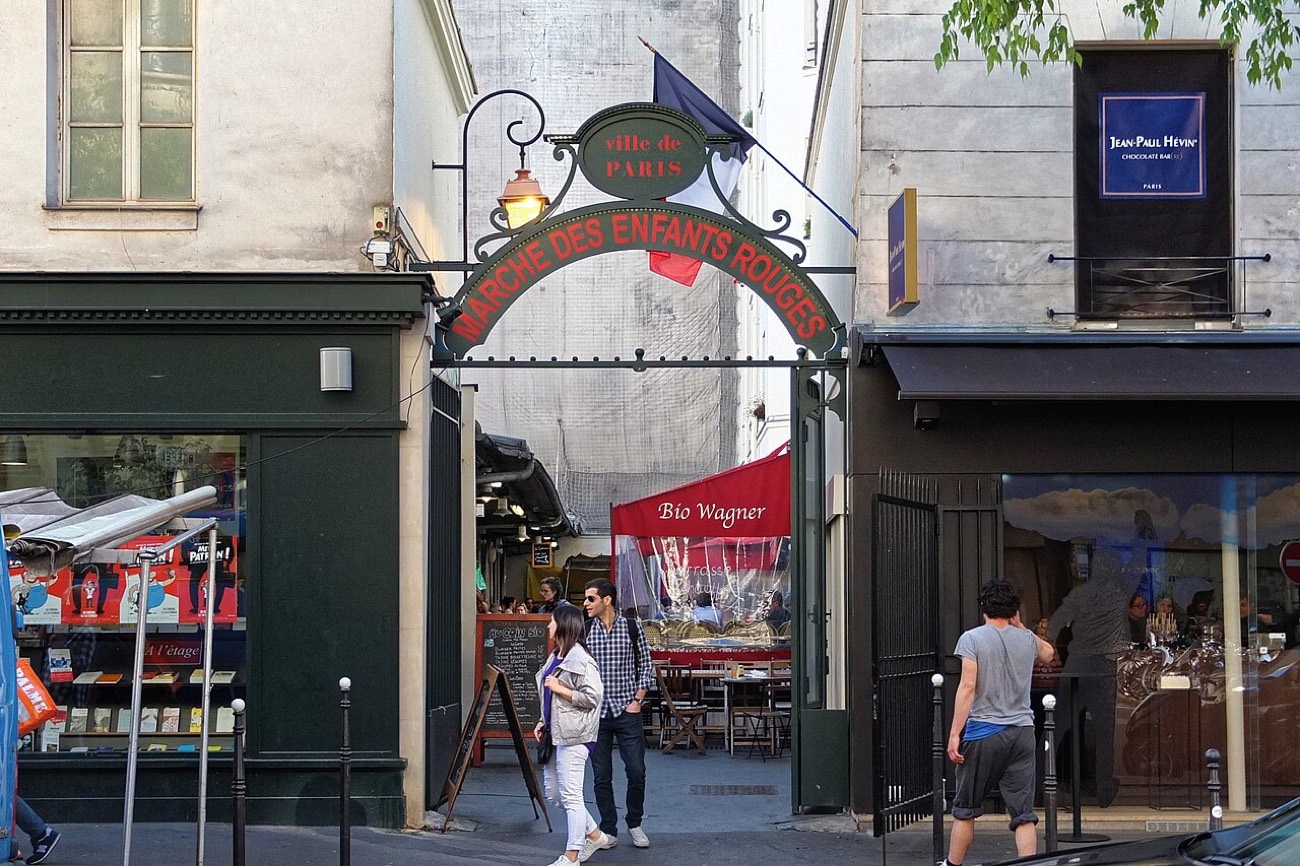
Paris's oldest covered market, trading since 1615 — a produce-and-flower market by day that doubles as a lunch spot, with small stalls cooking Moroccan tagines, Japanese bento, Lebanese mezze and oysters side by side around shared tables. Busiest (and best) at lunch; closed Mondays, shorter hours on Sunday afternoon. Most stalls take cards but keep some cash on hand — a few still prefer it.
- 09:30
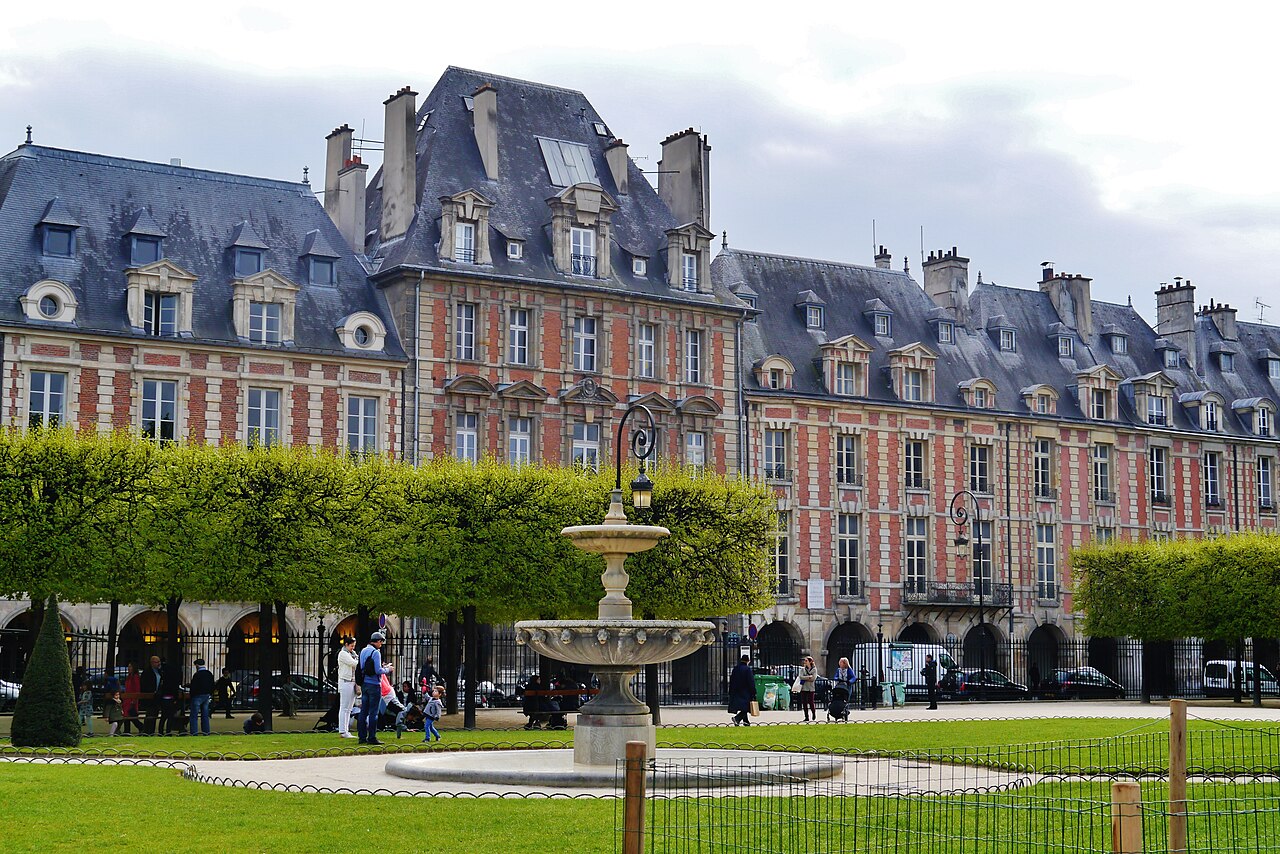
Paris's oldest planned square (1612) — a perfect quadrangle of pink-brick arcaded mansions wrapped around a garden of lindens, fountains, and an equestrian statue of Louis XIII. The arcades and perimeter are open around the clock; the central lawns close in the evening (20:30) and open a little later on weekends.
- 10:30
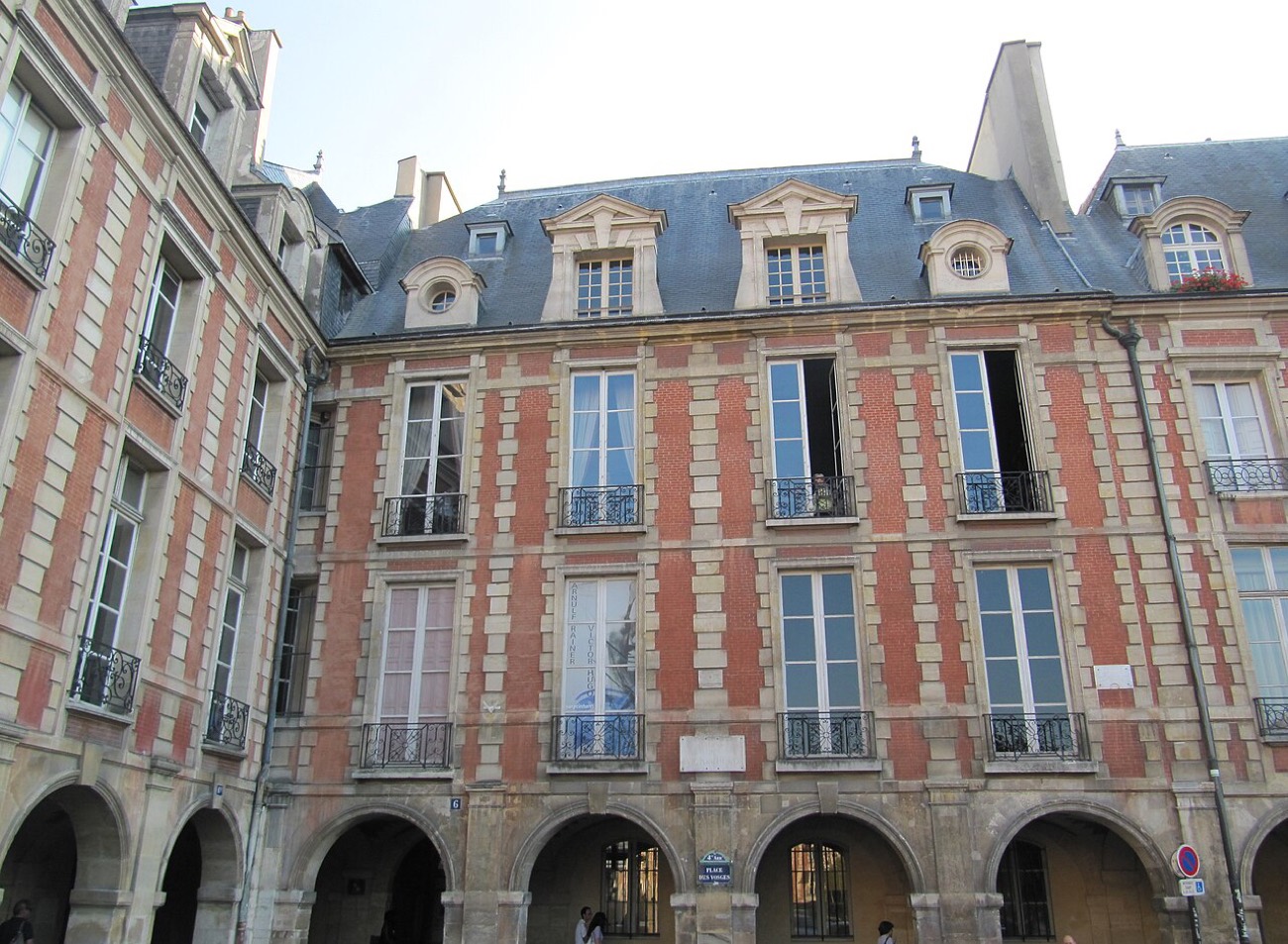
The writer's apartment on Place des Vosges, where he lived for 16 years and wrote much of Les Misérables — Chinese-inspired salons, his own drawings, and the desk he wrote standing at. The permanent collection is free; closed Mondays, and a paid ticket currently applies only to the temporary exhibition.
- 12:00Lunch Chez Janou
A sun-yellow Provençal bistro tucked behind Place des Vosges, self-declared temple of pastis with over 80 varieties behind the bar, plus a bottomless bowl of chocolate mousse to finish. Open daily for lunch and dinner; reservations are strongly recommended, especially for the terrace.
- 13:00Musée Cognacq-Jay
A department-store magnate's private collection of 18th-century art and furniture — Fragonard, Boucher, Reynolds, Chardin — installed in a Marais mansion exactly to the scale of a real home rather than a grand gallery. Free entry to the permanent collection (a paid ticket applies only to temporary shows); closed Mondays. Not wheelchair accessible — the historic townhouse has stairs throughout.
- 14:15
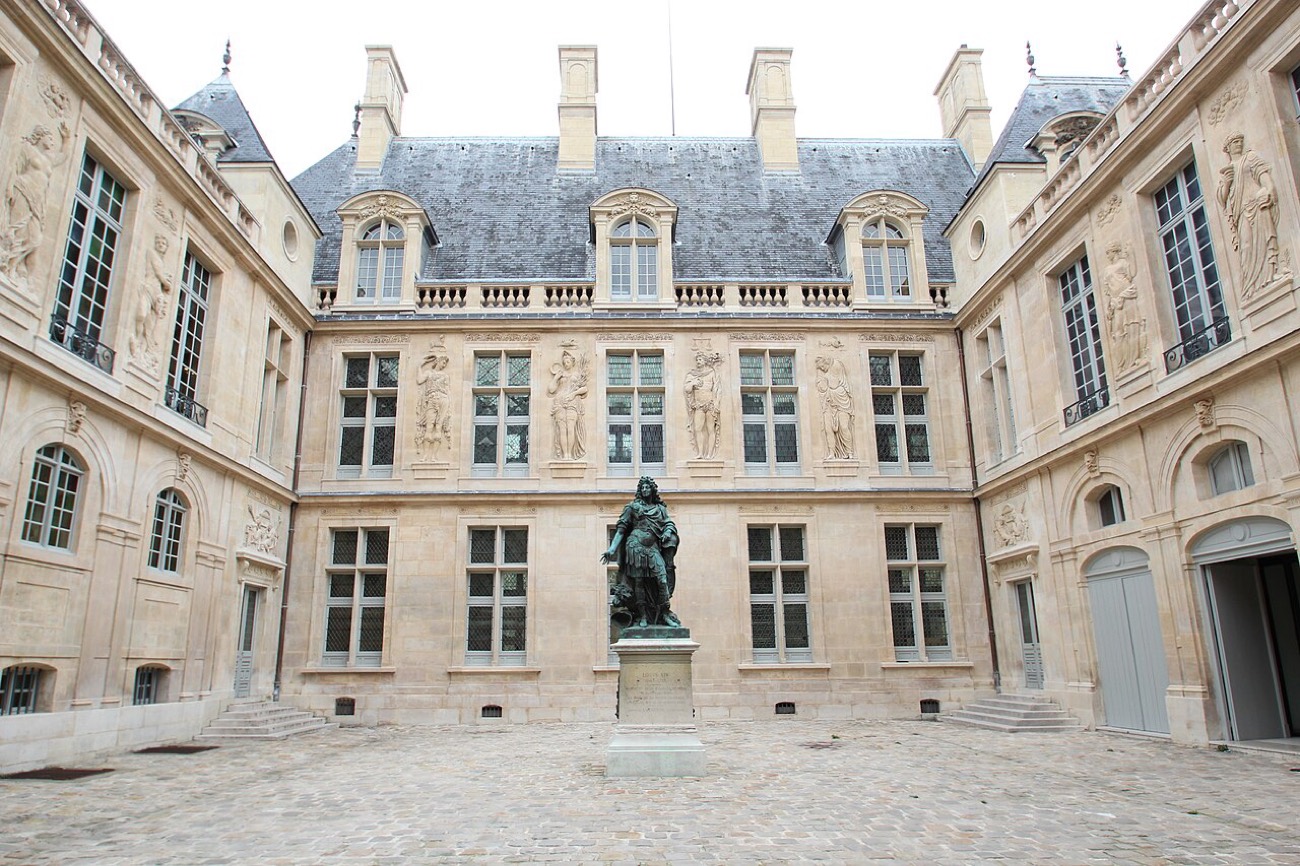
Paris's own history museum, free to enter, tracing the city from prehistory to today across two connected mansions — highlights include reconstructed period rooms and Marcel Proust's actual bedroom. Closed Mondays; the permanent collection needs no advance ticket.
- 16:00
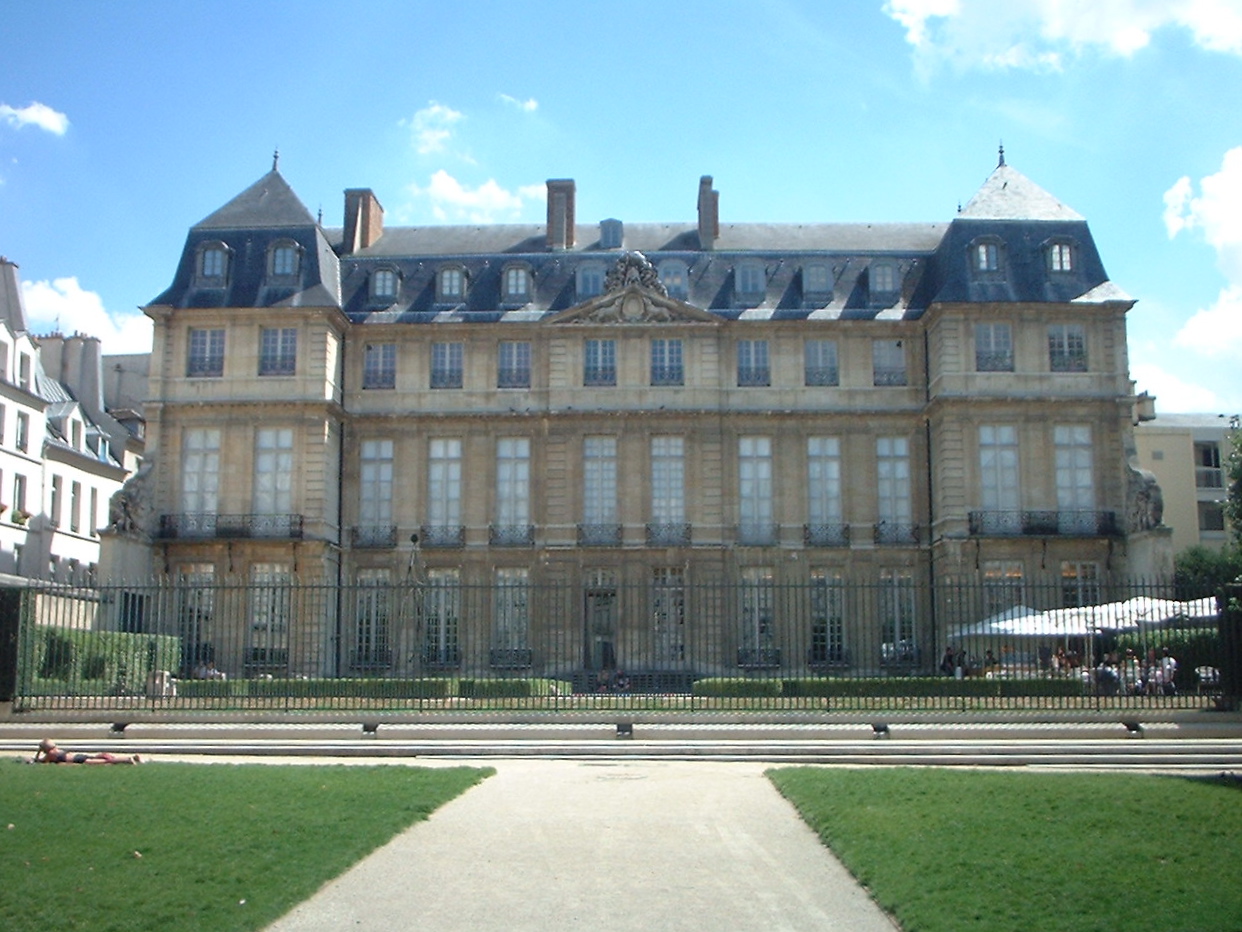
The artist's largest single collection anywhere, spread across the 17th-century Hôtel Salé mansion — paintings, sculpture, and Picasso's own private art collection. Closed Mondays; book a timed slot online in high season to skip the entry line, and the first Wednesday of the month stays open until 22:00.
- 17:45Dinner Jacques Genin
A former leather-tanner turned self-taught chocolatier, working in full view behind glass at his own Marais workshop — caramels (mango-passionfruit is the signature), pâtes de fruits and a millefeuille assembled to order are the draws, alongside chocolate bars and ganaches with no additives or flavour enhancers. The once-famous upstairs tea room closed in 2019, so this is now mainly a boutique visit rather than a sit-down stop. Closed Mondays.


Day 4Eiffel Tower & Trocadéro — a sights dayParis, 7 stops
The Eiffel Tower rises straight from the wide lawns of the Champ de Mars while, across the Seine, the Trocadéro's terrace and the Palais de Chaillot's twin curved wings frame the postcard view every visitor comes for.
- 09:00Rue Cler (Market Street)
A three-block pedestrian street lined with butchers, fishmongers, cheesemongers, greengrocers, bakeries and wine shops — the quintessential Paris market street to graze rather than sit down at. Busiest (and most photogenic) on Saturday mornings and Sunday until early afternoon, when Parisian families shop for the week's lunch; many stalls close or run reduced hours on Mondays. There's no entry fee — just wander, snack, and watch the neighbourhood at work.
- 10:00
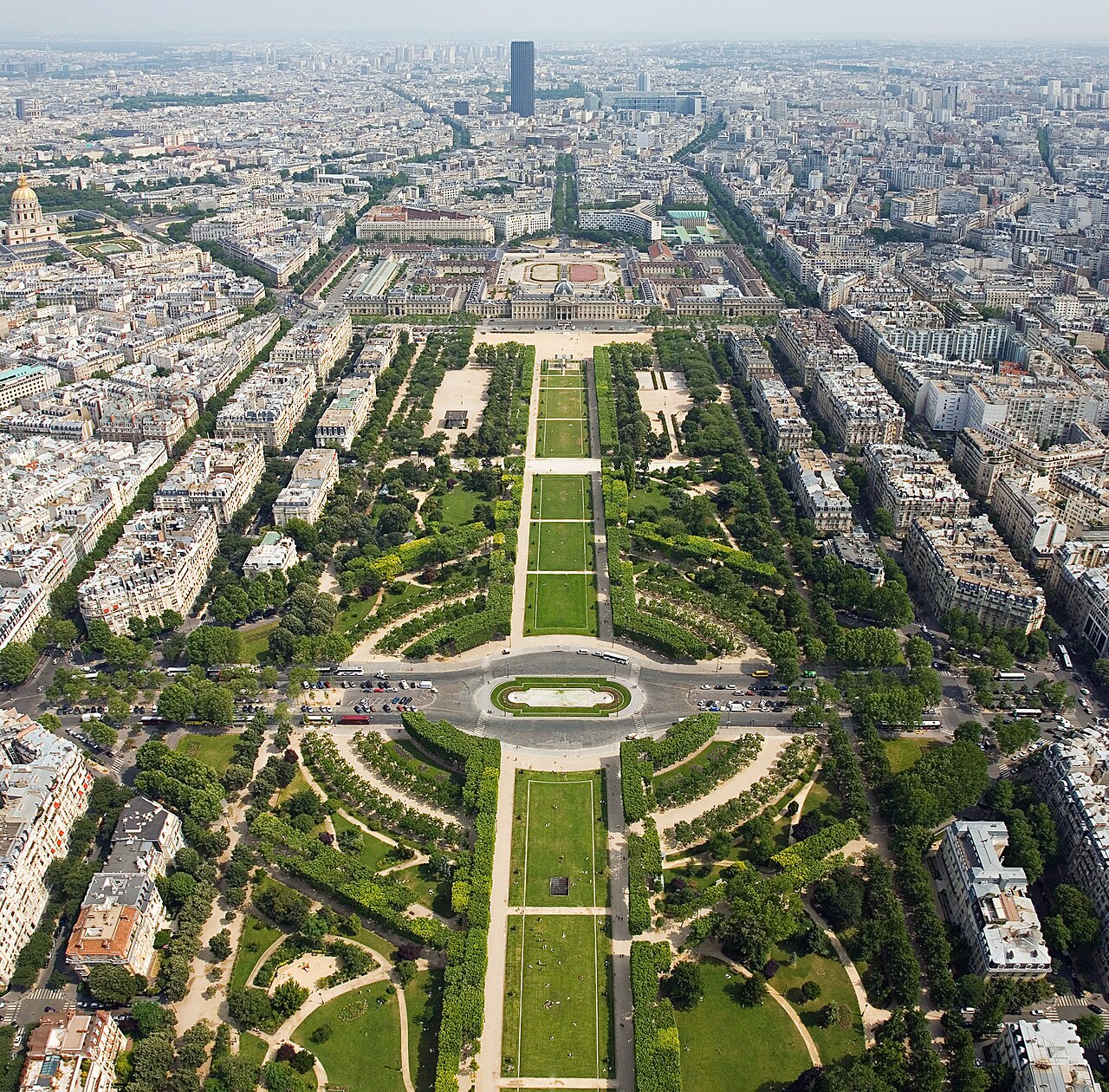
A long green lawn running from the Eiffel Tower's feet to the École Militaire — Paris' go-to spot for a picnic with a tower view, especially in the early evening when locals spread out blankets. Unlike most Paris gardens it's never gated, so it stays open day and night.
- 11:00
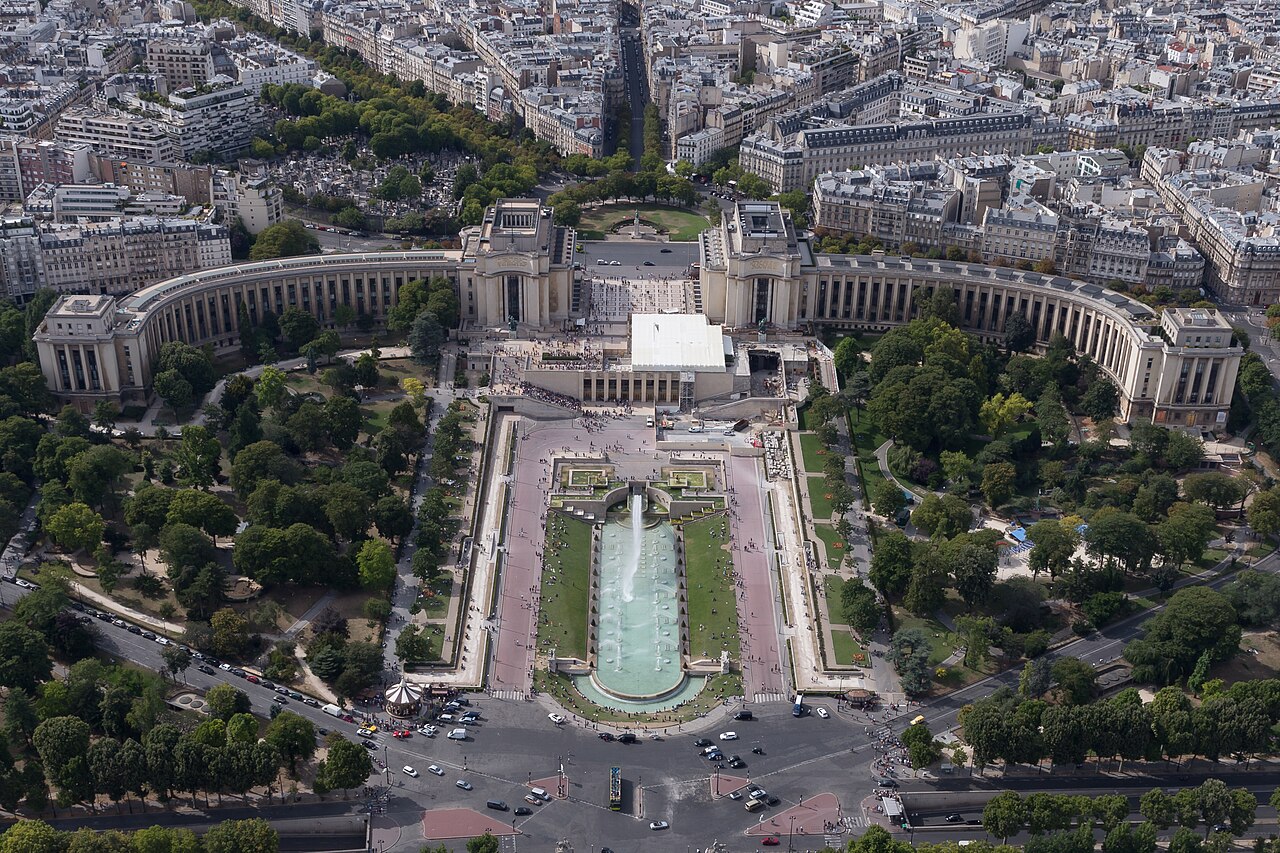
The terrace between the Palais de Chaillot's two curved wings delivers the classic head-on Eiffel Tower photo, especially at sunset and after dark when the tower sparkles on the hour. The palace itself houses the Cité de l'Architecture and the Musée de la Marine; the esplanade and gardens below are free and open around the clock.
- 12:00Lunch Les Cocottes
A cast-iron 'cocotte' bistro a few doors from where the original Café Constant used to be (that spot has since changed hands and names). Hearty South-West-leaning dishes — braised beef cheek, veal blanquette, country pâté — arrive in the pot they were cooked in. Open continuously all day, every day, from noon to around 11pm, so it's a reliable option outside the strict French lunch/dinner windows. Reservations are recommended for dinner, but walk-ins are generally accommodated.
- 13:00
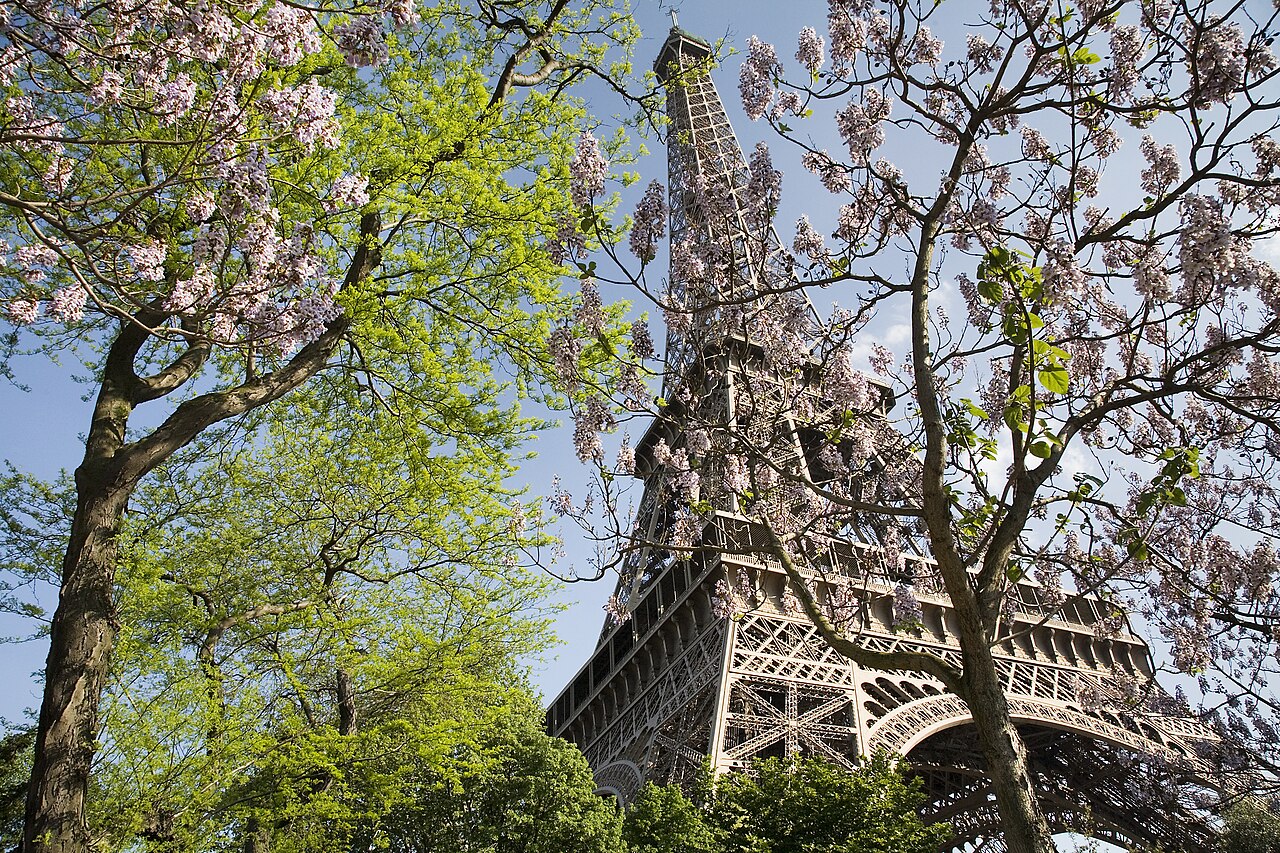
Paris' 330-metre iron icon rises straight from the Champ de Mars; ride the lift to the summit or climb the stairs to the 2nd floor for skyline views over the city. Tickets sell out same-day in high season — book online well ahead for a specific time slot. Floors 1 and 2 are wheelchair accessible by lift; the summit is not.
- 15:15Musée du Quai Branly – Jacques Chirac (World Cultures Museum)
Jean Nouvel's building holds an outstanding collection of indigenous and non-Western art and artefacts from Africa, Asia, Oceania and the Americas, displayed thematically along one long suspended gallery above a lush garden. Closed Mondays (it opens on Mondays only during spring school holidays); Thursday evenings run until 10pm, the rest of the week until 7pm. Timed-entry tickets are best booked online in advance; the museum is fully step-free with lift access throughout.
- 17:30Dinner La Fontaine de Mars
A red-and-white-check-napkin bistro open since 1908, tucked on a small square just off Rue Cler, serving South-West French classics like duck confit, cassoulet and foie gras. Popular enough that a reservation is essential, especially for dinner.


Day 5Tridente & Villa Borghese & nearby — a sights dayRome, 8 stops
The Spanish Steps and Via del Corso's flagship stores anchor Rome's fashion triangle, but climb past Piazza del Popolo and the day opens into Villa Borghese's shaded paths, rowboat lake and the Galleria Borghese — book the gallery's timed entry weeks ahead, as same-day tickets rarely exist.
- 06:39Flight
- 11:00Drop your bags at your stay
- 11:30
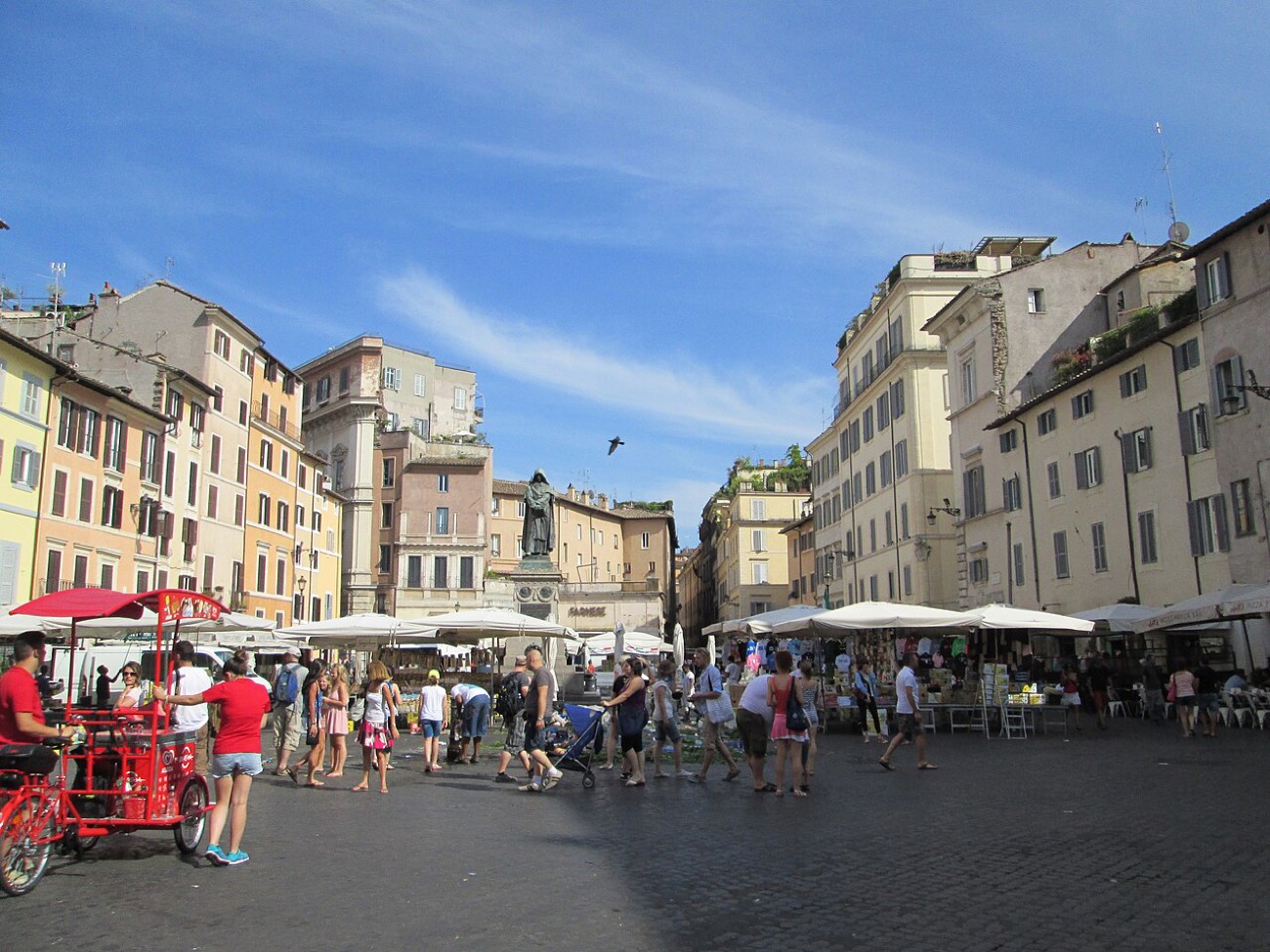
A working morning market since 1869, when it replaced the fruit-and-vegetable stalls that used to fill Piazza Navona — flowers, produce, spices and Roman souvenirs crowd the square Monday to Saturday, 7:00–14:00, then vanish by mid-afternoon for the evening bar and restaurant crowd. At the centre, a brooding bronze statue marks where the philosopher Giordano Bruno was burned at the stake in 1600 for heresy — he still faces the Vatican. No entry fee; bring small cash, since some stalls don't run cards.
- 12:25Lunch Giolitti
Rome's oldest gelateria, scooping since 1890 and once supplier to the Italian royal family — the marble counters and gilt mirrors haven't changed much since, and neither has the queue, which is the honest trade-off for genuinely artisan-made gelato rather than the industrial tubs sold at some Pantheon-area shops. Order and pay at the register first, then take the receipt to the counter to choose flavours; fruit sorbetto flavours are typically dairy-free. Expect €3–10 depending on size, and go a little later in the evening if the midday line looks daunting — it's open until 1:30am daily.
- 13:25
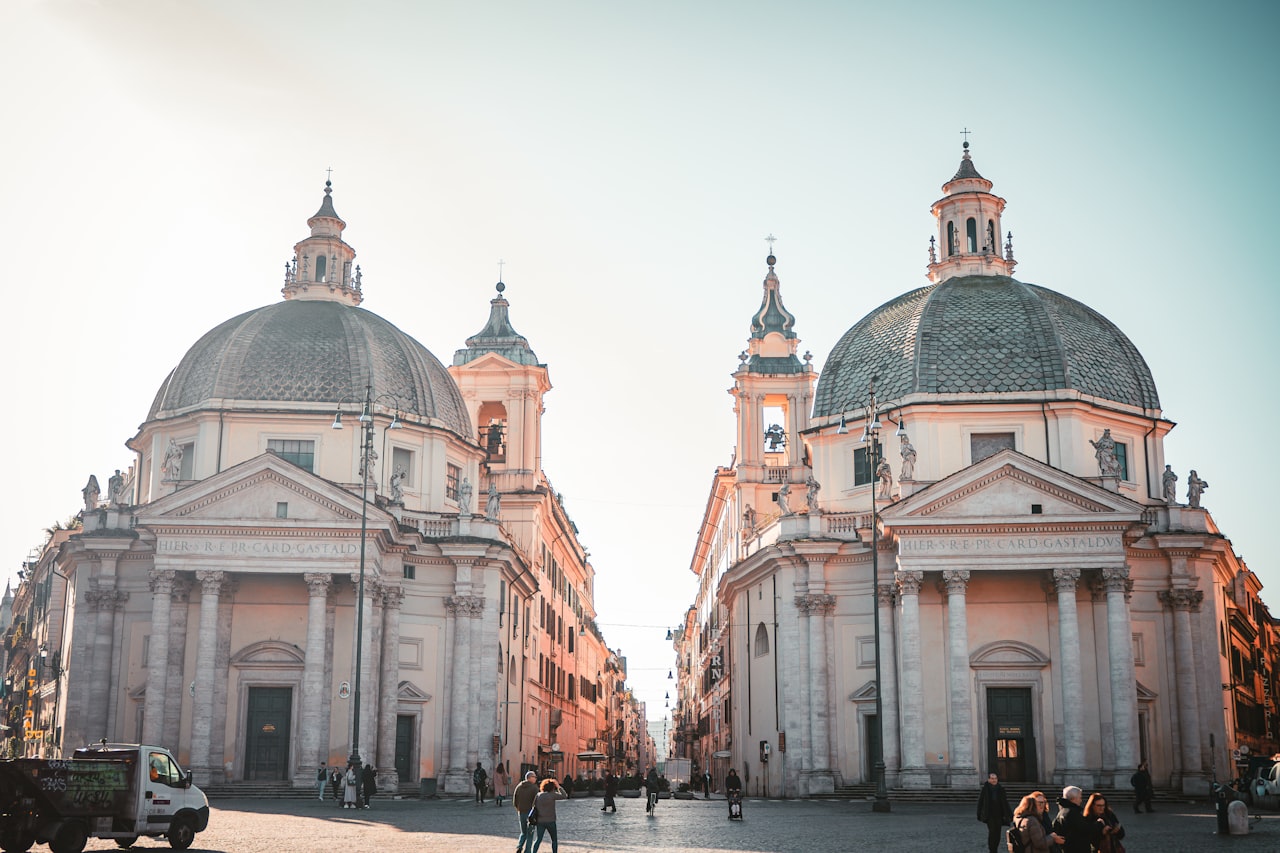
Rome's monumental northern gateway — a wide oval piazza framed by an Egyptian obelisk brought here in 1589 and Carlo Rainaldi's baroque 'twin' churches, their domes deliberately mismatched (one oval, one round) to disguise the piazza's uneven proportions. A ramped, switchback path Giuseppe Valadier built on the eastern side climbs to the Pincio Terrace, where crowds gather every clear evening for a free view over the piazza's rooftops to St Peter's dome — arrive at least an hour before sunset for a spot at the railing. Both the piazza and the terrace are free, always open and wheelchair-navigable via Valadier's ramp (paved, no stairs required); the flower-sellers working the piazza can be persistent, so a polite no is normal.
- 14:40
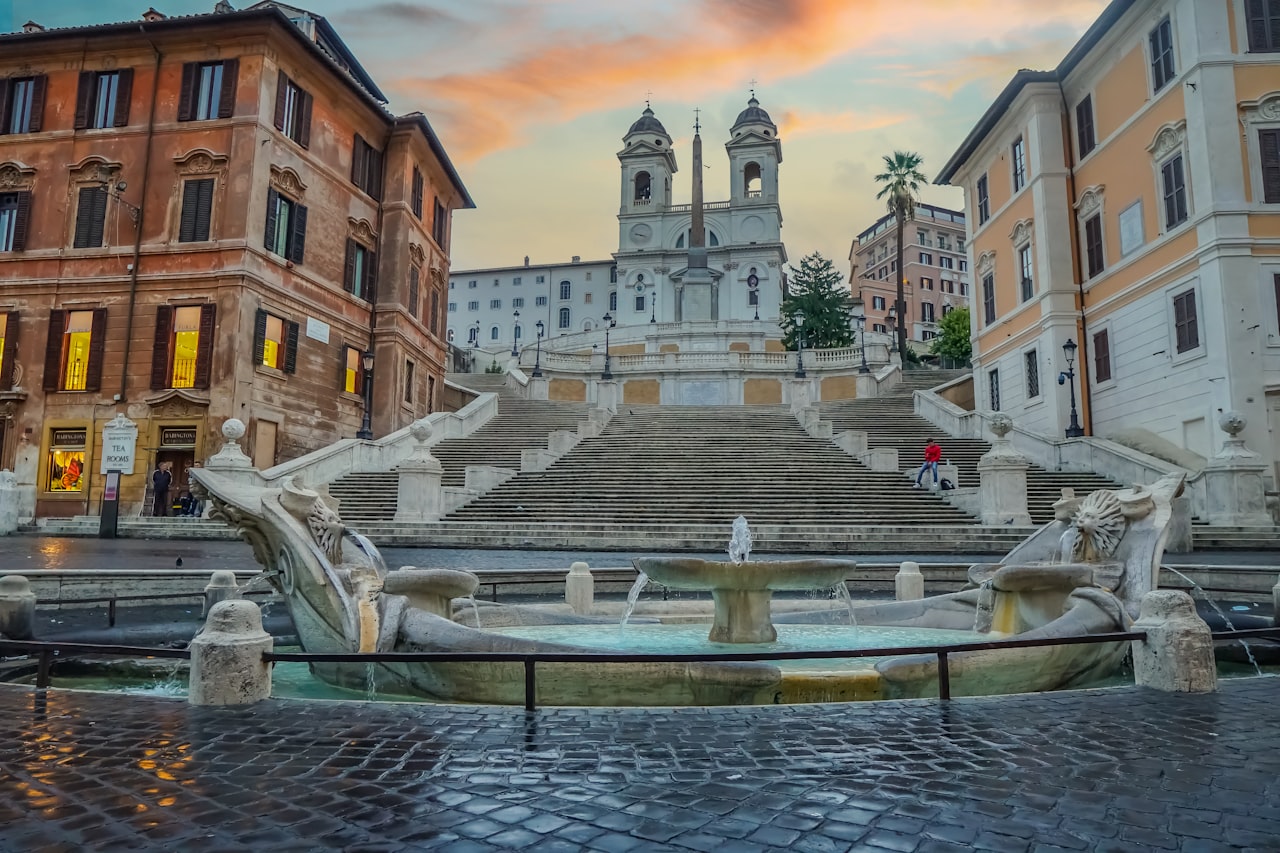
Rome's most photographed staircase — 135 travertine steps built in 1725 with French funding, linking Piazza di Spagna below to the twin-towered church of Trinità dei Monti above. A 2019 city ordinance bans sitting or lying on the steps: expect a €250 fine just for perching, rising to €400 if you damage or stain the stone — whistle-blowing officers patrol by day and the rule is still strictly enforced. At the base, Bernini's father carved the boat-shaped Fontana della Barcaccia, sunk low because of weak local water pressure. The steps themselves have no ramp; wheelchair users can reach the top via the elevator at Spagna metro station instead, while the piazza below is flat and step-free.
- 15:25
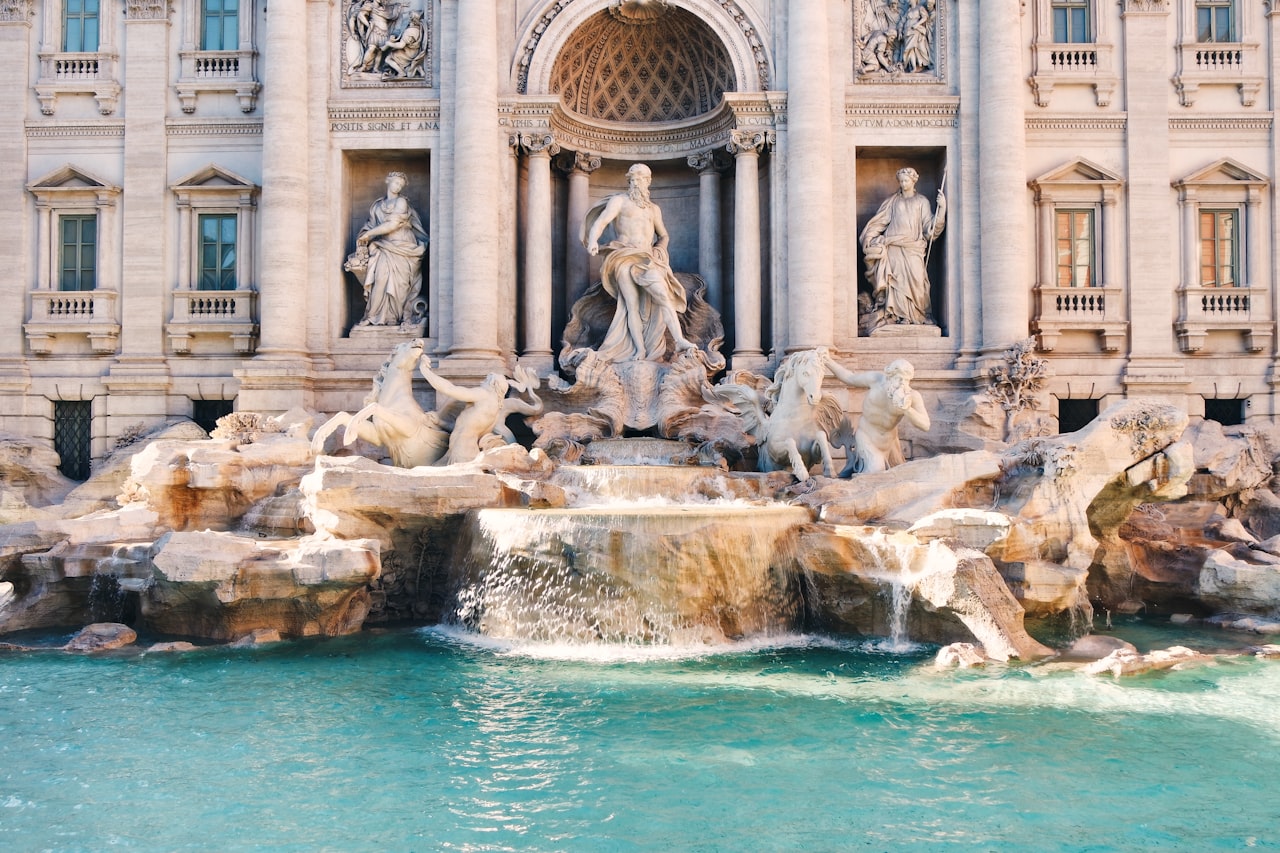
Rome's most theatrical fountain — Neptune's chariot pulled by sea-horses through a wall of travertine, restored to a gleam for the 2025 Jubilee. Since February 2026, non-residents pay €2 to step down onto the basin's stone edge for the classic coin-toss photo (tap a card or phone at the on-site machines, or book at fontanaditrevi.roma.it); viewing from the piazza itself stays free, and the fee doesn't apply after 22:00 or before 09:00 (11:30 on Mondays and Fridays) — go late evening or early morning for both a thinner crowd and a free basin. Legend says a coin thrown over your shoulder with your right hand guarantees a return to Rome.
- 16:00
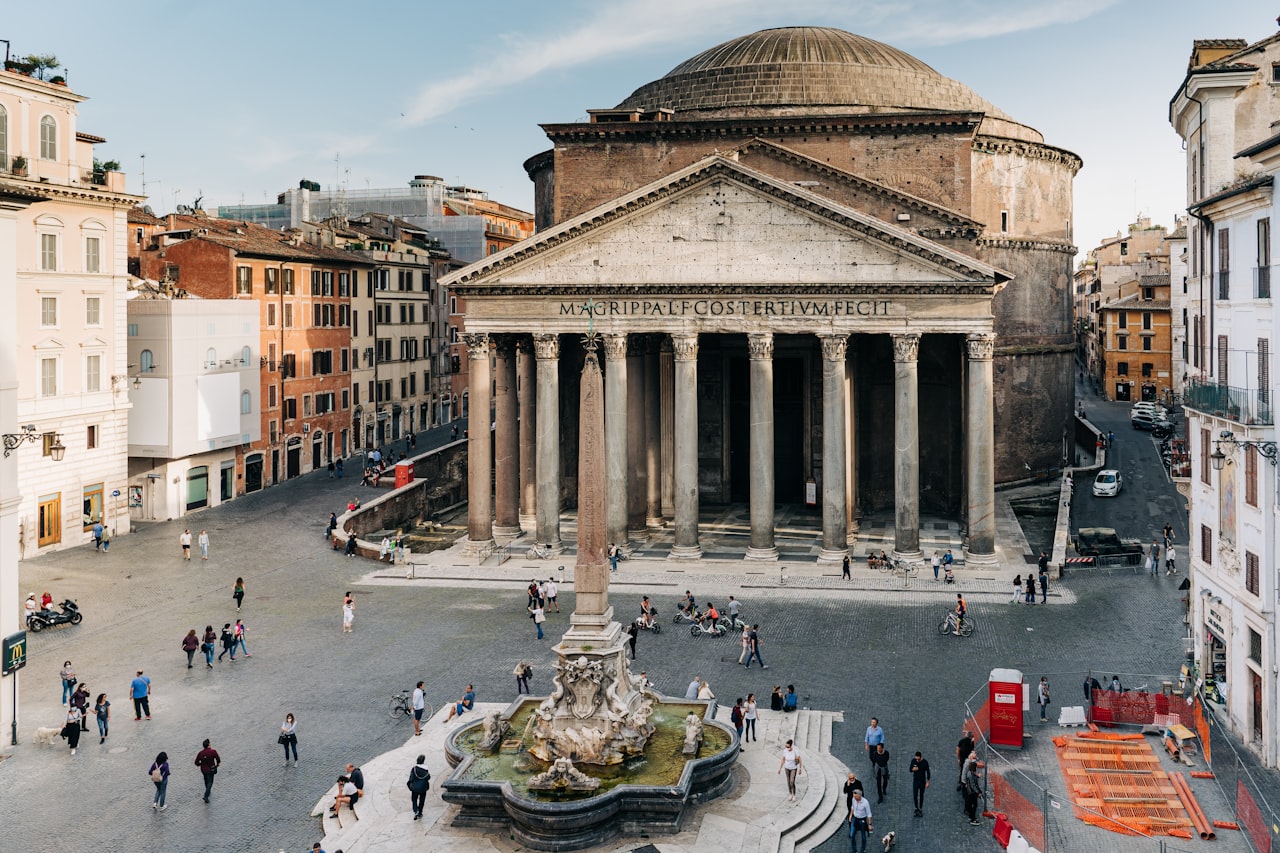
Ancient Rome's best-preserved monument — a 2,000-year-old dome with a 9-metre oculus still open to the sky, and no visible support columns holding it up. Entry now requires a paid, timed ticket (raised to €7 on 1 July 2026, from the €5 fee introduced in 2023); reduced €2 for EU citizens 18–25, free under 18 and on the first Sunday of the month (queue on-site for that slot — no online booking for free Sundays). Book the standard timed entry on the Musei Italiani site or app days ahead to skip the door queue; dress modestly (shoulders and knees covered) since it still functions as a working church. A ramp on the Via della Minerva side gives step-free access.
- 17:00
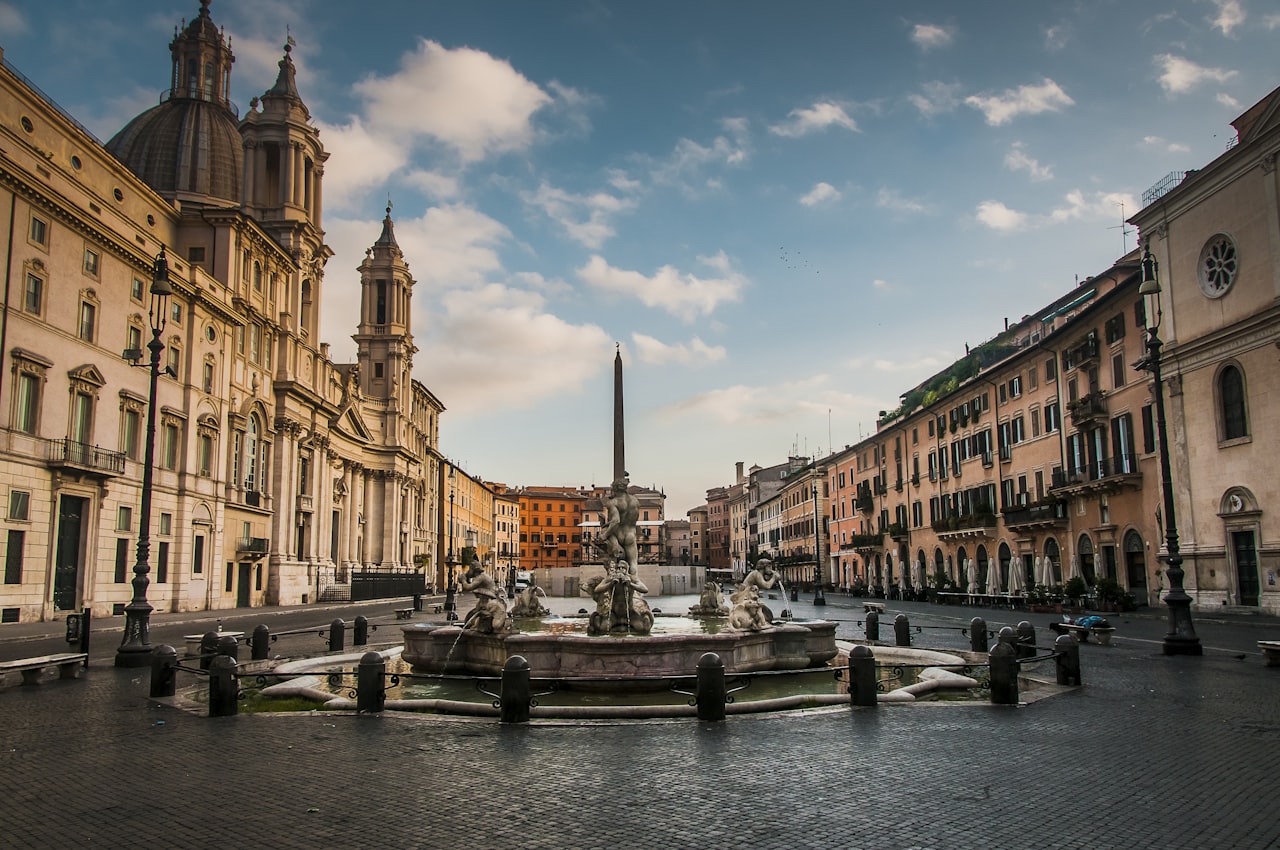
Rome's grandest baroque piazza, laid out on the oval footprint of Domitian's 1st-century stadium — Bernini's Fountain of the Four Rivers anchors the centre, flanked by his Moor Fountain and the Fountain of Neptune, all freshly restored for the 2025 Jubilee. Free to enter any time; street artists, portrait painters and gelato stands crowd the edges by day, café terraces take over by evening. No ticket, no queue — just come, though café tables here charge a premium for the view.
- 17:55Dinner Il Margutta
Rome's original vegetarian restaurant, running as an art-gallery-meets-dining-room concept since 1979, with rotating exhibitions and a plant-filled room around a hidden courtyard just off Via Margutta. Weekends bring the well-known Green Brunch buffet (around €28 per person, seatings 12:30–16:00) with roughly forty vegetarian and vegan dishes, cold and hot; weekdays it's a simpler €16 menu of the day or €18 lunch buffet, both served until 4pm. Dinner switches to à la carte and leans more refined — the seitan cotoletta and the artichoke risotto are the dishes locals order — with multi-course tasting menus also on offer. Call ahead to book, especially for the weekend brunch, which fills up fast with both Romans and visitors. It's a short walk from Piazza del Popolo, so pair a meal here with a stroll down the artists' street outside.


Day 6Trastevere & nearby — a sights dayRome, 9 stops
Cobblestone lanes, ivy-draped façades and Rome's most laid-back piazza life by day tip into the city's liveliest bar and trattoria scene after dark — expect it loud and packed on weekend nights. It's a short walk across the river from Centro Storico, not a separate trek.
- 08:00Breakfast Pasticceria Barberini
Testaccio's own pasticceria since 1925 — this isn't a branch of some grander shop elsewhere in Rome, it's the original, and locals will tell you the neighbourhood splits into two camps: Barberini loyalists and those who swear by Linari down the street. The draw is the cornetto made with a natural sourdough starter, maritozzi stuffed with whipped cream, and the house "Torta Barberini" (zabaglione cream and dark chocolate mousse); espresso and pastries run a few euros each. Open early — 6:00am Monday to Saturday, closing at 9pm (8pm on Sunday) — so it works well as a stand-up breakfast before a morning at the market a few streets over. No reservations, just walk up to the counter.
- 09:00
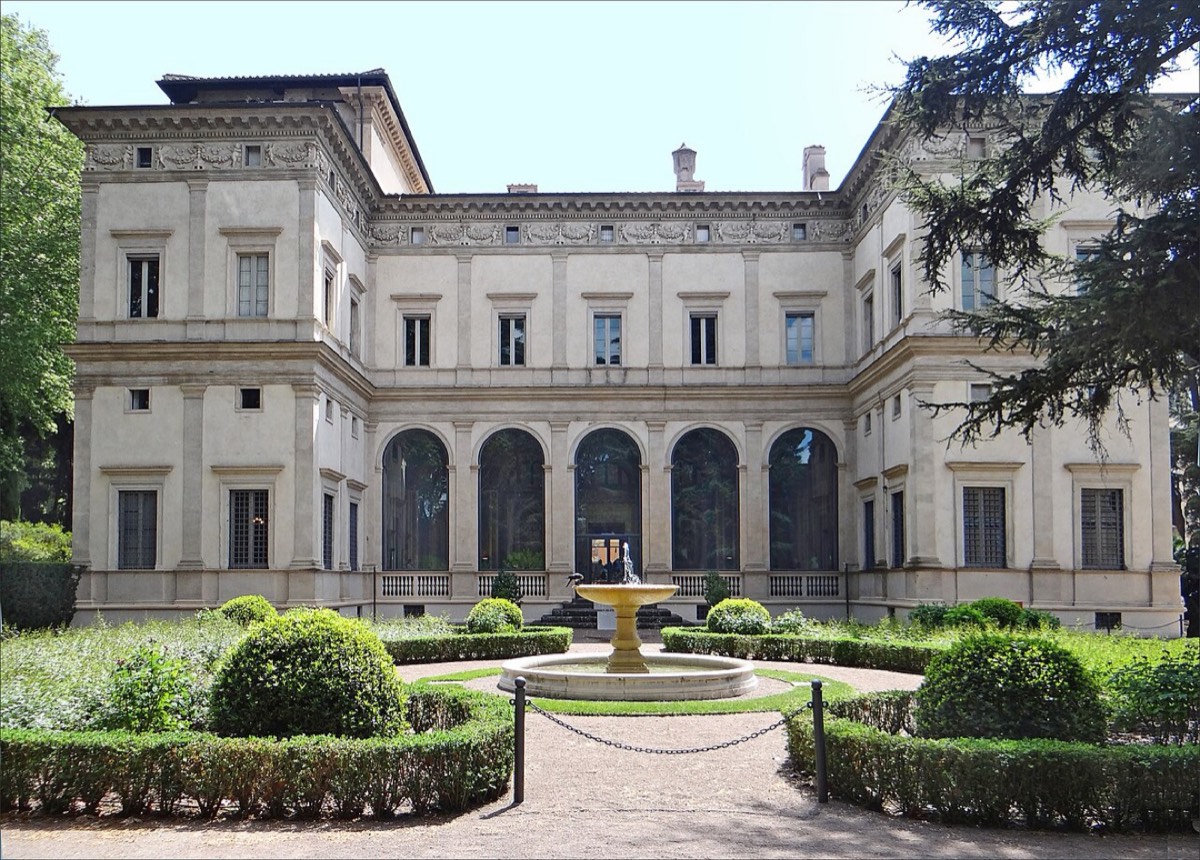
A Renaissance banker's pleasure villa turned museum, its ground-floor loggias frescoed by Raphael and his workshop — the Loggia of Cupid and Psyche's ceiling and the adjoining Galatea fresco, painted around 1517-1519 for the banker Agostino Chigi, are the highlights. Unlike most Rome museums, it keeps mornings-only hours: Monday to Saturday 9am-2pm (last admission 1:15pm), closed Sundays except the second Sunday of each month (9am-5pm, with a curated concert at 11:30am) — plan a morning visit here, not an afternoon one. Full ticket €12, reduced €10; a ramp gives step-free entry at the main loggia and a lift reaches the upper floor. A quiet, often near-empty counterpoint to the crowds across the river in Centro Storico.
- 10:30Testaccio Market
Rome's best working food market, rebuilt into a modern covered hall in 2012 and still run for locals first — lunch-counter stalls like Mordi e Vai (offal panini) and Casa Manco (fried supplì) draw a midday crowd of market workers and regulars rather than tour groups. Open Monday to Saturday, 7:00–15:30, and closed all day Sunday — come before 11:00 for the fullest stalls, or a little later once the lunch counters start cooking. Bring some cash: bigger vendors take cards, but many of the smaller produce and deli stalls still prefer euros. A separate, ticketed Republican-era warehouse beneath the market (its walls built from reused amphorae) opens only on the second Tuesday of the month by guided visit — a different thing entirely from the food market above it.
- 11:45
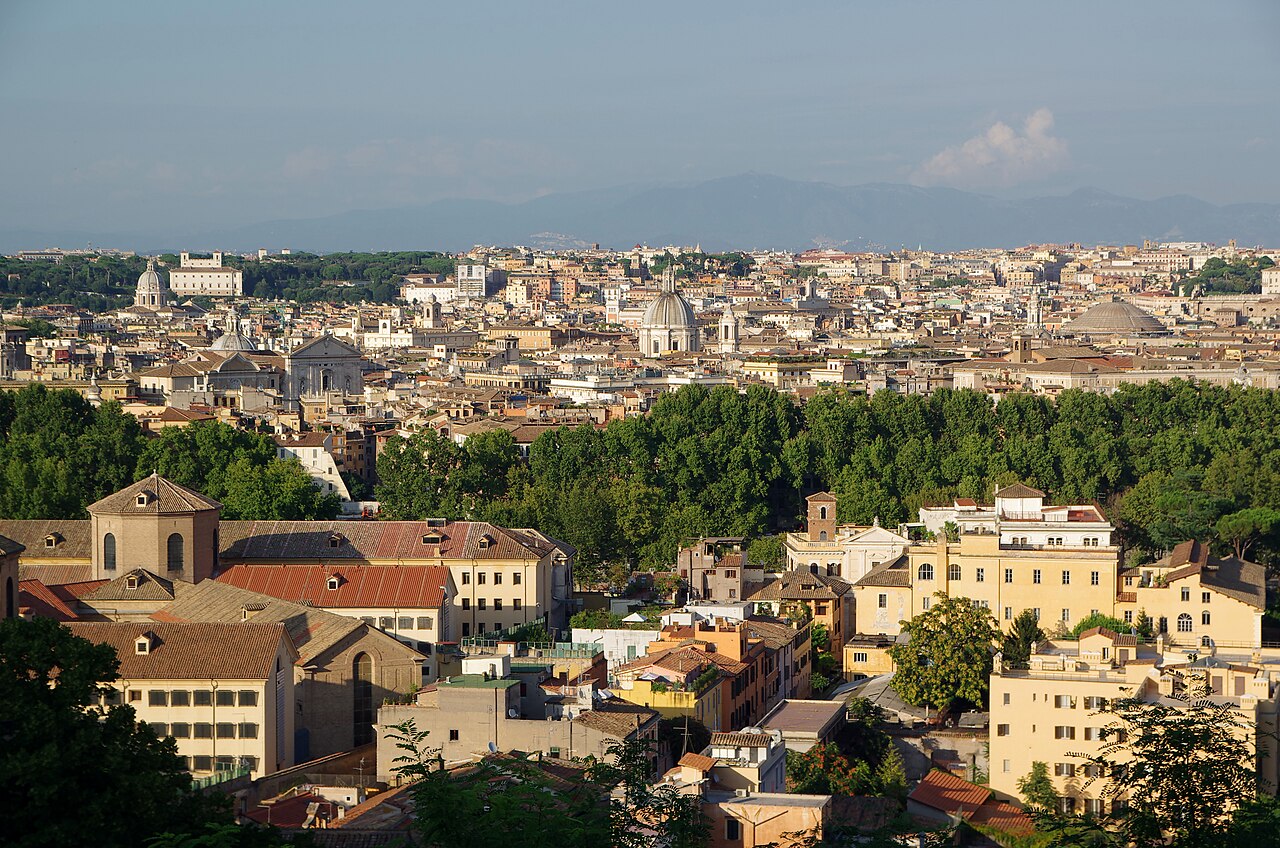
Rome's widest panoramic view, unfolding from St Peter's dome across every rooftop and hill of the historic centre — reachable by a stiff 20-25 minute uphill walk from Trastevere, or more easily by bus 115 or a taxi straight to the piazzale. Time it for noon: a cannon has been fired from just below the terrace, beneath the equestrian statue of Giuseppe Garibaldi, every single day since 1847 (originally to give Rome's churches one shared signal to synchronise their bells) — the blank round is loud enough to hear across much of central Rome, and you can walk right up to watch two uniformed attendants load and fire it. Free to visit any time; a few kiosks along the terrace sell drinks and snacks for a cheap view-side aperitivo.
- 12:40Lunch Checchino dal 1887
Open since 1887 and still run by the Mariani family, Checchino is the closest thing Rome has to a quinto-quarto shrine — this is reputedly where coda alla vaccinara (braised oxtail) was codified into its modern form, and Gambero Rosso named it a 2024 "Campione della Tradizione" for the dish. Expect rigatoni con la pajata, trippa alla romana and insalata di zampi alongside the oxtail, with mains running €13–25 and a full dinner with wine closer to €60–70 a head; a separate, clearly signposted vegetarian and celiac menu covers anyone not eating offal. Book ahead, especially for weekend dinner — the dining room is set into a converted 19th-century slaughterhouse building at the base of Monte Testaccio and doesn't hold many tables. Closed Monday and Tuesday, plus the usual few weeks around Ferragosto.
- 13:40
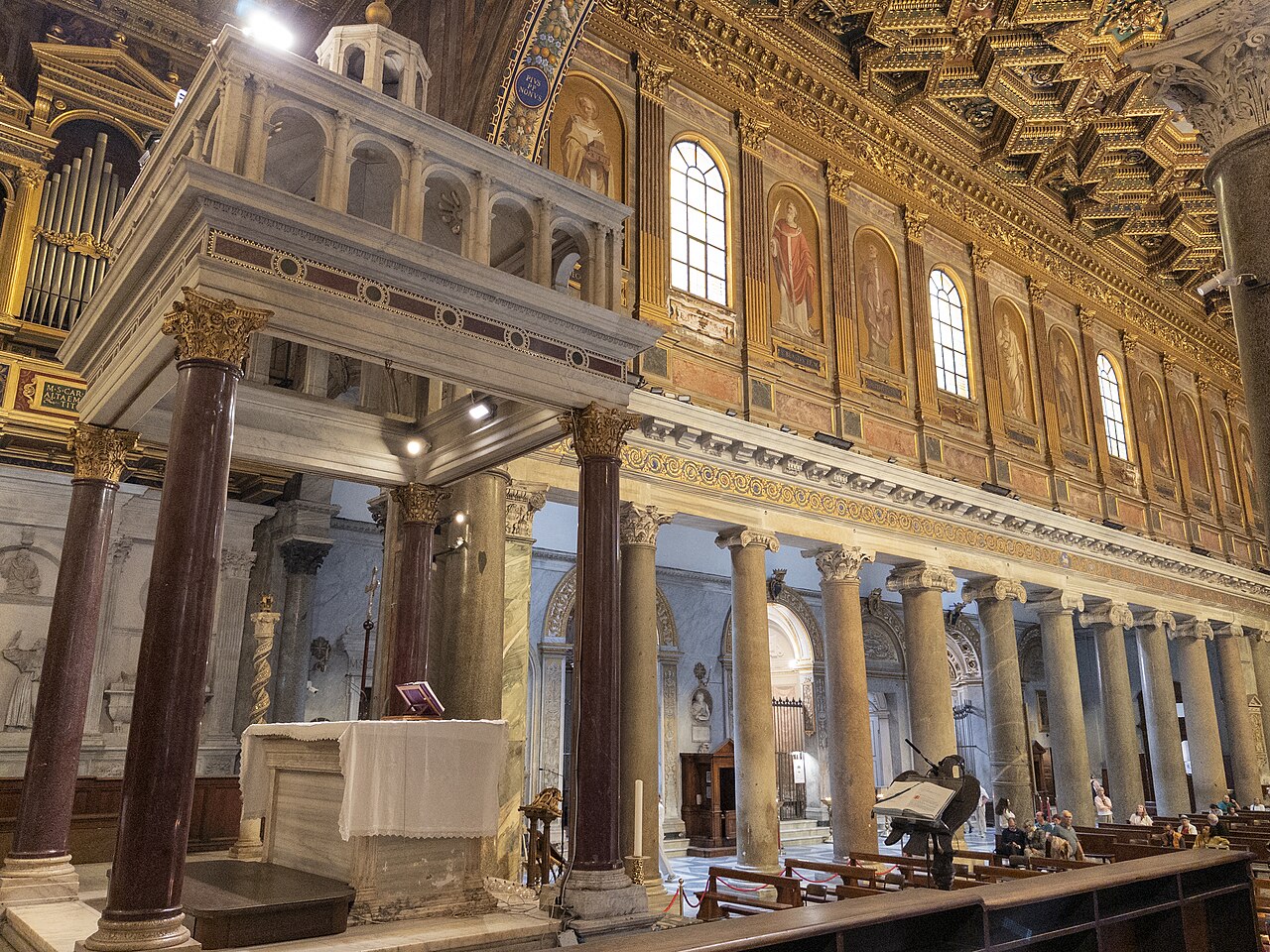
One of Rome's oldest churches dedicated to the Virgin — founded in the early 4th century and rebuilt into its current form around 1148 — famous for the glowing 12th-century apse mosaic of Christ enthroned beside Mary, with Pietro Cavallini's 13th-century Life of the Virgin cycle in the same apse below it. Free entry, no ticket needed, roughly 7:30am to 8pm daily (hours run shorter in August and visits pause during Mass, so check locally if you're set on a specific time). The piazza outside, built around one of Rome's oldest public fountains, is Trastevere's social heart from morning coffee through to the evening crowd.
- 14:25Monte Testaccio (Monte dei Cocci)
An entire hill built from roughly 53 million broken ancient Roman amphorae — mostly olive-oil jars discarded over centuries as cargo was unloaded at the nearby river port — Monte Testaccio is genuinely one of Rome's strangest ancient sites, but it is not a park you can just walk up. The hill is fenced and managed as a protected archaeological area; the only way in is a reserved guided visit (call 060608 daily 9:00–19:00 to book, meeting point Via Nicola Zabaglia 24; €4 full / €3 reduced, free for Rome residents and MIC cardholders), and even then paths are uneven gravel and steps with no wheelchair access. A 2024–2026 restoration project aims to eventually reopen the summit for unrestricted public use, but as of writing it still isn't a walk-up site. Without a booking, the closest most visitors get is eating at one of the restaurants built directly into caves at its base — Flavio al Velavevodetto's dining rooms still have amphora shards visible in the walls.
- 15:40
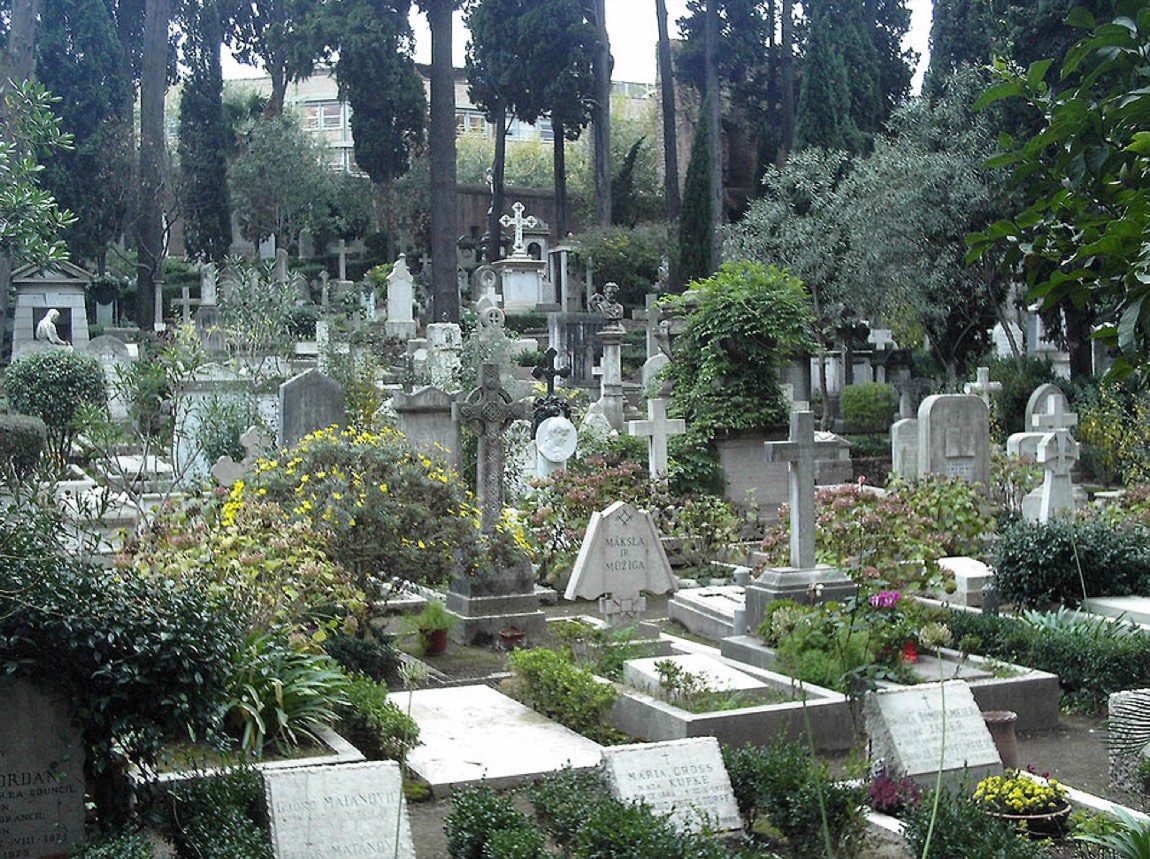
One of Europe's oldest continuously used non-Catholic burial grounds, and still active today — this is where John Keats is buried ("Here lies One Whose Name was writ in Water") and where Percy Bysshe Shelley's ashes rest beneath a stone inscribed with lines from The Tempest, a short walk from William Wetmore Story's haunting "Angel of Grief." There's no fixed ticket price, but the cemetery explicitly asks for a €5-per-person donation at the gate — it's what keeps the gardens, and a resident cat colony documented here since at least 1850, going. Open Monday–Saturday 9:00–17:00 (last entry 16:30) and Sunday 9:00–13:00 (last entry 12:30), with extra closures around Christmas, New Year and two weeks in mid-August. Paths are gravel and the cemetery itself notes architectural barriers, so it's a rougher walk than a paved piazza — wear flat shoes, and leave your phone off social media while inside, a house rule here.
- 17:30Dinner Trapizzino (Testaccio, the original)
This is where the trapizzino was actually invented — Stefano Callegari filled a triangular pocket of pizza bianca dough with braised Roman classics for the first time here in 2008, before it grew into the citywide (and now international) chain it is today. Order at the counter: pollo alla cacciatora, coda alla vaccinara and the vegetarian parmigiana di melanzane are the standing flavors, each around €4, so a casual meal of two or three plus a drink runs €8–15. There's a handful of stools and an adjoining room, but this is grab-and-eat food — no reservations, no real menu to study, just point at what looks good. Open Tuesday to Saturday, noon until midnight (1am Friday and Saturday); closed Sunday and Monday.


Day 7Monti & the Colosseum & nearby — an old-town dayRome, 8 stops
The Colosseum, Roman Forum and Palatine Hill sit on one combined ticket — book timed-entry online days ahead, since walk-up lines can run past an hour in summer. A few minutes north, Monti's sloped cobblestone streets swap ruins for vintage shops, wine bars and Rome's most villagey feel this close to the centre.
- 07:40Check out of your stay
- 08:30
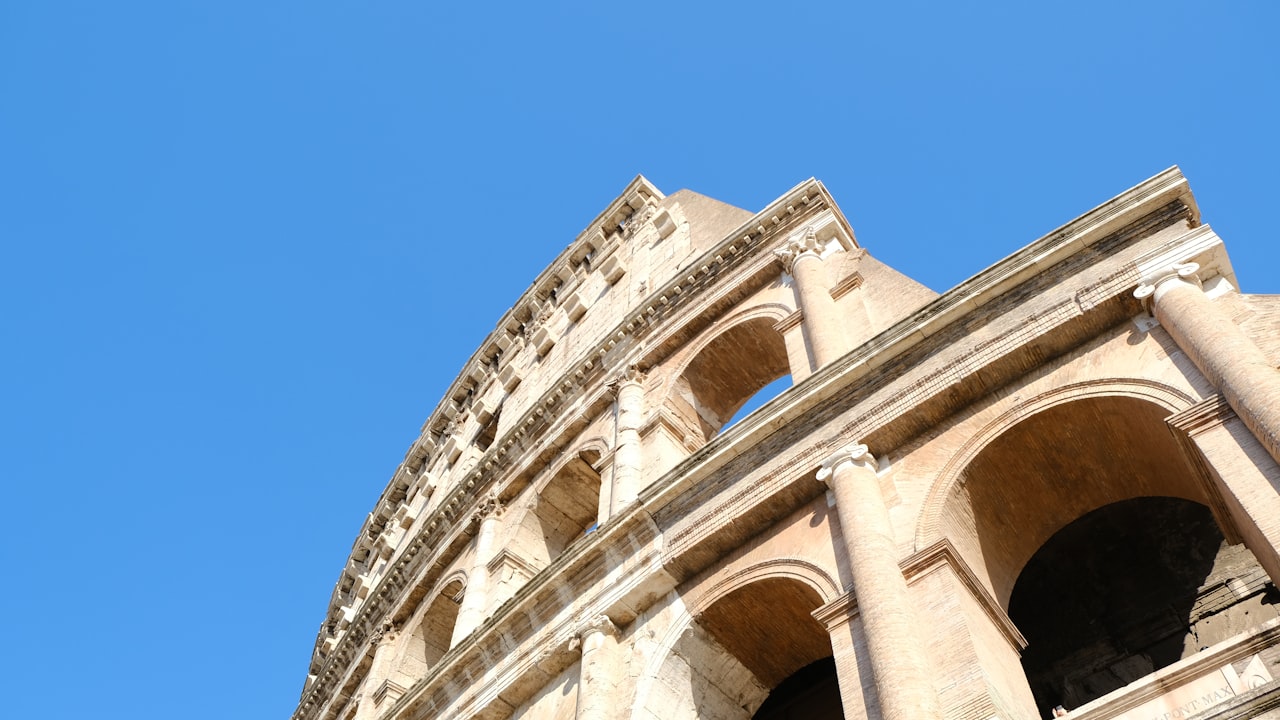
Rome's ancient amphitheatre, and the single most booked sight in Italy — as of April 2024, ticketing moved off CoopCulture entirely onto the Parco Archeologico del Colosseo's own site (ticketing.colosseo.it); buy only there or at official partner sites, never a .com reseller. The standard ticket (€18) is nominative — tied to your name, checked against photo ID at the gate — and covers one entry each to the Colosseum, Roman Forum and Palatine Hill within 24 hours. Slots release exactly 30 days ahead at 9:00 Rome time and the summer 08:30–19:15 window sells out fastest at peak hours. The Full Experience upgrade (Underground & Arena, €24 + a non-refundable €2 booking fee) adds the reconstructed arena floor and the gladiator/animal tunnels beneath it — the best add-on for a first visit, but it sells out within minutes of release, so book the moment your date opens. A dedicated accessible entrance, lifts between levels and free wheelchair loan are available at the reception/security office; disabled visitors plus one companion enter free.
- 10:15
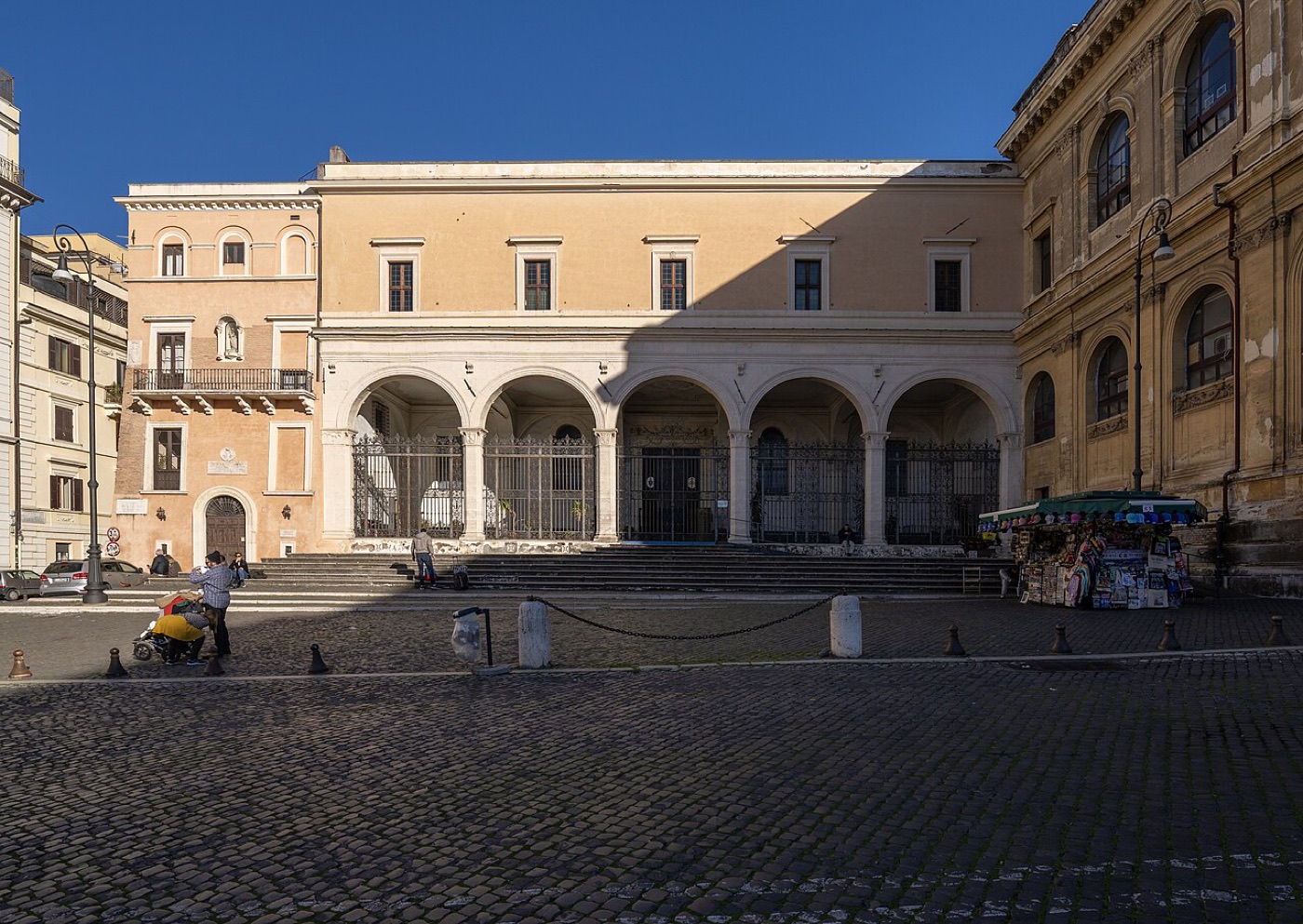
Free entry to see one of Michelangelo's greatest sculptures without a ticket, a booking, or a crowd — his seated Moses, muscular and horned per medieval iconography, was carved for Pope Julius II's never-finished tomb and anchors the right transept. The church closes for a genuine midday break, roughly 12:30–15:00 (stretching later into the evening — up to 19:00 — in summer), so plan around lunch rather than showing up at 13:00. It's two minutes uphill from the Colosseum but sees a fraction of the visitors. Note the entrance is a flight of steps with no ramp — not workable for wheelchairs or strollers without prior arrangement with staff.
- 10:50Piazza della Madonna dei Monti
Monti's living room — a small fountain-centred square where the neighbourhood actually sits, day and night, on the steps around the basin. It's the natural hub for wandering the sloped, cobbled lanes fanning out from it — Via del Boschetto and Via dei Serpenti for vintage and indie shops, Via Urbana for a quieter stroll — all a five-minute walk from the Colosseum but feeling like a different, villagey Rome. No opening hours, no ticket: come for an aperitivo at dusk when the square fills up and stays that way past midnight on weekends.
- 12:00Lunch Ai Tre Scalini
Monti's soul, by most locals' account — a wine shop since the 1800s and a bottiglieria proper since 1895, pouring roughly 100 wines by the glass from a tiny standing-room counter that spills onto the steps of Via Panisperna. No reservations taken and it's genuinely packed most evenings, so arrive right at noon or by 18:00 to actually get a seat on the steps. Vegetarian and vegan small plates sit comfortably alongside the wine list — this is a grazing-and-drinking stop, not a full sit-down dinner.
- 13:00
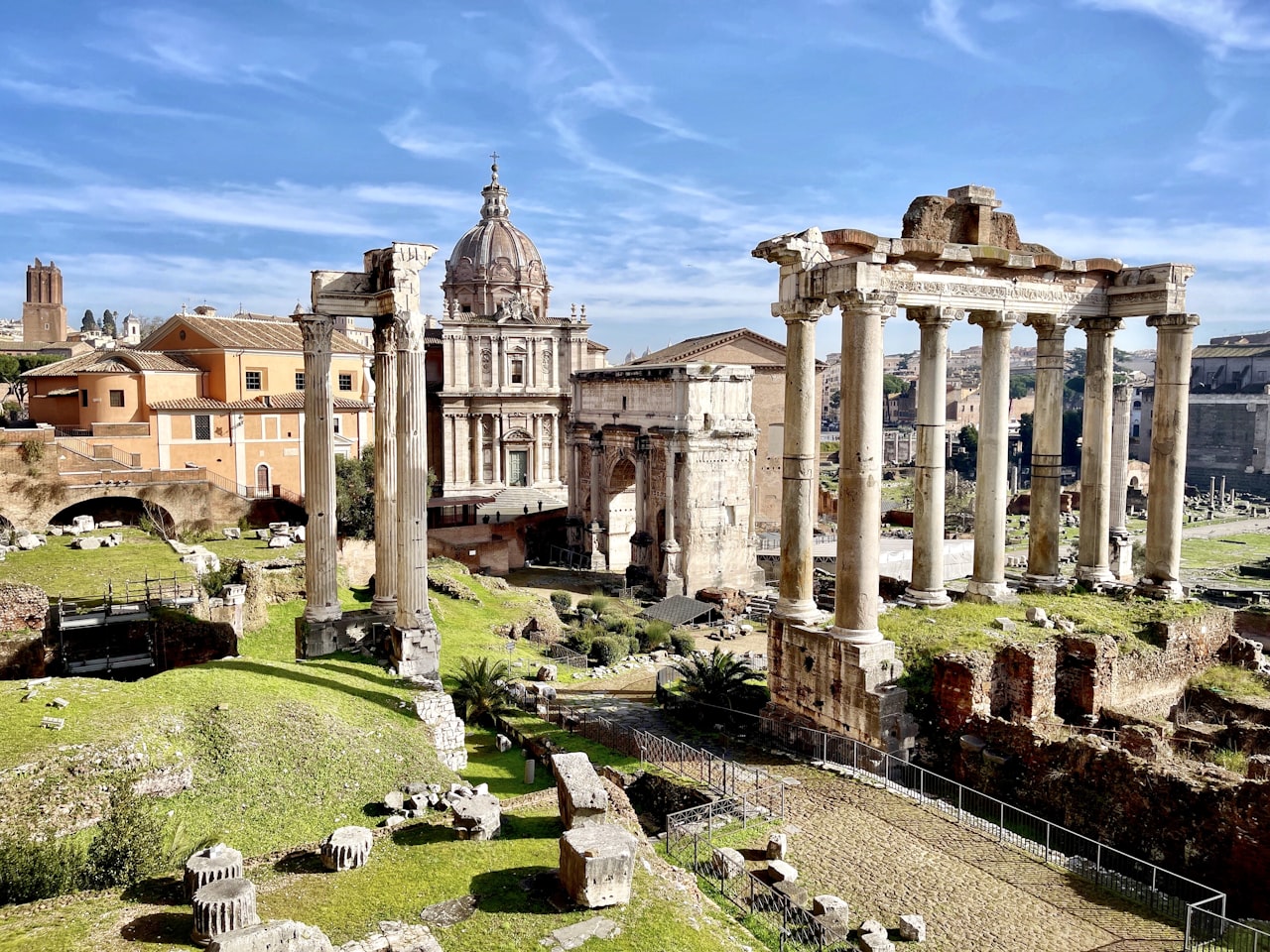
The same nominative ticket that gets you into the Colosseum also covers one entry each here — no separate booking, just walk in with the same QR code within its 24-hour window. The main visitor entrance sits at Largo della Salara Vecchia near the Arch of Titus, with a second access point off Via di San Gregorio. Give it a solid two hours: the Forum's temple foundations and the Palatine's imperial palace ruins (with sweeping views down over the Circus Maximus) reward slow wandering, and there's almost no shade — bring water and a hat in summer. Roughly a fifth of the site is step-free and wheelchair-passable via ramps and lifts near the main entrances; the rest is original ancient stone paving, uneven and gap-ridden, so wheelchair users should ask staff about the accessible route and the golf-cart shuttle on request.
- 15:15
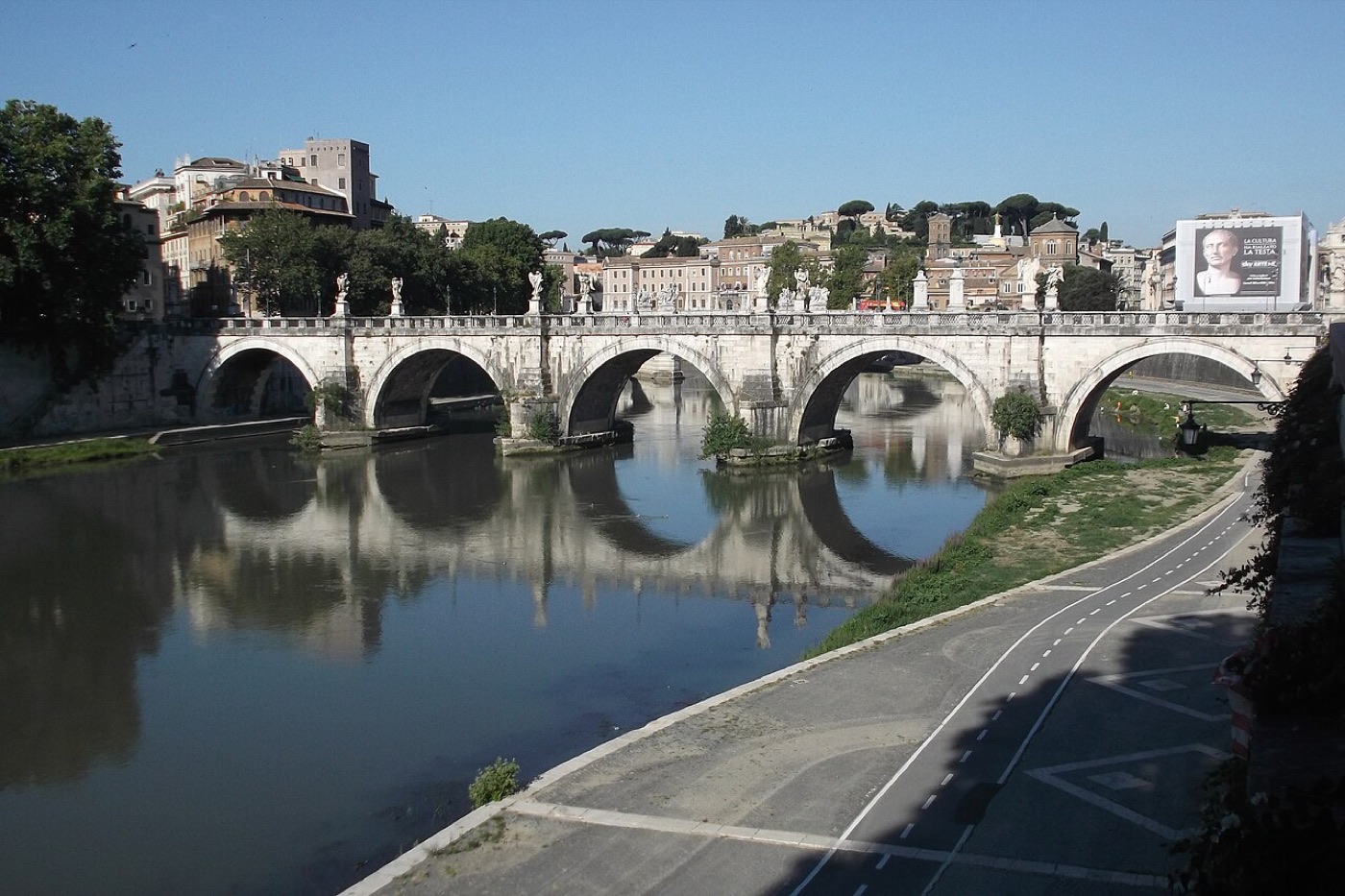
The pedestrian-only approach to Castel Sant'Angelo, lined with ten marble angels — each carrying an instrument of the Passion — carved in Bernini's workshop in the 1660s (two originals now live in a church nearby, replaced here by copies). Free, always open, and one of the best places in Rome to frame the castle against St Peter's dome, especially at golden hour. The old stone paving underfoot is uneven in places, worth noting for wheelchairs or strollers.
- 15:45
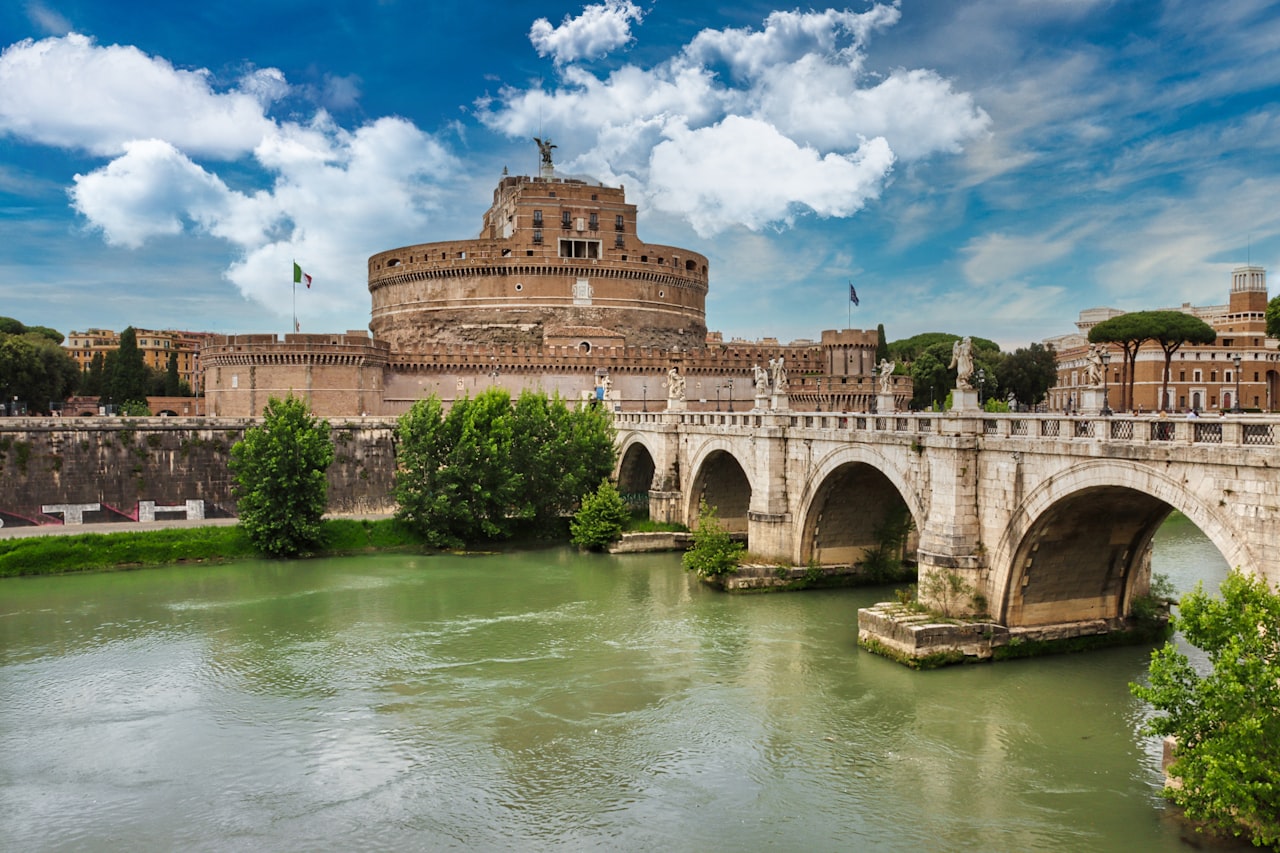
Hadrian's 2nd-century mausoleum, later a papal fortress and prison, now a museum — the climb up through the Sala Paolina and the papal apartments ends on a rooftop terrace with one of the best skyline-and-river views in Rome, especially near sunset. Adult ticket €18, reduced €2 for EU citizens 18–25, free on the first Sunday of the month. Closed Mondays year-round, with one exception: a 'Mondays in the Castle' initiative (August–December 2026) opens the museum 14:00–20:00 that day for a flat €5. It's an old fortress, so accessibility is only partial — an assisted lift reaches most levels but needs a staffed escort arranged at the dedicated accessible entrance on Lungotevere Castello, not a free-roam route.
- 17:30Dinner Gelateria dei Gracchi
Alberto Manassei's gelato bar, a few streets from the Vatican walls — one of the earliest in Rome to ditch pre-made bases and additives for genuinely natural ingredients, and Anthony Bourdain once called his gelato 'the best of the best.' Pistachio and hazelnut are the benchmark flavours; fruit sorbetti are naturally dairy-free, and dedicated gluten-free and lactose-free options are on offer. Open until midnight most nights, later on Friday and Saturday — a solid post-dinner stop after a Prati trattoria, without the queue you'd find nearer the Trevi Fountain.


