
Barcelona & Madrid — Gaudí, the Prado and the AVE between them in 6 days
- 6 days, 2 cities
- Balanced pace
- About 40 min walking a day
Spain's two biggest cities are two and a half hours apart on the AVE from Barcelona Sants to Madrid Atocha, which makes six days enough for both without rushing either. Three days for Gaudí's unfinished basilica, the Gothic quarter's Roman fragments, Park Güell's mosaic terrace and paella at plastic tables on Barceloneta; three for the Prado, Reina Sofía and Thyssen on one boulevard, the largest royal palace in western Europe, and tapas eaten standing at the bar in La Latina. Every stop below is human-verified, including the awkward truths: the Reina Sofía closes on TUESDAYS, not Mondays, so the Paris and Rome reflex misfires here; Casa de les Punxes no longer admits visitors and is an exterior stop only; El Rastro runs on Sundays and public holidays alone, so a weekday visit finds an ordinary residential street; and Spain has no law obliging a business to take cards, so carry cash for the older bars. Saved once, the whole plan works offline.
Day by day
Day 1Gràcia & Park Güell & nearby — a sights dayBarcelona, 10 stops
A separate town until 1897 and it still behaves like one — car-light squares where people actually sit, and above them the mosaic terrace Gaudí built for a housing estate nobody bought.
- 08:00Breakfast Bar del Pi
An easygoing terrace bar facing the rose window of Santa Maria del Pi, open all day for coffee, flauta sandwiches, tapas, and a glass of vermouth. Nothing fancy and no reservations — walk-up, no-fuss seating right on one of the quarter's best squares. A good pick for a slow breakfast or an afternoon break between sights rather than a destination dinner.
- 08:30Mercat de la Llibertat
A Modernista ironwork market building designed by Francesc Berenguer i Mestres (Gaudí's close collaborator), built 1888-1893 and fully renovated in 2009, which nearly doubled its floor space and added a supermarket. A genuine working neighbourhood market for fresh produce, seafood and everyday shopping rather than a tourist attraction, and a good complement to a meal at La Pubilla next door. Closed Sundays, and closes by mid-afternoon on Saturdays.
- 09:30
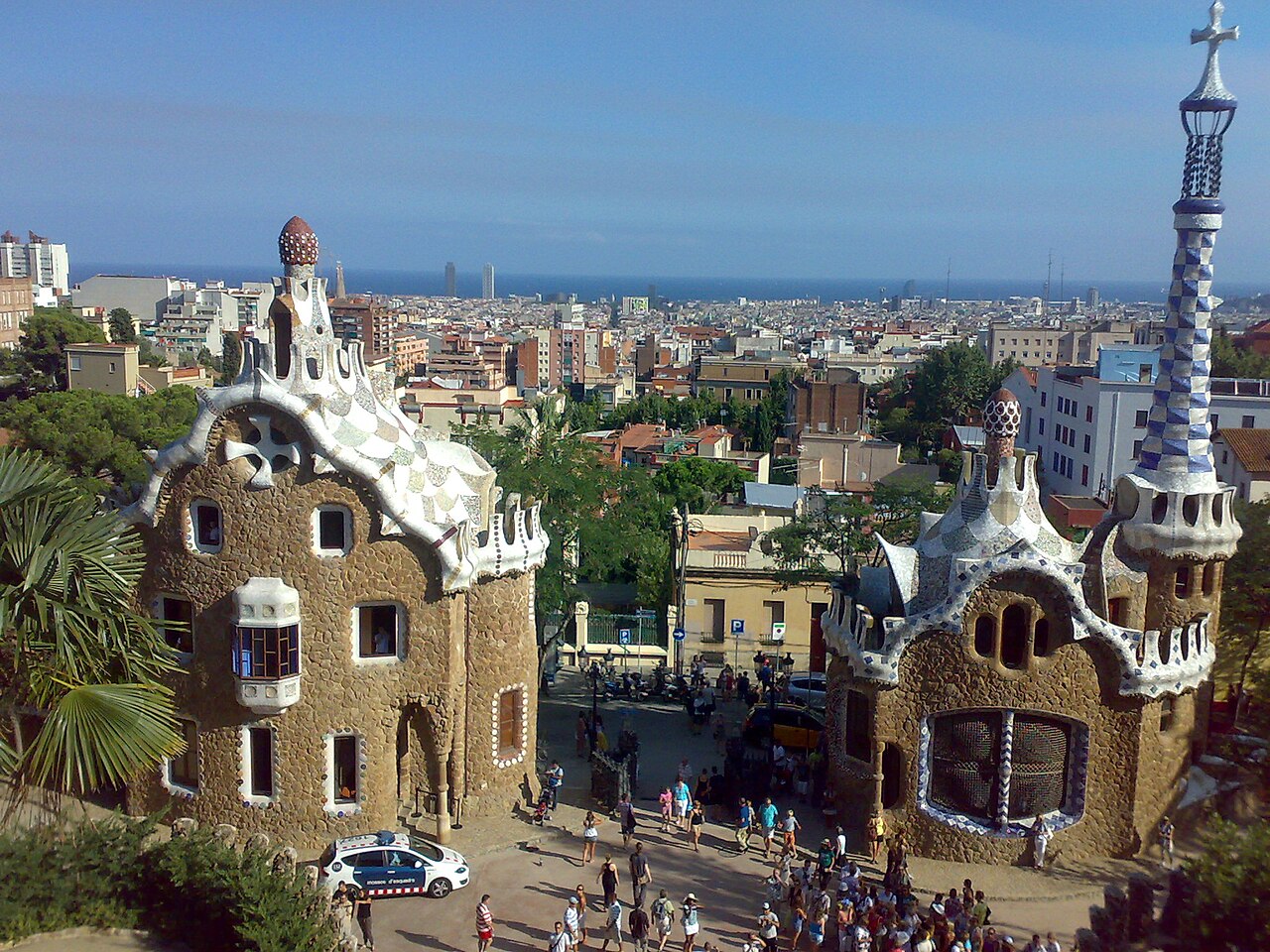
The park has a free, open general area and a separate paid Monumental Zone (the mosaic dragon staircase, the Hypostyle Room and its forest of columns, and the wavy tiled Nature Square terrace) — that ticketed core is what most visitors come for. Adult entry is 18 euro and comes with a timed half-hour entry slot plus a 30-minute grace window; buy online up to about three months ahead, and do it well before a summer visit, since walk-up, same-day entry is not guaranteed once the day's slots are gone. Allow about an hour inside the Monumental Zone; there's no re-entry once you leave. Nearest metro stops are Lesseps or Vallcarca (L3), both roughly a 20-minute walk with escalators to help with the climb. The park itself is hilly and only partly step-free — an adapted itinerary and loaner wheelchairs are available on request at the entrance for anyone who needs them.
- 11:05Casa Vicens
Gaudí's first major commission (1883-1888), tucked into a quiet Gràcia side street rather than on the Passeig de Gràcia circuit, so it's markedly less crowded than his later houses. A UNESCO World Heritage Site since 2005 and a house-museum since 2017; the self-guided visit includes a free audioguide and takes about an hour. Tickets are sold online only through the official site — there's no simple walk-up box office, so book ahead rather than turning up on spec. Closing time shifts with the season, so check the day's hours when you book rather than counting on a late-afternoon slot.
- 12:20Lunch La Pubilla
Sits right across from Mercat de la Llibertat and sources straight from it — genuinely a neighbourhood spot rather than a tourist stop. Known for its weekday menú del día (roughly 18-25 euro for a full lunch) and for 'esmorzar de forquilla', a hearty fork-breakfast tradition. Vegetarian and gluten-free dishes are available. Reservations are recommended, especially at lunch, since locals fill it fast. Closed Sundays and Mondays.
- 13:20
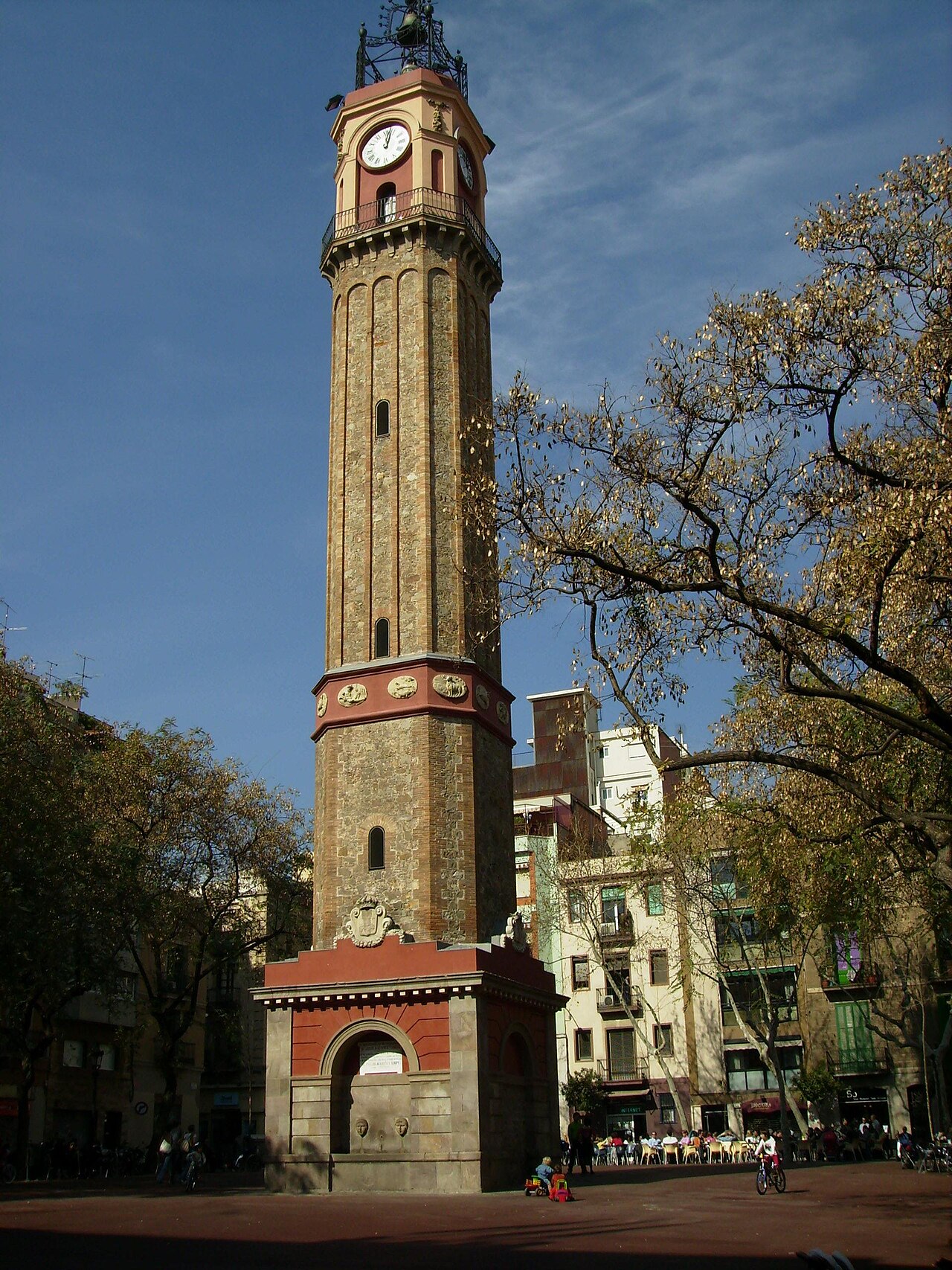
Gràcia's main square, free and open at all hours, centred on the Rellotge de Gràcia clock tower built in 1862-1864 by architect Antoni Rovira i Trias. During the 1870 anti-conscription 'Quinta' uprising, rebels rang the tower's bell as a signal and army artillery fired on it from Carrer de Provença, cracking the structure; bell-ringing was banned for years afterward and the clock faces weren't fully relit until 1882. Today it's ringed by terrace bars and functions as Gràcia's social living room; it's also a focal point of the Festa Major de Gràcia street-decoration festival every August.
- 14:05La Boqueria Market
Closed Sundays (with a few Sunday openings around Christmas). Stalls right at the La Rambla entrance price fruit cups and juices for one-time tourists — walk toward the back of the market, near the Carrer de la Petxina exit, for the same produce at local prices. Bar Pinotxo and El Quim de la Boqueria, both just inside, are the real reason to eat here: grab a stool at the counter rather than a table near the entrance. This entrance sits right across La Rambla from the Barri Gòtic side — geographically it is the closest major sight to the Gòtic centre, though the market building itself is administratively in El Raval.
- 15:05Basílica de Santa Maria del Pi
Fronts two connected squares — Plaça del Pi at the main door, Plaça de Sant Josep Oriol at the side with the famous rose window facade. General entry to the nave is free; sightseeing access can be briefly paused during Mass. A separate paid climb to the bell tower and rose window is sold on-site for those who want the view over the Gòtic roofs. The two squares outside host a weekend artists' market and are one of the pleasanter places in the quarter to sit with a coffee away from the Rambla crush. The 8 euro entry covers the basilica, crypt, museum, garden and the bell-tower level; the guided climb up the tower is a separate 4 euro ticket at set times. Sundays and holidays open only from the afternoon.
- 15:50
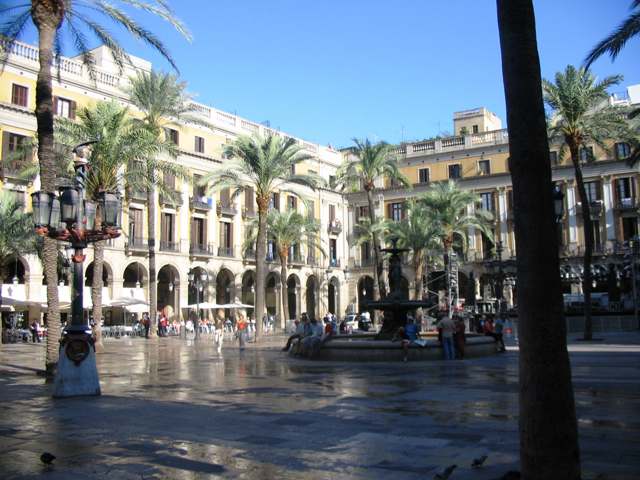
A neoclassical arcaded square from the 1850s, palm trees and all, holding the lamp posts a young, still-unknown Gaudí designed in 1879 — his first public commission. Bars and restaurants ring the arcades; several are priced for one-time tourists rather than locals, so treat a table right on the square as convenience, not a food destination. A small stamp-and-coin market sets up under the arcades on Sunday mornings. Lively and safe by day; at night it fills with bar crowds and pickpocket risk rises, so keep bags zipped and to the front, same as anywhere in the Gòtic after dark.
- 17:30Dinner Con Gracia
A small, dinner-only tasting-menu restaurant tucked into a Gràcia backstreet — the kind of place locals in the know book rather than a tourist find. The set menu changes seasonally (currently a spring 2026 menu around 79 euro) and includes a 'menú secreto' surprise course. Dinner only, closed Sunday and Monday, plus scheduled vacation closures through the year — check the current dates before booking. Reservation is essential (via the restaurant's site, phone or WhatsApp). Vegetarian diners are accommodated on request, but mention it when booking since the menu leans seafood and meat.


Day 2L'Eixample — a museum dayBarcelona, 8 stops
Cerdà's grid, and the reason people book flights — Gaudí's unfinished basilica at one end, his rippling apartment houses along Passeig de Gràcia, and chamfered corners that make every junction a small plaza.
- 09:00Casa Milà (La Pedrera)
The 'La Pedrera Essential' ticket starts from 29 euro online; a Sunset visit and separate Night Experience (with a show among the chimneys) also run seasonally. Summer hours (roughly March-November) are 09:00-20:30 for the day visit; winter hours shorten to about 09:00-18:30 — check before a shoulder-season trip since the cutover dates shift slightly year to year. Most of the house — the courtyards, the Tenants' Apartment and the Gaudí Space in the attic — is wheelchair accessible, but the famous rooftop terrace with the helmet-shaped chimneys has an uneven, sculpted surface that the building itself flags as not wheelchair accessible. A UNESCO World Heritage Site since 1984. Lifts and ramps reach the courtyards, the Tenants' Apartment and the Attic, but the Rooftop's uneven surface cannot be crossed in a wheelchair; chairs wider than 63 cm need to be arranged in advance.
- 10:30
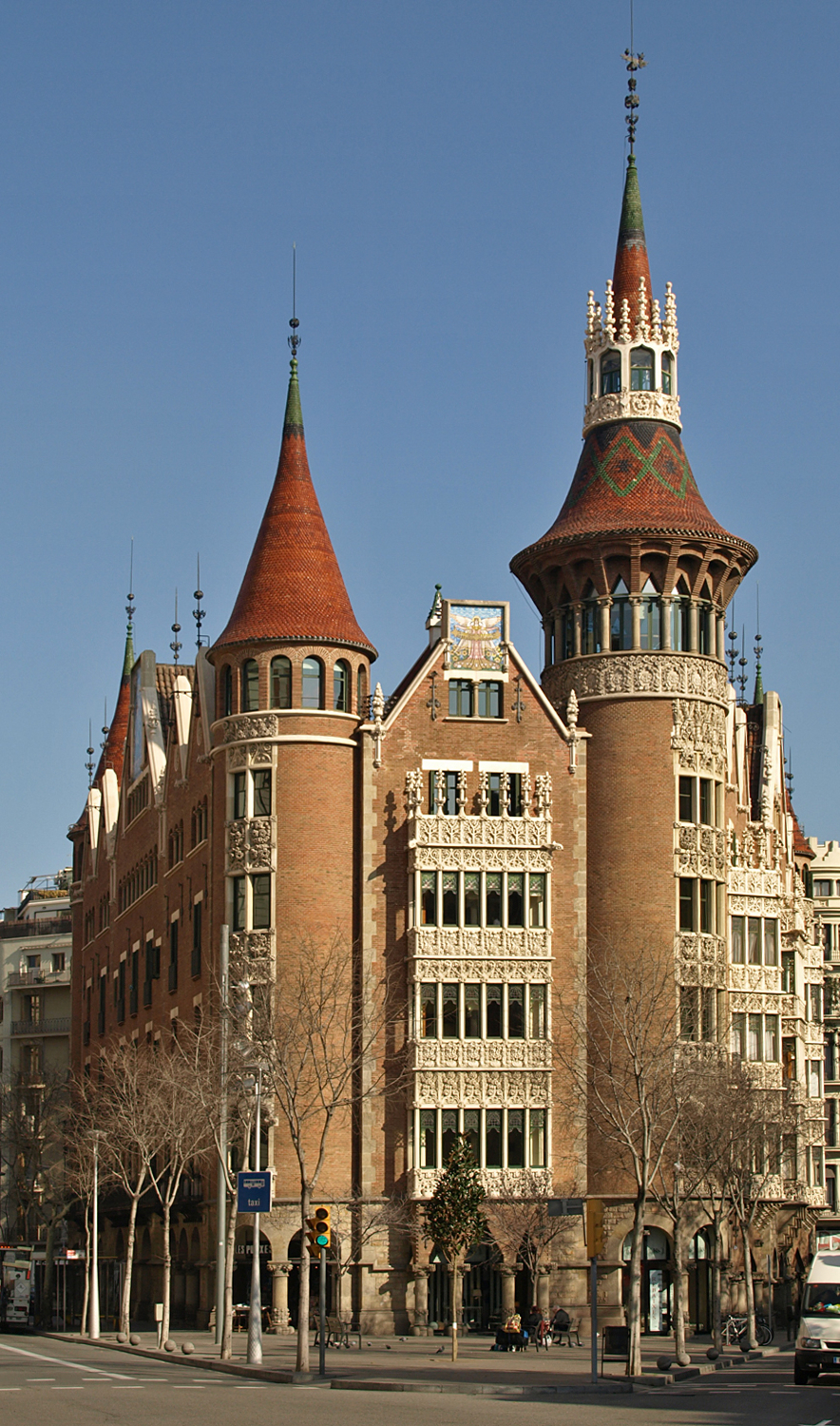
Puig i Cadafalch's spiky, castle-like mansion on the Diagonal — six houses fused into one, with four corner turrets and a witch's-hat roofline. Treat it as an exterior stop: the interior visit that ran from 2016 has not resumed, and much of the building is now offices, so there is no ticket to buy and nothing to queue for. Best seen from the Bruc corner, where three of the towers line up. A short walk from Palau Baró de Quadras on the same avenue, making a natural Puig i Cadafalch pairing.
- 11:00
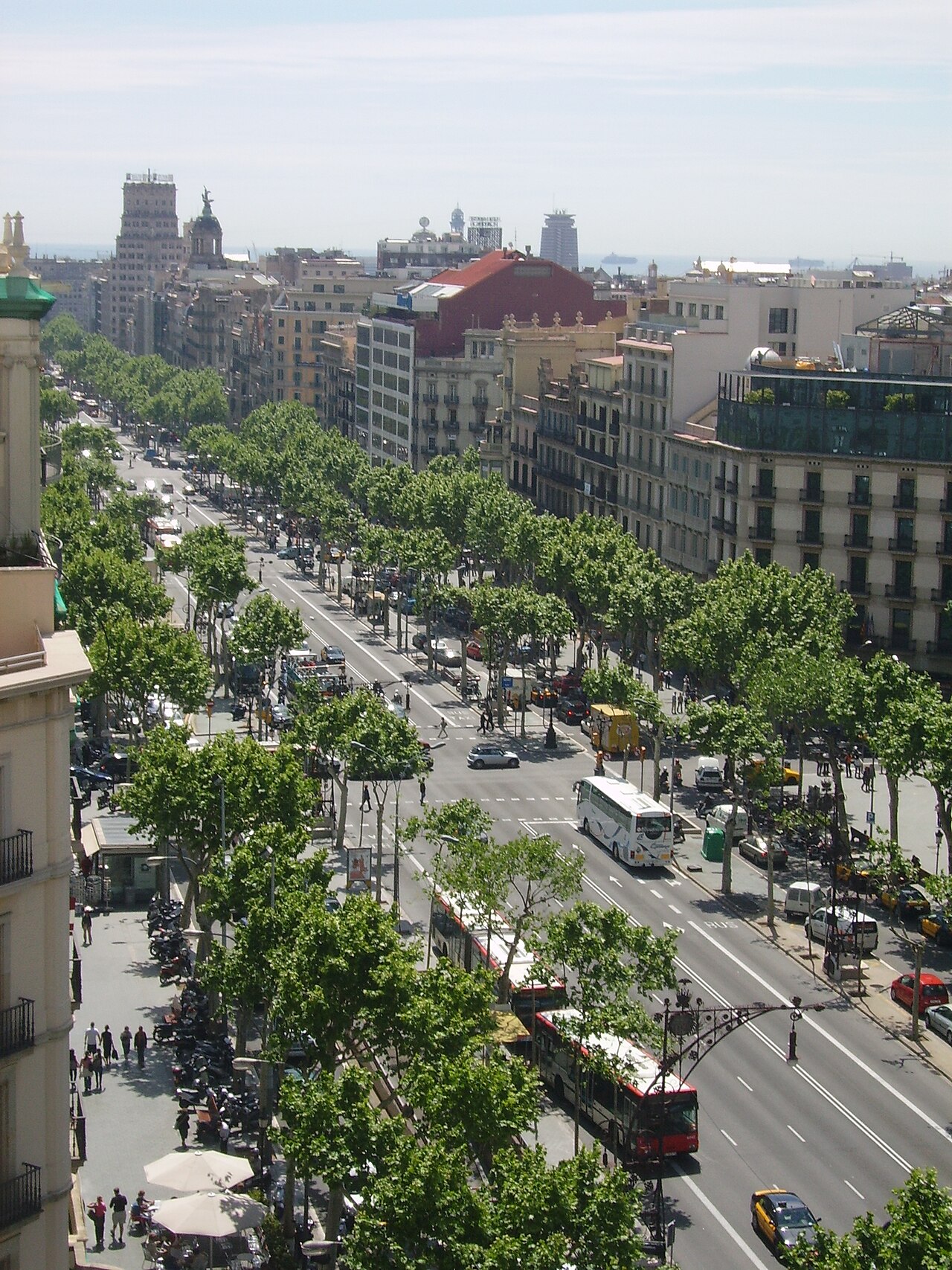
The Modernista boulevard running from Plaça de Catalunya up to Avinguda Diagonal — free to walk any time, and worth doing slowly rather than as a transit route. The 'Illa de la Discòrdia' block (Casa Batlló, Casa Amatller and a third house side by side) is its architectural centrepiece; the rest of the street is Gucci, Chanel and Spanish flagship stores (Loewe, Camper) plus the hexagonal Gaudí-designed paving tiles underfoot. Well-lit and busy after dark, but the Plaça de Catalunya end and the metro entrances there are a known pickpocket hotspot — keep bags zipped and to the front.
- 12:15Lunch Bar Mut
No printed menu — a chalkboard that changes with what the market had that morning, built around a 300-plus-reference wine list. Open non-stop 13:00-24:00 every single day, which is unusual for an upscale Barcelona kitchen (most close at least one day a week). A table for dinner is worth booking ahead, but walk-ins are welcome standing at the bar counter without a reservation. Carries a Repsol Guide 'Solete' mention. Typical spend runs around 50 euro per person with wine.
- 13:15
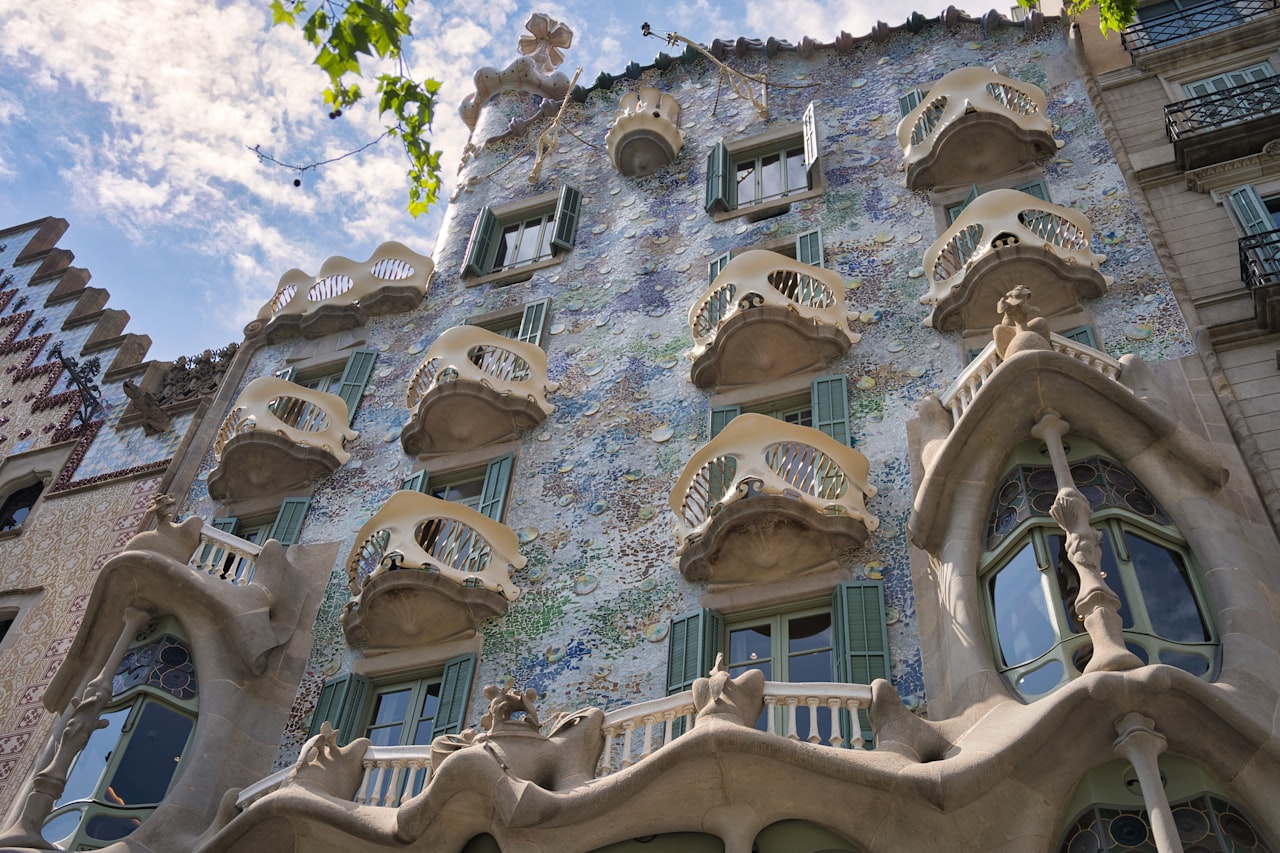
General Visit tickets start from 29 euro online, with a discount for buying ahead of the box office price — book in advance. The whole house is wheelchair accessible by lift, including the newer exhibition rooms and the roof terrace; if you use a wheelchair, the house itself suggests visiting between 16:00 and 19:00 to avoid the worst of the crowds. Open every day of the year, 09:00-22:30, with no weekly closure. Bone-shaped balconies and the dragon-back roof are the reason it's paired with Casa Amatller and a third house next door as the 'Illa de la Discòrdia' — worth walking the whole block even if you only ticket one house.
- 14:45Casa Amatller
Puig i Cadafalch's stepped Dutch-gabled house sits right next to Casa Batlló on the same block. The self-guided audio tour runs about 45-50 minutes and costs 21 euro online (22 euro at the box office) — book online for the small discount. Open daily 10:00-20:00 year-round except 25/26 December and 6 January. The house-museum states it is an accessible space for visitors with reduced mobility. Quieter than its more famous neighbour, so a good stop if Casa Batlló's queue looks long.
- 15:50
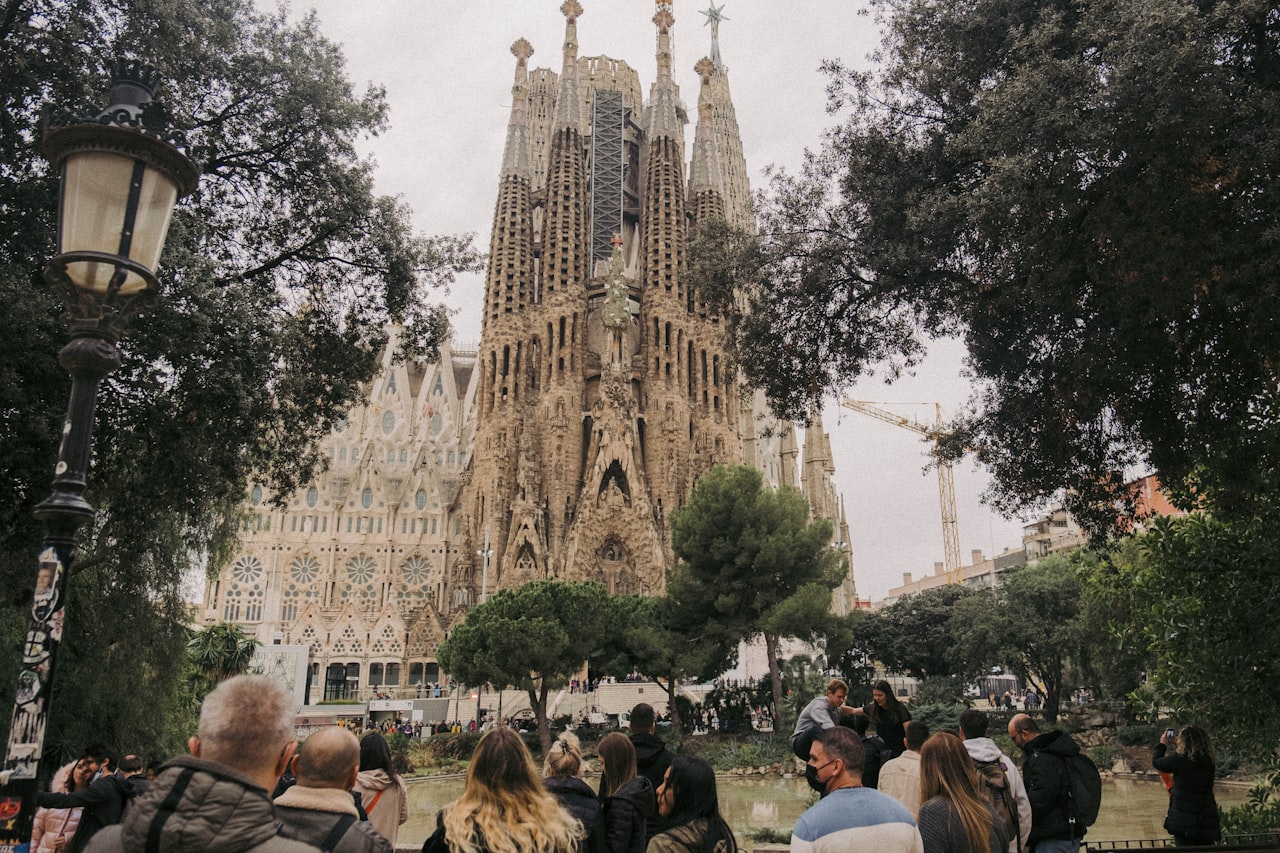
Book only through the official site — third-party resellers reprice and go stale fast. Four tiers as of 2026: basic entry 26 euro, basic plus a guided tour 30 euro, basic plus tower access 36 euro, and guided tour plus towers 40 euro (discounts for seniors, under-30s and students; under-11s and visitors with a disability go free). The towers are a separate, more limited ticket and the first thing to sell out — book as early as the roughly two-month advance window allows, especially for a summer visit. The whole basilica is wheelchair accessible except the towers themselves, which are lift/stairs only. Hours run later in summer (to 20:00 Mon-Fri, April-September) and shorter in winter (to 18:00, November-February) — the schedule above is the current summer one. Construction is still active and visibly ongoing; there's no weekly closure day, only shortened hours on 24/25/26 December and 1/6 January.
- 17:35Dinner Cervecería Catalana
One of the few Eixample tapas bars that stays open straight through the traditional 16:00-20:00 afternoon gap, serving continuously from breakfast to past midnight. No reservations — take a number or wait for the bar, and expect a real queue at the Spanish peak times (roughly 14:00 and 21:00). Patatas bravas, escalivada and other vegetarian tapas are on the menu, but it's overall a meat- and seafood-forward Catalan spread with no halal certification. Typical spend with a couple of drinks runs around 25-30 euro per person.


Day 3Barceloneta & Port Vell — a sights dayBarcelona, 8 stops
The fishermen's grid turned beach quarter — a working marina at one end, four kilometres of sand at the other, and paella eaten at plastic tables with the sea in view.
- 08:30Barceloneta Market (Mercat de la Barceloneta)
A working neighbourhood food market for the fishing quarter, built in 1887 to a design by Antoni Rovira i Trias and rebuilt in 2005–2007 with a modern iron-and-glass design — rooftop solar panels now supply about 40% of its power — while keeping the market's original ironwork. Expect fresh Mediterranean fish and seafood stalls, produce, and a few stand-up tapas bars tucked among them: a genuinely local market rather than a tourist-facing food hall like La Boqueria. Open Monday to Thursday 07:00–14:00, Friday 07:00–20:00, Saturday 07:00–15:00, closed Sundays — go in the morning, since most stalls shutter by early afternoon.
- 09:45Church of Sant Miquel del Port (Església de Sant Miquel del Port)
An austere 18th-century Baroque parish church — completed in 1755 and the first building finished in Barceloneta's original fishermen's grid — with a modern (1992) statue of the winged Archangel Michael over the door, flanked by carvings of Sant Elm and Santa Maria de Cervelló, patrons of the Catalan fishing fleet. It's a quiet, quick stop rather than a headline sight: the nave is open for casual visits daily from 09:45 to 13:00, with a few extra evening openings tied to specific services that vary through the week — if you want to see inside outside the morning window, check the parish's own schedule first.
- 10:20
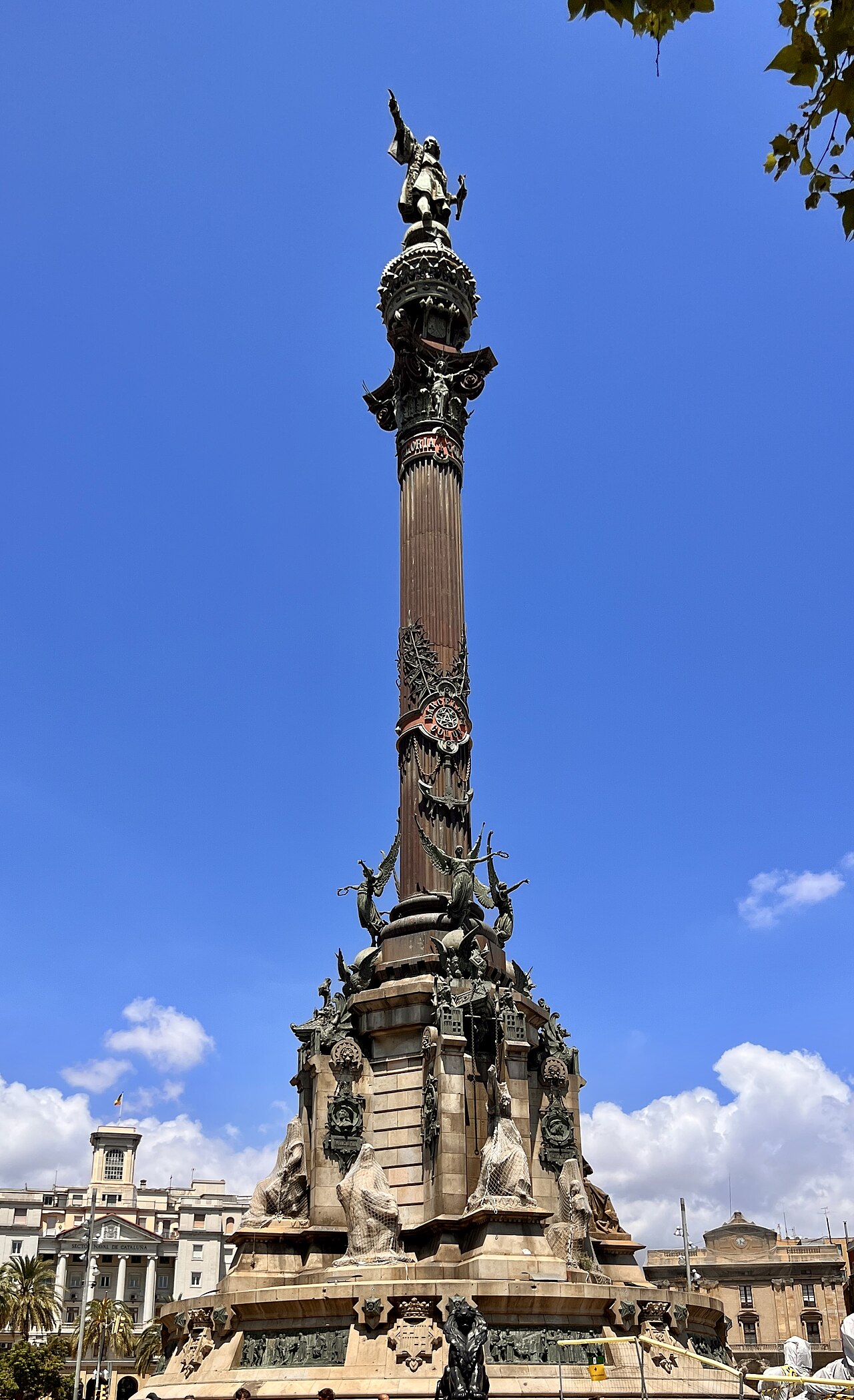
A 60-metre column raised for the 1888 World's Fair, marking the spot where locals believed Columbus first reported back to the Spanish monarchs. The elevator to the small enclosed viewing platform below the statue is genuinely running — recent visitors confirm it — but the fare has climbed sharply, now around €10 for what's a very short ride and view. Daily 08:30–20:30 (last entry 20:00), closed 1 January and 25 December. Worth knowing before you queue: the ticket office and lift access sit down a short flight of stairs below street level, and the lift car itself is narrow (fits about four people plus the attendant) — wheelchair users should call ahead, since a special narrow wheelchair is needed and staff assistance has to be arranged in advance rather than assumed on arrival. This is a 15-minute add-on at the port end of a Barceloneta walk, not a headline stop — the view is decent but Montjuïc's viewpoints are better value for the same effort.
- 11:05Port Cable Car (Transbordador Aeri del Port)
A dramatic aerial cable car crossing Barcelona's harbour from the Torre de Sant Sebastià in Barceloneta straight up to Montjuïc's Miramar viewpoint, with sweeping views over the port and city along the way. The mid-route Torre Jaume I tower is currently closed, so you can only board and disembark at the two end stations. A one-way ticket is €12.50, round trip €20, buyable online or at the station windows. Queues build fast at busy times — reviewers commonly report 15–20 minute waits with nowhere to sit, so go early or late in the day. Hours are seasonal: the year-round core is about 11:00–17:30, extending to roughly 10:30–20:00 at the height of summer — the times shown here are the safe winter window, so check the operator's current season before counting on a late ride.
- 12:05Lunch La Cova Fumada
No sign outside, a handful of stools, and the birthplace of the bomba — Barceloneta's fried potato-and-meat croquette, served here since 1944 with its original spicy sauces. This is the genuine local pick in a neighbourhood full of tourist-menu seafood restaurants: grilled sardines, fried squid, mussels and razor clams cooked to order, nothing precious about the room. Cash only, no cards at all, and no reservations — put your name down and wait, or come right at opening (09:00) to beat the crush; a 30–45 minute wait is normal by midday. Kitchen runs out of the day's fresh ingredients and closes when it does, so don't plan a late lunch here. Closed Sundays.
- 13:05L'Aquàrium de Barcelona
An 80-metre walk-through shark tunnel and a full Mediterranean-to-tropical tank sequence at Port Vell, a 2-minute walk from Barceloneta proper. Be honest with yourself about the price before booking: general admission runs around €27–30, on the high end for what's a mid-sized aquarium by international standards, and it's squarely a tourist-volume attraction rather than a hidden gem — go for it if travelling with kids, who reliably love the shark tunnel, rather than expecting a world-class marine institution. Open daily from 10:00, with closing time sliding from around 19:30 on winter weekdays out to 21:00–21:30 in peak summer (June–August) — check the exact closing time for your date on the official site. Booking online in advance meaningfully cuts the entry queue, which builds fast around midday in summer.
- 14:50
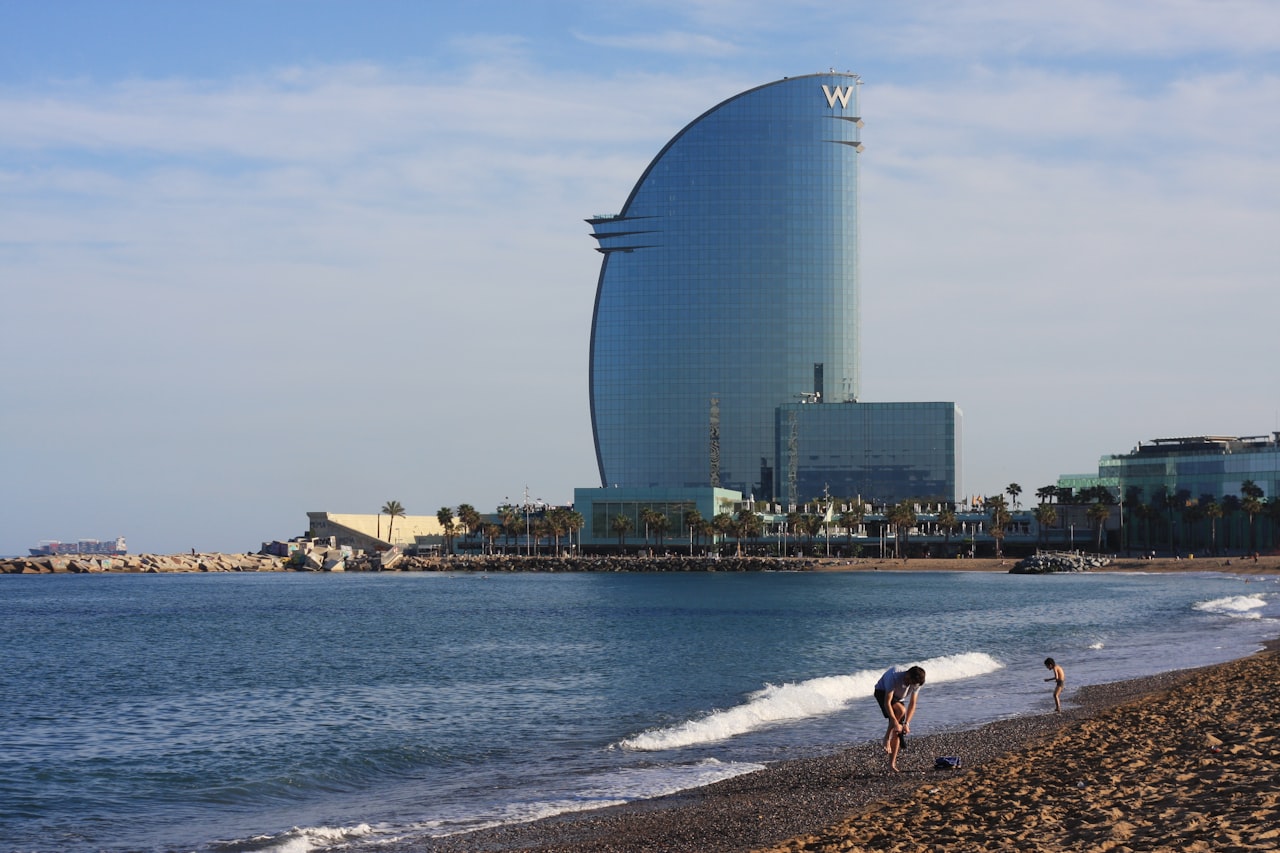
The city's original beach, backed by the old fishermen's grid rather than hotel towers — a straightforward strip of sand at the metro end of the line, lifeguard-patrolled roughly June through September. Bag-watching matters here specifically: theft from towels while people are in the water is the single most common complaint about this beach, more so than most others in the city, so keep valuables at your accommodation or take turns swimming. Barcelona's city council runs an accessible-beach programme starting mid-April — wooden walkways down to the waterline, adapted changing rooms, and free amphibious wheelchairs available seasonally by request. The boardwalk chiringuitos (beach bars) are fine for a drink but priced for the view; better food is a short walk inland in the old town grid.
- 17:30Dinner Jai-Ca
Family-run since 1955, a couple of streets back from the beach on a quiet residential corner rather than the touristy strip nearer the sand — the fried baby squid (chipirones), razor clams, and the bomba all hold up well against pricier neighbours. Vermouth on tap alongside cava and the seafood tapas is very much part of the point, especially for a late-morning or early-evening sit rather than a full sit-down dinner. Loud, crowded and a little brusque at the bar during peak hours — that's the character, not a complaint. Open every day, 09:00 to 23:30, no midday break.


Day 4Paseo del Arte & Retiro — a sights dayMadrid, 4 stops
Three of the world's great painting collections on one boulevard — Velázquez and Bosch in the Prado, Guernica up the road, a private empire's worth in between — with a royal park behind them for the recovery.
- 09:40Check out of your stay
- 10:00Train
- 15:52Check in to your stay
- 16:22
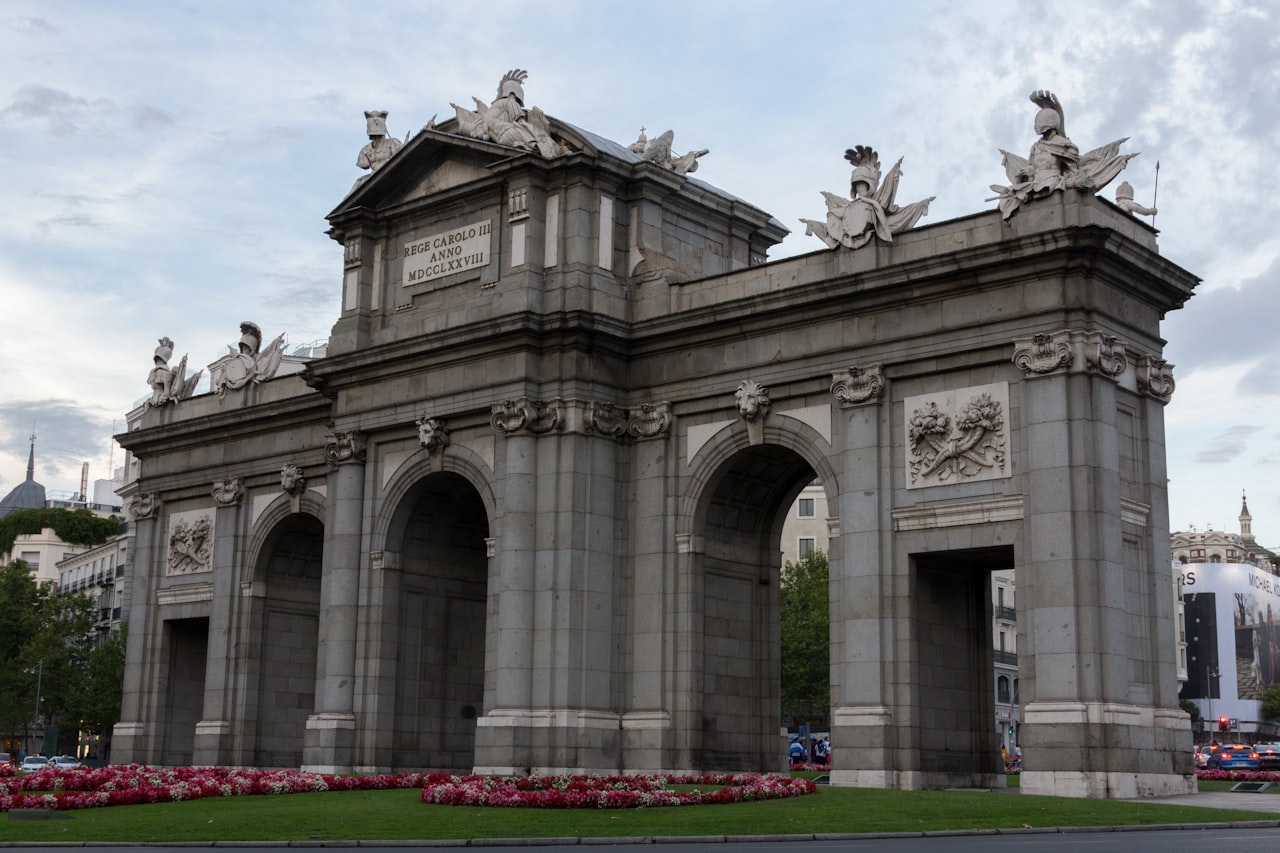
A neoclassical granite gate built for Charles III in 1778, one of the last survivors of the five royal gates that once marked the roads into the city. It stands on the traffic circle at Plaza de la Independencia, right at the edge of Retiro park nearest the museums — a natural photo stop on the walk between the Prado and the park, and lit up after dark. There's no ticket or interior to visit, just the monument itself in the middle of the roundabout, so budget only a few minutes here.
- 16:52Thyssen-Bornemisza Museum
The third leg of the Golden Triangle — a private collection spanning Old Masters through 20th-century avant-garde in a single walk-through, complementing the Prado's classical focus and the Reina Sofía's modern one. It's the only one of the three open on Mondays, and free that day from 12:00 to 16:00 (a Mastercard-sponsored slot). Current summer hours (July-August) run Tuesday-Friday 10:00-21:00 and Saturday until 23:00; hours shift shorter, closing at 19:00 Tuesday-Friday, outside the summer season. General admission is €14. The museum holds an AENOR universal-accessibility certification with adapted routes and lifts throughout the building.
- 18:37Dinner La Platería
A quieter, less-touristy tapas bar in the Barrio de las Letras, a few minutes' walk from the Prado's Jerónimos entrance. Standing bar up front for a quick tapa and a vermouth, small dining room behind for sitting down to classic Madrid sharing plates. A good lunch stop between museums that skips the queues of the bigger-name places closer to Sol.
- 19:52Retiro Park
Madrid's former royal park, opened to the public in 1868 — free to enter, any day, any time within opening hours. Rent a rowboat on the Estanque Grande (the big lake), or walk to the glass-and-iron Palacio de Cristal a few minutes further in. Current (April-September) hours run 06:00 to midnight; the park closes earlier, at 22:00, from October to March, and gates do lock for the night, so don't linger past closing. Dog-exercise areas open separately from 07:30. Weekends bring buskers, tarot readers and a puppet theatre near the lake — lively rather than quiet.

Day 5Sol & Plaza Mayor & nearby — a sights dayMadrid, 12 stops
The official centre of Spain, kilometre zero underfoot — an arcaded seventeenth-century square, a covered market turned tapas hall, and the pedestrian shopping streets that connect them.
- 08:00Breakfast Toma Café
One of the cafés that started Madrid's third-wave coffee scene, tucked on a quiet Malasaña side street — house-roasted beans, a short pastry case, and a stripped-back counter with a few stools rather than a full dining room. Oat and other plant-based milks are available for the espresso and filter drinks. Open daily, weekdays from 8am and weekends from 10am, both until 8pm. It's small, so weekend mornings get crowded fast.
- 08:30
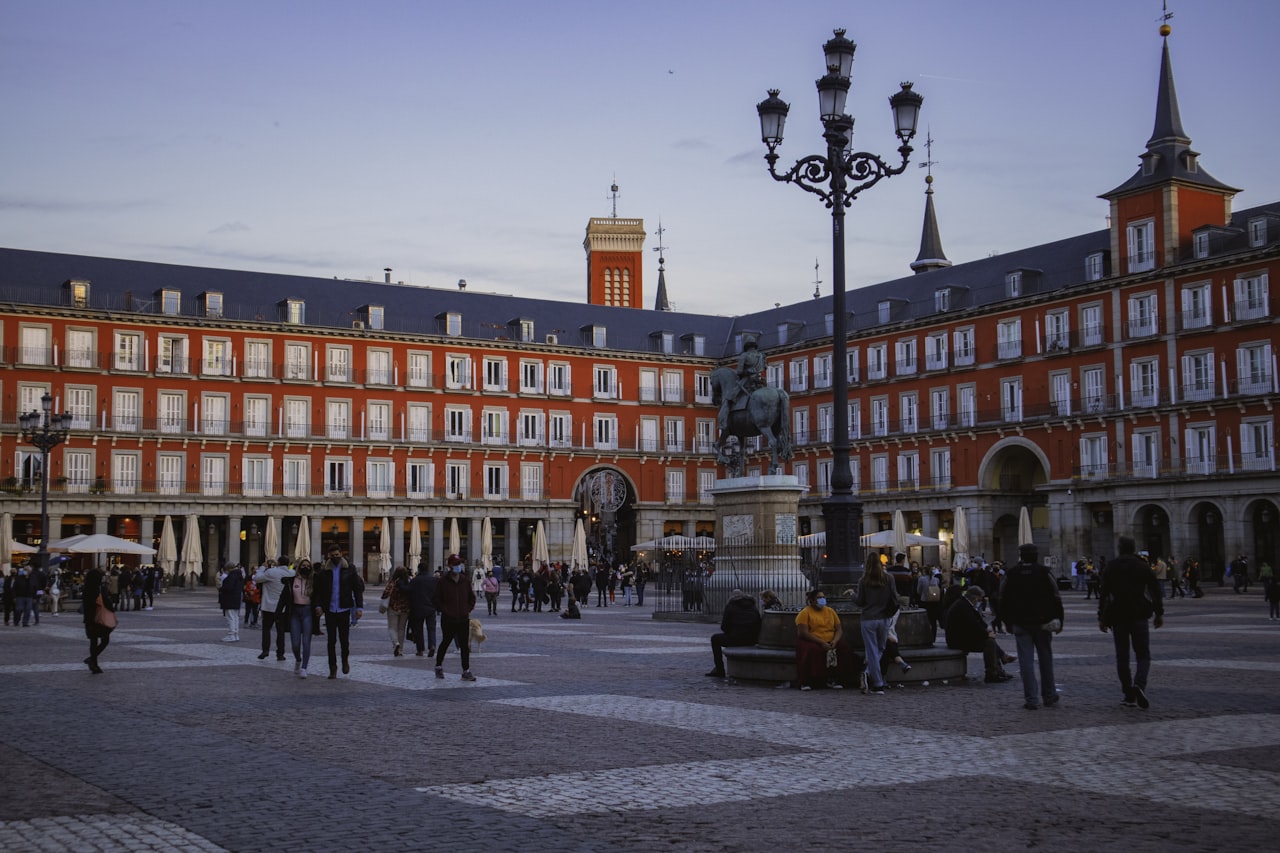
A closed rectangular square built in 1619, arcaded on all four sides with nine gated entrances. Look up at the Casa de la Panadería, the frescoed building on the north side — the paintings are 20th-century but the square once hosted bullfights, executions and royal proclamations underneath them. A statue of Philip III on horseback sits at the centre. The terrace restaurants ringing the square are priced for tourists and rarely the best meal in the neighbourhood — walk two minutes into the surrounding streets instead. In December it fills with a Christmas market; year-round it's open and free to walk through at any hour.
- 09:15
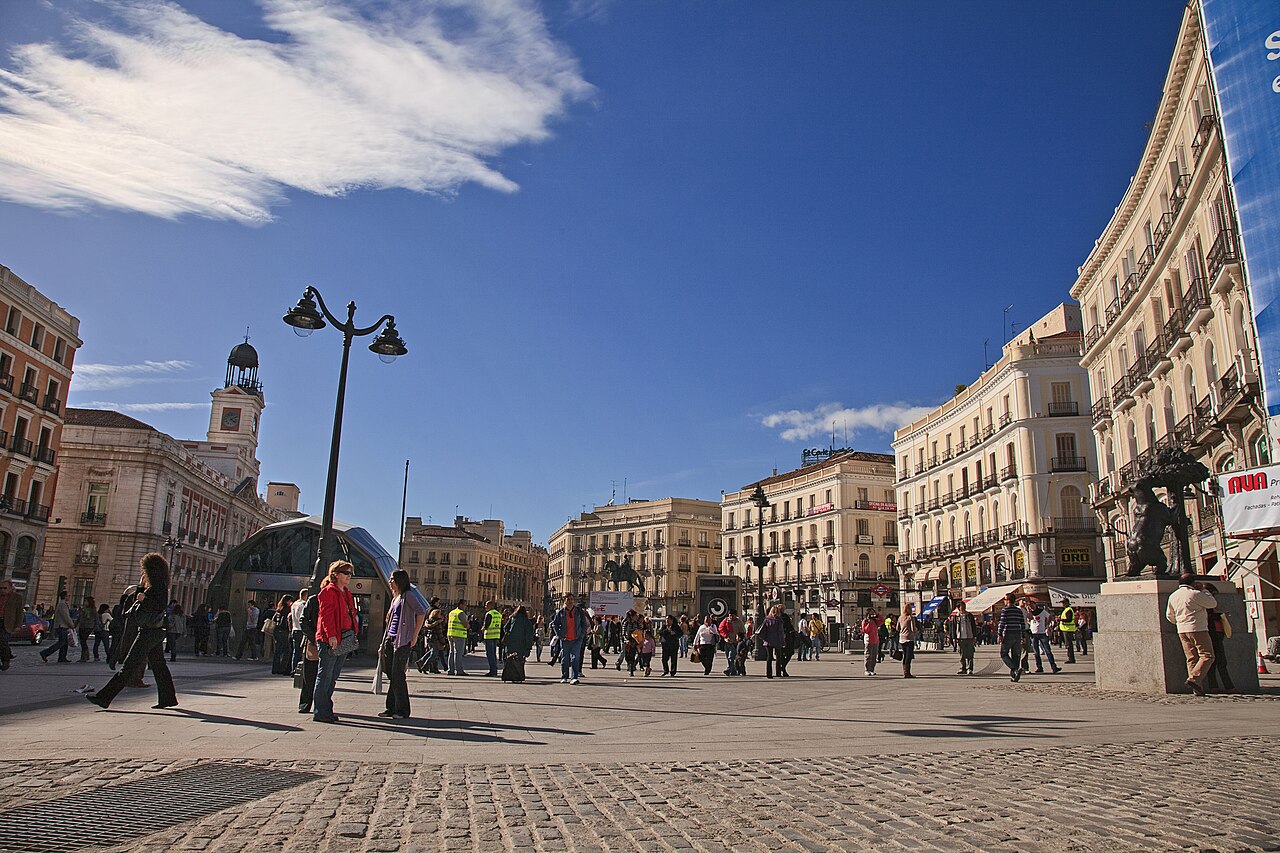
Spain's official kilometre zero — the marker in the pavement outside the Real Casa de Correos (now the regional government building) that every national road distance is measured from. Look up at the clock tower for the bells that ring in the New Year, and find the bronze bear reaching into a madroño tree, Madrid's civic symbol, near the eastern corner. It's the busiest single square in the city at any hour, always crowded with street performers and vendors, so keep bags zipped and to the front — this is the most-cited pickpocket spot in central Madrid. Every metro line in the centre converges underneath it, making it the natural starting point for a first day.
- 09:50San Antón Market
A three-storey food market a block from Chueca's terraces — ground-floor stalls for fish, produce, and jamón, a mid-level food court, and a rooftop terrace-restaurant with skyline views. Stalls run Monday to Saturday roughly 9:30am to 9:30pm and are closed Sundays, while the gastro-bars and rooftop restaurant stay open every day well past midnight. Come earlier in the day for the market stalls themselves; by evening it's mostly the bars and restaurant still going.
- 11:05Church of San Antón
A working parish church that keeps its doors open day and night — a long-standing policy meant for anyone who needs shelter or a quiet moment, and travellers are welcome to step in outside Mass. It's also the church where Madrid brings dogs, cats, and other pets each January for the traditional blessing of San Antón, and a side window serves breakfast each morning to anyone who needs it. Avoid photography during Mass out of respect.
- 12:00Lunch Restaurante Botín
Trading since 1725 and Guinness-listed as the world's oldest restaurant, built over a 16th-century wine cellar just off Plaza Mayor. The signature dishes are whole roast suckling pig and roast lamb cooked in a wood-fired oven you can see from the entrance — the menu is meat-forward, with little on offer for vegetarian diners. Reservations are strongly recommended; walk-ins face real waits given how much of the room is pre-booked. Kitchen runs continuously from 13:00 to 23:30 every day, unlike most traditional Madrid restaurants that close mid-afternoon.
- 13:00Madrid History Museum
Free municipal museum behind a striking Pedro de Ribera stone doorway — worth walking past even if you skip the exhibits. Inside, models and paintings trace Madrid's growth from a minor Habsburg outpost into a modern capital. Step-free access covers the building and the front desk has a magnetic induction loop for hearing aids. Closed Mondays and on 1/6 January, 1 May, and 24/25/31 December; these are the summer hours (mid-June to mid-September) — outside that window the museum stays open an hour later. Rooms clear ten minutes before closing.
- 14:15Magpie Vintage
One of several secondhand shops clustered on Calle de Velarde, Malasaña's vintage-shopping strip a couple of minutes from Tribunal metro — racks of clothing and accessories spanning the 1950s through 1980s. Open Monday to Saturday, roughly 11:30am to 9pm, closed Sundays. Mornings and weekdays are noticeably calmer than weekend afternoons.
- 15:00
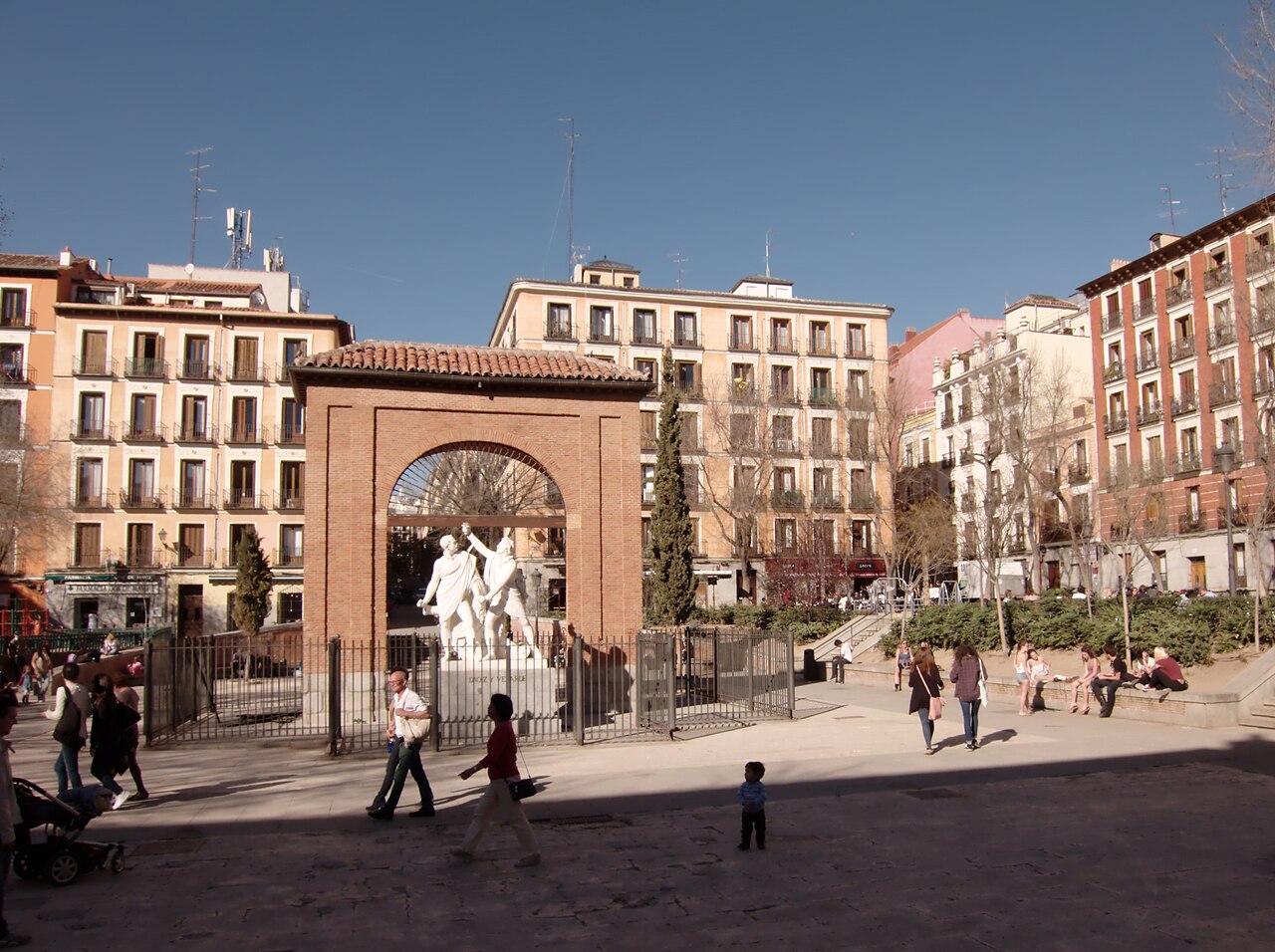
Malasaña's living room — a wide, tree-lined square named for Madrid's 1808 uprising against Napoleon's troops, with the surviving gate of the old artillery barracks standing at its centre. Ringed by terraces that fill up from midday through the small hours, it's less a sight to tick off than a place to sit down, order a drink, and watch the neighbourhood go by. Always open, no ticket, no fixed hours.
- 15:50Mercado de San Miguel
An iron-and-glass 1916 market hall rebuilt in 2009 into a stand-and-graze tapas hall — small plates from a few euros to €10+ per dish at dozens of stalls (oysters, vermouth, jamón, croquetas, pastries). It's genuinely one of the pricier ways to eat in the neighbourhood, especially at the stalls nearest the main door, so treat it as a grazing stop rather than a full meal if budget matters. Open until midnight most nights and until 1am Friday and Saturday. It gets very crowded from early evening onward — arriving right at opening (10:00) or on a weekday afternoon is the way to actually get a seat at one of the standing counters.
- 17:20Royal Monastery of the Descalzas Reales
A working convent of cloistered nuns founded in 1559 in a former royal palace, one block from Sol but visited by a fraction of the crowd. Every visit is a guided tour of about an hour (English-language tours run daily at 12:00; more Spanish-language departures through the day) through galleries the noblewomen who took the veil here filled with Titian, Rubens and Brueghel over four centuries, plus a grand staircase and choir. Adult tickets cost €9. There is currently no accessible route for wheelchair users — the building's original stairs and floor levels have not been adapted. Closed Mondays.
- 18:35Dinner Casa Labra
A standing-room-only tasca open since 1860, a minute from Puerta del Sol. Order at the marble bar — the tajada de bacalao (fried cod) and croquetas de bacalao are the reason to come, priced by the piece (roughly €1.70-2.30 each), and a full round with a beer easily comes to under €10 a head. There are no tables in the historic front room; find a ledge to lean on or take it standing. A small plaque marks where the Spanish Socialist Party (PSOE) was founded here in 1879. Open every day of the year except January 1st.


Day 6Palacio & Ópera & nearby — a sights dayMadrid, 8 stops
Bourbon Madrid on the western edge of the plateau — the largest royal palace in western Europe by floor area, a cathedral that took a century to agree on, and an Egyptian temple rebuilt above the sunset.
- 07:40Check out of your stay
- 09:00Sabatini Gardens
A formal, symmetrical garden along the north side of the Royal Palace, laid out in the 1930s on the site of the old royal stables. Free entry, open daily 09:00-21:00 October-April and 09:00-22:00 May-September. Benches and clipped hedges make it a good sit-down break with a postcard view of the palace facade; it's much quieter than the Plaza de Oriente side.
- 10:00
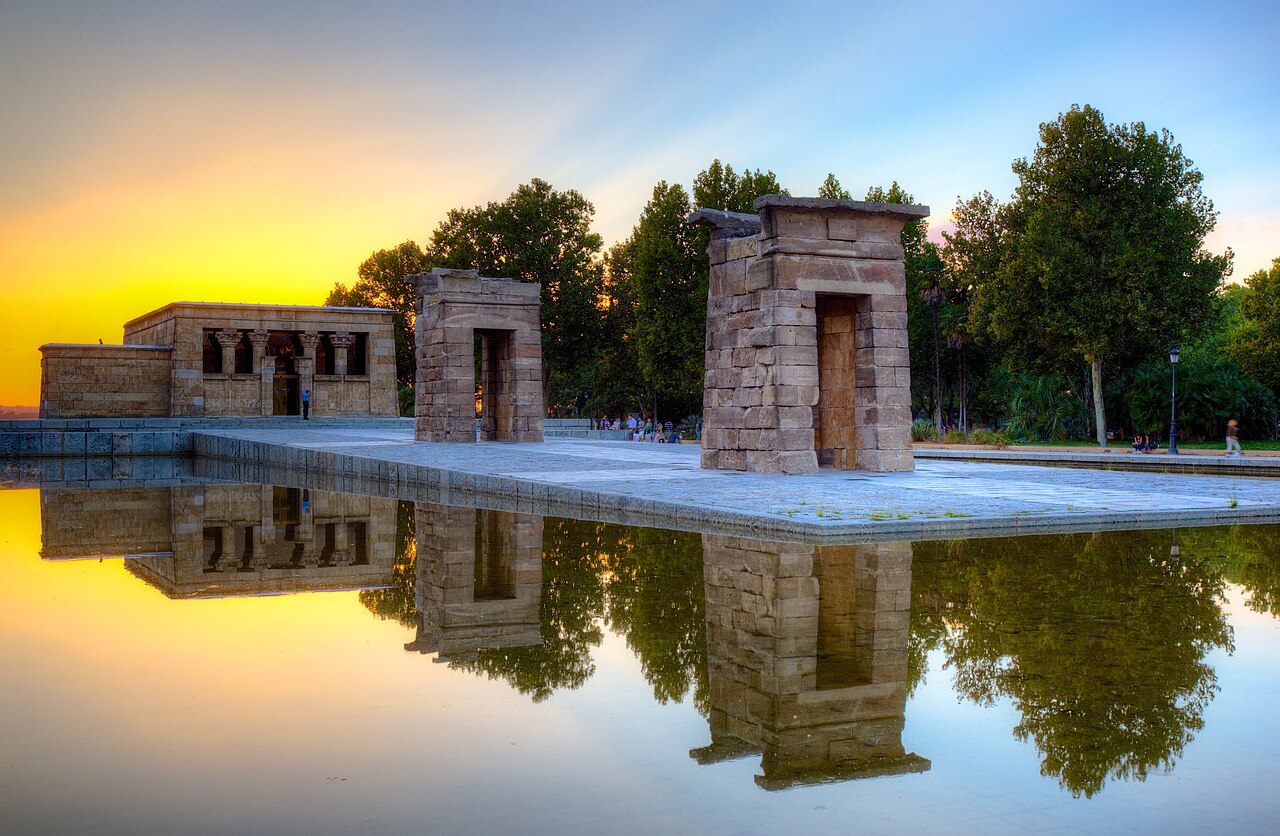
A genuine 2nd-century BC Egyptian temple, gifted to Spain in 1968 and rebuilt on this hill purely for its sunset views over the city. Entry is free, open Tuesday to Sunday 10:00-20:00 (last entry 30 minutes before close), closed every Monday including bank holidays, plus 1 and 6 January, 1 May, and 24, 25 and 31 December. Interior capacity is limited, so book the free timed slot online in advance rather than risk being turned away at busy sunset hours. Outside, the surrounding park and reflecting pools are open access and are where most people actually watch the sunset - you don't need the interior ticket for that.
- 10:45
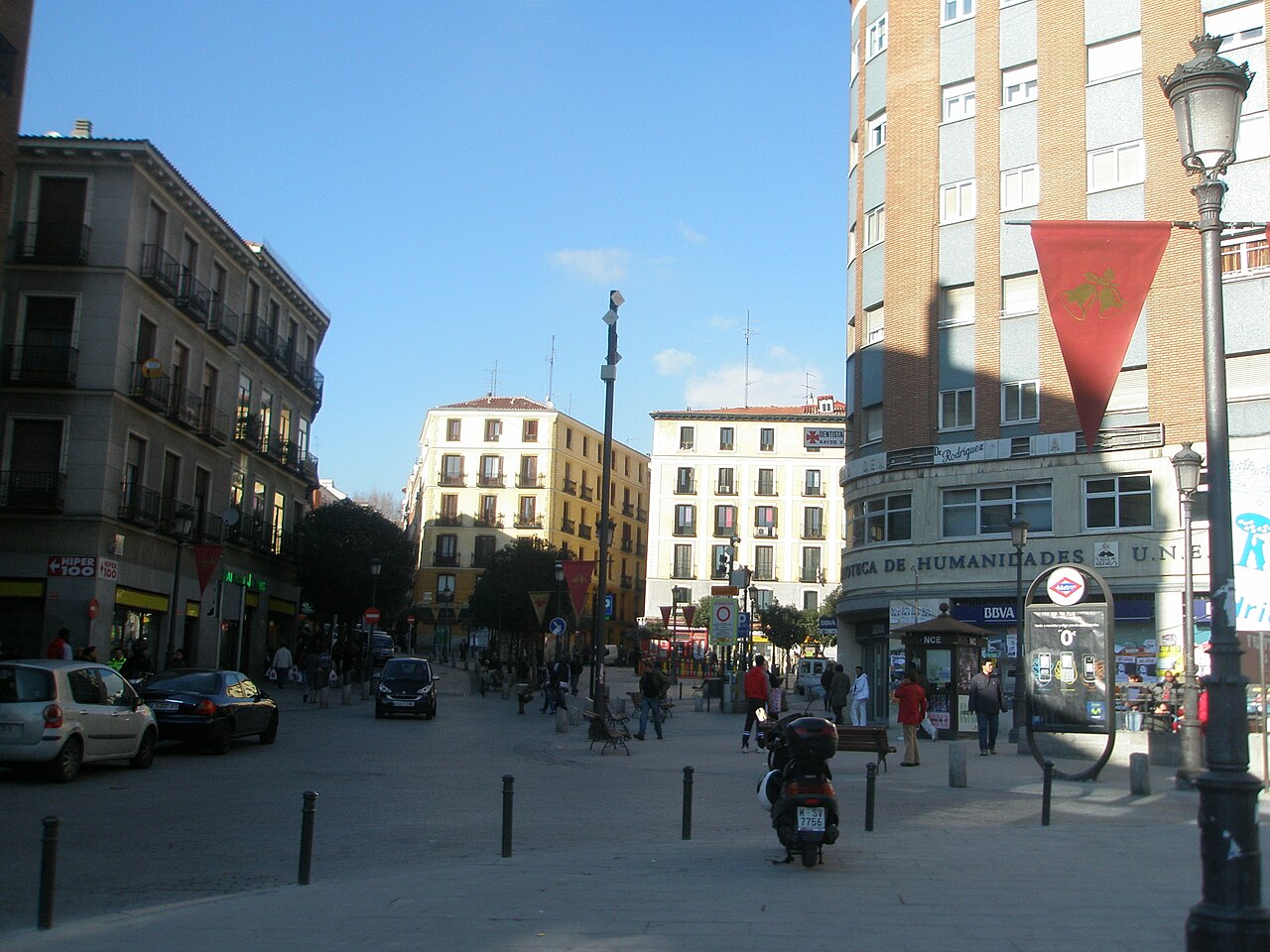
The sloping, triangular square that gives the neighbourhood its name and its social centre - Bangladeshi, West African, Chinese and Spanish-run cafés and shops ring the edges, and the benches fill with a genuine cross-section of the barrio rather than tourists. Always open, nothing to buy a ticket for; it's simply the best single spot to feel how mixed these streets are before wandering the calles running off it.
- 11:25Almudena Cathedral
Entry to the cathedral nave is free (a €1 donation is suggested), open daily 10:00-20:30 (until 21:00 in July-August). The small museum, reached from Plaza de la Almudena, keeps shorter hours - weekday mornings only, roughly 10:00-14:30, closed Sundays and feast days - and charges around €7 (€5 reduced). The crypt underneath, entered from Calle Mayor, is separately free with a €1 donation suggested and runs 10:00-14:00 and 16:30-20:00 daily; a guided crypt tour costs around €4. Whatever you visit, expect the doors to close during Mass and other services, so check the schedule board before queueing.
- 12:10Lunch Taberna Antonio Sánchez
Standing since before 1787 and decorated like a bullfighting museum, this is Madrid's vermouth culture at its most unreconstructed - no music, no screens, just the zinc counter and small plates (rabo de toro, callos a la madrileña) built to slow you down between drinks. Open daily from midday, with the kitchen running roughly 13:00-17:00 and 20:00-midnight (Sundays afternoon only, closing around 17:00). Cards are accepted. It's a counter to lean at solo as easily as a table to share.
- 13:10
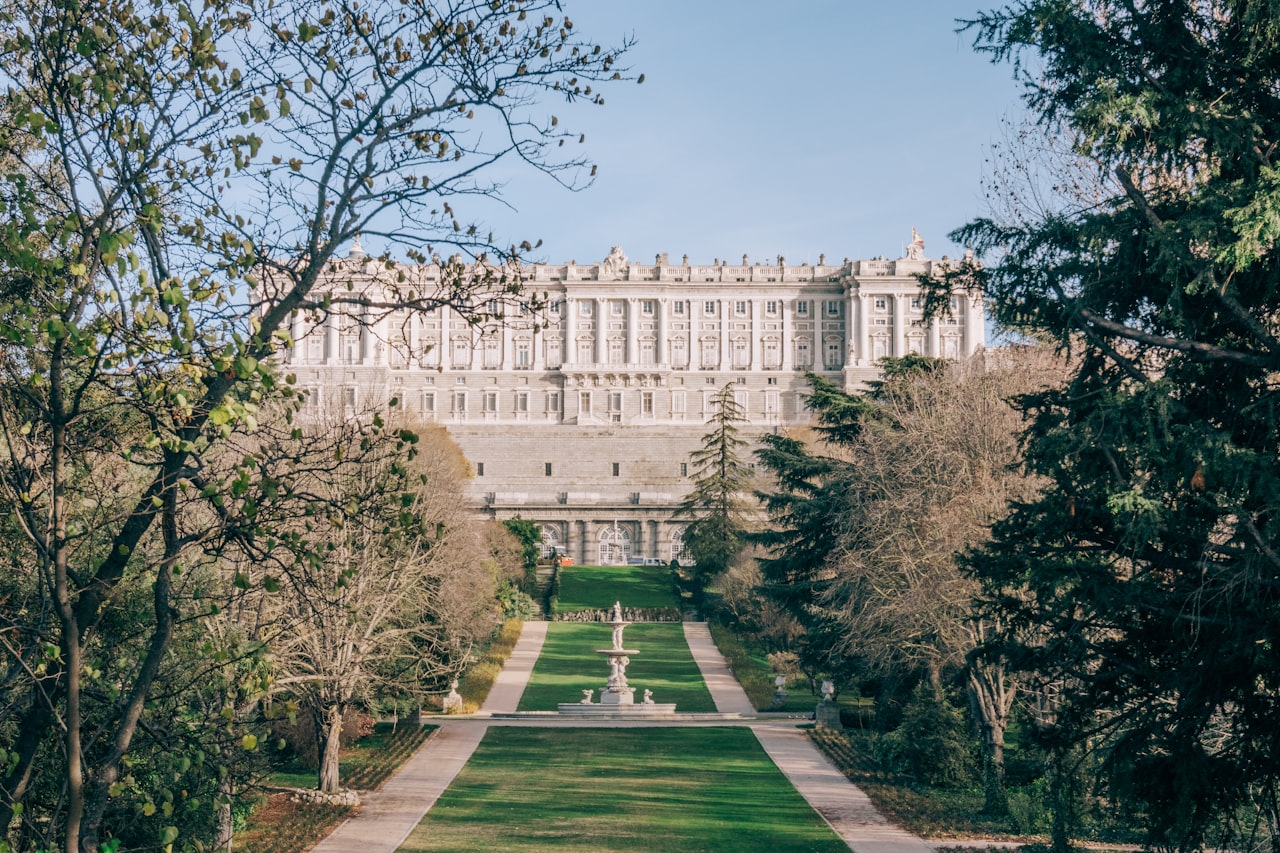
Europe's largest royal palace by floor area, though the state rooms open to visitors cover only a fraction of it. Self-guided entry is €18; a guided tour in Spanish or English runs €26. Monday to Thursday 17:00-19:00 in summer (16:00-18:00 in winter, when the whole palace also closes an hour earlier across the board), EU citizens and Ibero-American nationals get in free on production of a passport or ID - the catch is it's ticket-office-only, no online booking, and unguided visits only. Beyond the scheduled closures, the palace can shut with little notice for state ceremonies, so have a backup plan for that day. Wheelchairs are available on-site and the route is adapted for reduced mobility; ask at the ticket office. Photography without flash is fine, but leave the tripod and selfie stick behind.
- 14:55Campo del Moro Gardens
The palace's other, wilder garden - an English-style landscape below the west facade with fountains, peacocks and the long lawn used for the classic postcard photo of the palace. Free entry, open daily except 25 December and 1 January; enter from Cuesta de la Vega (behind the cathedral), Cuesta de San Vicente, or the Paseo de la Virgen del Puerto side near Príncipe Pío. It's flatter and less busy than Sabatini, and a better spot for a picnic bench with a view than a quick walk-through. Free to enter, open daily from 10:00, and it stays open until 20:00 between April and September rather than the 18:00 winter close.
- 17:30Dinner Casa Ciriaco
A Calle Mayor institution for well over a century, a couple of minutes from the palace, known for cocido madrileño (traditionally served Tuesdays), gallina en pepitoria and callos a la madrileña. Open Wednesday to Saturday 10:00-23:00, Sunday to Tuesday 10:00-16:00 only - plan around that Sun-Tue lunch-only window rather than counting on dinner those days. Cards are accepted. The dining rooms can host up to 120 for groups, so it's not a quiet corner-table kind of place at busy hours.


