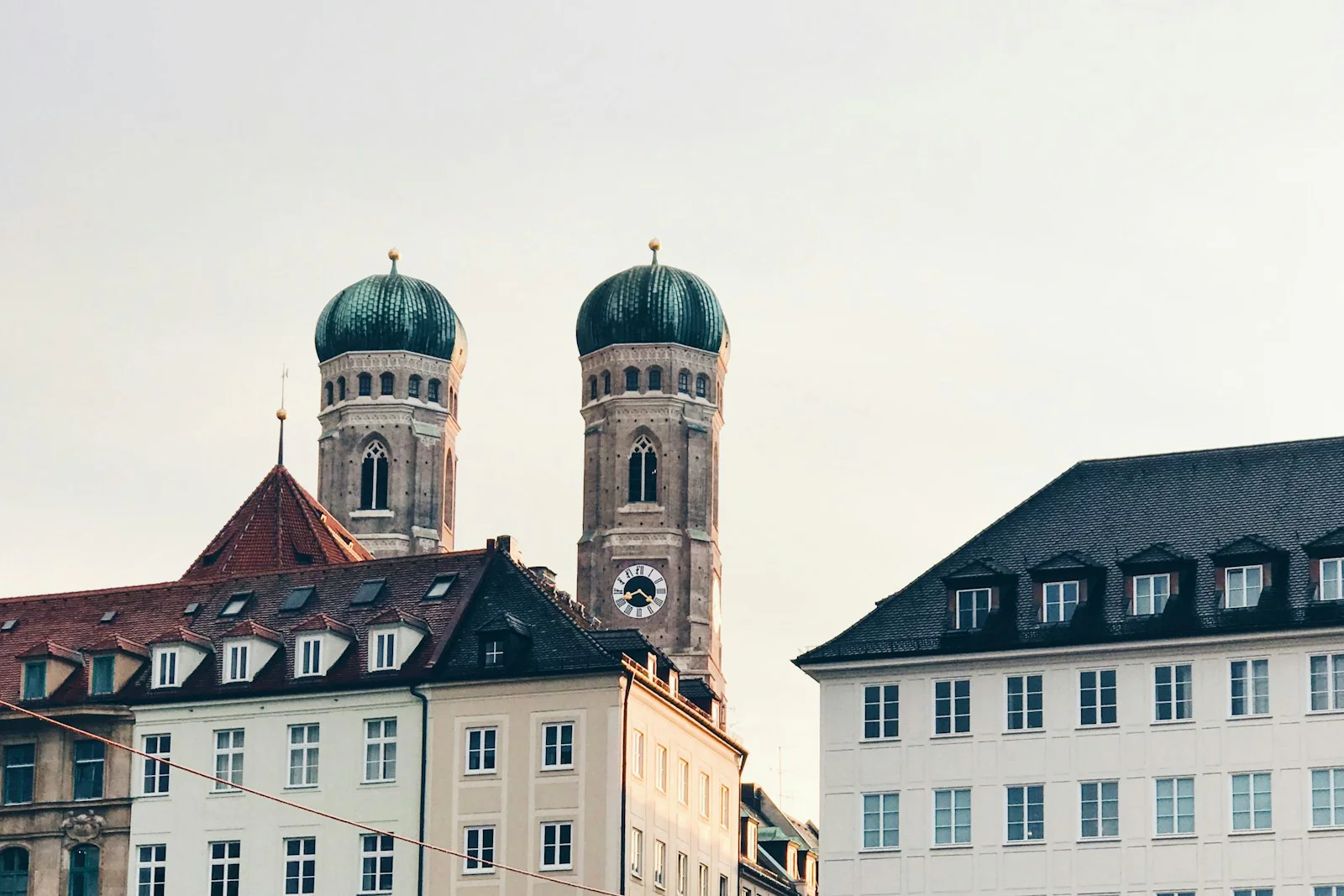
MunichMünchen
Bavaria's capital pairs a compact, walkable old town — Marienplatz, the Frauenkirche's twin domes, a produce market that's been open since the 1800s — with one of Europe's densest museum clusters and a beer-garden culture that spills out of every taproom the moment the sun is out. Nearly everything that matters sits inside a walkable core strung together by U-Bahn and tram, with the Englischer Garten's river surfers and Nymphenburg's palace park just a short ride further out. A short train ride opens onto the Alps, Salzburg, Neuschwanstein and Dachau.
Beer culture Museums Architecture Walkable Alpine gateway
Verified highlights
Deutsches MuseumMuseum
Step-free
One of the world's great science and technology museums, spread across its own island in the Isar — genuinely a half-day visit at minimum, more if you let kids loose on the hands-on exhibits (working model railway, planetarium, mining gallery).
Alter SimplFood
Vegetarian options Vegan options Cards OK Step-free
A literary Kneipe on Türkenstraße since 1903, named after the satirical magazine Simplicissimus and once a haunt of Schwabing's bohemian crowd.
MarienplatzLandmark
Step-free
The Rathaus-Glockenspiel on the New Town Hall's tower chimes at 11:00 and 12:00 daily, plus 17:00 from March to October — each performance runs about 12 minutes and re-enacts a 16th-century royal wedding joust above a coopers' dance said to have coaxed Munich back onto the streets after the plague.
Seehaus im Englischen GartenFood
Vegetarian options Cards OK Step-free
A proper sit-down restaurant right on Kleinhesseloher See, known for fish and a Wiener Schnitzel that keeps regulars coming back; the kitchen runs Monday-Saturday 12:00-00:00 and Sunday until 22:00.
ViktualienmarktMarket
Step-free
Munich's produce market has run on this square since the early 1800s.
Deutsche EicheFood
Vegetarian options Vegan options Step-free
A Munich institution since the 19th century (the building's neoclassical facade dates to 1864) and one of the city's oldest meeting points for the LGBTQ+ community — part hotel, part traditional Bavarian restaurant, part sauna, with a rooftop terrace overlooking the old town's spires.
Alte PinakothekMuseum
Step-free
One of the world's great Old Masters collections — Dürer, Rubens, Rembrandt — closed Mondays.
Nürnberger Bratwurst Glöckl am DomFood
Vegetarian options Cards OK
A real Bavarian grill house, not a tourist-menu copy — Rostbratwürstl grilled over an open beechwood fire, right behind the Frauenkirche.
Neighbourhoods
Altstadt & Marienplatz
Munich's pedestrian core radiates out from Marienplatz, where the Rathaus-Glockenspiel draws a crowd at 11 and noon and the twin onion domes of the Frauenkirche anchor every skyline photo. Duck into the Viktualienmarkt for a Weißwurst breakfast among stallholders who've worked the same corner for decades, wander the Residenz's state rooms for a dose of Wittelsbach excess, then let the evening land at a long communal table in the Hofbräuhaus — touristy, loud, and still somehow the room everyone ends up in at least once. Shopping runs Kaufingerstraße and Neuhauser Straße, but step one street back from the marquee route and prices — and crowds — drop fast.
Kunstareal & the Pinakotheken
A few square blocks north of the old town hold one of Europe's densest museum clusters: the Alte Pinakothek's Old Masters, the Pinakothek der Moderne's design and contemporary wings, the Glyptothek's Greek marble on Königsplatz, and the Lenbachhaus's Blue Rider canvases, all walkable from each other in minutes. The Neue Pinakothek next door is shut for a long renovation, so budget the saved time for a proper sit-down lunch on Türkenstraße rather than rushing a fourth museum. Königsplatz itself, ringed by neoclassical colonnades, is eerily grand for how few people linger in it — a good spot to sit down between galleries.
Maxvorstadt & the University Quarter
East of the museum cluster, the university quarter runs a slower, cheaper day: Ludwig-Maximilians-Universität's main building fronts Geschwister-Scholl-Platz, named for the White Rose resistance students executed here in 1943, and the streets radiating off it — Schellingstraße, Türkenstraße, Amalienstraße — are wall-to-wall secondhand bookshops, student cafés and the kind of unpretentious lunch spot that doesn't show up on a tourist map. Walk north up Ludwigstraße's monumental boulevard to the Siegestor, then let Schwabing's café streets pull you further if the day still has legs.
Englischer Garten & Schwabing
One of the largest urban parks in the world starts a few minutes' walk from the museum quarter and just keeps going — past the Chinesischer Turm's biergarten, where a full litre of Augustiner arrives whether you asked for it or not, up along the Eisbach, where a permanent standing wave draws a rotating cast of river surfers year-round, cold weather included. Push north and the park lets out into Schwabing, a onetime bohemian quarter now given over to Leopoldstraße's bars and Münchener Freiheit's café tables — a natural place to land once the park closes out the afternoon.
Schloss Nymphenburg & its Park
The Wittelsbachs' summer palace sits at the end of a long formal canal, and a day here is really two: the palace's state rooms and the Marstallmuseum's royal carriages first, then the park itself, which is big enough to lose the crowds within ten minutes of the main facade — English-style groves, four smaller pavilions (the Amalienburg's rococo hall of mirrors is worth the walk alone), and the Botanical Garden tucked against the park's northern edge. Bring a picnic; there's little reason to rush back for lunch.
Haidhausen & Wiener Platz
The 'French Quarter' nickname points at the streets named for Napoleonic battles, but the actual draw is quieter: a genuinely residential slice of the city where Wiener Platz's small daily market anchors a day of unhurried café-hopping along Pariser Platz and Preysingstraße, with the Gasteig's cultural programming and the Müllersches Volksbad's Art Nouveau public swimming hall as the two structured stops. It's one U-Bahn stop from the centre and feels like a different, calmer city the moment you surface.
Glockenbachviertel & Isarvorstadt
By day, this is the Deutsches Museum's turf — one of the world's great science and technology collections, spread across an entire island in the Isar, easily a full day on its own if you let the kids loose on the working exhibits. By night it flips entirely: Gärtnerplatz and the streets around it (Klenzestraße, Fraunhoferstraße, Müllerstraße) make up the city's most walkable independent-shop-and-bar quarter, less polished than the old town and considerably more interesting after dark. Isartor, the one surviving medieval gate with its frescoed arch, sits right at the seam between the two moods.
Olympiapark & BMW Welt
The 1972 Olympic grounds have aged into one of the city's best all-purpose green spaces: climb or take the lift up the Olympiaturm for a panorama that reaches the Alps on a clear day, swim in the same pool Mark Spitz swam in, or just spread out on the hill over the sunken stadium. Next door, BMW Welt's cantilevered showroom and the cylindrical BMW Museum turn car culture into an actual architectural spectacle — worth the visit even with zero interest in cars — and sit close enough to the park to fold both into one day without a second transit leg.
Where to stay
Altstadt & Marienplatz
Everything marquee is on foot, and Marienplatz's U-Bahn/S-Bahn convergence puts the rest of the city one ride away. The most expensive and most crowded base — best for a short trip built around the old town's own sights.
Maxvorstadt & the University Quarter
A few U-Bahn stops from both the Hauptbahnhof and the museum cluster, with student-city prices that beat the old town without losing the walkability.
Glockenbachviertel & Isarvorstadt
South of the old town's price tag but still inside the ring, with the city's best independent dining and bar scene on the doorstep and the centre a short walk or one tram away.
Haidhausen & Wiener Platz
One U-Bahn stop east of the centre, genuinely residential, and noticeably cheaper than anywhere inside the old town ring — trade a few minutes' commute for a quieter evening.
Some links may earn hi tabi a commission, at no extra cost to you.
Getting there
Munich Airport (MUC) / Flughafen München
About 30km northeast of the centre. The S1 and S8 S-Bahn lines both run to the Hauptbahnhof and Marienplatz in around 40–45 minutes, on a shared timetable that gives a train roughly every 10 minutes at peak — the airport sits in its own outer MVV fare zone, pricier than an in-city ticket. Ignore the taxi touts in the arrivals hall; book through the official taxi rank or a ride-hailing app instead.
München Hauptbahnhof
The city's main station and the departure point for the Munich–Vienna leg (and the ICE line north to Berlin/Frankfurt) that makes this launch a rail hub. Sits at the western edge of downtown — one U-Bahn stop or a 10-minute walk from Marienplatz. Deutsche Bahn's long-distance punctuality has a real, current reputation problem — build slack into any same-day connection through here rather than trusting a tight transfer window.
FAQ
What is Munich best for?
Munich is best for Beer culture, Museums, Architecture, Walkable, Alpine gateway. Bavaria's capital pairs a compact, walkable old town — Marienplatz, the Frauenkirche's twin domes, a produce market that's been open since the 1800s — with one of Europe's densest museum clusters and a beer-garden culture that spills out of every taproom the moment the sun is out.
How up to date is this information?
Every place in the catalog is human-checked, and volatile facts — opening hours, closures, payment — sit on a quarterly re-verification cycle. Plans and pages are regenerated with every site release, so what you read reflects the current catalog.