
Europe by Rail — Amsterdam, Berlin, Prague & Vienna in 14 days
- 14 days, 4 cities
- Balanced pace
- About 35 min walking a day
Four capitals across four countries, joined by trains rather than airports. Amsterdam for the concentric canals and the Rijksmuseum, Berlin for Museum Island and a city that still shows where it was divided, Prague for a castle over the Vltava and beer halls where the tab is a pencil mark on a slip of paper, Vienna for Schönbrunn and the coffee houses. This is the chain rail travellers actually ride, and the legs are short enough that no day is lost to travel — Amsterdam to Berlin is a direct ICE, and Berlin to Prague and Prague to Vienna are each an afternoon rather than a day. One neighbourhood a day, fourteen days, every stop chosen from human-verified places, and the whole plan opens offline once saved. Worth knowing before you book: three of these countries use the euro and Czechia does not, and in both Berlin and Vienna the shops close on Sunday.
Day by day
Day 1Centrum & De Wallen & nearby — a sights dayAmsterdam, 8 stops
The medieval core and the oldest streets in the city — a royal palace facing a working square, a fourteenth-century church with a red-light district grown around it, and a hidden almshouse courtyard two minutes from the crowds.
- 08:30
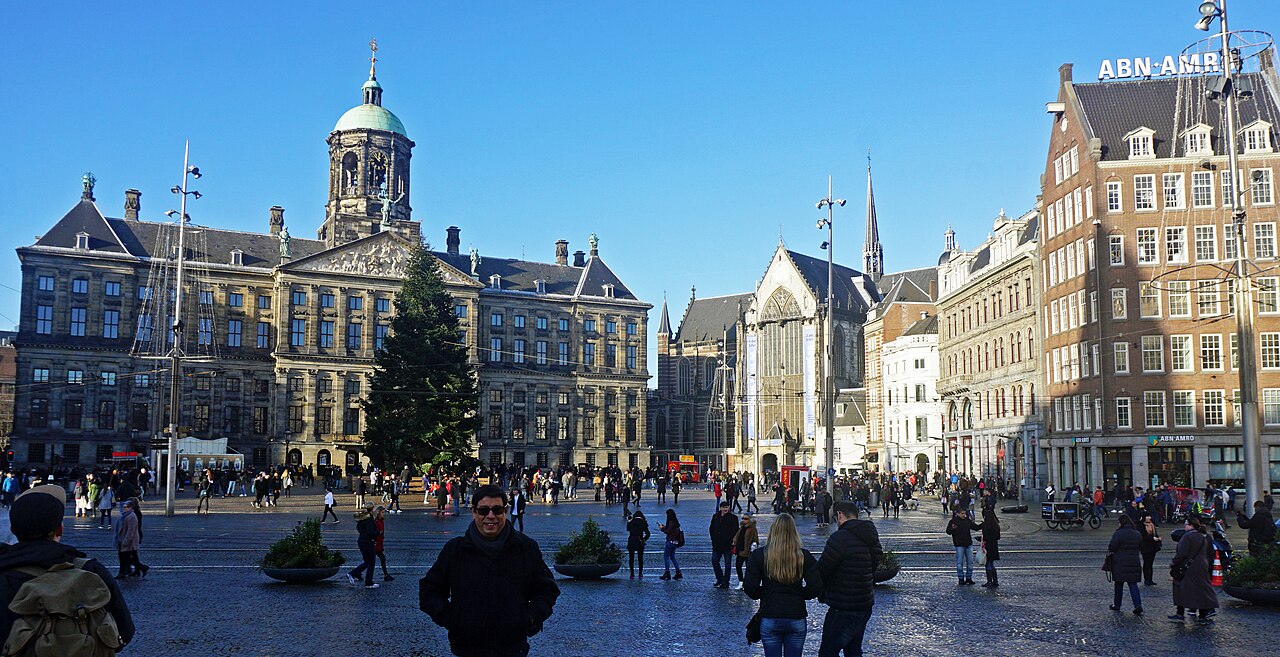
Amsterdam's historic centre point, ringed by the Royal Palace, the Nieuwe Kerk, and the department stores and wax museum along its northern edge. The Nationaal Monument, a 22-metre obelisk unveiled in 1956, honours the Dutch dead of the Second World War and stands at the square's eastern end. Street performers, pigeons and cyclists share the open cobbles, and the square doubles as the city's default stage for demonstrations, concerts and King's Day parties. Trams cross along the northern side, so look both ways before stepping off the pavement.
- 09:15
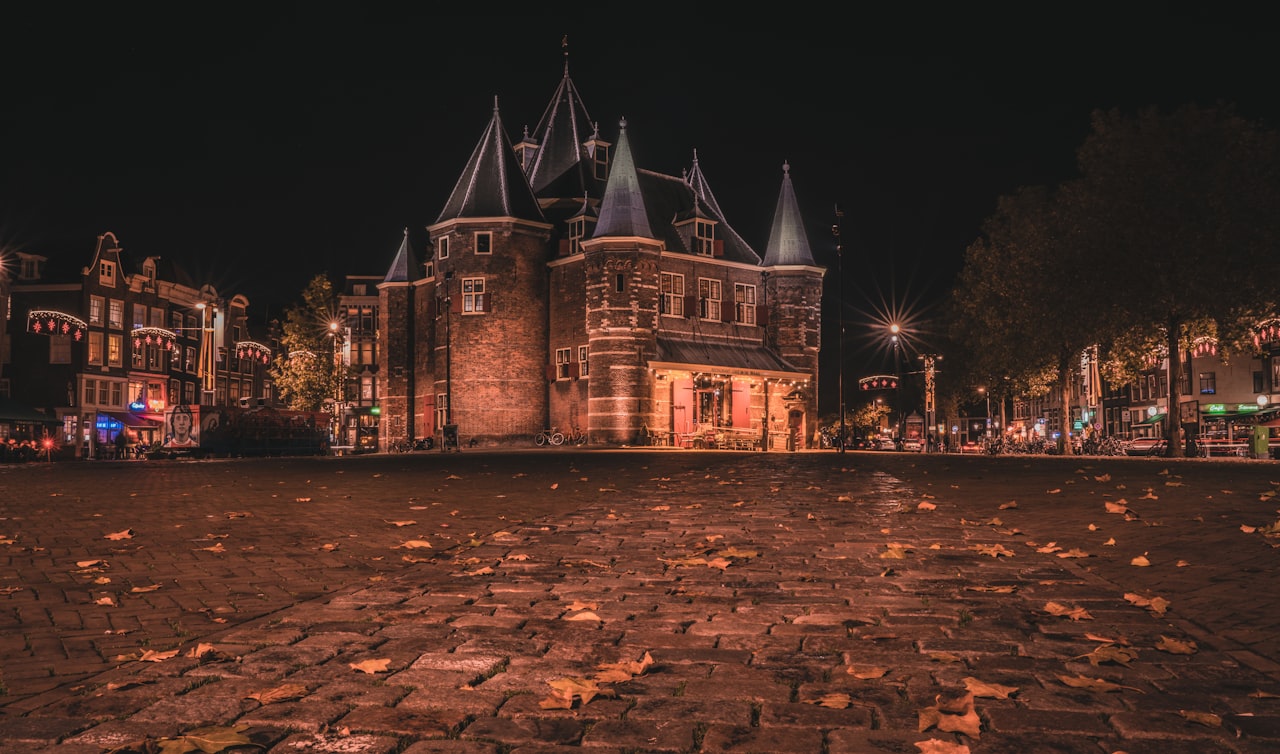
A wide-open square built around De Waag, a turreted 1488 city gate that later served as a guild hall and public weigh house and is now a restaurant — one of the few surviving pieces of Amsterdam's medieval fortifications. An organic farmers' market sets up on Saturdays, and the square sits exactly on the seam between Chinatown to the south and the old lanes of De Wallen to the west, ringed by terraces that are busiest once the market stalls pack away.
- 10:00Hortus Botanicus Amsterdam
One of the world's oldest botanical gardens (founded 1638), tucked behind a modest gate on Plantage Middenlaan — open daily 10:00-17:00 (closed only 25 December and 1 January), adult entry EUR 14.75. It's card-only; the garden states plainly that cash cannot be used anywhere on site. The paths are gravel-covered but wheelchair-passable, free wheelchairs are available with an advance email, and the Climate House greenhouse has automatic doors — the older greenhouses have a manual door with a threshold, so allow a little extra time or ask staff for a hand there. The on-site cafe has an accessible toilet reached via a ramp behind the terrace.
- 11:50
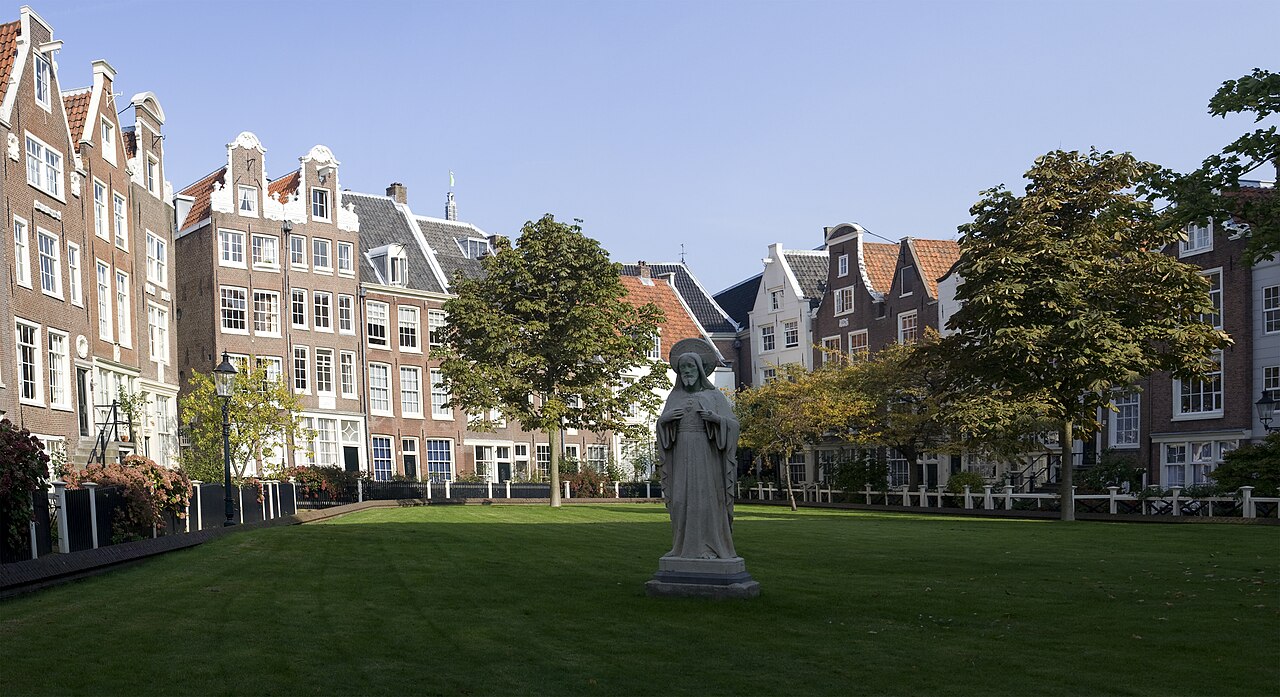
A walled courtyard of almshouses dating to the 14th century, built for the Begijnen — a lay religious sisterhood — and still home to a small residential community today, so voices stay low and the central lawn is looked at rather than walked on. Holds Amsterdam's oldest surviving wooden-fronted house (Het Houten Huys, number 34) and a hidden Catholic chapel facing the English Reformed Church. Free to enter, open daily 10:00-18:00, closed only on King's Day (27 April). The entrance gate off the Spui side is easy to walk past without noticing — look for a plain wooden door between the shopfronts.
- 12:35Lunch In de Waag
A restaurant-café built into the Sint Antoniespoort, the turreted 15th-century city gate anchoring Nieuwmarkt square, lit almost entirely by roughly 300 real candles after dark for a dinner that genuinely feels medieval. Open daily from 11:00, with the kitchen running 11:30-22:00 and an all-day menu of starters, mains and desserts; the room can also lay on a shared starter-and-main menu for groups of up to 180. Reserve ahead for a weekend dinner table — the candlelight and the setting make it a popular choice.
- 13:35
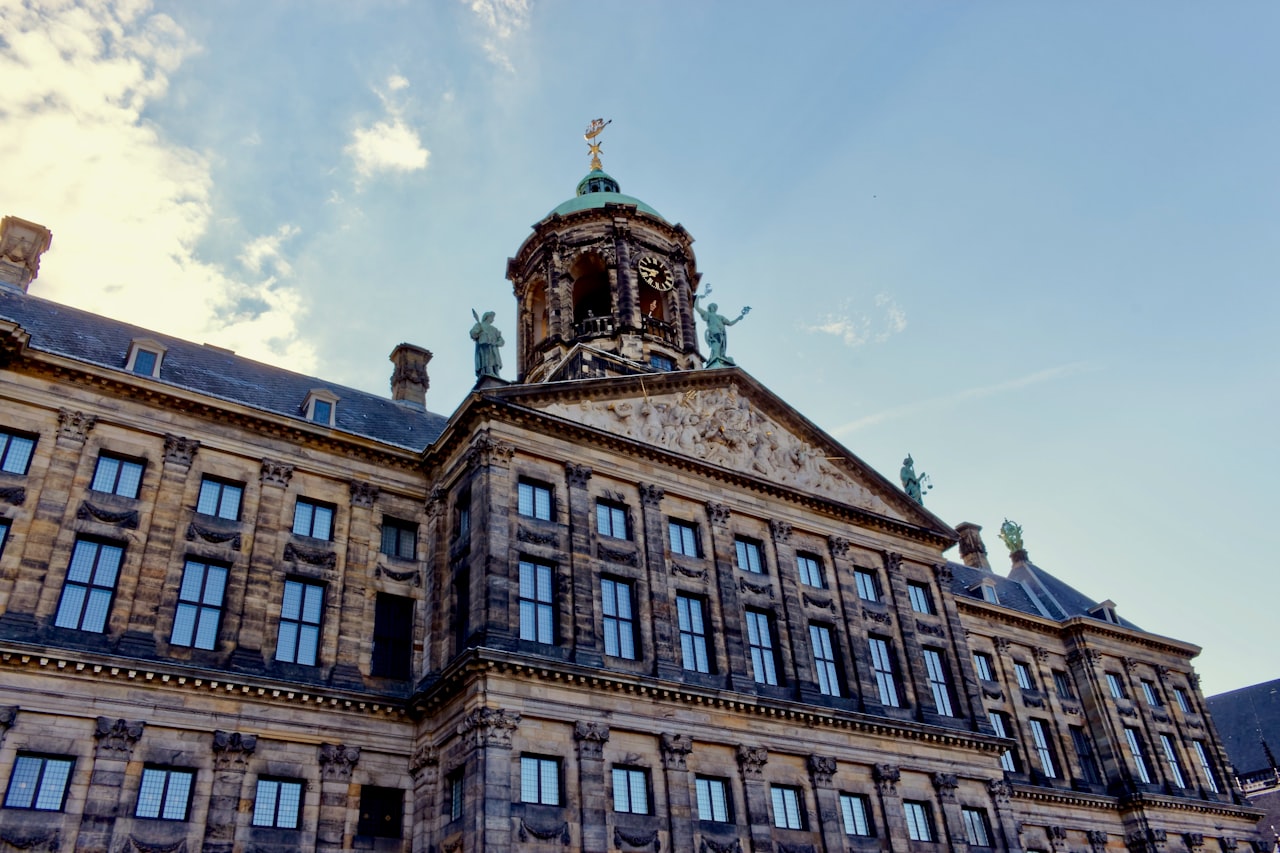
Built in the 17th century as Amsterdam's city hall on 13,659 wooden piles sunk into the marsh, and still King Willem-Alexander's working reception palace today — used for state visits and royal functions, so opening days vary through the year and the palace's own calendar is worth checking before planning a visit around it. Adult admission is 13.50 euro and includes an audio tour. The entrance has a sloping ramp on the right side facing Dam Square, a lift to every floor, no interior thresholds, and a wheelchair-accessible toilet on the ground floor; a wheelchair or walking stick can be borrowed free of charge by writing ahead, and lightweight folding stools are available to rest on partway through.
- 15:05Nieuwe Kerk
No longer used for regular services — Dutch monarchs are inaugurated here instead, most recently Willem-Alexander in 2013 — and the nave now hosts rotating art and history exhibitions under a soaring Gothic wooden ceiling. Open daily 10:00-17:00 with last entry at 16:30; adult admission is 25 euro. It runs as a fully cashless museum, debit and credit cards only, no cash accepted at all. All galleries and facilities are wheelchair accessible, with a lift down to the toilets in 't Nieuwe Kafé on the basement level. Closed on 27 April, 3-5 May, 28 May, 8 July, 25 December and 1 January, so don't count on it landing on those dates.
- 17:30Dinner De Drie Fleschjes
Amsterdam's oldest tasting room, pouring jenever and Bols liqueurs straight from the barrel since 1650, tucked a few steps behind the Nieuwe Kerk. The house order is a kopstootje — a small glass of jenever next to a freshly poured beer — and staff will walk you through styles (jong versus oud, fruit-infused options) if you don't already have a favourite. It still runs the only working drinks organ left in Amsterdam, a 50-barrel mechanical curiosity worth asking to see in action. Vegetarian bar snacks — olives, peppadews, banderillas, nuts — sit alongside the classic Dutch bittergarnituur platter. Open Sunday 15:00-19:00 and Monday-Saturday 14:00-20:30.


Day 2Grachtengordel & Jordaan & nearby — a sights dayAmsterdam, 9 stops
The seventeenth-century canal ring and the working-class quarter beside it, now the city's most photographed streets — a house where a family hid for two years, a church tower you can climb, and nine little shopping lanes between the canals.
- 08:00Breakfast Winkel 43
The café most associated with Amsterdam's 'world-famous' apple pie, right on the corner of Noordermarkt with a sun-catching terrace that fills fast on market mornings. Breakfast and lunch run roughly 8:00 to 15:00 — croissants from 4.50 euro, a full plate of bitterballen at 15 euro — and the kitchen keeps going into the evening with Dutch classics like ossenworst alongside sandwiches. A vegan bitterballen plate (six pieces, 8 euro) and a vegetarian club sandwich are both regular menu items, useful in a neighbourhood that otherwise leans traditional. Best combined with a Monday flea-market or Saturday farmers-market visit next door.
- 09:00Noordermarkt
A square in front of the Noorderkerk that turns into two very different markets: a Monday-morning flea market (9:00-14:00) for vintage clothing, fabric, books and secondhand odds and ends, and a Saturday organic farmers' market (9:00-16:00) for artisan bread, Dutch cheese, olives and fresh juice, with stalls spilling into the surrounding streets. Outside those windows it's just a quiet, café-lined corner of the Jordaan, so time a visit for Monday or Saturday morning if the markets are the point.
- 10:15
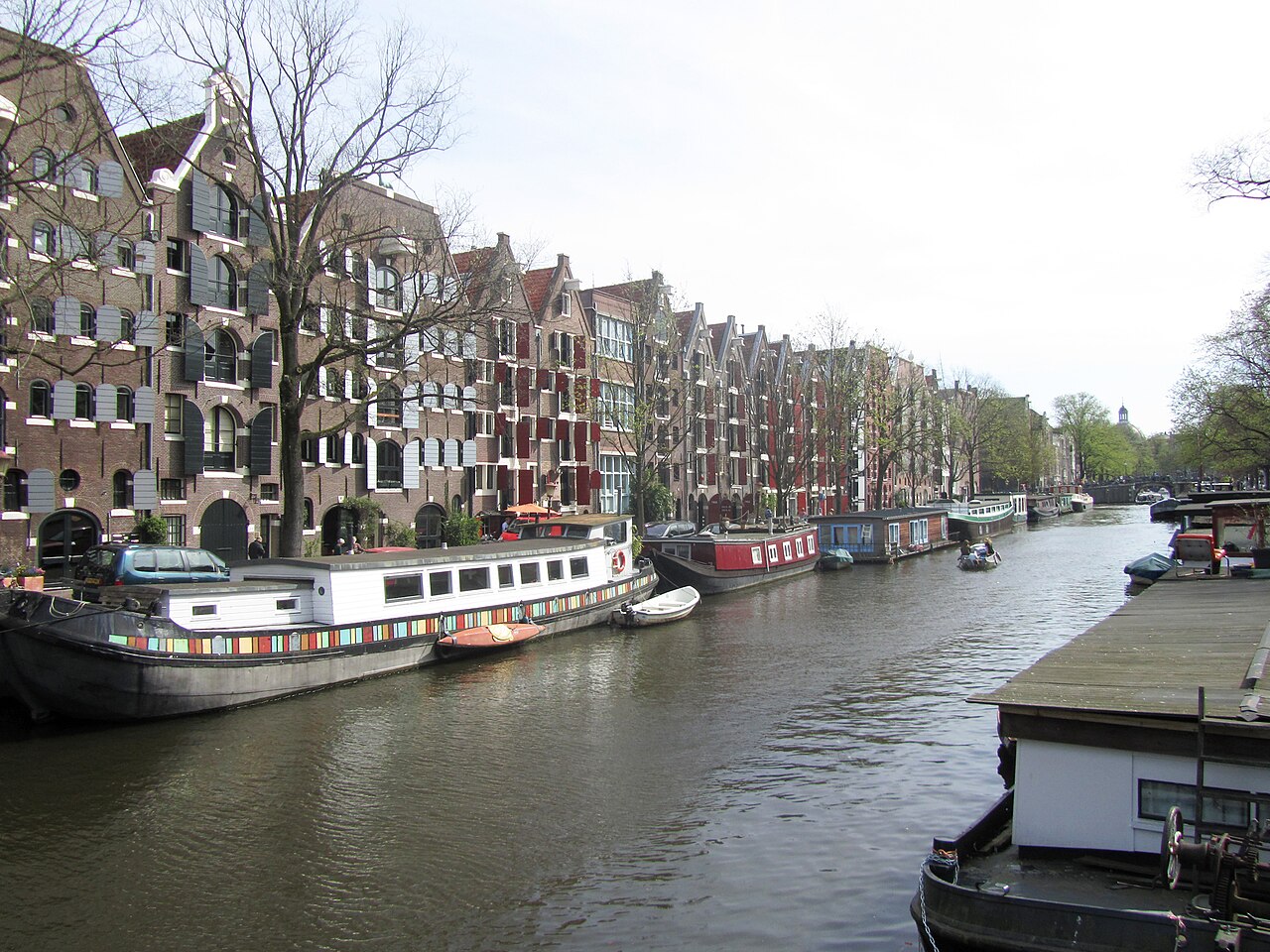
Once the working harbour for the old brewers' warehouses, now the canal ring's quietest and most photographed stretch — houseboats moored end to end, converted warehouse gables on both banks, and a bridge every couple of hundred metres where four canals meet. Better walked slowly than treated as a single stop; the corner where Brouwersgracht meets Prinsengracht is the classic postcard angle, especially in the low light of early morning or evening.
- 10:50Anne Frank House
The canal house where Anne Frank and seven others hid for two years during the German occupation, preserved behind the revolving bookcase largely as they left it. Tickets go on sale every Tuesday at 10:00 CEST for a visit exactly six weeks later, and none are sold at the door — book the moment a slot opens if specific dates matter, since the museum itself says this is the tightest ticket window in the city. Online payment is by bank transfer or credit card. Open daily 9:00-22:00, with a handful of closures through the year (King's Day and Yom Kippur among them) — check the calendar before locking in a date. The house has steep, narrow stairs and a high step at the entrance and is not step-free; anyone with mobility difficulties should read the museum's own accessibility page before booking.
- 12:20Lunch Café 't Smalle
A genuine 'brown café' — the name comes from decades of tobacco-stained walls and ceilings — on the Egelantiersgracht, running since 1780 as a jenever distillery's tasting house before settling into the neighbourhood local it is today. The small waterside terrace is the reason people queue for a table; order a beer or a bitterbal and watch the canal rather than treating it as a proper meal stop, since the kitchen keeps to sandwiches and snacks. Opens at 14:00 Monday to Thursday, 13:00 on Friday, and from noon on weekends, staying open past midnight most nights (until 23:00 on Sundays). A Jordaan institution — expect it standing-room-only by early evening.
- 13:20
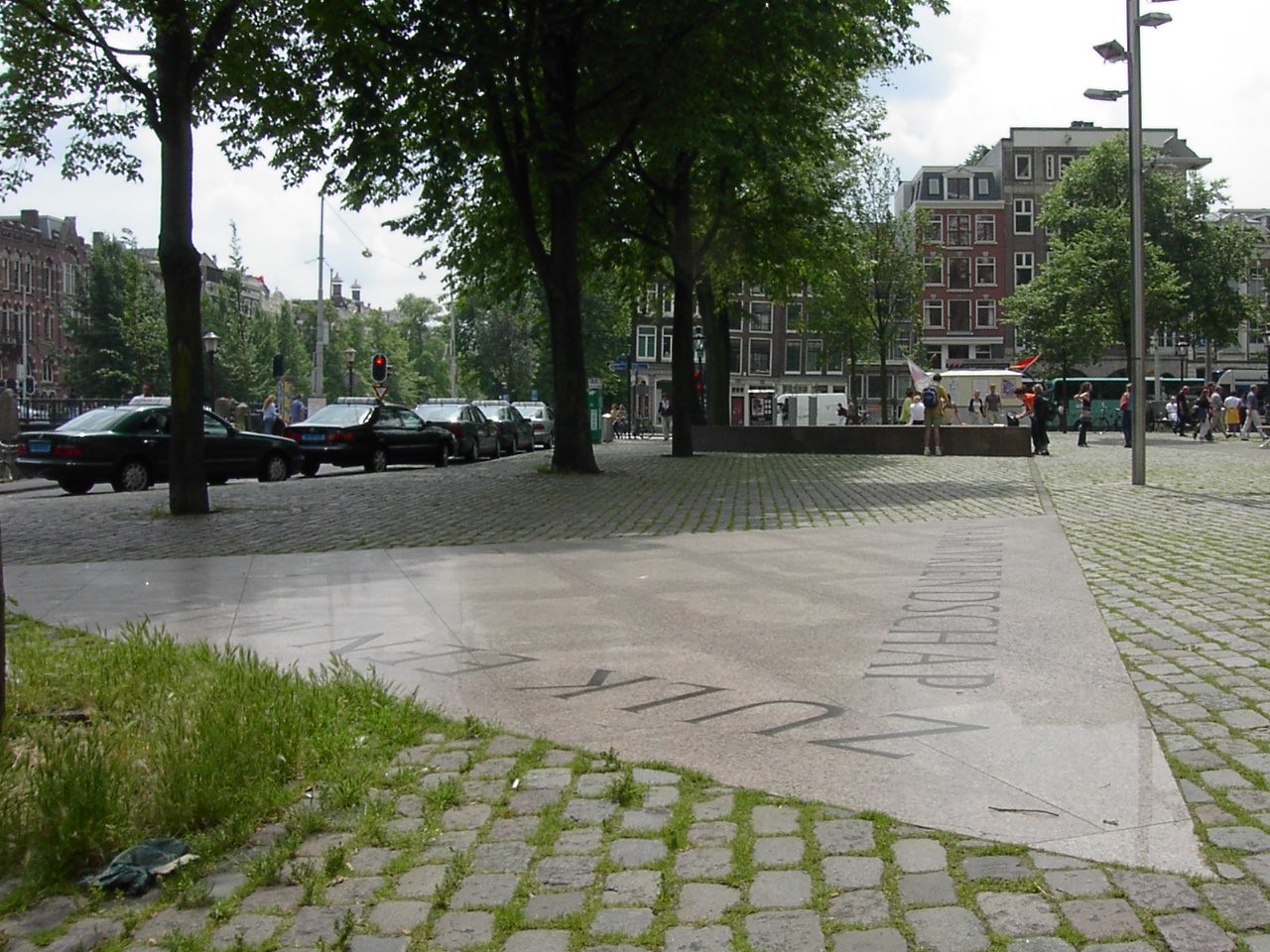
Three connected pink-granite triangles set into the paving of Westermarkt, unveiled in 1987 as the first public monument anywhere built to remember people persecuted for their sexuality — one triangle points toward the Anne Frank House, one toward the former headquarters of the Dutch gay rights movement, and one out toward the wider city. Open all the time and free, it doubles as an everyday gathering spot and a stage for Remembrance Day and Pride events. Wheelchair access is fine on the upper level, but the lowest triangle is reached by steps rather than a ramp, and the monument sits in open traffic space, so watch for trams and cyclists passing close by.
- 13:50
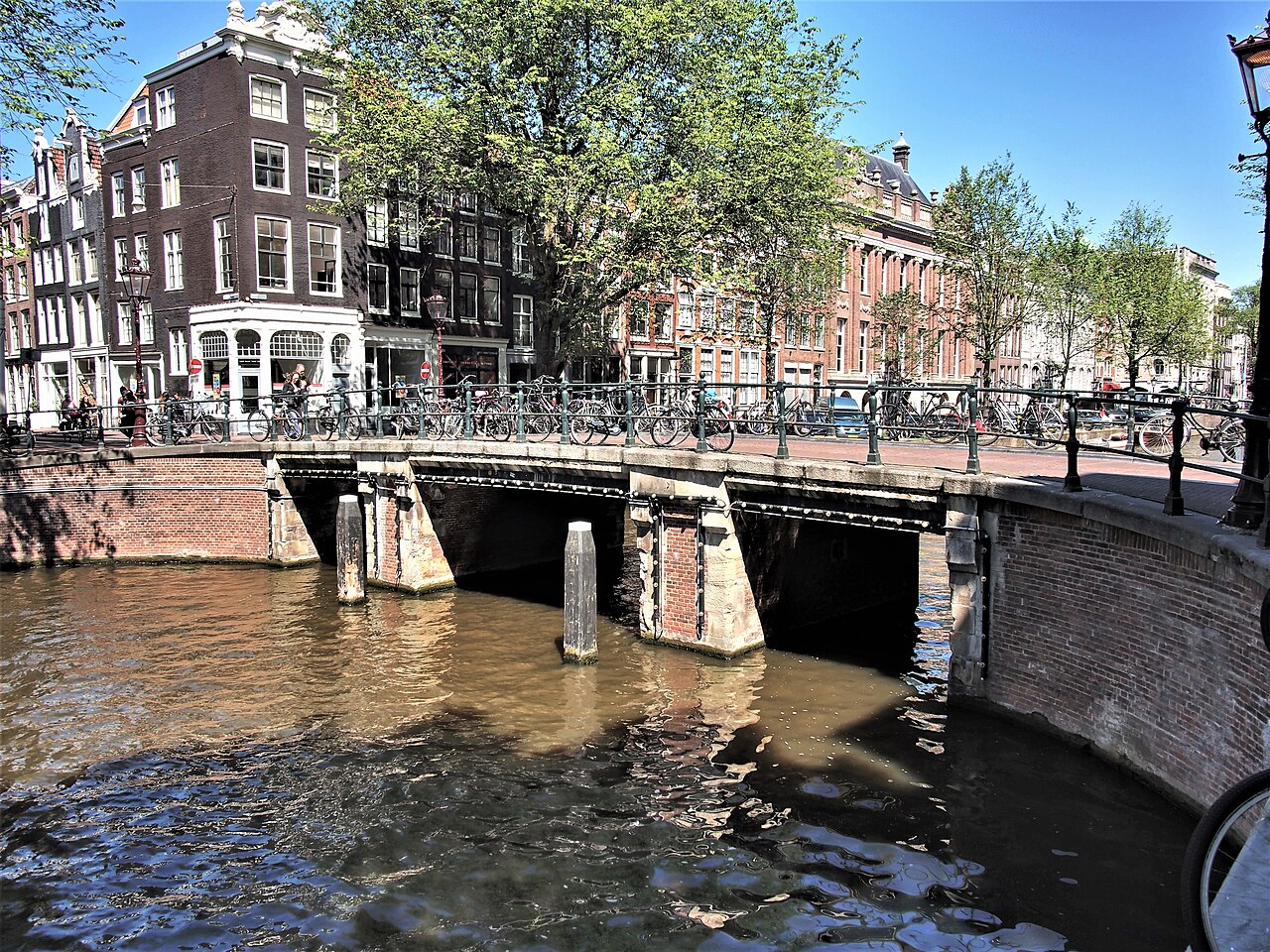
Nine short cross-streets — Berenstraat, Wolvenstraat, Oude Spiegelstraat, Runstraat and the rest — laid across the three main canals between Raadhuisstraat and Leidsegracht, packed with independent boutiques, vintage shops, concept stores and small cafés rather than chain retail. It rewards wandering without a fixed plan more than treating it as a single ticked-off stop; hours vary shop to shop, so treat any one boutique's opening time as worth double-checking rather than assumed. One of the few Amsterdam shopping areas that still feels local rather than built for tourists.
- 15:35A'DAM Lookout
The observation deck sits on the roof of A'DAM Tower, a three-minute free ferry ride (Buiksloterweg line) from behind Centraal Station, and gives a 360-degree view over the IJ, the station and the old city skyline. Open Monday-Thursday 11:00-19:00 (last entry 18:00) and Friday-Sunday 11:00-21:00 (last entry 20:00); the tower takes cards only, no cash. The optional Over The Edge swing, billed as Europe's highest, costs extra on top of the roughly EUR 16.50-19 entry ticket. Getting up involves a stretch of steep stairs partway through the route, which the venue itself flags as unworkable for visitors with limited mobility — plan around that if it matters for your group.
- 17:30Dinner Pllek
A big, laid-back restaurant and bar built into a converted shipping-container hall on a man-made beach facing the IJ at NDSM-werf — the kitchen serves food daily from 09:30 with the kitchen open until 22:00 (the bar itself runs later, until 01:00-02:00 on weekends). At least three-quarters of the menu is vegetarian and a good share of that is vegan; expect locally grown vegetables and only small amounts of sustainably sourced fish and meat. It's card-only — pin, Amex, Visa and Mastercard are all accepted, no cash. Reachable by the NDSM ferry (about 15 minutes from behind Centraal) or a short walk/cycle once you're on that side of the IJ; the deck chairs on the sand fill up fast on the first sunny weekend of the year.


Day 3Museumkwartier & Vondelpark — a museum dayAmsterdam, 8 stops
Three major collections and a concert hall around one grassy square, with the city's biggest park behind them — the Dutch Golden Age in one building, Van Gogh's own hand in the next, and modern art across the plaza.
- 08:00Breakfast Cobra Café
A ground-floor lunch café right on Museumplein, open daily 10:30-19:00 — the easiest spot to sit down between the Rijksmuseum and the Van Gogh Museum without leaving the square. Founded in 1999 alongside the CoBrA art movement, the room is furnished and decorated by CoBrA artists Karel Appel and Corneille, so even a coffee stop has something to look at. The menu runs sandwiches, bitterballen, hand-cut fries and apple pie, with a chicken-avocado and a classic cheese sandwich covering vegetarians; drinks stretch from fresh juice to local beer, jenever and cocktails. Casual and walk-in — no booking needed even with a group.
- 08:30Vondelpark
Amsterdam's best-known park, entered here from its northeastern corner a few minutes' walk from the museums via Constantijn Huygensstraat. There are no gates and no entrance fee — it's open around the clock, every day of the year. Inside: a historic 1937 open-air theatre with free summer programming, a rose garden, ponds full of herons, and paths thick with cyclists (stay off the cycle lanes — bikes have the right of way and won't stop for a distracted pedestrian). The city's own visitor guide lists a wheelchair-accessible entrance, provisions for reduced mobility and accessible restrooms. Skip renting a bike just for the park — walking or a short tram ride in is easier than fighting rental queues for a 90-minute loop.
- 10:00
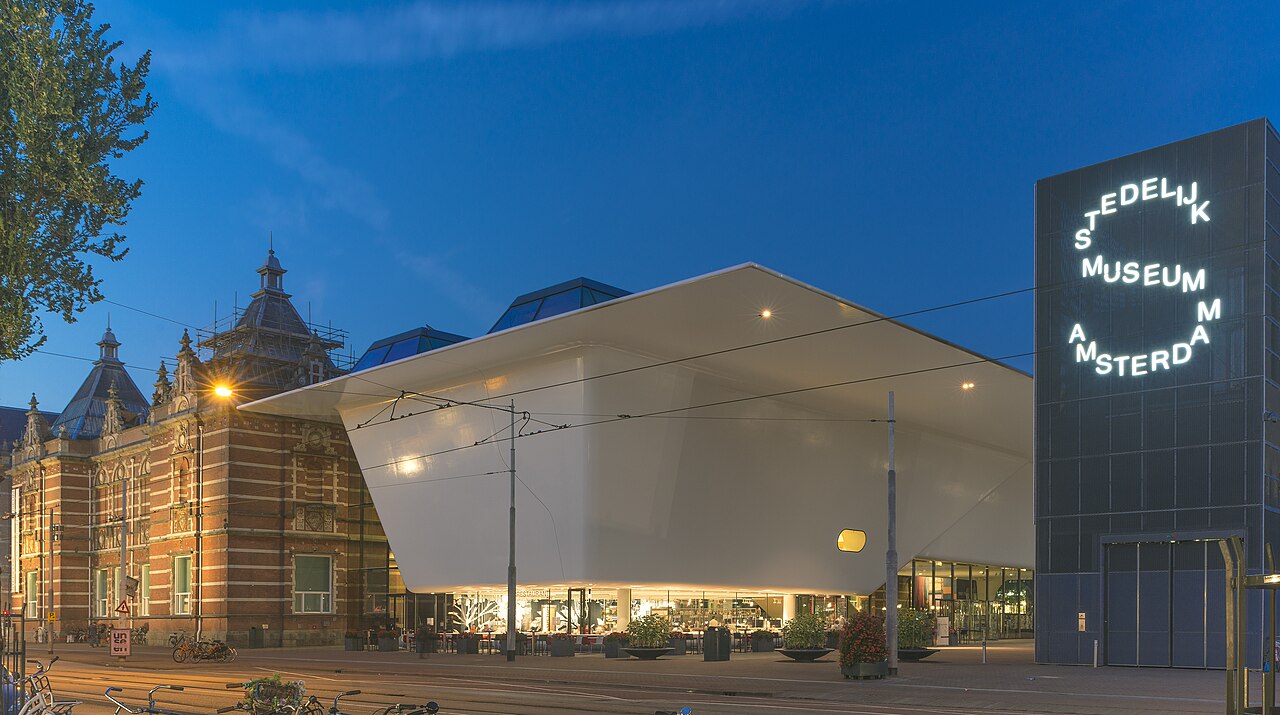
The Netherlands' modern and contemporary art museum, open all 365 days of the year, 10:00-18:00, with last entry at 17:45. Adult admission is 22.50 euro, students and CJP cardholders pay 12.50 euro, and under-19s go free. The bathtub-shaped 2012 extension (Amsterdammers call it "the bathtub") sits behind the original 1895 building and holds a rotating collection running from Mondrian and Chagall to Warhol and current Dutch design. The museum states it has elevators, wheelchair-accessible restrooms and barrier-free passageways, and lends wheelchairs, walkers and folding chairs free at the information desk. Buying online in advance is recommended over turning up cold.
- 13:00Van Gogh Museum
Open daily 09:00-18:00, holding the world's largest Van Gogh collection including Sunflowers and The Bedroom. Adult tickets are 25 euro and under-18s go free, but every ticket is online-only with a mandatory timed entry slot — there is no door sale at all, so this has to be booked before you leave the hotel, not decided on the day. Buy only through vangoghmuseum.nl or the museum's named resellers. The museum has lifts to every floor, an accessible main entrance and adapted toilets, and lends wheelchairs and folding seats free of charge if you email ahead.
- 15:15
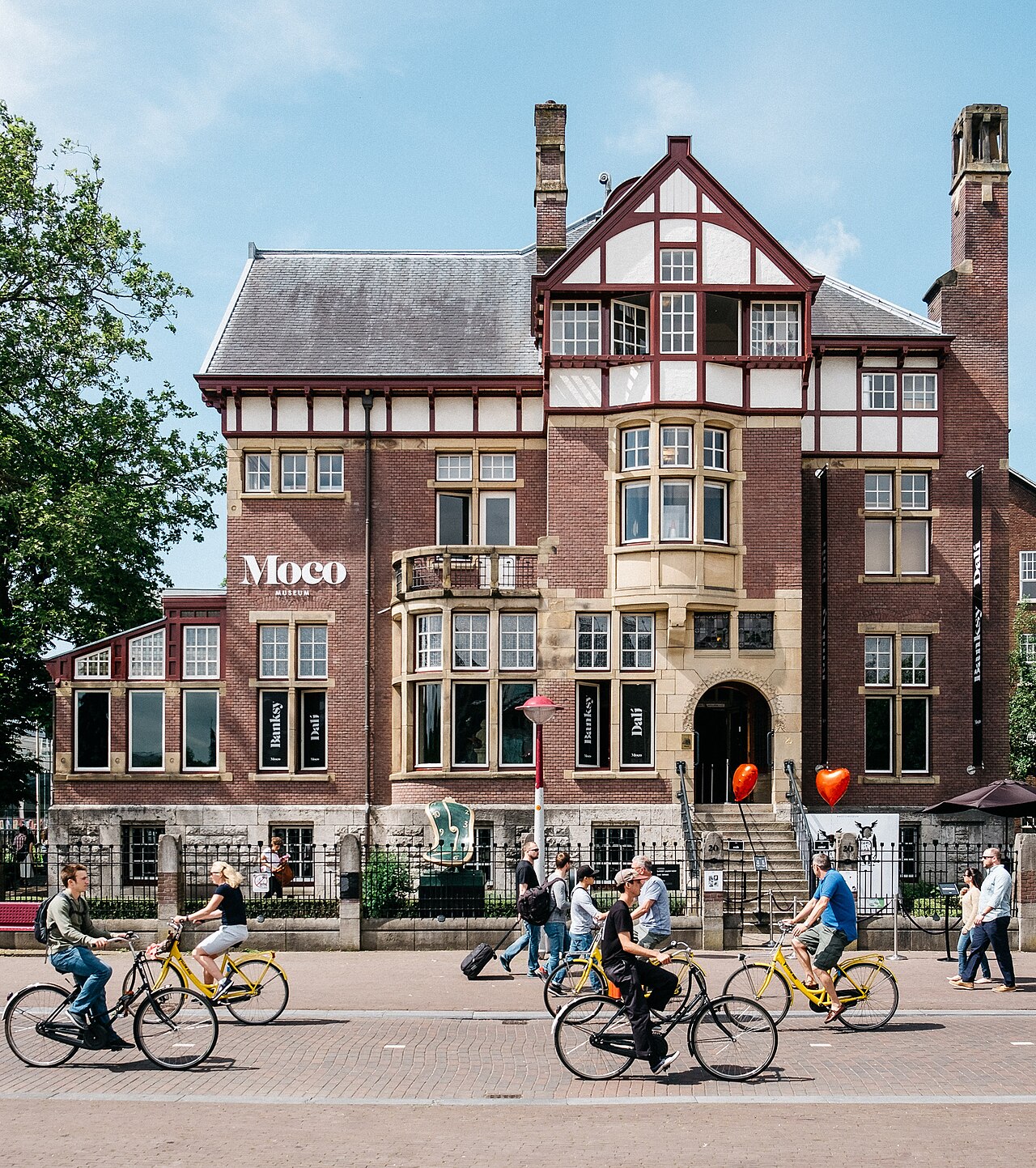
A private contemporary-art museum in Villa Alsberg, a 1904 mansion on Museumplein, showing Banksy, Warhol, Basquiat and Kusama in a much shorter visit than its neighbours — plan on about an hour. Open daily 09:00-20:00. Tickets start around 19.95 euro online (booking ahead is noticeably cheaper than paying at the door, and early or late time slots knock off up to 5 euro more). The museum states plainly that it is not wheelchair accessible: the historic villa has stairs throughout and no lifts, and the building's protected status means one can't be installed. Staff can offer a carry-chair with assistance if needed, but this isn't a step-free visit.
- 16:30
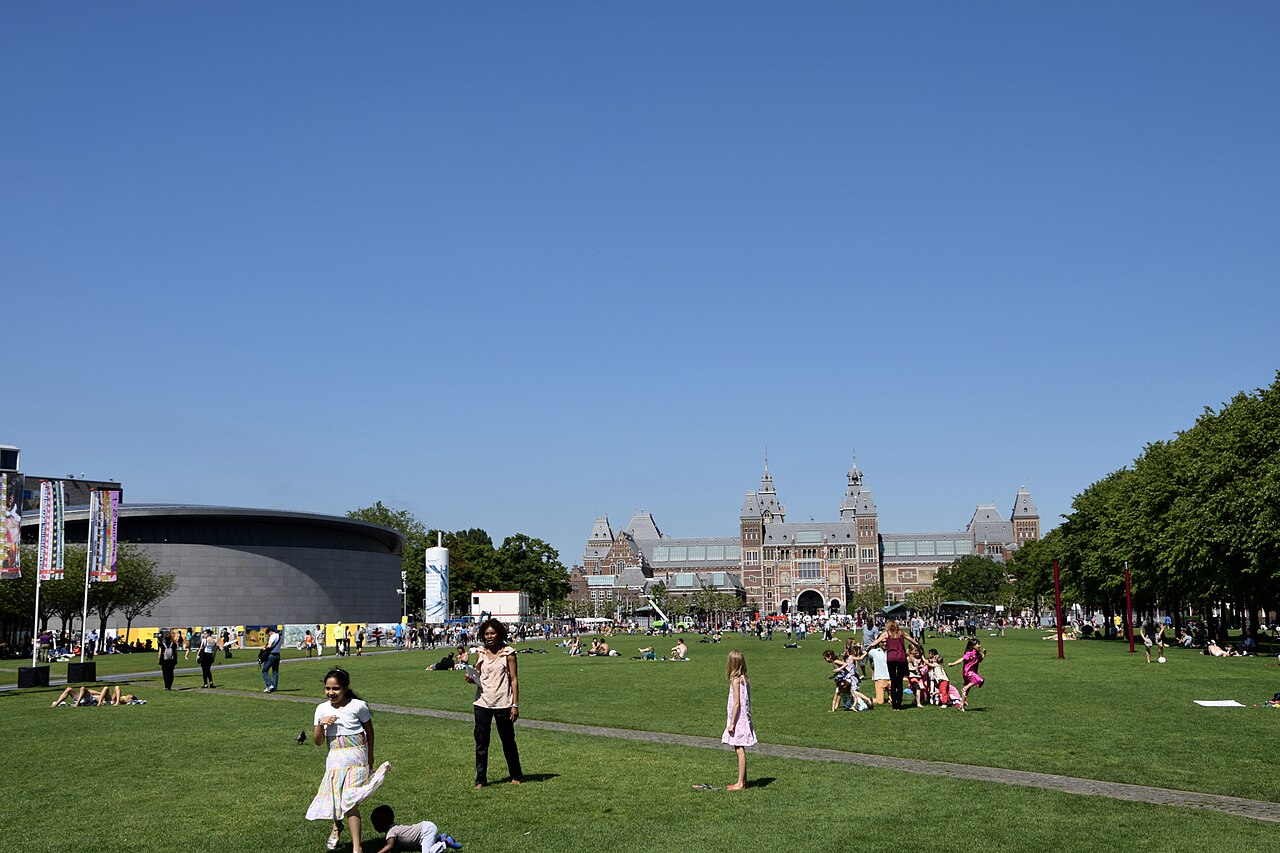
The long grass lawn and reflecting pool framed by the Rijksmuseum, Van Gogh Museum, Stedelijk and Concertgebouw — free, open, and the natural place to regroup between museums. It's used for picnics, pick-up football and, in winter, a temporary ice rink; the famous "I amsterdam" letters that used to sit here were removed by the city in 2018 after they became a photo-crowding bottleneck, so don't plan a stop around finding them. It's flat, paved and street-level throughout, though no operator statement covers formal accessibility since this is open municipal ground rather than a ticketed site.
- 17:30Dinner Café Loetje (Museumkwartier)
A branch of Amsterdam's best-known steak sandwich chain — started as a billiard café in 1977, now famous city-wide for its "biefstukje": tender steak in a rich jus with white bread, crispy fries and a small salad. This location, a few minutes south of the Concertgebouw, has a spacious terrace and keeps long hours daily, 10:00-22:30, serving both lunch and dinner. The restaurant states its entrance is wheelchair accessible, though the restrooms are not. Reservations aren't required but are worth making for a weekend evening — it fills fast and doesn't hold walk-in tables.
- 18:45The Concertgebouw
One of the world's most acoustically celebrated concert halls, home to the Royal Concertgebouw Orchestra, on the square of the same name a short walk from the museums. There's no single ticket price — a listing on the calendar can start from 25 euro for an orchestral or chamber programme up in the balcony, climbing well past that for premium seats or headline names — so check concertgebouw.nl for the specific date rather than assuming a figure. The hall states it has seven disabled parking spaces by the main entrance, loanable wheelchairs, lifts to the Recital Hall and to the Main Hall balconies, and reserved wheelchair seating arranged in advance through the box office; infrared and induction-loop hearing systems are available at the cloakroom. Guide dogs are welcome. This is a formal room — smart-casual dress and quiet phones are the norm, and latecomers are held until a natural pause in the programme. There are no general visiting hours — you come for a performance or a guided tour, so check the programme and book before building a day around it.


Day 4Kreuzberg & the Landwehrkanal & nearby — a sights dayBerlin, 6 stops
Kottbusser Tor sits at the messy, loud heart of it, but walk five minutes any direction and the neighbourhood softens — south to Bergmannkiez's flower-lined Bergmannstraße and Viktoriapark's small Alpine-style waterfall, or along the Landwehrkanal to Maybachufer's Tuesday and Friday Turkish market. Oranienstraße's bars and Görlitzer Park pick up after dark, when this becomes one of the city's real nightlife centres rather than a daytime sightseeing stop. Expect graffiti, döner stands doing genuine trade rather than tourist theatre, and a Turkish-German community that shaped the neighbourhood long before it got trendy.
- 07:30Check out of your stay
- 07:33Flight
- 11:00Drop your bags at your stay
- 12:00Lunch Vöner
Berlin's original fully-vegan döner/kebab shop, serving a signature wheat-and-legume 'meat' since the 1990s — everything on the menu is plant-based. Cash only, cards aren't accepted. Open daily noon to 10pm; expect a short queue around lunch.
- 13:00Markthalle Neun
The hall's regular stalls run Monday-Saturday during the day and it's closed Sundays. The big draw is 'Street Food Thursday', a weekly evening food market every Thursday from 17:00-22:00 with dozens of vendors — arrive early or expect queues at the popular stands.
- 14:45
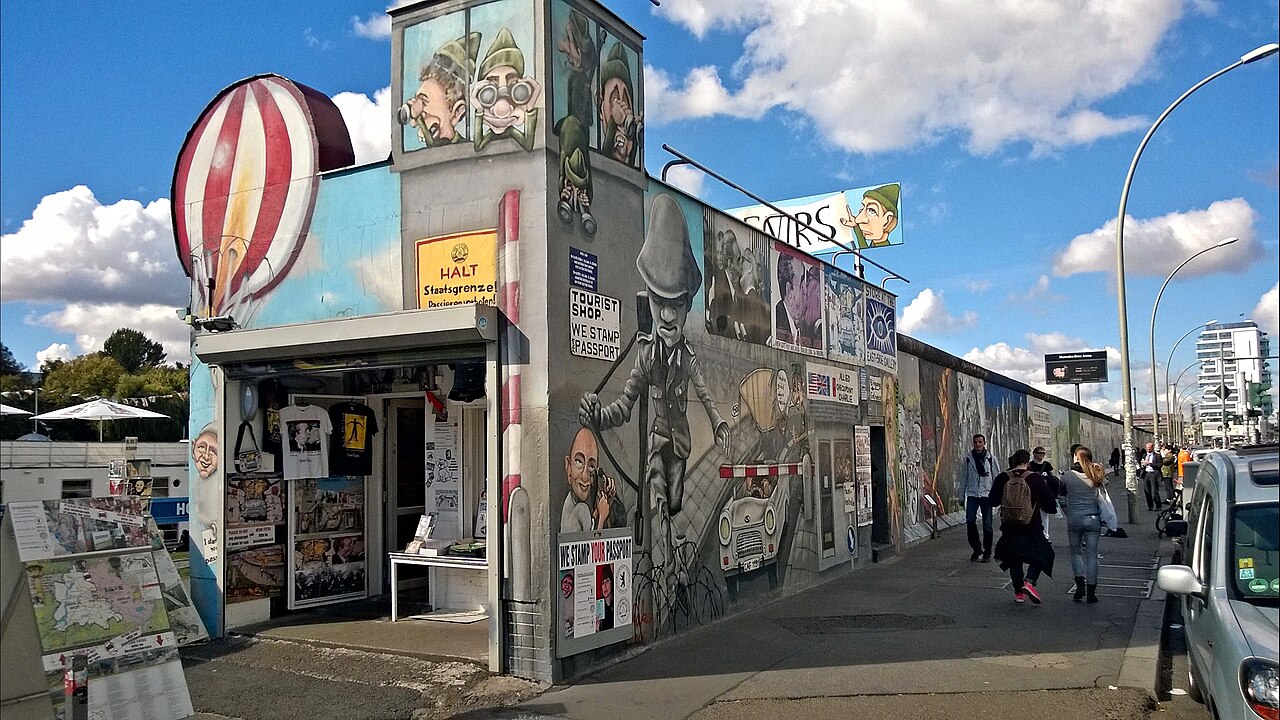
Free, always-open outdoor gallery along a 1.3km stretch of the former Berlin Wall — no ticket needed, walk it any time of day. It gets crowded with photographers near the famous 'Fraternal Kiss' mural; early morning is quieter.
- 16:00Volkspark Friedrichshain
Berlin's oldest public park (opened 1840), free and open 24 hours with no ticket needed. The main draw is the Märchenbrunnen (Fairy Tale Fountain) in the park's northern section — 106 stone sculptures of German fairy-tale characters, most impressive in the warmer months when the fountains are running. Paths are mostly flat gravel or paved, but there's no official accessibility statement for the park.
- 17:30Dinner Defne Restaurant
Long-running Turkish-Anatolian restaurant right on the Landwehrkanal, popular for its canal-side outdoor tables in summer. The warm kitchen serves from 16:00 to around 23:00 even though the doors stay open later.
- 18:45RAW-Gelände (Alternative Arts & Nightlife Yard)
A former railway repair yard turned alternative culture hub: clubs, bars, a skate hall, a climbing wall, and open-air cinema in summer. The Sunday flea market (about 08:00–17:00, free entry) is the best time for a daytime visit; the bars and clubs mostly open only in the evening and each keeps its own hours, so check individual venues if you're going at night. Bring cash for the flea-market stalls.

Day 5Brandenburger Tor & the Government Quarter & nearby — a sights dayBerlin, 10 stops
Berlin's ceremonial front door — the Brandenburg Gate anchors Pariser Platz, and Unter den Linden runs east from it past Humboldt University and the opera house toward the Museum Island bridges. The Reichstag's glass dome is a five-minute walk north across the Spree, and the sombre concrete grid of the Holocaust Memorial sits just south of the Gate itself. This is the day for the postcard shots and the 20th-century weight behind them; the crowds thin fast once you turn off the main boulevard.
- 08:30
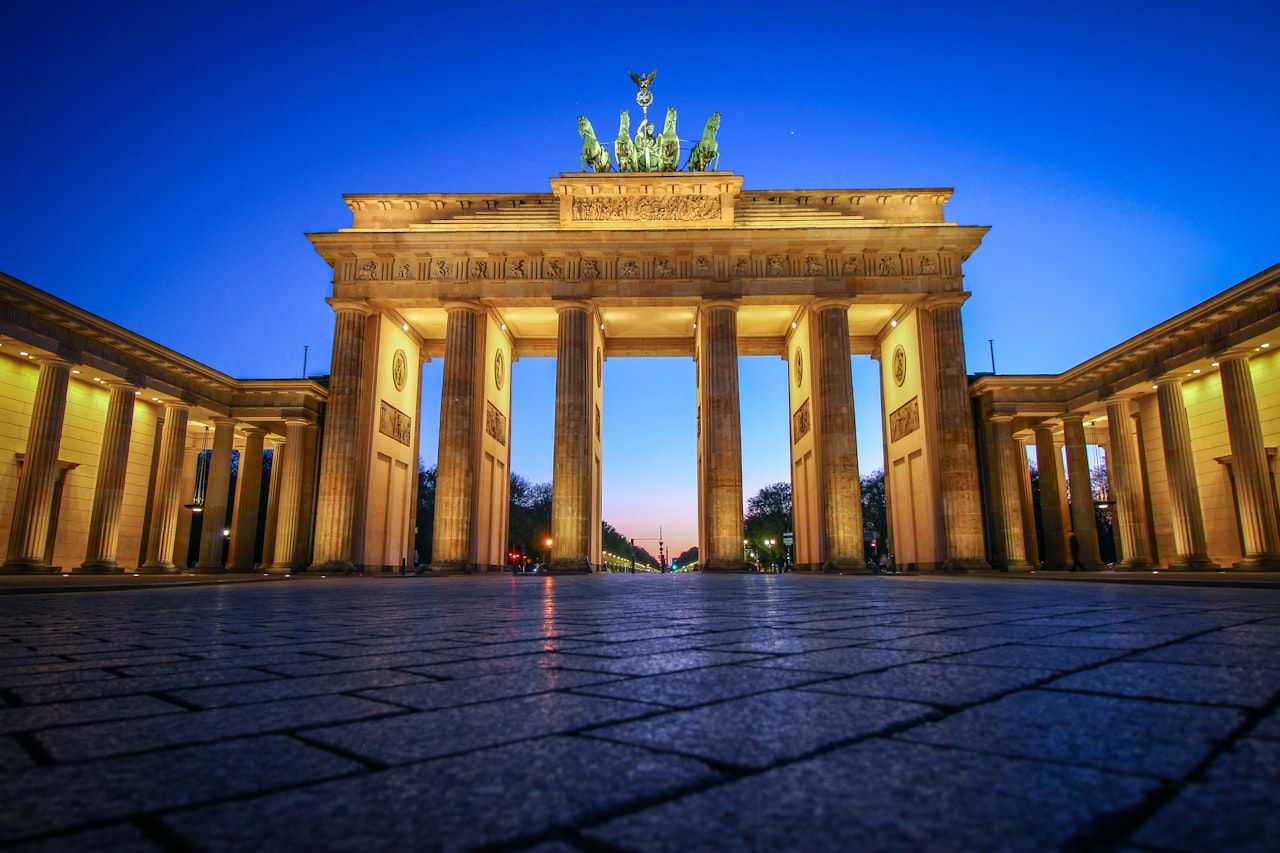
Berlin's neoclassical city gate, topped by the Quadriga chariot, anchors Pariser Platz where Unter den Linden begins — a free, unticketed, fully pedestrianised square with no vehicle traffic. Always accessible, so come at sunrise or after the tour buses leave in the evening for a clear shot of the gate without a crowd of selfie sticks in front of it. The Holocaust Memorial's stelae field is a five-minute walk south; the Reichstag is five minutes north across the Spree.
- 09:05
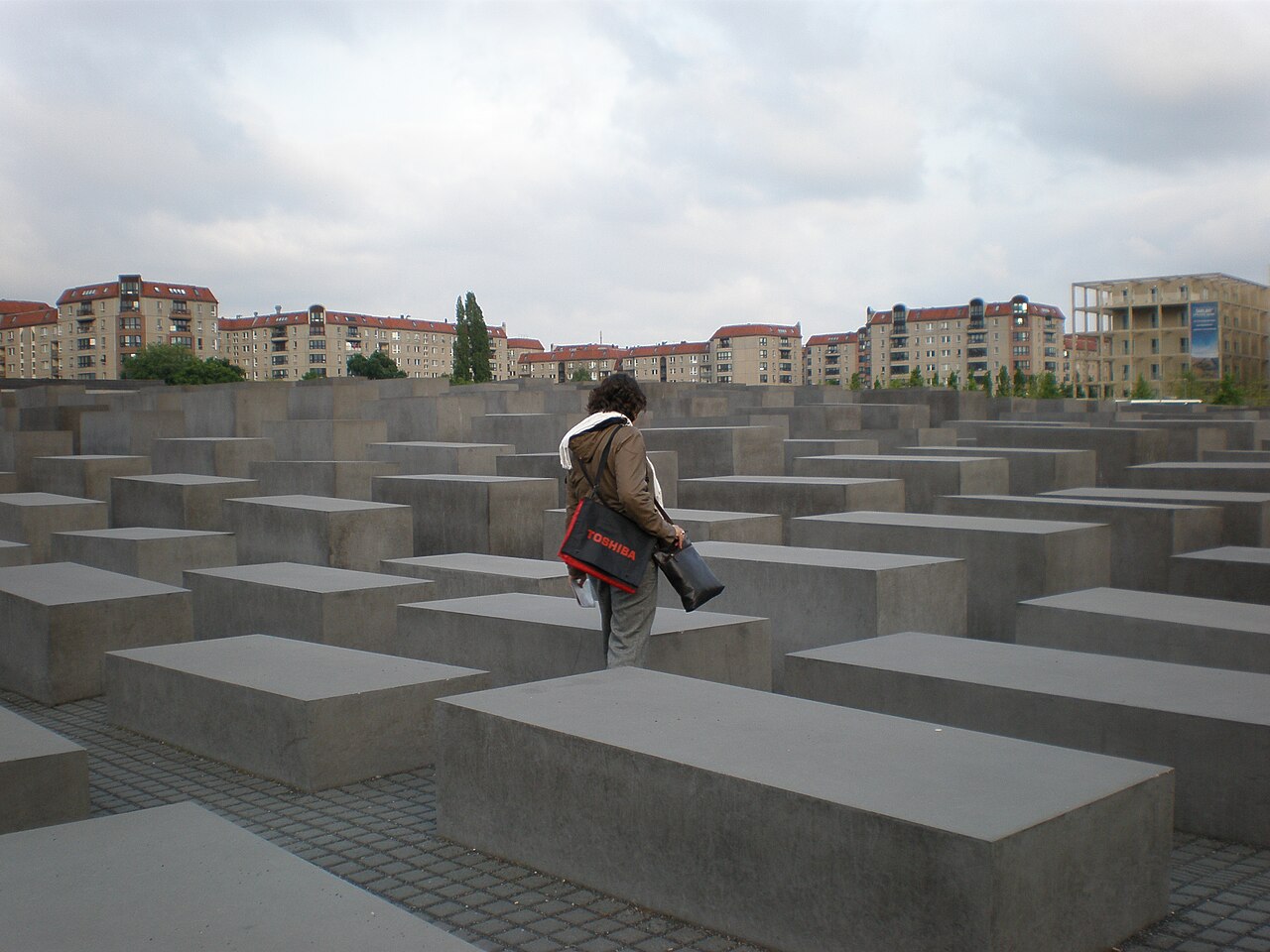
2,711 concrete stelae of varying height cover a full city block with no gates and no ticket — always open, always free, and it's the single memorial most first-time visitors walk into unplanned on the way between the Gate and the government quarter. The underground Ort der Information documentation centre, entered at the south-east corner, keeps its own hours: Tuesday to Sunday, roughly 10:00–19:00 in the summer months and 10:00–18:00 the rest of the year, closed Mondays, last admission 45 minutes before closing, with a bag check at the door but no entry fee. The stelae field's ground genuinely undulates, so wear flat shoes, and please don't climb or picnic on the blocks — it draws visible disapproval from other visitors even where it isn't formally policed.
- 10:20Reichstag Dome
Free to visit, but every visitor must register in advance online at the Bundestag's own visitor-service site — this is not optional and there is no ticket booth on site. Bring the exact original photo ID (passport or national ID card, no copies) used at registration: everyone 16+ needs one, and 14–15-year-olds need ID showing their name and photo. Entry runs in timed slots every 15 minutes, with last admission at 21:45. If online slots are gone, the visitor service centre will register walk-ins in person, but only with a minimum two hours' notice and if capacity remains, so it is not a reliable backup plan. The spiral ramp inside the glass dome climbs to a roof terrace with views straight down the government quarter and across the city.
- 12:00Lunch Ständige Vertretung (StäV)
A Rhineland-themed 'political-cult pub' a few steps from Friedrichstraße station on the Spree, its name and West-German-embassy decor playing on the old Bonn Republic's Cold War-era mission in West Berlin — walls are covered floor to ceiling in Bonn Republic-era political photos and memorabilia. Open daily from 11:00 and running to around 1:00 the next morning — Berlin has no legal evening closing-hour cutoff, so this genuinely stays open that late. Kölsch beer and Flammkuchen (Alsatian tarte flambée) alongside currywurst are the mainstays, but the current menu also explicitly labels a vegan Flammkuchen (vegan mozzarella, olives, mushrooms), a vegan currywurst made from herb seedlings and pea protein, and a vegan spelt burger — a real option beyond the meat-heavy pub-food image. Riverside terrace seating on the Spree in warmer months.
- 13:00Dussmann das KulturKaufhaus
A seven-storey 'culture department store' a few steps from Friedrichstraße station — floors of books in German and English, a large CD/vinyl/DVD department, stationery, and a basement stage hosting free readings and concerts. Open Monday-Friday until midnight and Saturday until 23:30, genuinely unusual hours even by Berlin's relaxed weekday-trading rules; it also opens Sunday 13:00-18:00 under Berlin's limited Sunday-trading allowance, when almost everything else nearby is shut. Takes Visa, Mastercard, American Express and PayPal as well as cash, so it's a reliable stop if a Girocard-only till elsewhere has just declined a foreign card.
- 14:00Bebelplatz & the Empty Library Memorial
The square where Nazi students and academics burned around 20,000 books on 10 May 1933. Artist Micha Ullman's underground memorial, the 'Empty Library', is a glass pane set flush into the cobbles — look down and you see a room lined with white, entirely empty bookshelves sized to hold exactly the books that were burned. A nearby plaque carries the 1821 Heinrich Heine line the memorial is built around: 'That was only a prelude; where they burn books, they will in the end also burn people.' Free, unticketed, always open. Humboldt University's old law faculty and St. Hedwig's Cathedral face the square, with the State Opera Unter den Linden on its northern edge — this is the same stretch of Unter den Linden that runs from the Brandenburg Gate toward Museum Island.
- 14:30Gemäldegalerie (Old Masters Picture Gallery)
Part of the Kulturforum museum cluster, and Berlin's home for European Old Masters — Rembrandt, Vermeer, Dürer, Botticelli — room after room, with almost none of Museum Island's crowds. Closed Mondays; open Tuesday–Sunday 10:00–18:00. A one-day Kulturforum ticket covers this museum plus several others on the same site, including the Neue Nationalgalerie next door, so it's worth pairing the two rather than buying separate tickets.
- 16:15
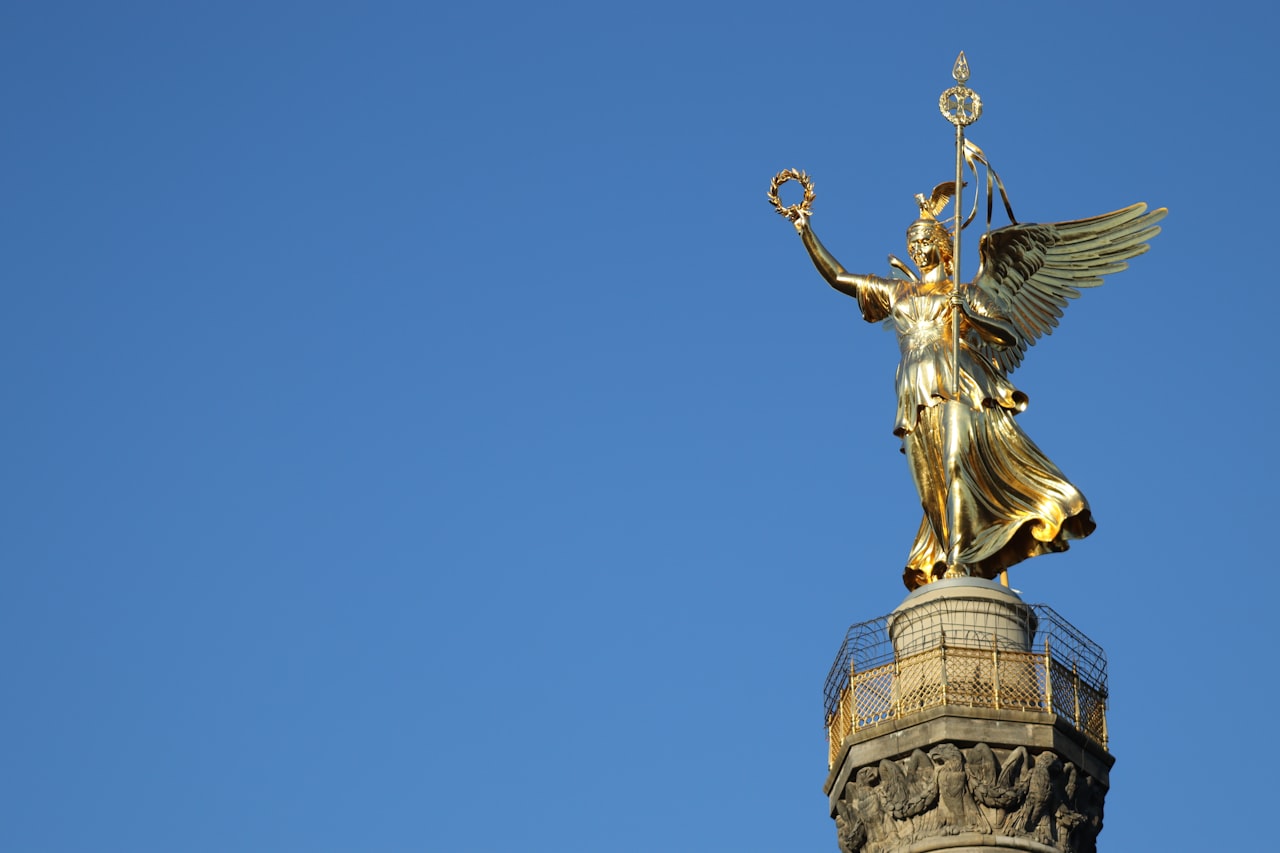
The gold-topped Victory Column marks the literal centre of Tiergarten at the Großer Stern roundabout — reachable on foot only through pedestrian tunnels under the surrounding traffic circle, never by crossing at street level. Climbing to the viewing platform is ticketed and stairs-only: 285 steps up a spiral staircase, no lift, so it's not wheelchair- or stroller-accessible. From the top, the view runs down Straße des 17. Juni to the Brandenburg Gate on one side and toward Potsdamer Platz on the other.
- 17:30Dinner Café Einstein Unter den Linden
A Viennese-style coffeehouse a few doors from Bebelplatz and the State Opera, running since 1996 and best known for its Wiener Schnitzel. Breakfast runs Monday-Friday until 11:30 and Saturday-Sunday/holidays until 13:00, with the full lunch and dinner menu from 11:30 onward. The current menu explicitly labels several vegetarian dishes (Austrian vinegar dumplings with pumpkin-seed oil, Käsespätzle cheese noodles, a burrata starter) and vegan ones (vegan pancakes, a vegan 'everything' bagel with grilled vegetables, a green vegan minestrone, tofu instead of the tuna steak) — so it isn't only a meat-and-schnitzel stop. Ask for a window table for Unter den Linden people-watching, or the quieter courtyard seating in summer.
- 18:45Tiergarten Park
Berlin's largest inner-city park, criss-crossed by paths radiating out from the Großer Stern roundabout at its centre — free, unfenced and open around the clock, with no set closing time. It's mostly flat and easy walking, but after dark the park empties out fast and isn't the place for a solo evening stroll.


Day 6Wannsee & Pfaueninsel — a sights dayBerlin, 5 stops
Berlin's inland beach day — Strandbad Wannsee is one of Europe's largest lake lidos, sand imported decades ago and still packed on any warm weekend. A short ferry from the jetty crosses to Pfaueninsel, a genuinely car-free island landscaped as an 18th-century royal folly, peacocks included. The Haus der Wannsee-Konferenz on the lake's eastern shore, where the 1942 meeting that planned the Holocaust's logistics took place, sits a deliberate, heavy contrast a short walk from all the swimming.
- 08:30Glienicke Bridge (the "Bridge of Spies")
A plain steel bridge over the Havel that spent the Cold War as the border crossing between West Berlin and Potsdam in East Germany — and became world-famous as the site of three East–West spy exchanges, including the 1962 swap of captured U-2 pilot Francis Gary Powers for Soviet agent Rudolf Abel, later dramatised in the film Bridge of Spies. A small plaque on the Berlin side marks the spot. It's a free, unticketed, 24-hour pedestrian and road crossing with nothing to buy a ticket for — just walk out toward the middle for the view back over the Havel toward Berlin, then continue into Potsdam if you want to keep going. Nothing here depends on a season or opening time, which makes it an easy add to a day otherwise built around ferry and lido schedules.
- 09:26Strandbad Wannsee (Wannsee Lido)
Strandbad Wannsee is one of Europe's largest inland lidos, but it only opens for the summer season — in 2026 that's 29 June through 30 August, daily 09:00–20:00 (ticket booths close an hour before closing, swimming stops half an hour before). Outside that window the beach itself is closed, so check berlinerbaeder.de for the current season's exact dates before planning a visit. A standard day ticket runs €6.50 (€3.80 reduced), or €12 for a family of three; anyone aged 14 or over needs a physical photo ID to get in. There are accessible toilets, showers and reserved parking, and a paved path leads to three reserved beach chairs at the water — but the route from the entrance down to the main stretch of sand is either steps or a steep unpaved slope, so full wheelchair access isn't straightforward.
- 12:42Lunch Blockhaus Nikolskoe
A wooden Russian-style dacha built in 1819 for Crown Princess Charlotte of Prussia — daughter of Friedrich Wilhelm III and later Empress of Russia — sitting right on the Havel between the Wannsee shore and Pfaueninsel, and still a working restaurant today. It's only open Wednesday, Thursday and Sunday 12:00–18:00 and Friday–Saturday 12:00–20:00 (kitchen closes 30 minutes before each of those times), and closed Monday and Tuesday. The menu is German comfort food — schnitzel, venison goulash, beef roulade, a children's menu — with a dedicated vegan-and-vegetarian section marked directly on the printed menu (sesame carrots with beetroot and edamame; a vegan ravioloni), plus a Sunday brunch (September–November, €44.50 per person) described as vegetarian- and vegan-friendly too. As at many independent Berlin restaurants, carry some cash as backup in case the terminal turns out to be Girocard-only. A relaxed, sit-down way to break up the ferry-and-swimming day, right on the walking route between Wannsee and Pfaueninsel.
- 13:42Pfaueninsel (Peacock Island)
A short ferry is the only way onto this car-free island — a landscaped 18th-century royal park with a small white castle folly and free-roaming peacocks. The island is open daily 10:00–18:00 from March through October, dropping to 10:00–16:00 in November and December; hours can shrink further in January and February, so check spsg.de before a winter visit. The ferry itself runs every 20 minutes (departing at :15, :35 and :55 past the hour) from the Nikolskoer Weg jetty, with the last crossing 45 minutes before closing — buy your ticket from the machine before boarding, since the ferry crew can't sell them on board. A ferry ticket costs €6 (€5 reduced); the machine takes Visa, Mastercard and Girocard, but if you're paying cash it only accepts coins, not banknotes. Going inside the small castle costs an extra €8 (€6 reduced), sold same-day only at the ferry house ticket counter. The paths accommodate a wheelchair with someone to help push, but the castle interior itself isn't step-free.
- 15:57House of the Wannsee Conference
The villa where senior Nazi officials met on 20 January 1942 to coordinate the logistics of the Holocaust is now a memorial and permanent exhibition on that meeting and its perpetrators. Entry is free, open daily 10:00–18:00 (last admission 15 minutes before closing); it closes on 1–4 January, 8 March, Good Friday, 1 May, Ascension Day, 3 October and 24–31 December. The ground floor holding the exhibition is wheelchair accessible, with a ramp at the entrance, a barrier-reduced toilet, a loaner wheelchair and widened doorways; there's also a lift up to the first-floor library, though it's a listed historic lift not built for larger wheelchairs, so ask reception staff to operate it. Most of the memorial garden is wheelchair accessible too, but the path down to the lake itself isn't yet. This is a heavy, sobering visit — worth planning as a deliberate contrast to the swimming and the island, not stacked back-to-back with either.
Day 7Neukölln & Tempelhofer Feld & nearby — a sights dayBerlin, 9 stops
The old Tempelhof Airport's runways are now the largest open field in the city — no trees, no fences, just kilometres of tarmac and grass where Berliners kite-surf on rollerblades, barbecue and fly actual kites. Schillerkiez, the streets pressed against its western edge, went from cheap-and-rough to the city's most talked-about café strip within about a decade, and Karl-Marx-Straße further north still runs the older, grittier, more Turkish-Arab Neukölln that predates the hype. Come for the field's open sky, stay for whichever version of the neighbourhood you land in.
- 08:30Winterfeldtplatz Market
Berlin's biggest weekly market — around 250 stalls of fresh produce, flowers and everyday goods ring the square. It runs Wednesdays 08:00–14:00 and, much bigger and busier, Saturdays 08:00–16:00; there's no market at all the rest of the week, so time a visit for one of those two mornings. Stallholders are mostly cash-based — bring coins and small notes.
- 10:00Körnerpark
A sunken Baroque-style garden built in a former sand quarry, with clipped hedges, a central fountain and a curved colonnade — a formal, almost theatrical park that feels nothing like the scrappy streets around it. The Orangerie at one end holds a small gallery and café; the rest of the park is free and open daily 10:00–20:00. Entry is barrier-free via a ramp from Wittmannsdorfer Straße, and there's an accessible toilet on site.
- 11:00Bethlehemskirche & the Böhmisches Dorf
Richardplatz is the cobbled green heart of the old Böhmisches Dorf, settled from 1737 by Protestant refugees fleeing Bohemia — the Bethlehemskirche, rebuilt for that Bohemian congregation after a much older church already stood here, still anchors the square. A working blacksmith's forge on the square has operated since 1797, and a small local-history museum sits a few doors away on Kirchgasse. The square itself is always open and free; the church is an active parish, so times to see the interior can vary with services.
- 12:00Lunch Café am Neuen See
Berlin's best-loved beer garden sits right on the shore of the Neuer See, Tiergarten's boating lake, with a self-described 'country house in the city' feel and a menu running from breakfast (cold-pressed juices, Bircher muesli) through Berlin classics to a few Middle Eastern-influenced dishes. Rowboats can be rented from the jetty out front. Like most Berlin beer gardens, hours (and whether it opens at all) shrink in cold or wet weather, so treat this as a warm-season plan rather than a sure thing in winter.
- 13:00Tempelhofer Feld
The old Tempelhof Airport runways and taxiways are now Berlin's largest open field — flat tarmac and grass with no trees or fences, used for cycling, kite flying, rollerblading, skateboarding and barbecuing (bring your own grill stand, ground fires aren't allowed). Entry is free and there are ten gates around the perimeter, several along Oderstraße on the Neukölln side. The gates lock at closing time, and that time shifts hard with the seasons: roughly 22:30 in high summer, down to about 17:00 in December and January, so check the current month's closing time before you linger past dusk.
- 14:47Schöneberg City Hall
A working district town hall, not a museum — but the steps out front are where John F. Kennedy delivered his 1963 "Ich bin ein Berliner" speech to a crowd of hundreds of thousands, and the tower holds the Freedom Bell, an American-donated replica of Philadelphia's Liberty Bell installed in 1950. The square in front was renamed John-F.-Kennedy-Platz after his assassination. Interior and tower access follow normal government-building hours, not tourist opening times — check ahead if you want more than the exterior and the plaza.
- 15:22
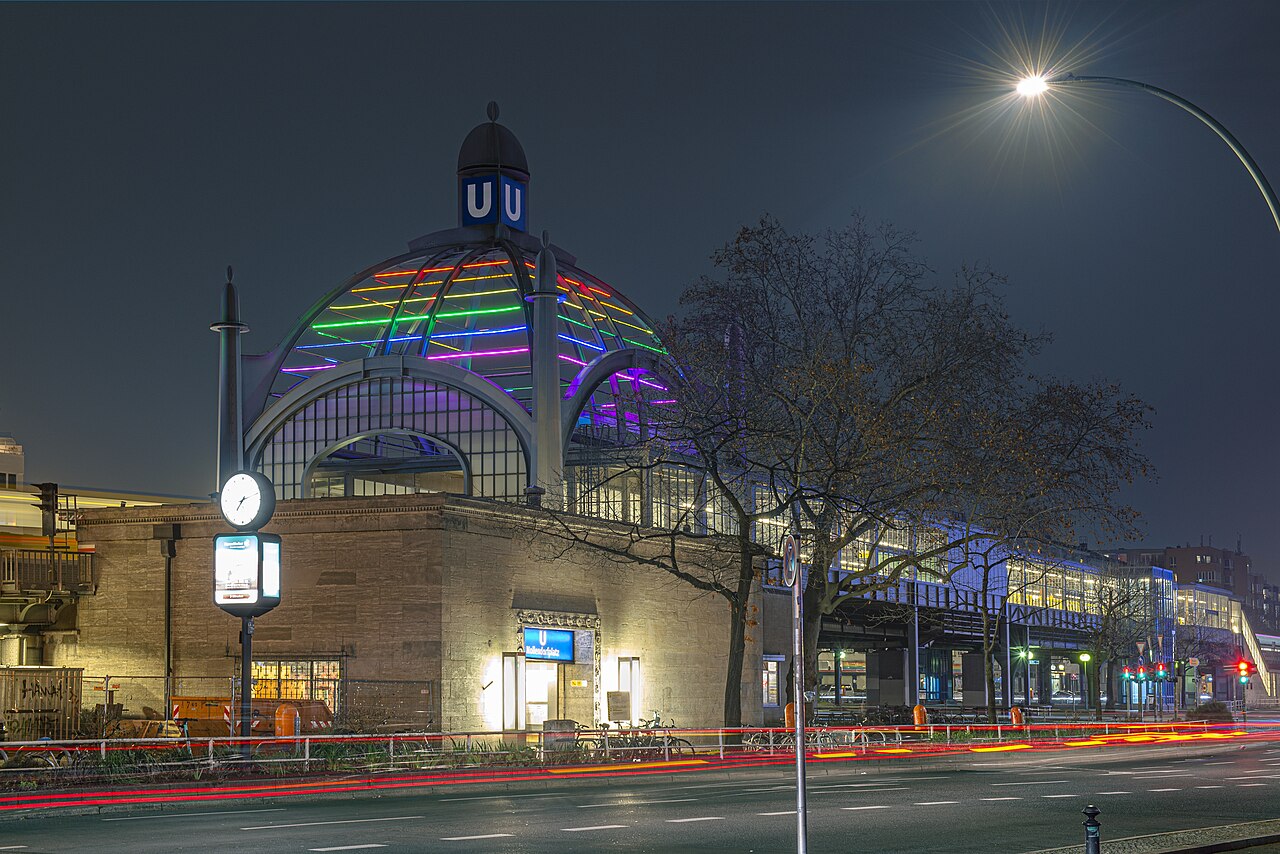
The elevated station opened in 1902 on Berlin's very first U-Bahn line, designed by Cremer & Wolffenstein with an ornate dome rebuilt as open ironwork after WWII damage. A plaque on the station's south façade, placed in 1989, was the first public memorial in any German city to the homosexual victims of Nazi persecution — a quiet marker on a square that was the historic centre of Berlin's gay nightlife well before Christopher Isherwood lived a few streets away.
- 15:52KaDeWe (Kaufhaus des Westens)
Continental Europe's largest department store, open Monday–Saturday 10:00–20:00 and closed Sundays like the rest of Berlin's ordinary retail. Six floors plus the famous top-floor food hall; as a major international retailer it's a safe bet for cards, though it's worth carrying some cash as backup like anywhere else in the city.
- 17:37Dinner La Côte
A small Schillerkiez wine bar and neighbourhood restaurant with a southern-European-leaning menu — raw fish, homemade pasta and a natural-wine list. Tables sit close together and the kitchen doesn't take children under 8 or strollers, so this is an evening-out spot rather than a family stop. Open Tuesday to Saturday from 18:00, kitchen closes at 22:30; closed Sunday and Monday.

Day 8Staré Město & the Astronomical Clock & nearby — a sights dayPrague, 9 stops
Prague's most photographed square and its most crowded — the Astronomical Clock draws a scrum on the hour, every hour. Slip a block back from Staroměstské náměstí and the lanes empty out fast, leading north into Josefov's six synagogues and the Old Jewish Cemetery's tilted headstones, or toward Charles Bridge's Old Town tower. Eat a street away from the main square; the view comes free, the food beside it does not.
- 07:42Check out of your stay
- 08:02Flight
- 11:00Drop your bags at your stay
- 11:30Old Jewish Cemetery
Roughly 12,000 visible tombstones packed onto uneven, centuries-layered ground, entered from Široká 3 — the oldest Jewish cemetery in Europe still in its original location, in use from the 15th century until 1787. Rabbi Loew's grave, the most visited, is often covered in small paper wishes tucked between the stones. One ticket (600 CZK) covers this plus five other Jewish Museum sites, but not the separately-ticketed Old-New Synagogue. Closed Saturdays and Jewish holidays; hours run to 16:30 in winter and later into the evening from spring to autumn. The uneven historic ground means it is not wheelchair accessible.
- 12:15Lunch Grand Café Orient
The only café in the world built entirely in the Cubist style, on the first floor of the House of the Black Madonna — climb the equally Cubist staircase past the small museum on the way up. Open from 09:00 on weekdays and 10:00 at weekends, until 21:00 daily, so it works for a mid-morning coffee break away from the Old Town Square crowds. There is no lift to the first floor.
- 13:15
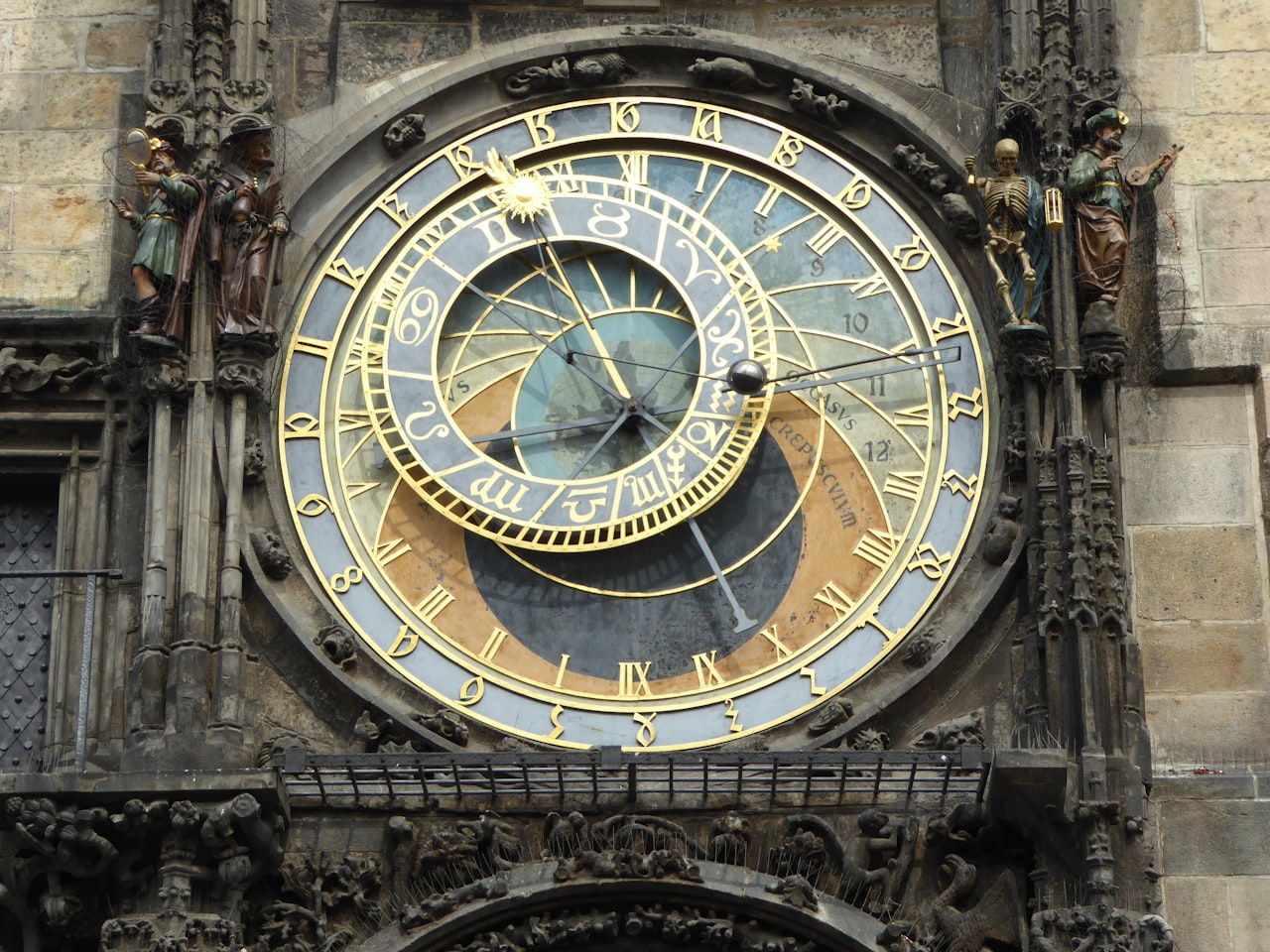
The tower and its 15th-century astronomical clock anchor Old Town Square — every hour on the hour (09:00–21:00) the clock's Apostles parade past two small windows above the dial, watched by a dense crowd below; you don't need a ticket to see this from the square. Climbing the tower is ticketed separately and gets you a lift up plus the best rooftop view over the square. The tower itself is barrier-free by lift, but the older historical rooms inside the town hall are not. Hours run later (until 20:00) from April through December and shorten to 10:00–19:00 in January–March.
- 14:15Botanicus (Ungelt)
A Czech natural-cosmetics brand — soaps, oils and herbal teas made from its own farm — with a shop tucked into the Ungelt courtyard right behind Týn Church, a quieter pocket than the square out front. Open daily 10:00–19:00, making it an easy stop between the church and the Jewish Quarter.
- 14:55Old-New Synagogue
The oldest active synagogue in Europe, still used for regular services, so it keeps synagogue hours rather than museum hours: open Sunday to Friday 09:00–17:00, closing an hour earlier on Fridays before Shabbat, and closed Saturdays and Jewish holidays. It is ticketed separately from the rest of the Jewish Museum's sites — its ticket does not combine with the Old Jewish Cemetery ticket, and vice versa. The building's medieval stepped entrance is not wheelchair accessible.
- 15:40Old Town Bridge Tower
The Old Town end of Charles Bridge, and the better-value of the bridge's two towers to climb — a steep spiral stair leads to a small museum and then the gallery, with a view straight down the bridge to the castle. Charles Bridge itself is free and always open; only the tower is ticketed. Hours run 10:00–18:00 in the colder months and extend to 20:30 in June–September, last entry 30 minutes before closing. The tower has no lift and is not wheelchair accessible.
- 16:25Kampa Island & Park
A flat, willow-shaded riverside park on the island the Vltava's Čertovka mill-stream carves off from the rest of Malá Strana — the classic photo spot for the water-wheels below Charles Bridge, and a genuinely quiet green break a five-minute walk from the bridge crowds. It's free and open around the clock; the wide lawn along the river (Na Kampě) is the spot to sit. No paid attractions here beyond Museum Kampa at its northern tip.
- 17:20
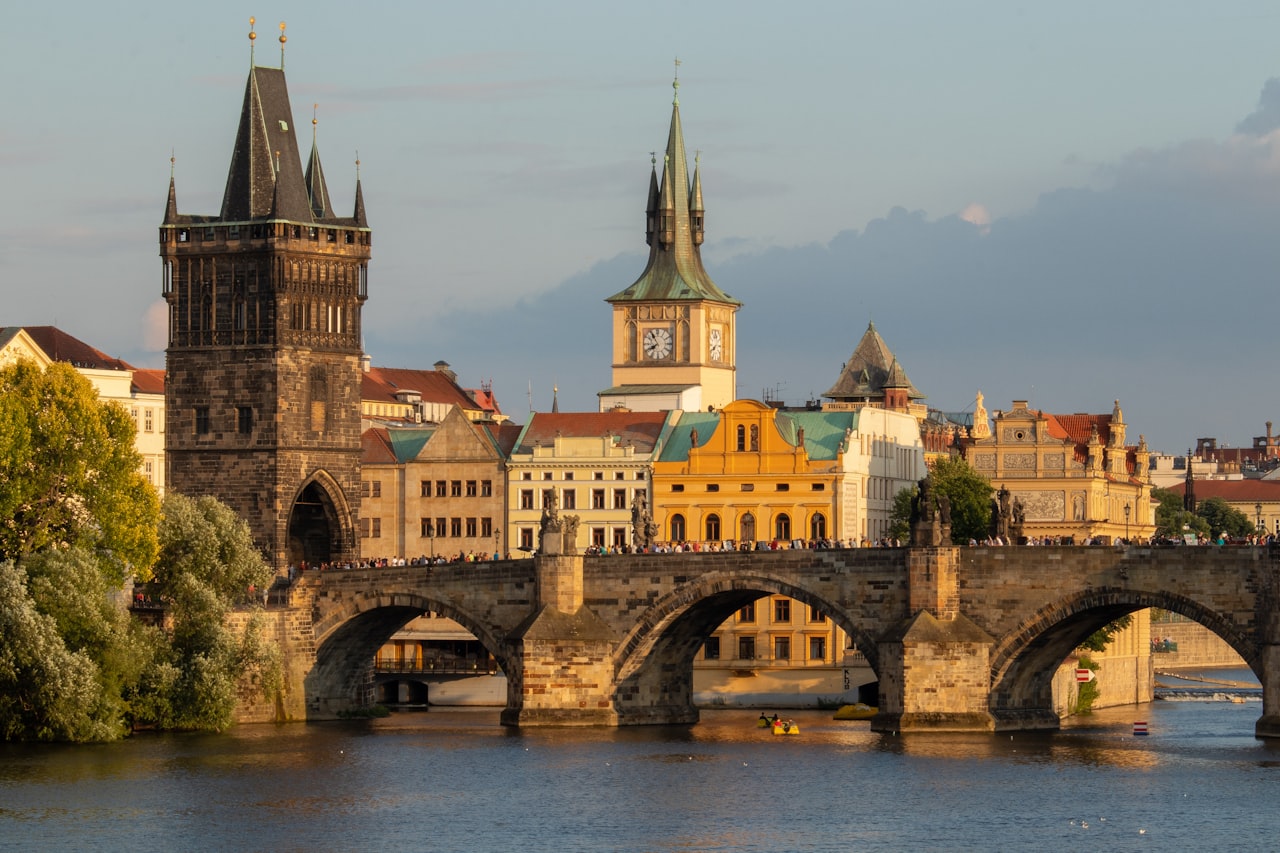
The view side of Charles Bridge — cross from Malá Strana's Mostecká street for the classic look back at Staré Město and the bridge's baroque saint statues. It's a free, unticketed, 24-hour pedestrian crossing; the flanking Malá Strana Bridge Towers can be climbed separately for a fee, on their own hours. Come at sunrise or after 22:00 for the bridge without the tour groups — by mid-morning it is one of the most crowded spots in the city.
- 18:05Dinner U Zlatého Tygra (At the Golden Tiger)
A small, dark, unchanged pivnice off Karlova street, made famous by writer Bohumil Hrabal and once host to Václav Havel and Bill Clinton over a beer — but it is still a genuine locals' pub, not a stage set. Cash only; there's an ATM nearby if you arrive without koruna. It gets hopelessly full in the evenings, so a phone reservation is worth making if you want a table rather than standing room. The menu skews meaty; the fried jalapeños with blue cheese are the one clearly vegetarian dish.


Day 9Vinohrady & Náměstí Míru & nearby — a sights dayPrague, 10 stops
Prague's leafiest residential quarter, and where locals actually eat and drink once the tourist-centre kitchens close. Náměstí Míru's neo-Gothic church anchors a street pattern of Art Nouveau apartment blocks, wine bars and a growing share of the city's better restaurants; Riegrovy sady's beer garden looks back at the castle skyline from the other side of the river. No single must-see — the point of a day here is the neighbourhood itself.
- 08:00Breakfast Café Sladkovský
A corner café-bistro toward the Vršovice edge of Vinohrady, serving sandwiches, burgers and pancakes with a late-night bar turn — open until midnight most nights, from 11:00 on Sundays. Cards, cash and even bitcoin are all accepted.
- 08:30Havlíček Gardens (Grébovka)
A hillside park built over the spoil from digging the Vinohrady rail tunnel, now home to a working 1.7-hectare vineyard that still produces its own wine. Free to enter, open until midnight April to October and until 22:00 the rest of the year. The wooden vineyard gazebo hosts a wine-harvest festival every autumn.
- 09:50Rieger Gardens
A big sloping park above Vinohrady with wide views back toward the castle skyline across the river — locals come for the grass, not a single sight. The beer garden inside runs seasonally, roughly April through October, opening from around 14:00 on weekdays and 11:00 on weekends; it's closed over winter.
- 11:05
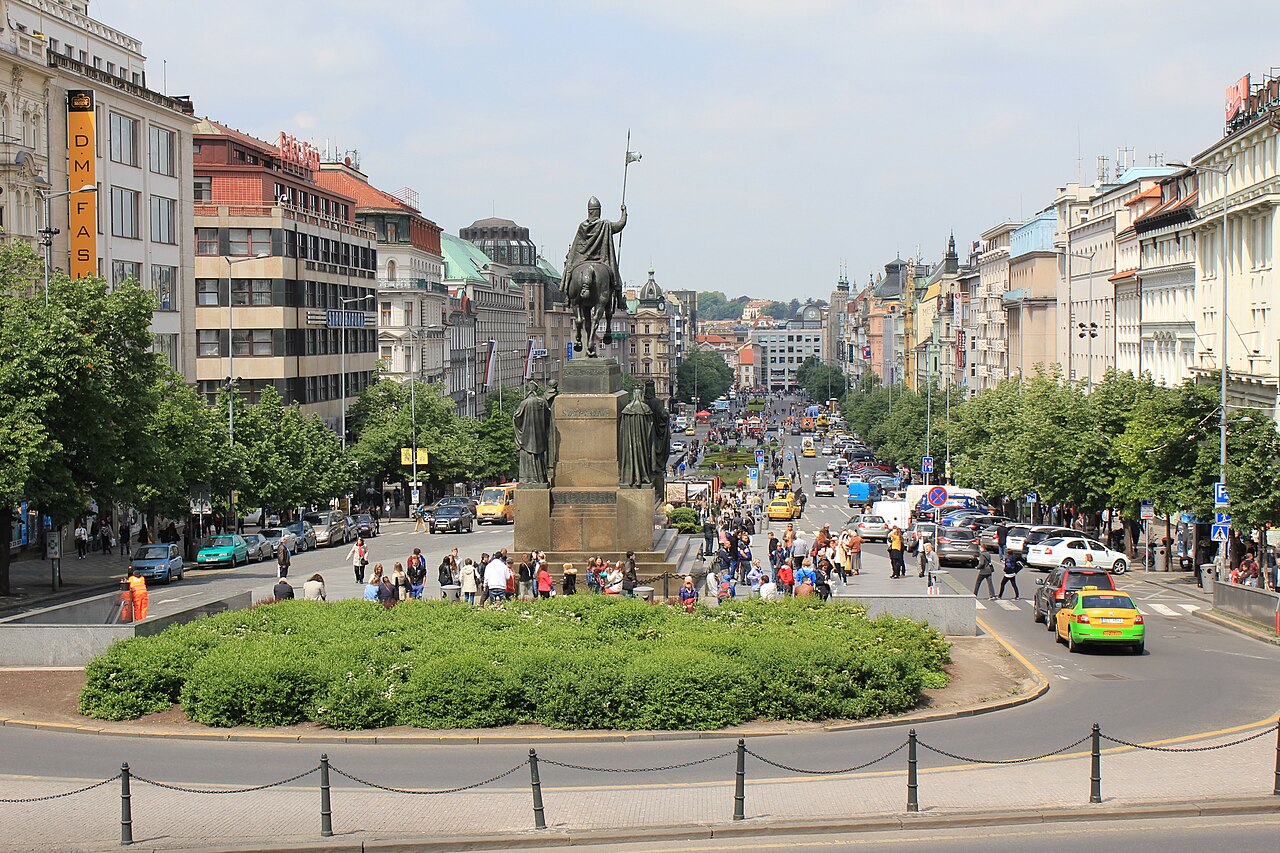
A half-kilometre pedestrian-and-tram boulevard running from the National Museum down to the Old Town gate — the site of the 1989 Velvet Revolution protests, now lined with cinemas, chain stores and, at night, stag-party bars. The “0% commission” currency-exchange booths along it quote a bad buy rate in small print; use a bank ATM instead and always decline any “convert to home currency” offer. Eat a street back rather than at the square-front cafés.
- 12:00Lunch Grébovka Pavilion
A garden café inside the Grébovka vineyard, built around a faithful replica of the park's 1870s bowling alley. Cash only — no cards accepted. A relaxed spot for a glass of the vineyard's own wine after the climb up.
- 13:00National Museum
The neo-Renaissance building crowning Wenceslas Square, open daily 10:00–18:00 with no fixed weekly closure. Tickets are sold online, by app, at a self-service machine, or at the box office. The Historical Building is wheelchair accessible via the New Building entrance and lifts, with wheelchairs available to borrow at the cloakroom, though the dome and the Children's Museum's upper floors are not reachable.
- 15:15Lucerna Passage
An Art Nouveau covered passage linking Štěpánská and Vodičkova, free to walk through, with a cinema, a music bar, shops, a café and one of the city's working paternoster lifts inside. Look up in the main hall for David Černý's upside-down parody of the Wenceslas statue hanging from the ceiling — the horse's rider is dead, the horse very much alive.
- 16:00Mucha Museum
Run by the Mucha Foundation at Savarin Palace since February 2025 — if an older guide points you to the previous Panská Street address, that location no longer holds the family-authorised collection. Open daily 10:00–18:00, closed only on 24 December; adult admission 300 CZK.
- 17:20
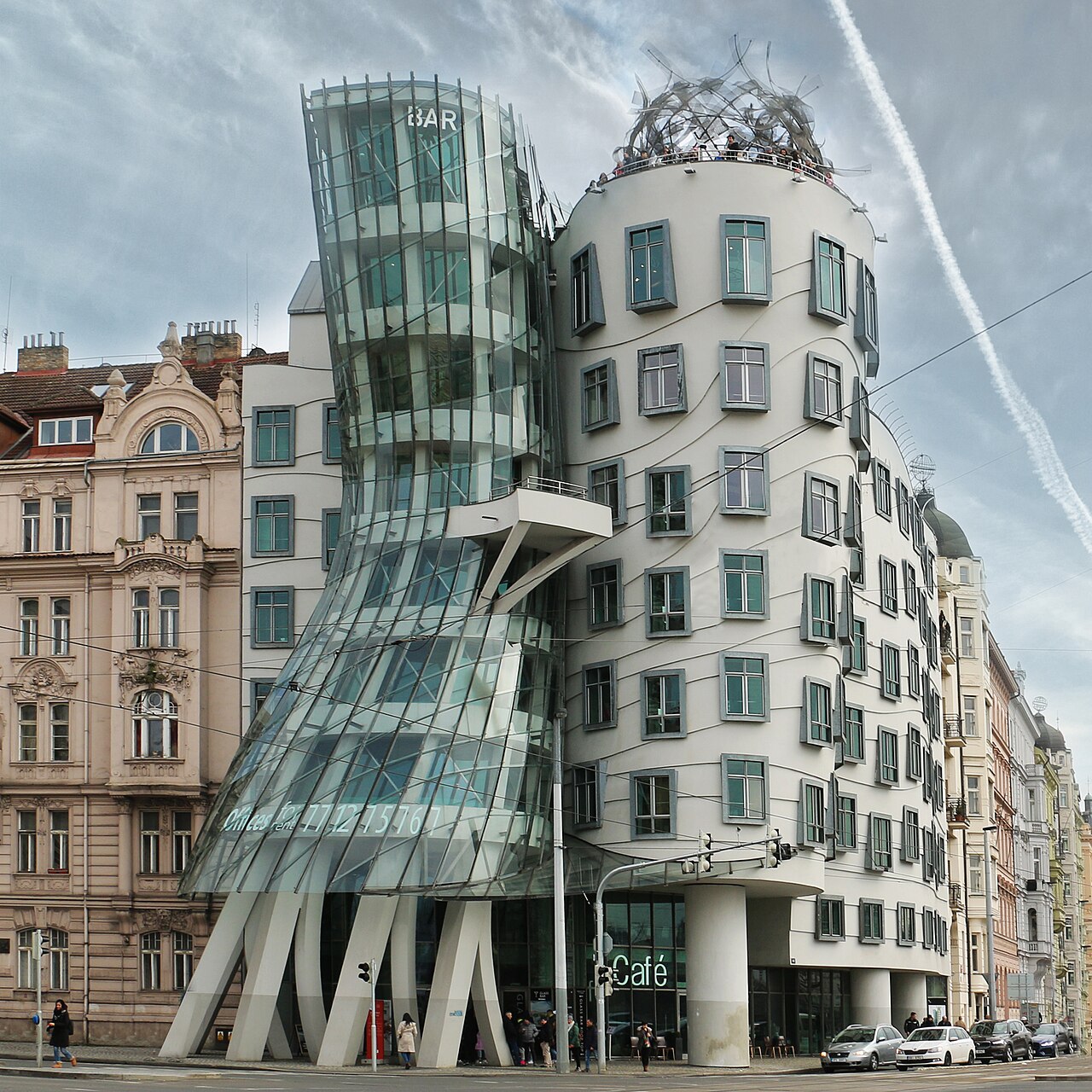
Frank Gehry and Vlado Milunić's twisting glass-and-concrete tower on the New Town embankment, free to view and photograph from outside any time. The building itself is mostly offices and a hotel; the rooftop bar and restaurant inside are open to anyone dining there, but there's no separate public viewing deck.
- 17:55Dinner Vinohradský Parlament
A grand, high-ceilinged corner restaurant right on náměstí Míru serving Czech regional cooking and dumplings from mid-morning to midnight most nights. There's a vegetarian option on the menu, though it's a short list — this is a meat-and-dumplings kitchen at heart. Cards accepted.


Day 10Vyšehrad Fortress & nearby — a sights dayPrague, 12 stops
A fortress park on a river-bend cliff with a fraction of the castle's crowds. The Slavín cemetery holds Dvořák, Čapek and most of the country's other cultural names under one shared monument; the ramparts beyond it give the best open view of the Vltava's curve in the city. Half a day is enough, which makes it an easy pairing with a light morning or evening elsewhere.
- 08:00Breakfast Café Savoy
An 1893 grand café at the Újezd end of Malá Strana, on the walk up to the Petřín funicular — a busy all-day café with pastries and light meals, turning into a quieter, French-leaning restaurant for dinner. Open 08:00–22:00 on weekdays, from 09:00 on weekends and holidays. It keeps its own wine list, so this isn't a dry option. It's a step further from the Charles Bridge crowds than most Malá Strana cafés, which is exactly the point.
- 08:30
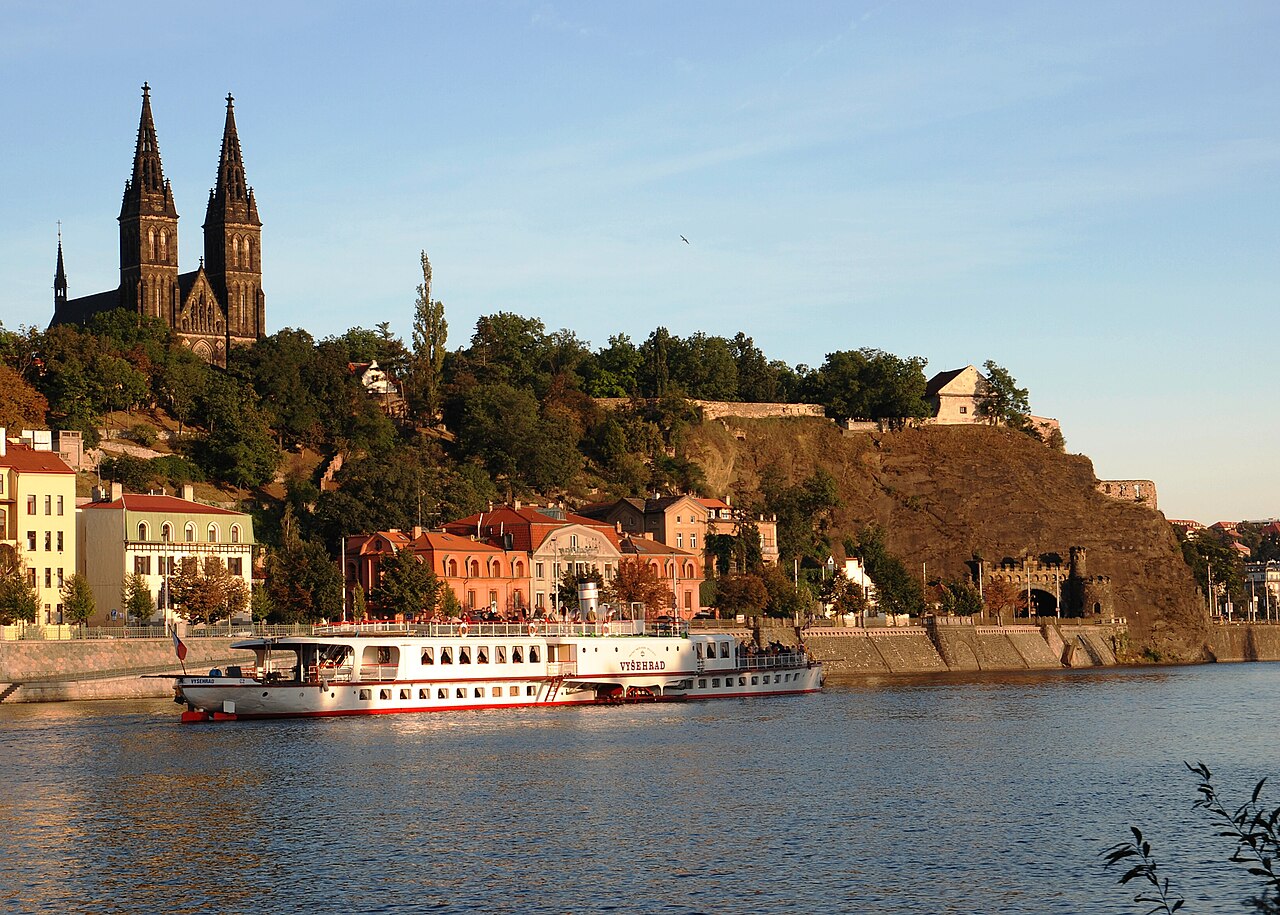
The fortified park and ramparts are free to enter year-round and give the widest open view of the Vltava's bend in the city. The grounds themselves are stated barrier-free, though the approach up the hill and the historic cobbling need extra care. The Leopold Gate infocentre, where paid tours are booked, keeps shorter hours — roughly 10:00–12:00 and 13:00–18:00.
- 10:00Slavín Cemetery
The shared national monument holding Dvořák, Smetana and most of the country's other cultural names, free to visit as part of the fortress grounds. It's an open-air memorial cloister, not a museum — quiet contemplation rather than a ticketed stop.
- 10:35Vyšehrad Casemates
A 45-minute guided walk through the fortress's underground corridors to the Gorlice hall, where the original Baroque statues from Charles Bridge are kept out of the weather. Timed tours run through the day in Czech and English — book at the Leopold Gate infocentre or online rather than expecting to walk straight in.
- 11:35St Martin's Rotunda
Prague's oldest surviving rotunda, built in the late 11th century and still used for regular Mass. The exterior can be viewed anytime within the free grounds; going inside needs prior arrangement through the Vyšehrad Chapter rather than a walk-up ticket.
- 12:05Lunch Manifesto Market (Anděl)
An open-air, industrial-style street-food hall a short walk from Anděl metro, with a rotating roster of independent kitchens spanning Asian, Mexican, Italian, Indian, American and Czech food, plus a dedicated beer bar. Vendors change over time — check the current stall list rather than one you read before your trip.
- 13:05Staropramen Brewery Visitor Centre
Closed Sundays and Mondays. The working Staropramen brewery, founded 1869, runs a roughly 50-minute guided multimedia tour ending with a beer tasting. Tours run in Czech and English through the day and need advance booking online — don't just show up expecting a slot.
- 14:35
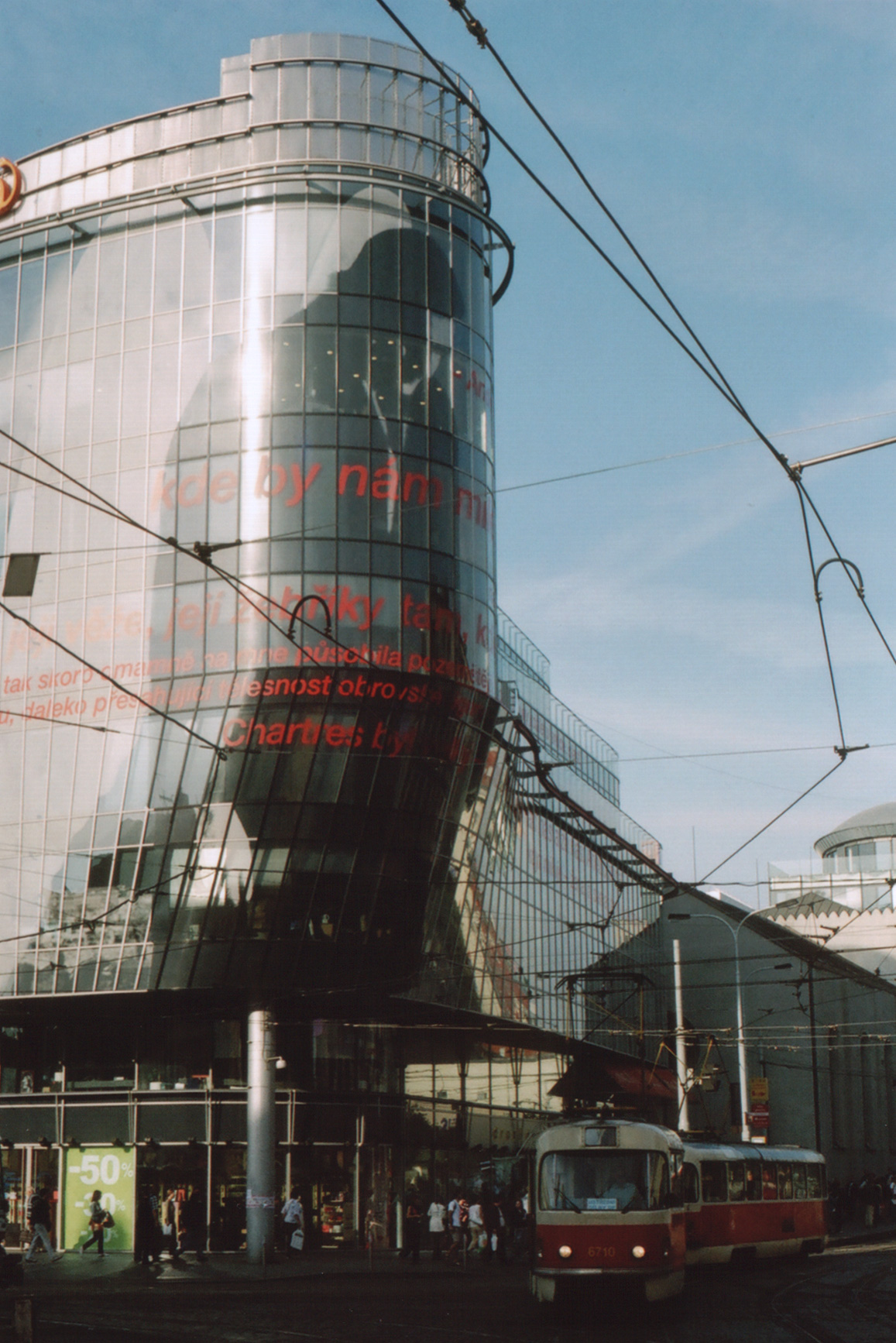
The curved glass office-and-retail building at Anděl junction, completed in 2000 by architect Jean Nouvel, with a large angel image serigraphed onto its corner facade — a nod to a 19th-century building of the same name that stood here until it was demolished in 1980 for the metro. It's a free exterior photo stop rather than a ticketed sight: the building itself is offices and shops, with no visitor program inside.
- 15:05Hořejší nábřeží (Smíchov riverside walk)
The Smíchov-side embankment where Kampa park's southern tip gives way to the Anděl district — a free, open riverside promenade with joggers, cyclists and views across the Vltava. It's the walk you'd take to reach the Dětský ostrov footbridge a little further north along the same bank.
- 15:50Children's Island
A small, free, car-free island in the Vltava reached only by a footbridge from Janáčkovo nábřeží, on the Smíchov riverbank just south of Kampa. It's a genuine playground island — age-grouped play equipment, a football pitch, a basketball/volleyball court, and a restaurant on the southern end. Hours vary seasonally and aren't published consistently, so treat it as a daytime-into-evening stop rather than checking a fixed closing time.
- 17:05
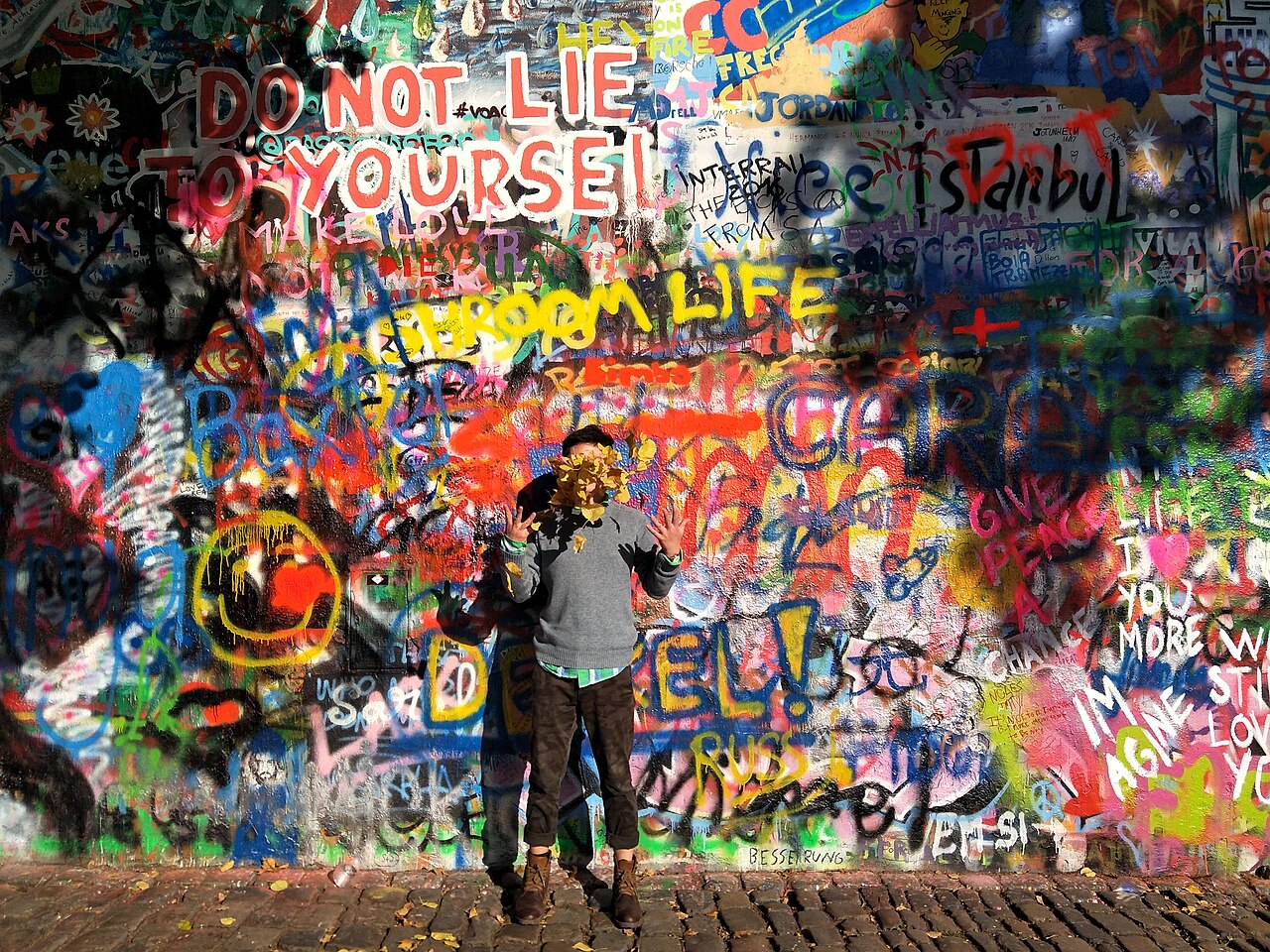
A wall of grafittied Lennon portraits and Beatles lyrics that became an unofficial memorial and free-speech symbol under communist rule, and it is still repainted over constantly today — whatever you see one week will likely be gone the next. It's free, unticketed, and on a public street, so there's no real 'opening hours'; daylight is easiest for photos since the lane is narrow and unlit at night.
- 17:35Dinner Café Bistro Citadela
A café-bistro inside the fortress's Old Burgrave's Residence, open daily 10:00–22:00 (shorter in bad weather) with a garden terrace over the ramparts. Modern burgers, sandwiches and pancakes rather than traditional Czech food; vegetarian options include a Portobello burger, and both cash and card are accepted.


Day 11Schönbrunn Palace & Gardens — a garden dayVienna, 2 stops
The summer palace, its formal gardens climbing to the Gloriette, and the world's oldest surviving zoo in the same grounds. This is a full day on its own and should be planned as one — palace tickets are timed, the gardens are free, and the walk up to the Gloriette view is longer than it looks.
- 07:45Check out of your stay
- 08:05Flight
- 11:00Drop your bags at your stay
- 13:00Schönbrunn Gardens & Gloriette
Formal parterres rising to the Gloriette on the ridge, with the best view back over the palace and the city behind it. The park opens at 06:30, long before the palace, which is the quietest hour to walk it. Several enclosures inside the park — the maze, the privy garden, the Gloriette terrace — are ticketed separately from the park itself. The garden is reached step-free by the ramp to the right of the palace as you face it — but the Gloriette viewing terrace, the maze platform and the Privy Garden are reachable only by stairs.
- 14:45Schönbrunn Zoo
The oldest zoo still operating anywhere, founded in 1752 inside the palace grounds, with the original baroque pavilion at its centre. Opens daily at 09:00; closing moves with the season, as late as 18:30 from April to September and as early as 16:30 in midwinter, with last entry half an hour before.
Day 12Innere Stadt & Stephansdom — a sights dayVienna, 10 stops
The medieval core inside the Ring, built around the cathedral's tiled roof. Graben and Kohlmarkt for the grand shopfronts, narrow lanes behind them for the old coffee houses. Everything here is walkable and everything here is priced accordingly — eat a street back from the main squares.
- 08:00Breakfast Demel
The imperial court confectioner, still making cakes behind a glass kitchen you can watch from the room. Open daily 10:00–19:00. It closes earlier than most Viennese cafés, so it is an afternoon stop rather than an evening one, and the queue at the front counter moves faster than the seated room.
- 09:00
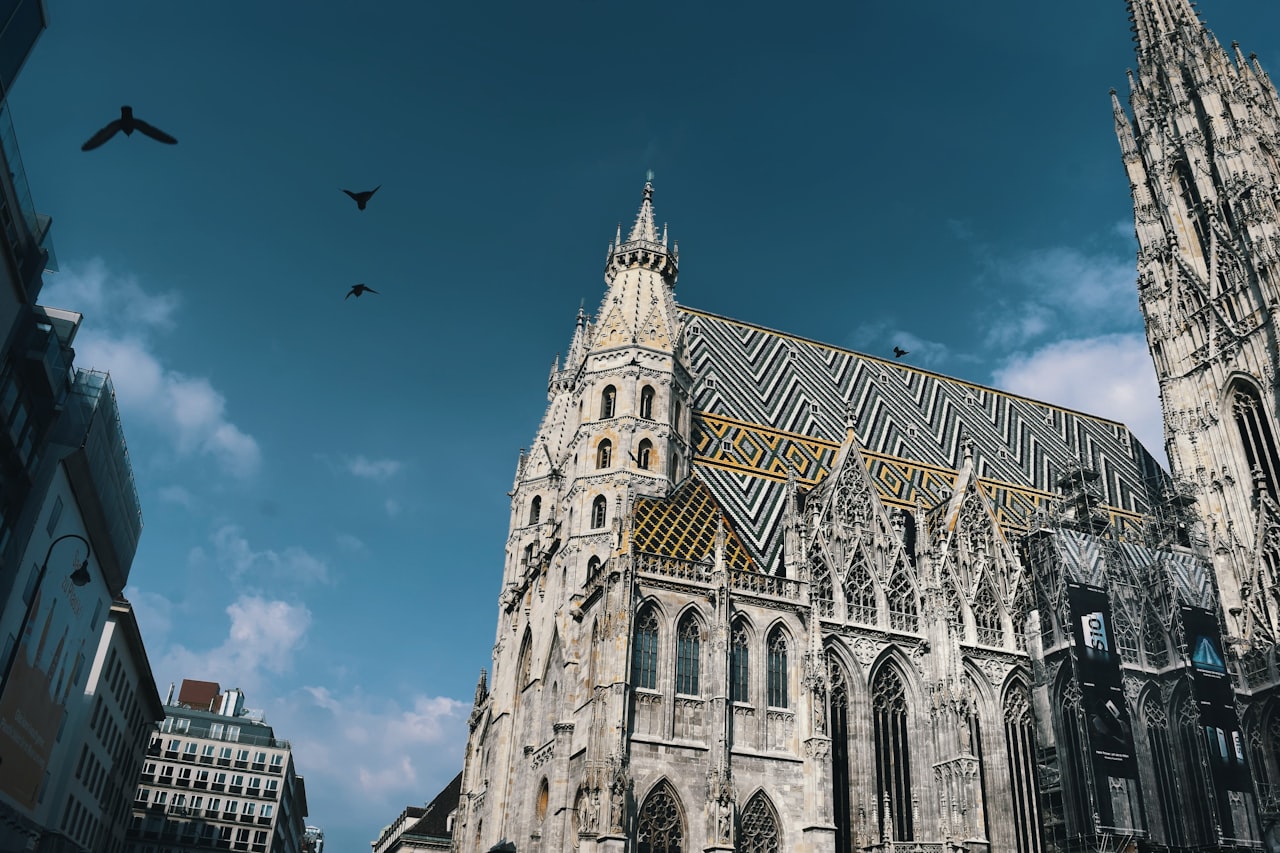
The cathedral is open from 06:00 to 22:00 for prayer, but sightseeing is confined to 09:00–11:30 and 13:00–16:30 on weekdays and Saturdays, and afternoons only on Sundays and holidays — services occupy the gaps. The nave is free to enter; the towers and catacombs are ticketed separately.
- 10:15
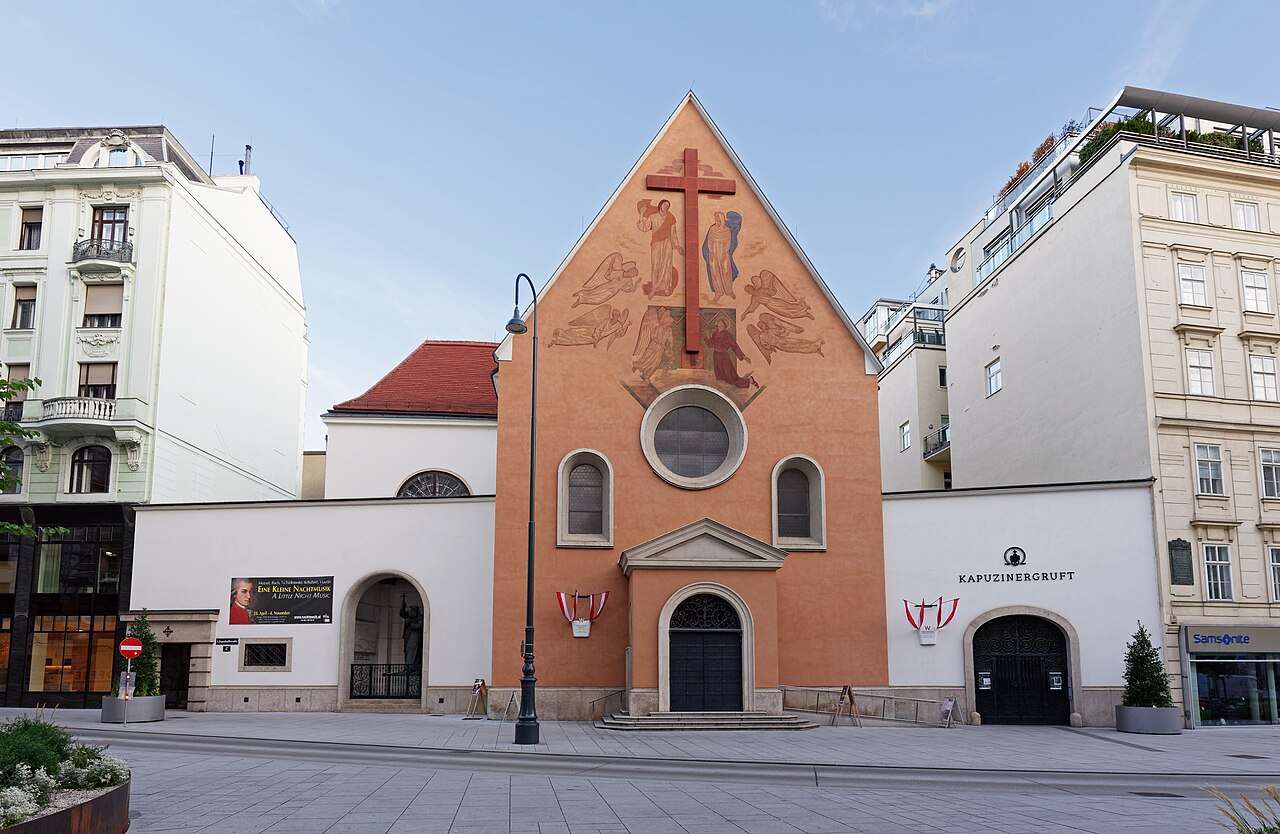
The Habsburg burial vault beneath the Capuchin church — 150 members of the family in tin coffins that get steadily more elaborate as the dynasty goes on. Open daily 10:00–18:00 with last entry at 17:30; €15 adult, reduced with the Vienna City Card. Holiday hours differ.
- 11:15St Peter's Church
A domed baroque church tucked behind the Graben, dim and gilded inside and almost always emptier than the cathedral two minutes away. Free to enter, donations welcome, and there is a free organ concert daily at 15:00.
- 12:00Lunch Trzesniewski
Open sandwiches the size of a palm, twenty-odd spreads, eaten standing at a counter since 1902 — Kafka is said to have been a regular. Two or three plus a small beer is lunch for a few euros, and it is the fastest honest meal in the first district.
- 13:00Jewish Museum Vienna
The city's Jewish history told in a palace on Dorotheergasse, with a second site at Judenplatz built over an excavated medieval synagogue. One ticket covers both, and they are ten minutes apart on foot.
- 14:45
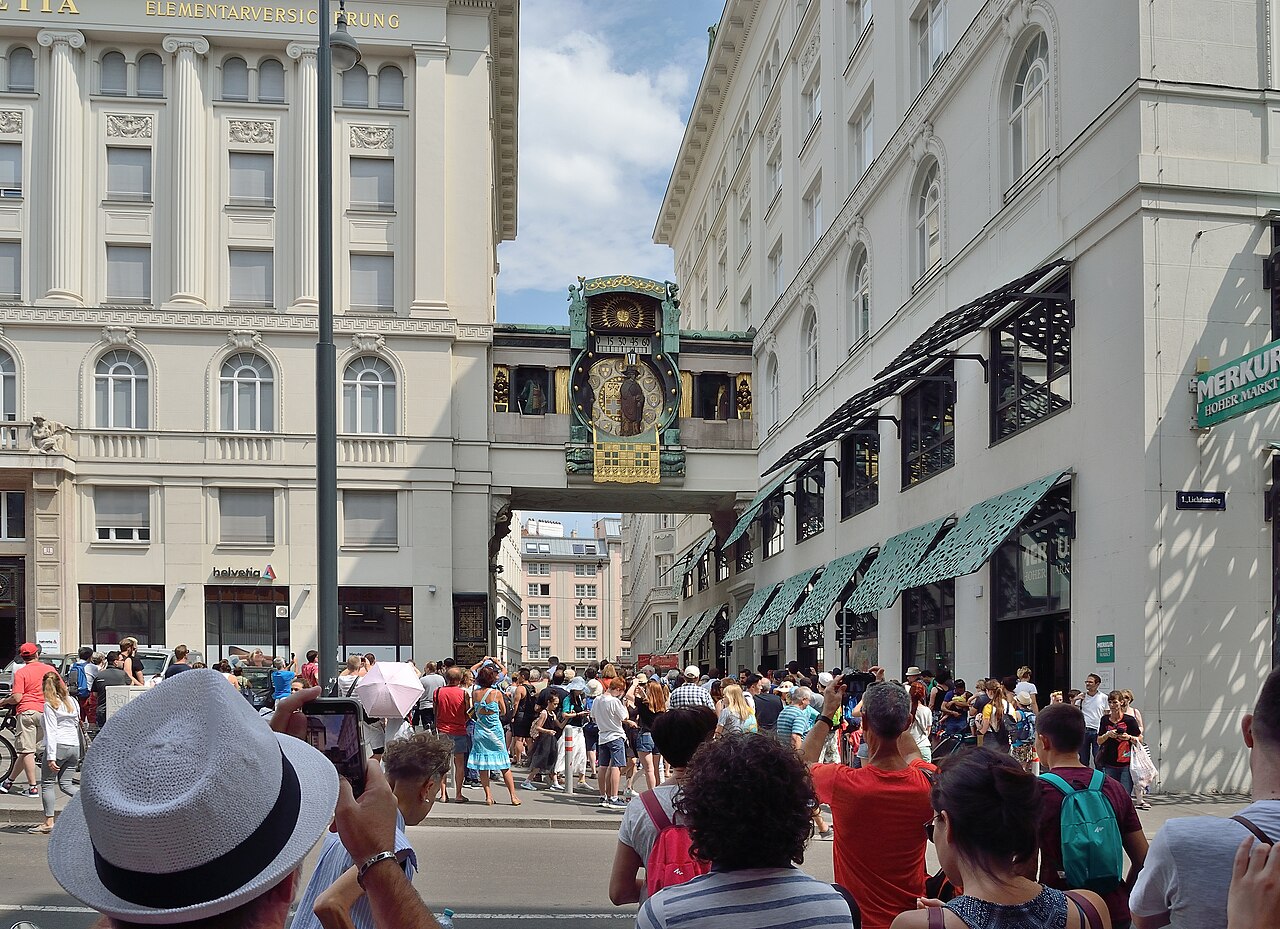
An Art Nouveau clock bridging two buildings, across which twelve figures from Vienna's history move one per hour. At noon all twelve parade in sequence with music — that is the thing to see, and it draws a crowd on the pavement below.
- 15:20Mozarthaus Vienna
The only one of Mozart's Vienna apartments still standing, where he wrote The Marriage of Figaro. Open daily 10:00–19:00. The flat itself is on the first floor and is smaller than the ticket price suggests; the two floors below set the city he worked in.
- 16:35Haus der Musik
An interactive sound museum over five floors — you conduct the Vienna Philharmonic on a screen and it plays back your tempo. Open daily 10:00–22:00 with last entry at 21:00, which makes it one of the few museums in the city usable in the evening. €19 adult, €8 under 12.
- 18:20Dinner Figlmüller (Wollzeile)
The schnitzel most visitors come for — pounded wider than the plate, breaded and fried in a lane off Stephansplatz since 1905. Open daily 11:00–22:30 but the kitchen stops at 21:30. It does not take reservations for small groups at busy times and the queue is part of the experience; go early or late.


Day 13Naschmarkt & Karlsplatz — a sights dayVienna, 7 stops
The long market strip and the streets either side of it, running down from Karlsplatz where the Secession's golden dome and Karlskirche sit almost opposite each other. This is where Vienna eats — market stalls, Levantine food, and the Saturday flea market at the far end.
- 09:00Wien Museum
The city's own museum, retelling Vienna from the first settlement to now — and the permanent exhibition is free, with no ticket needed. Closed Mondays. Thursdays it stays open to 21:00, one of the few late museum evenings in the city. Also closed 1 January, 1 May and 25 December.
- 10:45
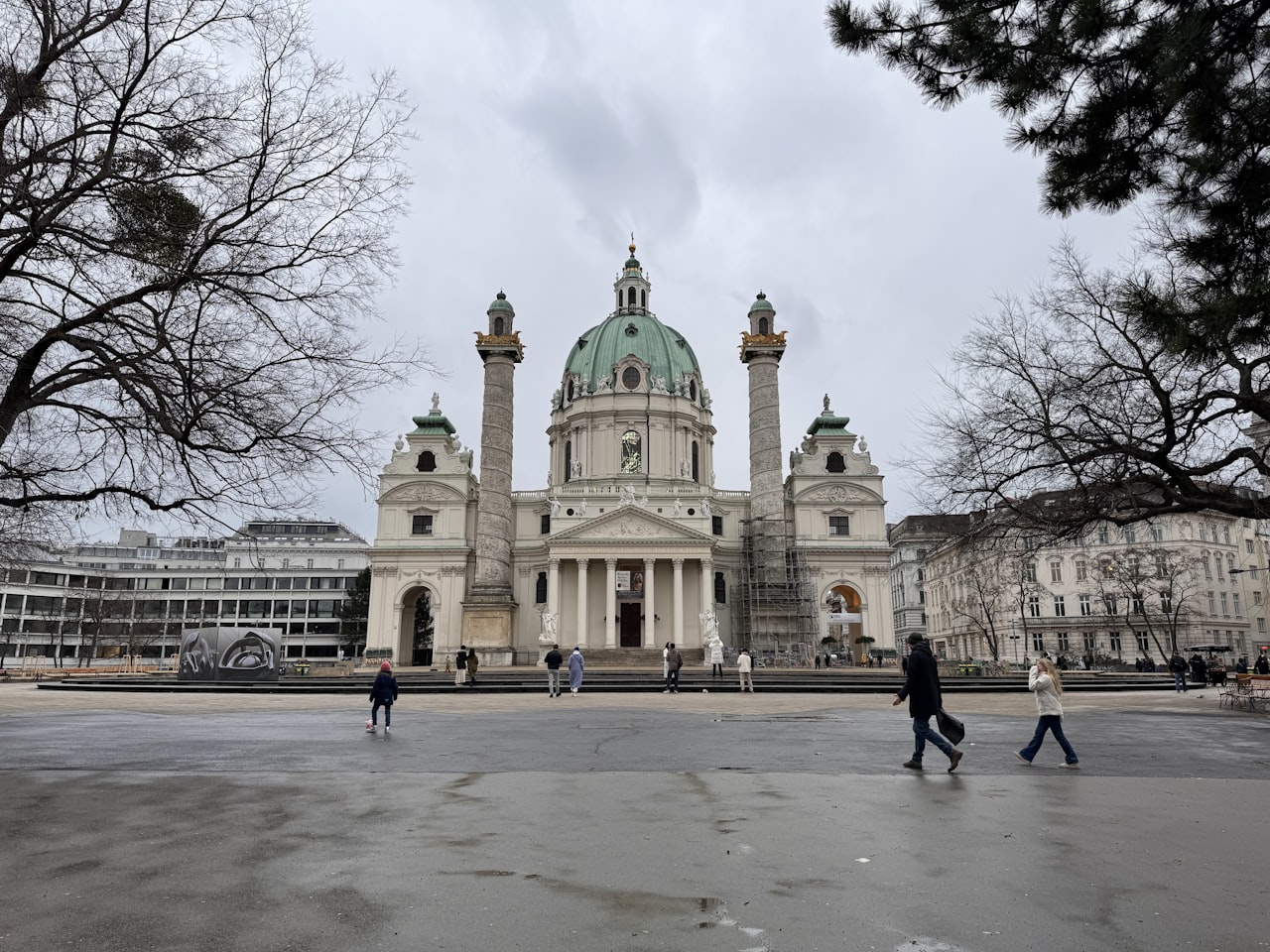
A domed baroque church with two Trajan-style columns, set behind a reflecting pool at the end of Karlsplatz. Ticketed visits run Monday to Saturday 09:00–18:00, and Sundays and holidays only from 11:45 after services. The lift up into the dome is the draw — it puts you level with the ceiling fresco.
- 11:45Otto Wagner Pavilion
Two green-and-gold station pavilions of 1899, the cleanest surviving statement of Viennese Jugendstil in the open air. One is a small museum about Wagner and the city railway; the other is a café. Both sit on the square, so seeing the outside costs nothing.
- 12:30Lunch Glacis Beisl
A garden Beisl tucked into the back of the MuseumsQuartier, on the old glacis where the city walls once stood — shaded tables and Austrian cooking a few minutes from the museums. Open daily from noon to midnight, but the kitchen stops at 22:30 and at 21:30 on Sundays.
- 13:30Secession Building
The gilded dome the Viennese call the golden cabbage, built in 1898 as a manifesto against the academy. Klimt's Beethoven Frieze is in the basement and is the reason most people come. Closed Mondays — open Tuesday to Sunday 10:00–18:00.
- 14:45Naschmarkt
Vienna's long market strip — produce and spice stalls at the Karlsplatz end, sit-down places the further you walk. Stalls keep their own hours but the market follows Austrian retail law: roughly 06:00 to 19:30 on weekdays, closing earlier on Saturday, and shut on Sundays. The flea market at the far end runs Saturdays only.
- 17:30Dinner Gasthaus Ubl
Closed Monday and Tuesday, and cash only — no cards. Doors stay open until midnight but the kitchen stops taking orders earlier (around 13:15 at lunch, 22:00 at dinner). The beer garden out back is a good fallback if the dining room is full.

Day 14Grinzing & Heiligenstadt Wine Villages & nearby — a sights dayVienna, 8 stops
A wine village swallowed by the city but still working, on the vine slopes at the northern edge. Heuriger taverns serve their own new wine from a buffet counter, opening in irregular seasonal stretches rather than to fixed hours. An evening rather than a day, and worth pairing with the ridge walk above it.
- 07:40Check out of your stay
- 08:30Grinzing Cemetery
A working cemetery on the vine slopes above the village, and the resting place of Gustav Mahler — his grave carries only his name, cut into a plain stone block at his own request, in group 6, row 7. Quiet, wooded gravel paths make it as much a green pause as a sight. Free to enter; the hours are the longer April to September window, and shrink to roughly 08:00-17:00 in winter.
- 09:30St Joseph's Church (Kahlenberg)
The chapel where King Jan III Sobieski is remembered for breaking the 1683 Ottoman siege of Vienna, inside a church that has stood on this summit since the 1630s. It is currently under restoration, so only the Sobieski Chapel is open to the public — Saturdays 09:00-13:00 and 14:00-18:00, Sundays and holidays 14:00-18:00; other days are group visits by advance booking only. Free to enter, and a short walk from the Kahlenberg viewpoint and its bus 38A stop.
- 10:15Kahlenberg Viewpoint
The terrace at 484 metres with the whole city below and the Danube running through it — the view Vienna puts on postcards, and free. Bus 38A climbs here from Heiligenstadt. Bring a layer: it is reliably colder and windier than the city, and there is little shelter.
- 11:30Leopoldsberg
The next hill along from Kahlenberg, with a ruined castle church and a quieter terrace looking straight down the Danube. The ridge walk between the two takes about forty minutes through the woods and is the reason to come up here rather than just for the view.
- 13:00Lunch Mayer am Pfarrplatz
A working Heuriger in the house Beethoven rented in 1817, where he worked on the Ninth Symphony — his rooms are still up the stairs from the terrace. Its own wine, served with a cold buffet you order at the counter. Opens daily from noon. Heuriger closing times move with the season and the crowd, so treat the evening end as approximate.
- 14:00Brunnenmarkt
The longest street market in Vienna and almost entirely a local one — Turkish and Balkan greengrocers, butchers and bakeries down a pedestrian street, at a fraction of Naschmarkt prices. Weekday mornings are the real thing. Closed Sundays like all Austrian retail.
- 15:15
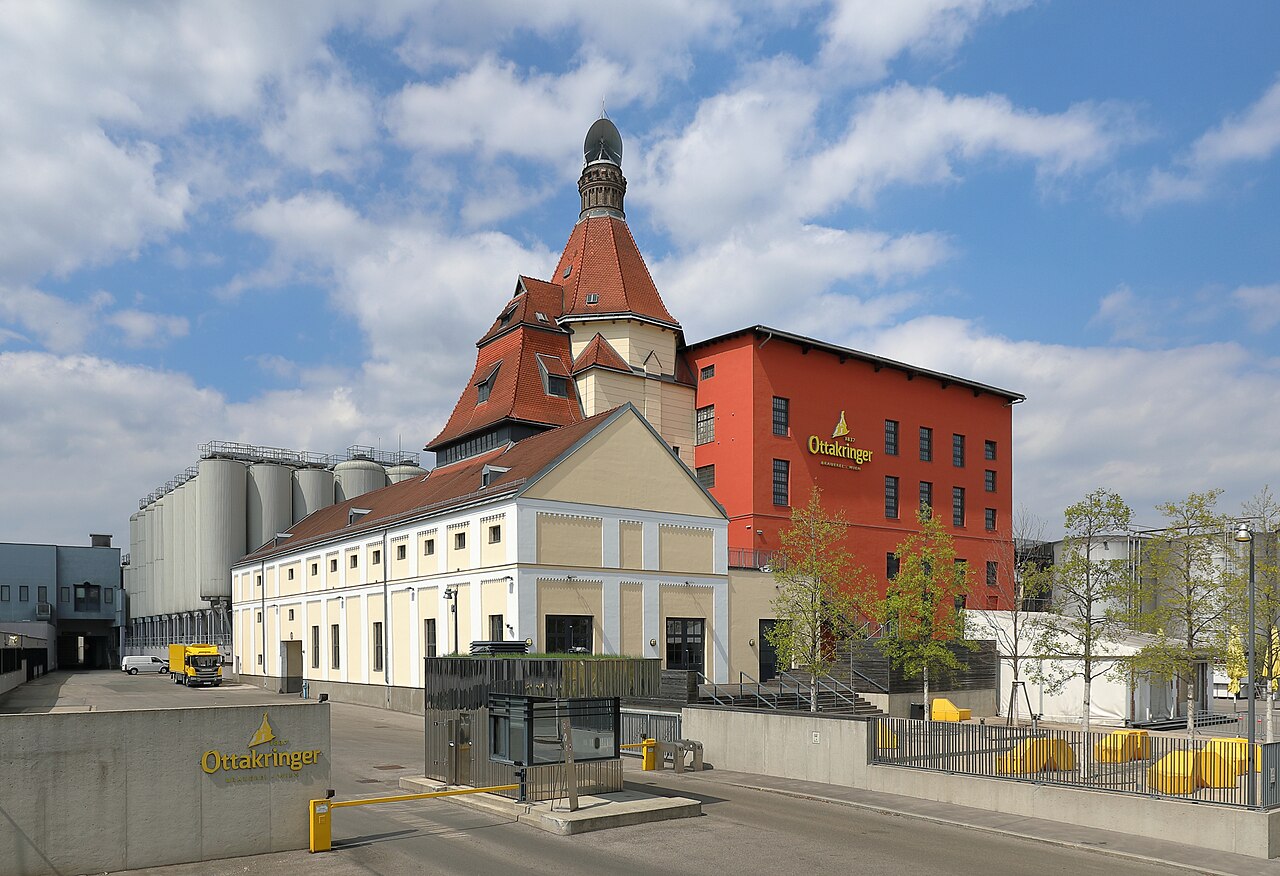
Vienna's last big independent brewery, still working in the district it is named after, with tours and a taproom. It is a working plant rather than a museum, so tour times are fixed and limited — book rather than turn up.
- 17:30Dinner Feuerwehr Wagner
One of Grinzing's best-known Heuriger, with a shaded natural garden for 450 and a buffet that explicitly lists vegetarian, vegan and gluten-free dishes next to the usual roasts — unusual for this style of place. Genuinely set up for children, with kids' portions, high chairs and a playground. Cash and card are both accepted. Hours follow the same ausg'steckt pattern as every Heuriger in Grinzing — irregular seasonal opening rather than a fixed calendar — so treat them as the general shape and check before a special trip.
