
Amsterdam & Paris — two capitals, one direct train, 7 days
- 7 days, 2 cities
- Balanced pace
- About 40 min walking a day
Two capitals that sit close enough to treat as one trip: a direct Eurostar links Amsterdam Centraal to Paris Gare du Nord in a little over three hours, city centre to city centre, with none of the airport time that makes the same distance by plane no faster. Amsterdam first — the concentric canals, the Rijksmuseum and Van Gogh at one end of a single square, the rooms where a family hid for two years. Then Paris, at the scale that actually rewards walking. One neighbourhood a day in each, every stop chosen from human-verified places, and the plan opens offline once saved.
Day by day
Day 1Museumkwartier & Vondelpark — a museum dayAmsterdam, 7 stops
Three major collections and a concert hall around one grassy square, with the city's biggest park behind them — the Dutch Golden Age in one building, Van Gogh's own hand in the next, and modern art across the plaza.
- 08:00Breakfast Cobra Café
A ground-floor lunch café right on Museumplein, open daily 10:30-19:00 — the easiest spot to sit down between the Rijksmuseum and the Van Gogh Museum without leaving the square. Founded in 1999 alongside the CoBrA art movement, the room is furnished and decorated by CoBrA artists Karel Appel and Corneille, so even a coffee stop has something to look at. The menu runs sandwiches, bitterballen, hand-cut fries and apple pie, with a chicken-avocado and a classic cheese sandwich covering vegetarians; drinks stretch from fresh juice to local beer, jenever and cocktails. Casual and walk-in — no booking needed even with a group.
- 08:30Vondelpark
Amsterdam's best-known park, entered here from its northeastern corner a few minutes' walk from the museums via Constantijn Huygensstraat. There are no gates and no entrance fee — it's open around the clock, every day of the year. Inside: a historic 1937 open-air theatre with free summer programming, a rose garden, ponds full of herons, and paths thick with cyclists (stay off the cycle lanes — bikes have the right of way and won't stop for a distracted pedestrian). The city's own visitor guide lists a wheelchair-accessible entrance, provisions for reduced mobility and accessible restrooms. Skip renting a bike just for the park — walking or a short tram ride in is easier than fighting rental queues for a 90-minute loop.
- 10:00
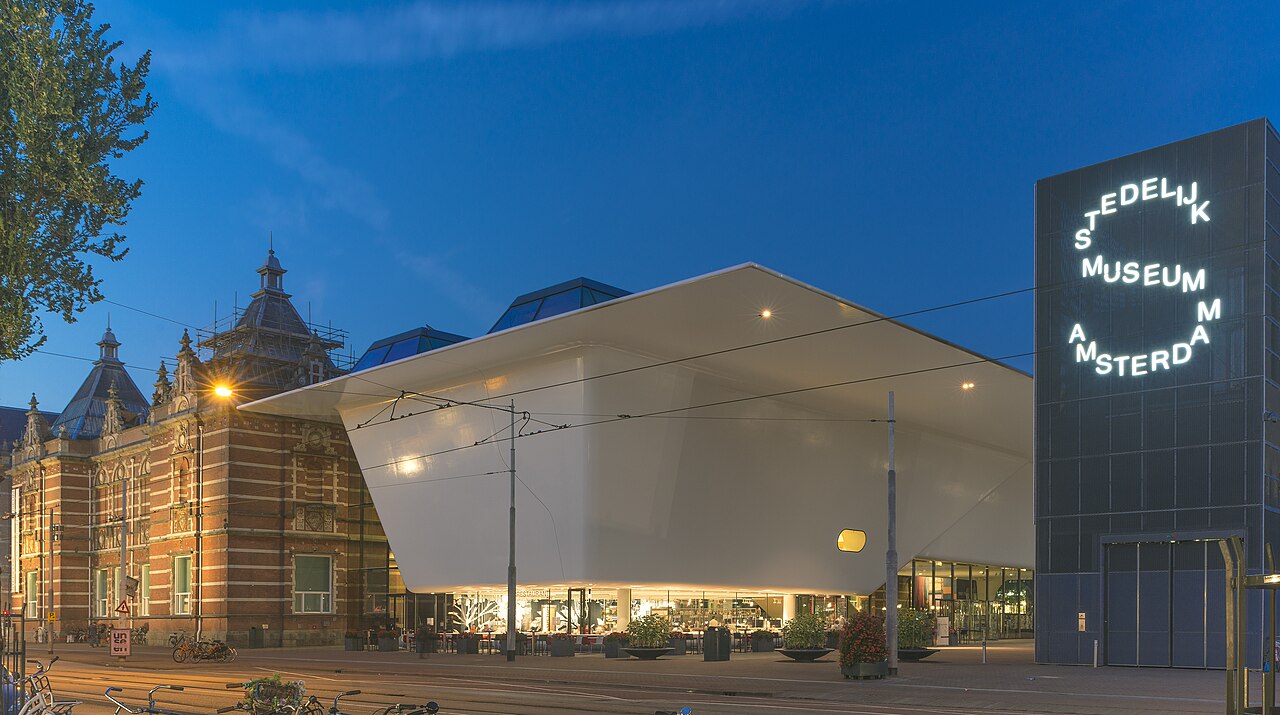
The Netherlands' modern and contemporary art museum, open all 365 days of the year, 10:00-18:00, with last entry at 17:45. Adult admission is 22.50 euro, students and CJP cardholders pay 12.50 euro, and under-19s go free. The bathtub-shaped 2012 extension (Amsterdammers call it "the bathtub") sits behind the original 1895 building and holds a rotating collection running from Mondrian and Chagall to Warhol and current Dutch design. The museum states it has elevators, wheelchair-accessible restrooms and barrier-free passageways, and lends wheelchairs, walkers and folding chairs free at the information desk. Buying online in advance is recommended over turning up cold.
- 13:00Van Gogh Museum
Open daily 09:00-18:00, holding the world's largest Van Gogh collection including Sunflowers and The Bedroom. Adult tickets are 25 euro and under-18s go free, but every ticket is online-only with a mandatory timed entry slot — there is no door sale at all, so this has to be booked before you leave the hotel, not decided on the day. Buy only through vangoghmuseum.nl or the museum's named resellers. The museum has lifts to every floor, an accessible main entrance and adapted toilets, and lends wheelchairs and folding seats free of charge if you email ahead.
- 15:15
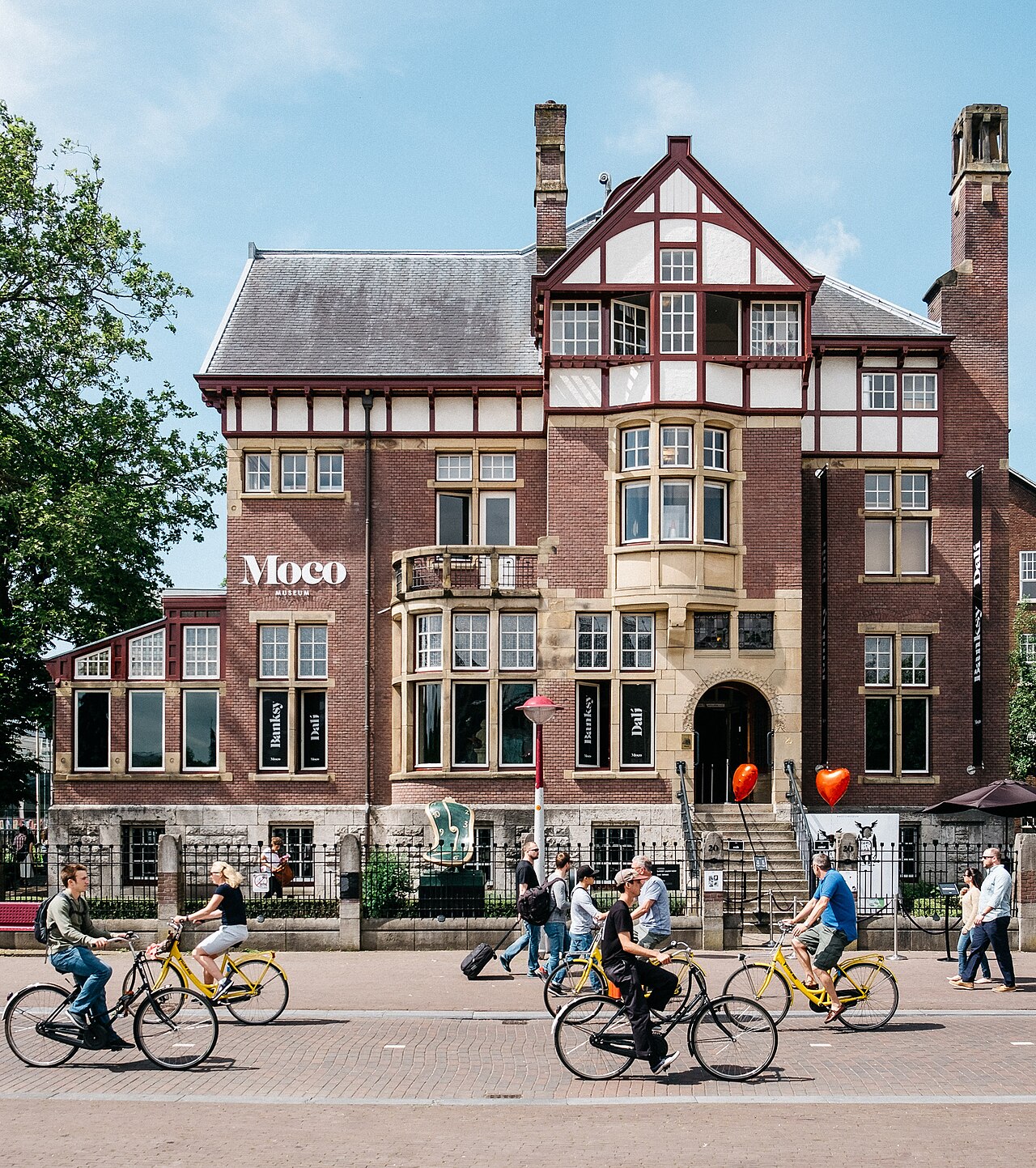
A private contemporary-art museum in Villa Alsberg, a 1904 mansion on Museumplein, showing Banksy, Warhol, Basquiat and Kusama in a much shorter visit than its neighbours — plan on about an hour. Open daily 09:00-20:00. Tickets start around 19.95 euro online (booking ahead is noticeably cheaper than paying at the door, and early or late time slots knock off up to 5 euro more). The museum states plainly that it is not wheelchair accessible: the historic villa has stairs throughout and no lifts, and the building's protected status means one can't be installed. Staff can offer a carry-chair with assistance if needed, but this isn't a step-free visit.
- 17:30Dinner Café Loetje (Museumkwartier)
A branch of Amsterdam's best-known steak sandwich chain — started as a billiard café in 1977, now famous city-wide for its "biefstukje": tender steak in a rich jus with white bread, crispy fries and a small salad. This location, a few minutes south of the Concertgebouw, has a spacious terrace and keeps long hours daily, 10:00-22:30, serving both lunch and dinner. The restaurant states its entrance is wheelchair accessible, though the restrooms are not. Reservations aren't required but are worth making for a weekend evening — it fills fast and doesn't hold walk-in tables.
- 18:45The Concertgebouw
One of the world's most acoustically celebrated concert halls, home to the Royal Concertgebouw Orchestra, on the square of the same name a short walk from the museums. There's no single ticket price — a listing on the calendar can start from 25 euro for an orchestral or chamber programme up in the balcony, climbing well past that for premium seats or headline names — so check concertgebouw.nl for the specific date rather than assuming a figure. The hall states it has seven disabled parking spaces by the main entrance, loanable wheelchairs, lifts to the Recital Hall and to the Main Hall balconies, and reserved wheelchair seating arranged in advance through the box office; infrared and induction-loop hearing systems are available at the cloakroom. Guide dogs are welcome. This is a formal room — smart-casual dress and quiet phones are the norm, and latecomers are held until a natural pause in the programme. There are no general visiting hours — you come for a performance or a guided tour, so check the programme and book before building a day around it.


Day 2Centrum & De Wallen & nearby — a sights dayAmsterdam, 9 stops
The medieval core and the oldest streets in the city — a royal palace facing a working square, a fourteenth-century church with a red-light district grown around it, and a hidden almshouse courtyard two minutes from the crowds.
- 08:30
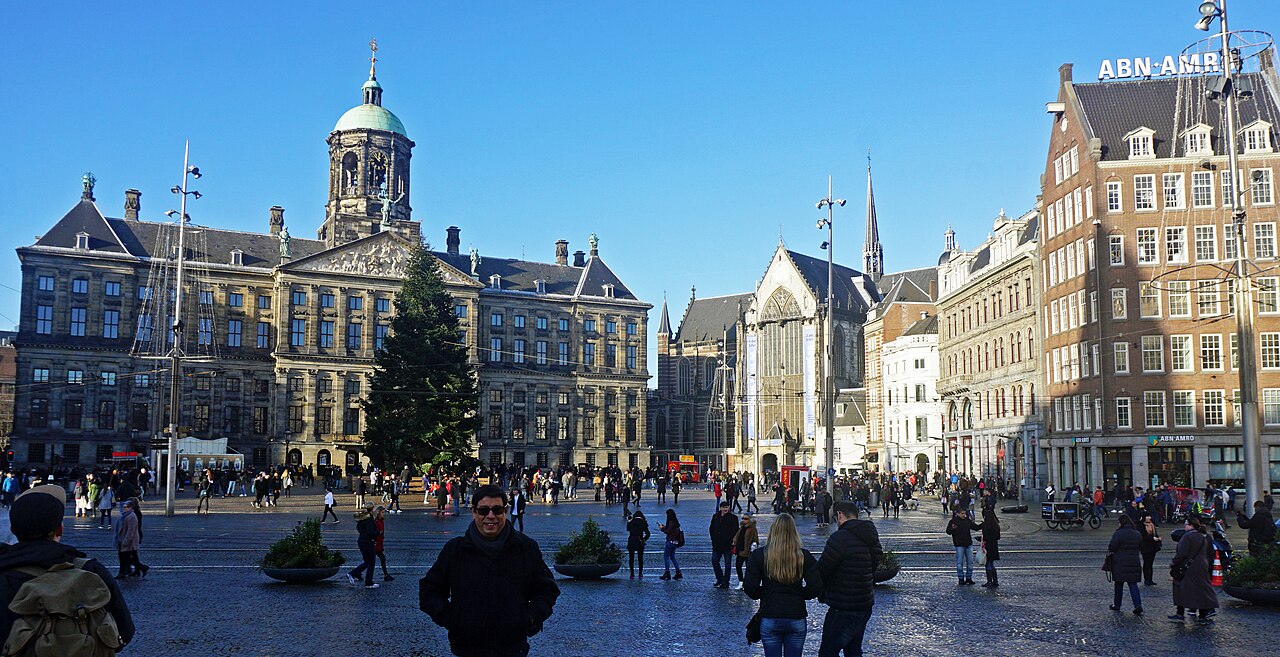
Amsterdam's historic centre point, ringed by the Royal Palace, the Nieuwe Kerk, and the department stores and wax museum along its northern edge. The Nationaal Monument, a 22-metre obelisk unveiled in 1956, honours the Dutch dead of the Second World War and stands at the square's eastern end. Street performers, pigeons and cyclists share the open cobbles, and the square doubles as the city's default stage for demonstrations, concerts and King's Day parties. Trams cross along the northern side, so look both ways before stepping off the pavement.
- 09:15
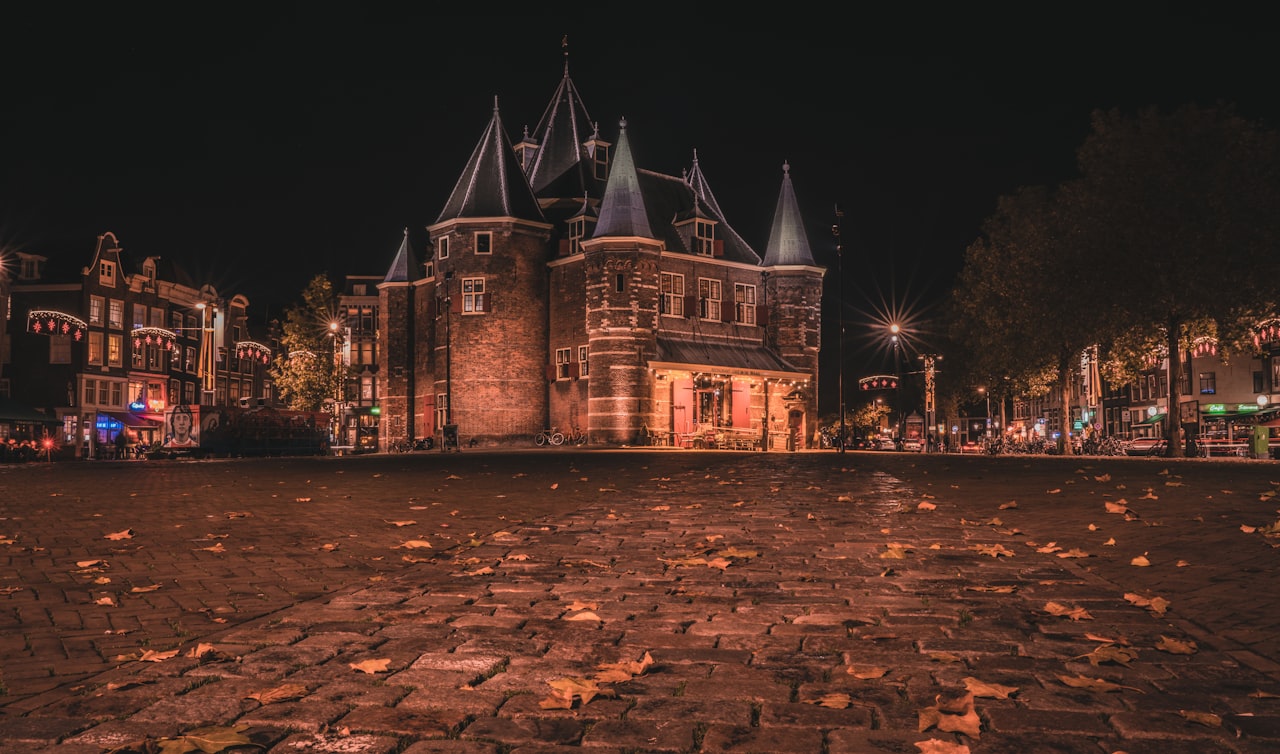
A wide-open square built around De Waag, a turreted 1488 city gate that later served as a guild hall and public weigh house and is now a restaurant — one of the few surviving pieces of Amsterdam's medieval fortifications. An organic farmers' market sets up on Saturdays, and the square sits exactly on the seam between Chinatown to the south and the old lanes of De Wallen to the west, ringed by terraces that are busiest once the market stalls pack away.
- 10:00Hortus Botanicus Amsterdam
One of the world's oldest botanical gardens (founded 1638), tucked behind a modest gate on Plantage Middenlaan — open daily 10:00-17:00 (closed only 25 December and 1 January), adult entry EUR 14.75. It's card-only; the garden states plainly that cash cannot be used anywhere on site. The paths are gravel-covered but wheelchair-passable, free wheelchairs are available with an advance email, and the Climate House greenhouse has automatic doors — the older greenhouses have a manual door with a threshold, so allow a little extra time or ask staff for a hand there. The on-site cafe has an accessible toilet reached via a ramp behind the terrace.
- 11:50
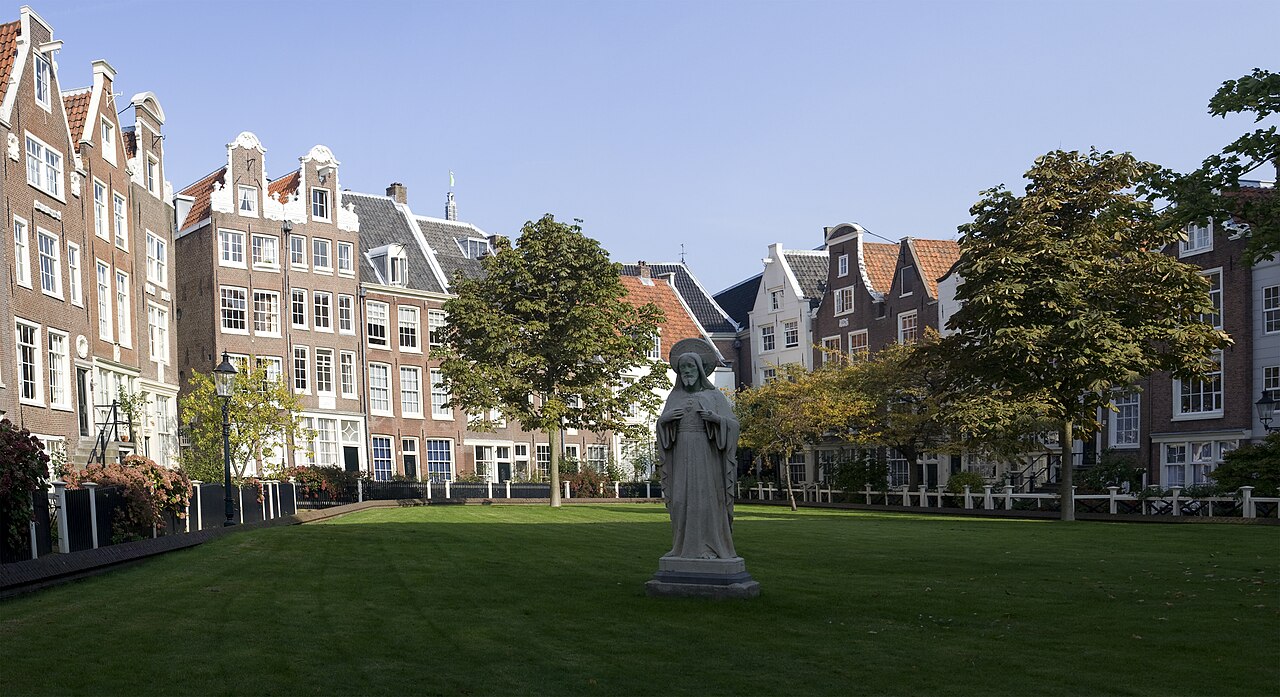
A walled courtyard of almshouses dating to the 14th century, built for the Begijnen — a lay religious sisterhood — and still home to a small residential community today, so voices stay low and the central lawn is looked at rather than walked on. Holds Amsterdam's oldest surviving wooden-fronted house (Het Houten Huys, number 34) and a hidden Catholic chapel facing the English Reformed Church. Free to enter, open daily 10:00-18:00, closed only on King's Day (27 April). The entrance gate off the Spui side is easy to walk past without noticing — look for a plain wooden door between the shopfronts.
- 12:35Lunch In de Waag
A restaurant-café built into the Sint Antoniespoort, the turreted 15th-century city gate anchoring Nieuwmarkt square, lit almost entirely by roughly 300 real candles after dark for a dinner that genuinely feels medieval. Open daily from 11:00, with the kitchen running 11:30-22:00 and an all-day menu of starters, mains and desserts; the room can also lay on a shared starter-and-main menu for groups of up to 180. Reserve ahead for a weekend dinner table — the candlelight and the setting make it a popular choice.
- 13:35
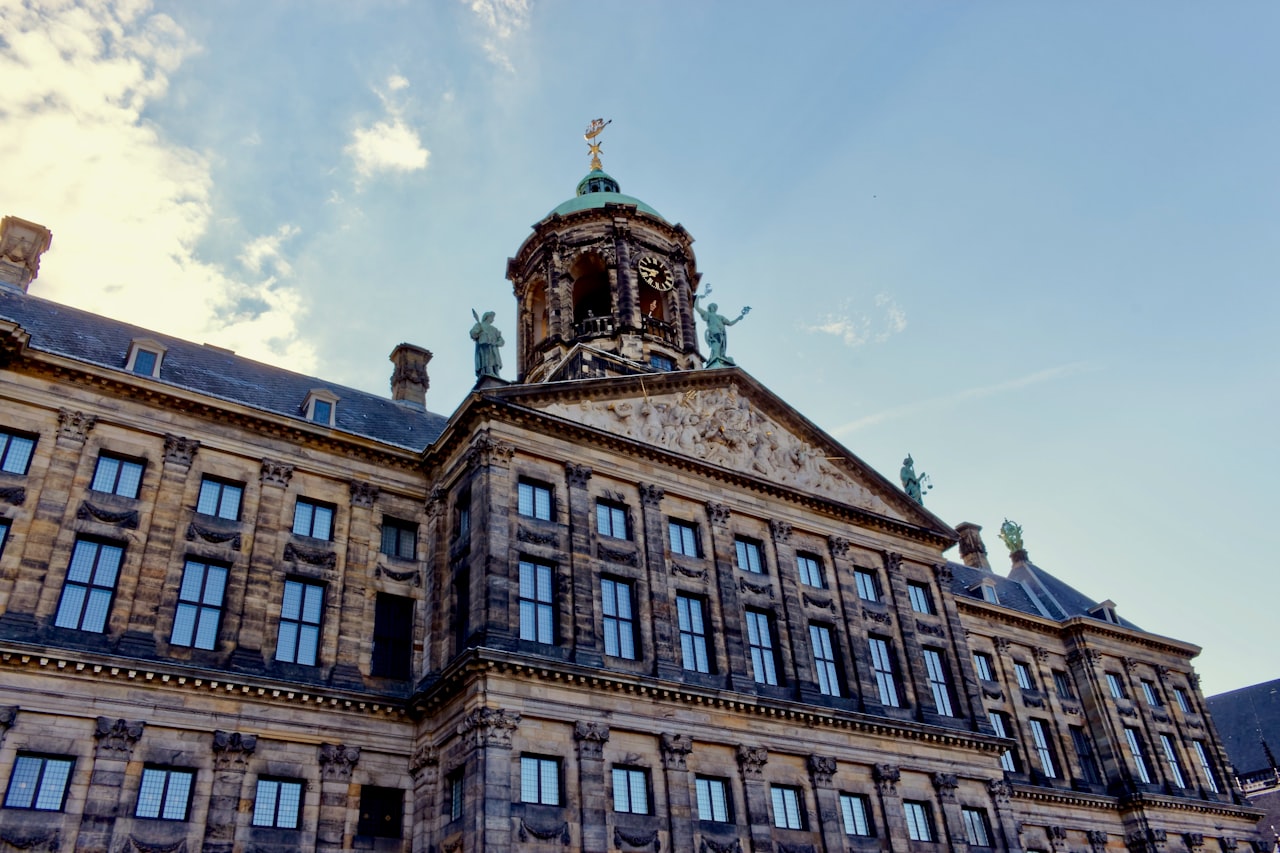
Built in the 17th century as Amsterdam's city hall on 13,659 wooden piles sunk into the marsh, and still King Willem-Alexander's working reception palace today — used for state visits and royal functions, so opening days vary through the year and the palace's own calendar is worth checking before planning a visit around it. Adult admission is 13.50 euro and includes an audio tour. The entrance has a sloping ramp on the right side facing Dam Square, a lift to every floor, no interior thresholds, and a wheelchair-accessible toilet on the ground floor; a wheelchair or walking stick can be borrowed free of charge by writing ahead, and lightweight folding stools are available to rest on partway through.
- 15:05Nieuwe Kerk
No longer used for regular services — Dutch monarchs are inaugurated here instead, most recently Willem-Alexander in 2013 — and the nave now hosts rotating art and history exhibitions under a soaring Gothic wooden ceiling. Open daily 10:00-17:00 with last entry at 16:30; adult admission is 25 euro. It runs as a fully cashless museum, debit and credit cards only, no cash accepted at all. All galleries and facilities are wheelchair accessible, with a lift down to the toilets in 't Nieuwe Kafé on the basement level. Closed on 27 April, 3-5 May, 28 May, 8 July, 25 December and 1 January, so don't count on it landing on those dates.
- 16:20Oude Kerk
Amsterdam's oldest surviving building, consecrated in 1306, with a soaring wooden ceiling, carved medieval misericords, and contemporary art installations woven into the historic fabric — still a working church alongside the museum visit. Open Monday-Saturday 10:00-18:00 and Sunday 13:00-17:30; general admission is 14.50 euro, or 22 euro for a combined church-and-tower ticket when the tower is running (seasonally, roughly late April to October). It's a fully cashless venue — debit, credit and digital payment only. The square outside fills with sightseers by day and sits at the centre of the working red-light district after dark; it remains a normal, functioning part of the city rather than anything to steer around.
- 17:30Dinner De Drie Fleschjes
Amsterdam's oldest tasting room, pouring jenever and Bols liqueurs straight from the barrel since 1650, tucked a few steps behind the Nieuwe Kerk. The house order is a kopstootje — a small glass of jenever next to a freshly poured beer — and staff will walk you through styles (jong versus oud, fruit-infused options) if you don't already have a favourite. It still runs the only working drinks organ left in Amsterdam, a 50-barrel mechanical curiosity worth asking to see in action. Vegetarian bar snacks — olives, peppadews, banderillas, nuts — sit alongside the classic Dutch bittergarnituur platter. Open Sunday 15:00-19:00 and Monday-Saturday 14:00-20:30.


Day 3Grachtengordel & Jordaan & nearby — a sights dayAmsterdam, 9 stops
The seventeenth-century canal ring and the working-class quarter beside it, now the city's most photographed streets — a house where a family hid for two years, a church tower you can climb, and nine little shopping lanes between the canals.
- 08:00Breakfast Winkel 43
The café most associated with Amsterdam's 'world-famous' apple pie, right on the corner of Noordermarkt with a sun-catching terrace that fills fast on market mornings. Breakfast and lunch run roughly 8:00 to 15:00 — croissants from 4.50 euro, a full plate of bitterballen at 15 euro — and the kitchen keeps going into the evening with Dutch classics like ossenworst alongside sandwiches. A vegan bitterballen plate (six pieces, 8 euro) and a vegetarian club sandwich are both regular menu items, useful in a neighbourhood that otherwise leans traditional. Best combined with a Monday flea-market or Saturday farmers-market visit next door.
- 09:00Noordermarkt
A square in front of the Noorderkerk that turns into two very different markets: a Monday-morning flea market (9:00-14:00) for vintage clothing, fabric, books and secondhand odds and ends, and a Saturday organic farmers' market (9:00-16:00) for artisan bread, Dutch cheese, olives and fresh juice, with stalls spilling into the surrounding streets. Outside those windows it's just a quiet, café-lined corner of the Jordaan, so time a visit for Monday or Saturday morning if the markets are the point.
- 10:15
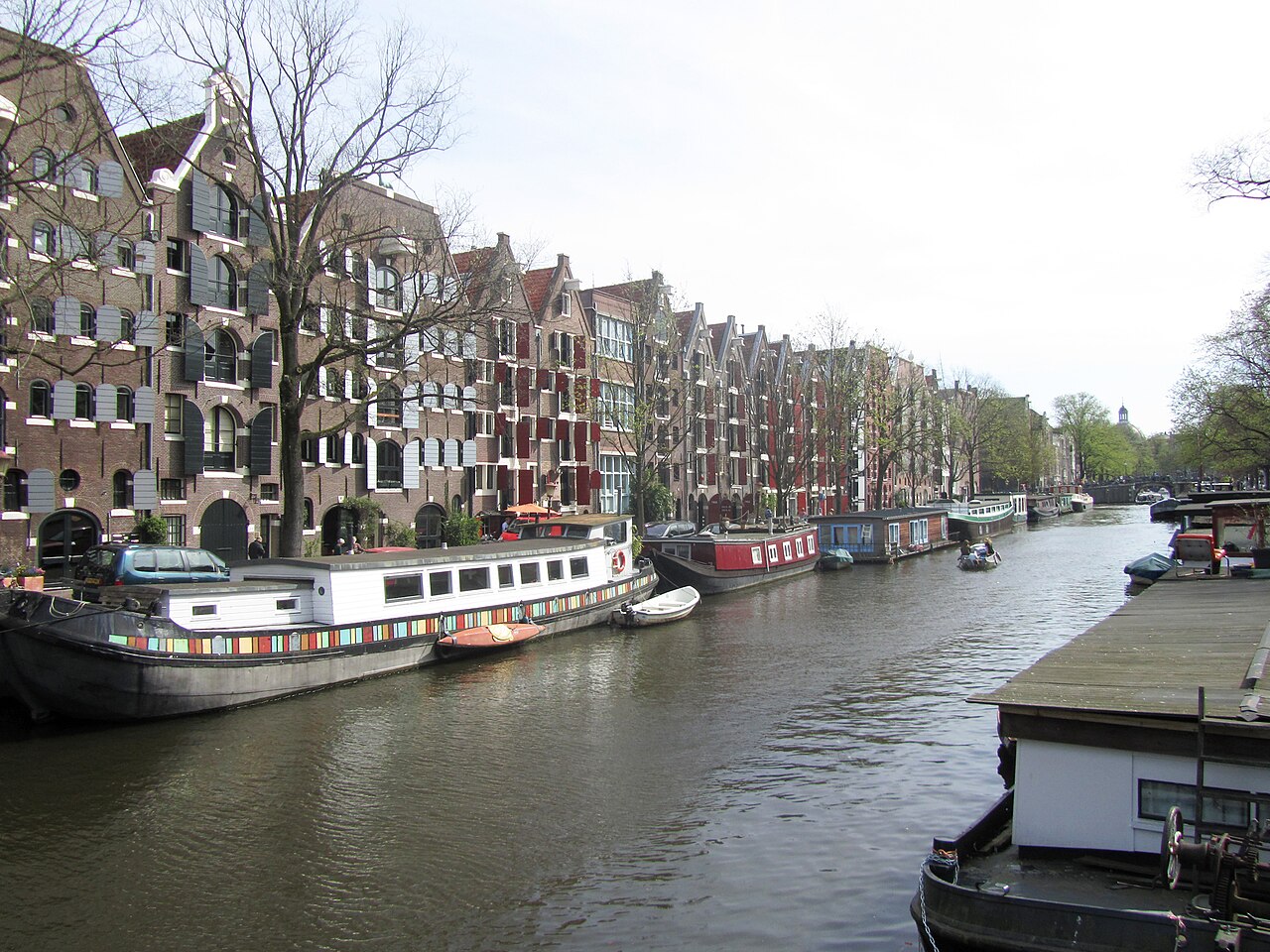
Once the working harbour for the old brewers' warehouses, now the canal ring's quietest and most photographed stretch — houseboats moored end to end, converted warehouse gables on both banks, and a bridge every couple of hundred metres where four canals meet. Better walked slowly than treated as a single stop; the corner where Brouwersgracht meets Prinsengracht is the classic postcard angle, especially in the low light of early morning or evening.
- 10:50Anne Frank House
The canal house where Anne Frank and seven others hid for two years during the German occupation, preserved behind the revolving bookcase largely as they left it. Tickets go on sale every Tuesday at 10:00 CEST for a visit exactly six weeks later, and none are sold at the door — book the moment a slot opens if specific dates matter, since the museum itself says this is the tightest ticket window in the city. Online payment is by bank transfer or credit card. Open daily 9:00-22:00, with a handful of closures through the year (King's Day and Yom Kippur among them) — check the calendar before locking in a date. The house has steep, narrow stairs and a high step at the entrance and is not step-free; anyone with mobility difficulties should read the museum's own accessibility page before booking.
- 12:20Lunch Café 't Smalle
A genuine 'brown café' — the name comes from decades of tobacco-stained walls and ceilings — on the Egelantiersgracht, running since 1780 as a jenever distillery's tasting house before settling into the neighbourhood local it is today. The small waterside terrace is the reason people queue for a table; order a beer or a bitterbal and watch the canal rather than treating it as a proper meal stop, since the kitchen keeps to sandwiches and snacks. Opens at 14:00 Monday to Thursday, 13:00 on Friday, and from noon on weekends, staying open past midnight most nights (until 23:00 on Sundays). A Jordaan institution — expect it standing-room-only by early evening.
- 13:20
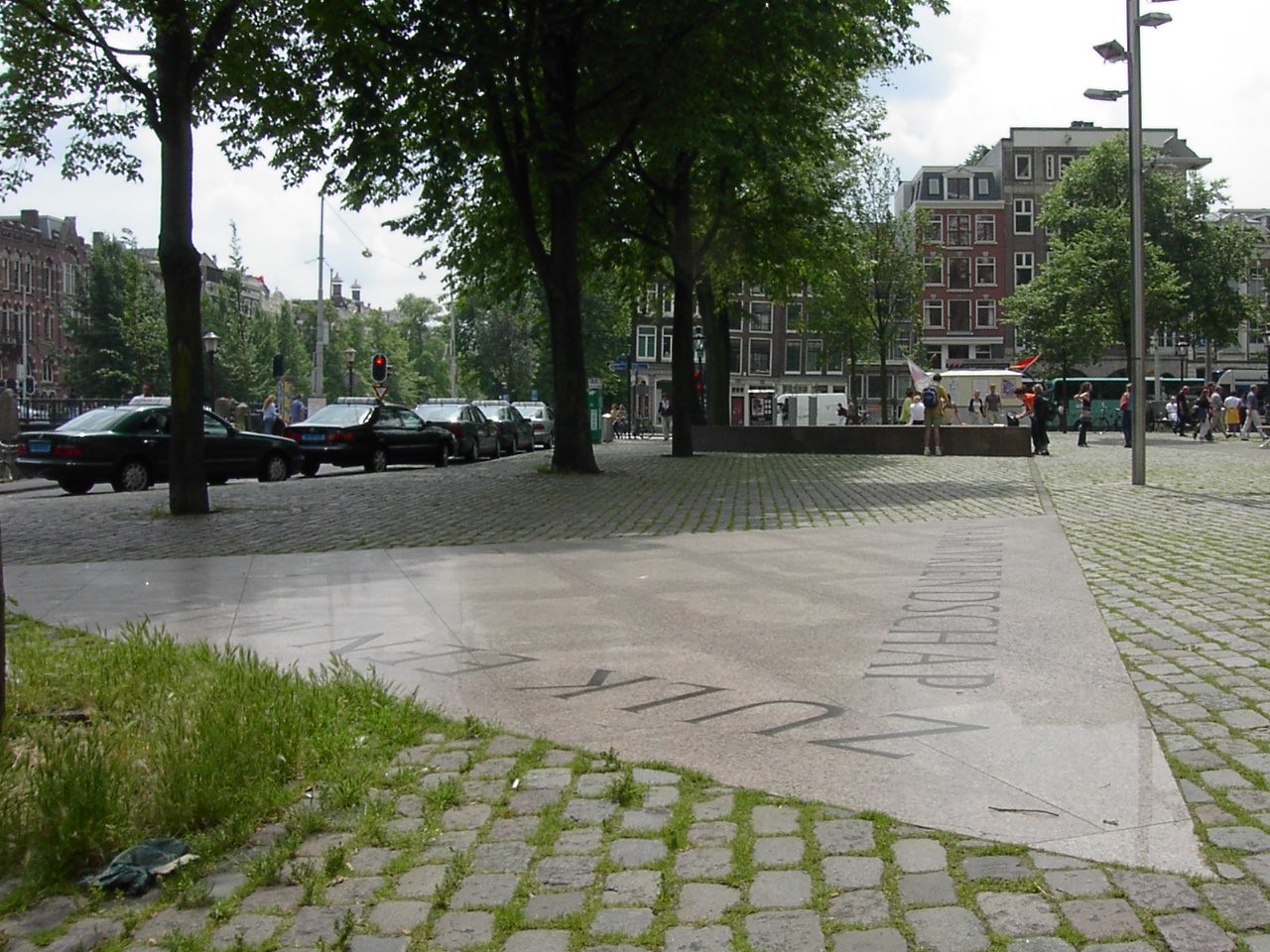
Three connected pink-granite triangles set into the paving of Westermarkt, unveiled in 1987 as the first public monument anywhere built to remember people persecuted for their sexuality — one triangle points toward the Anne Frank House, one toward the former headquarters of the Dutch gay rights movement, and one out toward the wider city. Open all the time and free, it doubles as an everyday gathering spot and a stage for Remembrance Day and Pride events. Wheelchair access is fine on the upper level, but the lowest triangle is reached by steps rather than a ramp, and the monument sits in open traffic space, so watch for trams and cyclists passing close by.
- 13:50
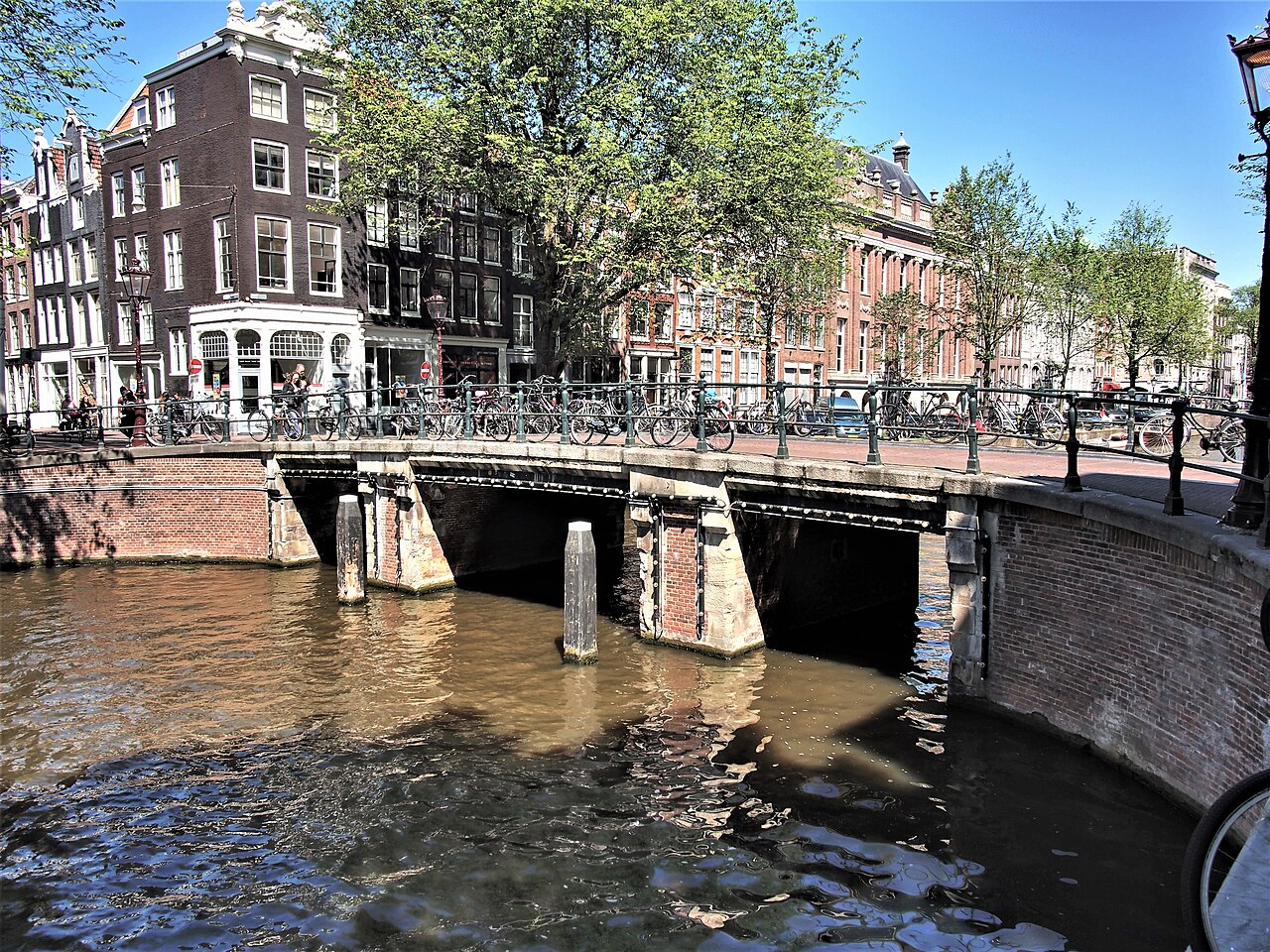
Nine short cross-streets — Berenstraat, Wolvenstraat, Oude Spiegelstraat, Runstraat and the rest — laid across the three main canals between Raadhuisstraat and Leidsegracht, packed with independent boutiques, vintage shops, concept stores and small cafés rather than chain retail. It rewards wandering without a fixed plan more than treating it as a single ticked-off stop; hours vary shop to shop, so treat any one boutique's opening time as worth double-checking rather than assumed. One of the few Amsterdam shopping areas that still feels local rather than built for tourists.
- 15:35A'DAM Lookout
The observation deck sits on the roof of A'DAM Tower, a three-minute free ferry ride (Buiksloterweg line) from behind Centraal Station, and gives a 360-degree view over the IJ, the station and the old city skyline. Open Monday-Thursday 11:00-19:00 (last entry 18:00) and Friday-Sunday 11:00-21:00 (last entry 20:00); the tower takes cards only, no cash. The optional Over The Edge swing, billed as Europe's highest, costs extra on top of the roughly EUR 16.50-19 entry ticket. Getting up involves a stretch of steep stairs partway through the route, which the venue itself flags as unworkable for visitors with limited mobility — plan around that if it matters for your group.
- 17:30Dinner Pllek
A big, laid-back restaurant and bar built into a converted shipping-container hall on a man-made beach facing the IJ at NDSM-werf — the kitchen serves food daily from 09:30 with the kitchen open until 22:00 (the bar itself runs later, until 01:00-02:00 on weekends). At least three-quarters of the menu is vegetarian and a good share of that is vegan; expect locally grown vegetables and only small amounts of sustainably sourced fish and meat. It's card-only — pin, Amex, Visa and Mastercard are all accepted, no cash. Reachable by the NDSM ferry (about 15 minutes from behind Centraal) or a short walk/cycle once you're on that side of the IJ; the deck chairs on the sand fill up fast on the first sunny weekend of the year.


Day 4Île de la Cité & Latin Quarter — an old-town dayParis, 6 stops
Two Seine islands cradle Notre-Dame's rebuilt spire and Sainte-Chapelle's stained glass, while the steep, market-lined lanes of the Left Bank climb past the Panthéon's dome to Rue Mouffetard's crêpe stands and the Sorbonne's oldest bookshops.
- 07:30Check out of your stay
- 07:47Flight
- 11:00Drop your bags at your stay
- 11:30
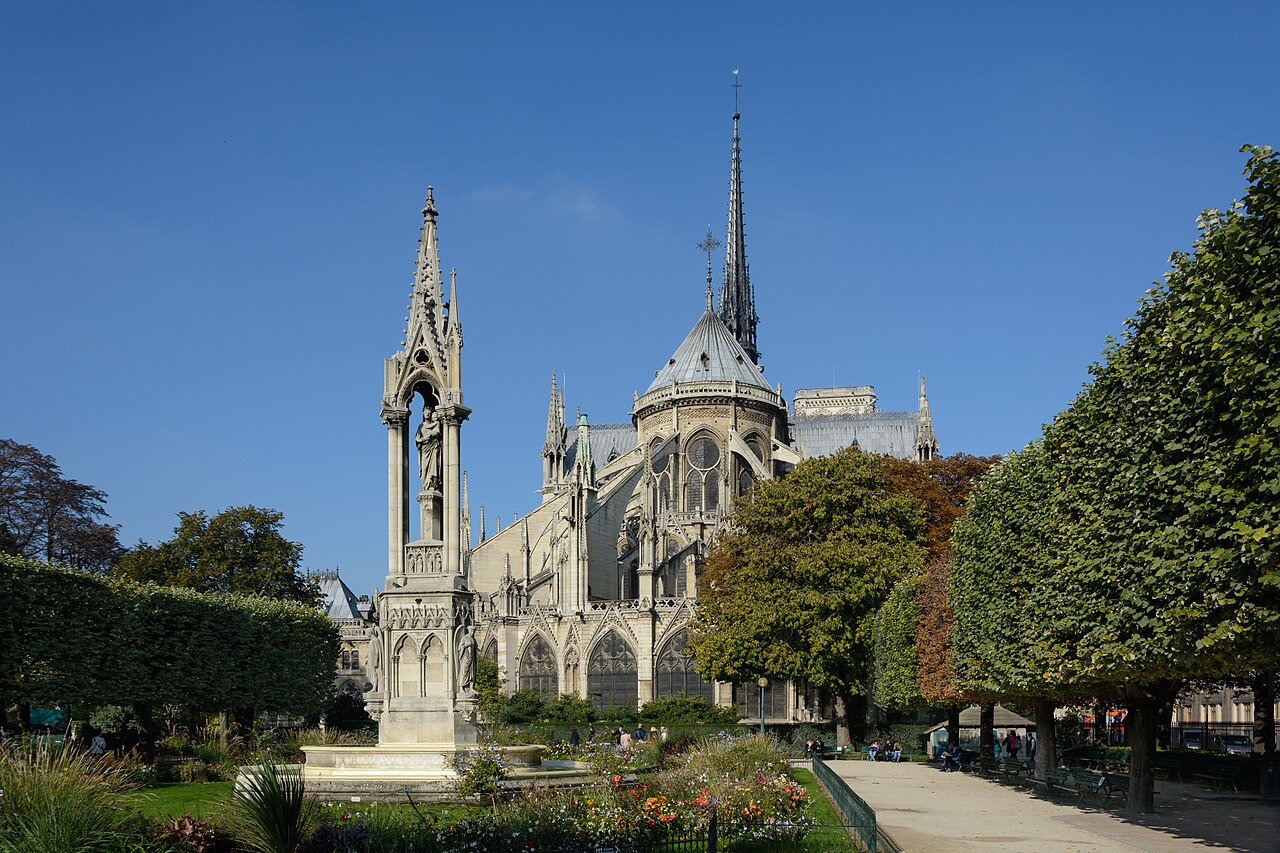
Reopened in December 2024 after the 2019 fire and five years of restoration, the cathedral's stone and stained glass look brighter than they have in generations. Entry is free but requires a timed slot booked online or on-site the same day — arrive early or come Thursday evening, when it stays open until 10pm.
- 12:45Lunch Au P'tit Grec
A walk-up window on Rue Mouffetard turning out oversized savory galettes since 1981 — try the feta-and-eggplant or the classic ham-egg-cheese, folded thick enough to eat one-handed while you keep browsing the market street. Cash only, and there's almost always a short queue after dark.
- 13:45
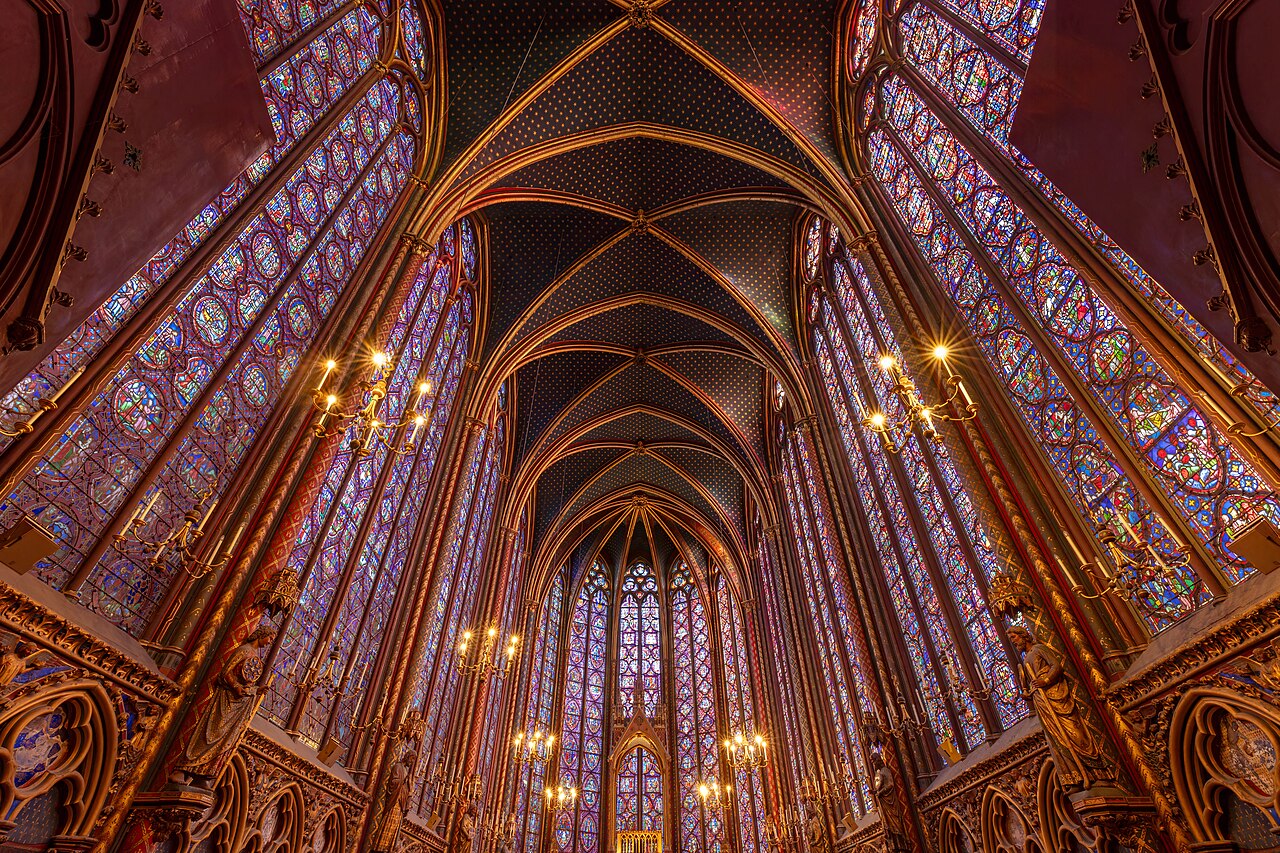
Fifteen towering stained-glass windows depicting over a thousand biblical scenes wrap the upper chapel in jewel-toned light — best on a sunny morning. Book a timed slot in advance; the chapel sits inside the working Palais de Justice, so every visitor passes through airport-style security.
- 14:45Musée de Cluny (National Museum of the Middle Ages)
Home to the six 'Lady and the Unicorn' tapestries in a purpose-built rotunda, plus a Gallo-Roman frigidarium — one of the best-preserved Roman bath halls in France — built right into the medieval mansion. Closed Mondays; the ticket desk shuts at 17:30 though the galleries stay open to 18:15, and the museum stays open until 21:00 on the first and third Thursday of each month. Full price is €12 (free the first Sunday of the month and for under-18s). The frigidarium closes for a few weeks in July–August 2026 for an exhibition changeover — check ahead if that hall is your main draw.
- 16:30
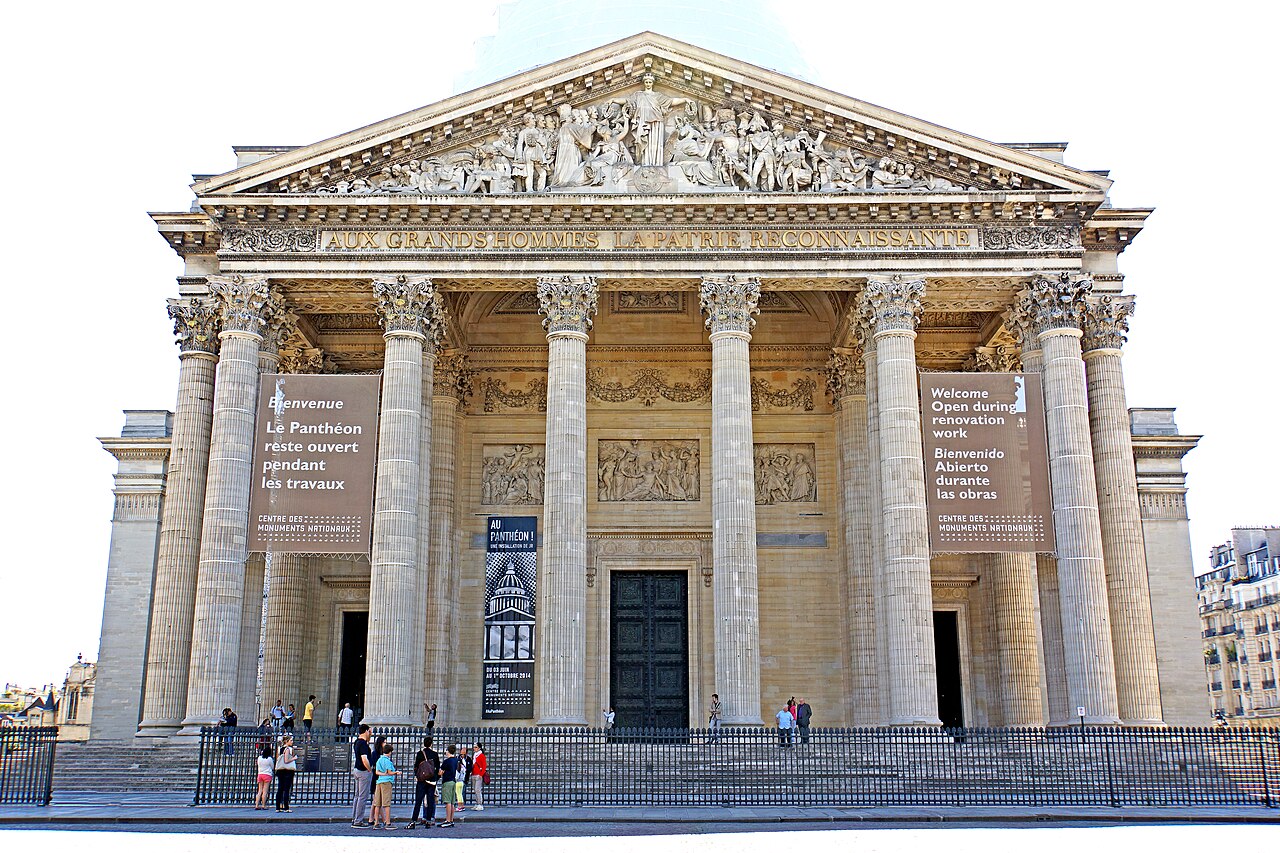
Voltaire, Rousseau, Curie and Hugo rest in the crypt beneath Soufflot's neoclassical dome, reached via a steep spiral or monumental staircase that isn't wheelchair-friendly. The rooftop colonnade view is currently closed for restoration work, but the nave and crypt alone are worth the visit.
- 18:00Dinner Brasserie Balzar
An Art Nouveau brasserie steps from the Sorbonne, serving daily since 1894 — order the choucroute (from €25) or a grilled entrecôte (from €26), and expect the house's famously brusque-but-fond waiter banter as part of the experience. Continuous service from 08:00 to 23:45 every day of the week, so it's a reliable fallback outside the usual French lunch/dinner windows. A vegetarian plate (€15) is on the menu, but this is classic Alsatian-brasserie cooking built around pork and cured meats, so options are narrow. Reserve ahead, especially for dinner and weekends.


Day 5Eiffel Tower & Trocadéro — a sights dayParis, 7 stops
The Eiffel Tower rises straight from the wide lawns of the Champ de Mars while, across the Seine, the Trocadéro's terrace and the Palais de Chaillot's twin curved wings frame the postcard view every visitor comes for.
- 09:00
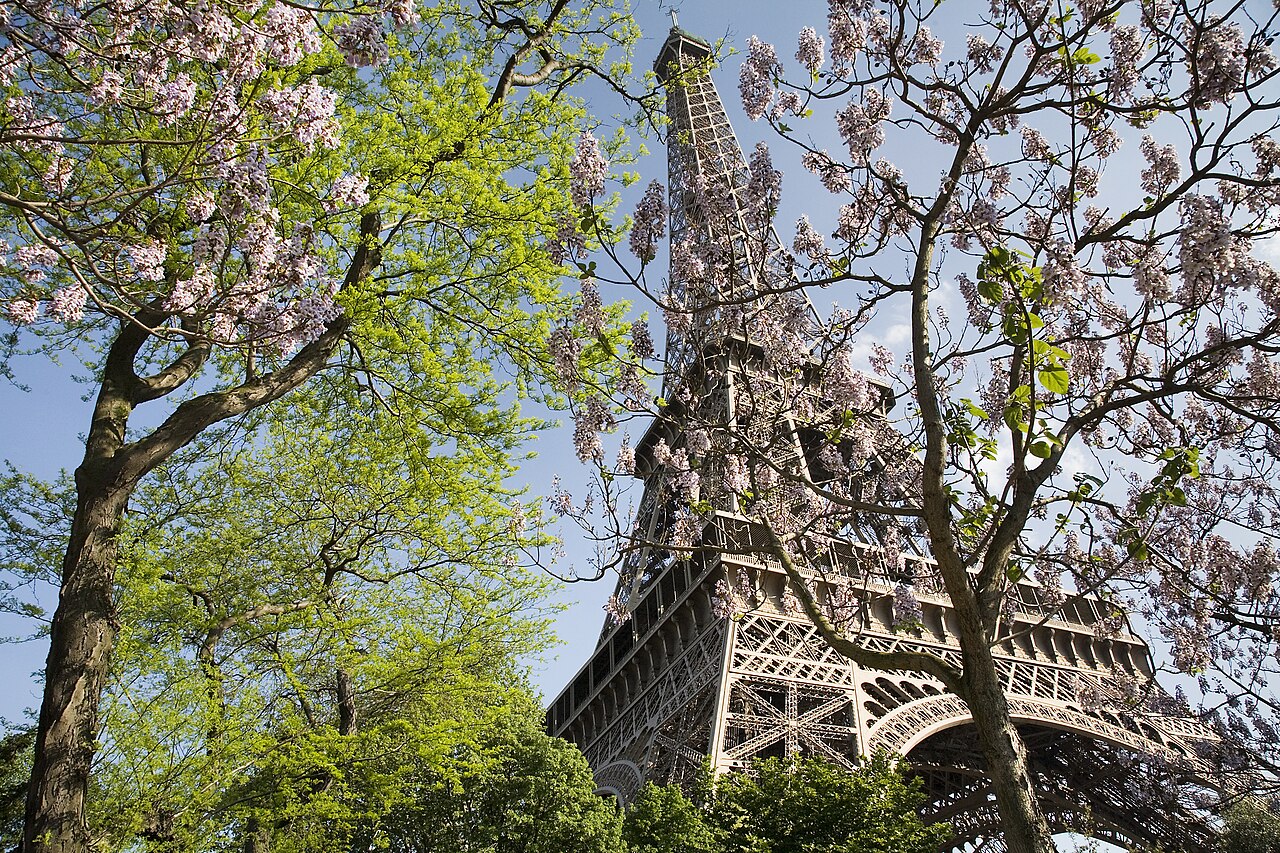
Paris' 330-metre iron icon rises straight from the Champ de Mars; ride the lift to the summit or climb the stairs to the 2nd floor for skyline views over the city. Tickets sell out same-day in high season — book online well ahead for a specific time slot. Floors 1 and 2 are wheelchair accessible by lift; the summit is not.
- 11:15
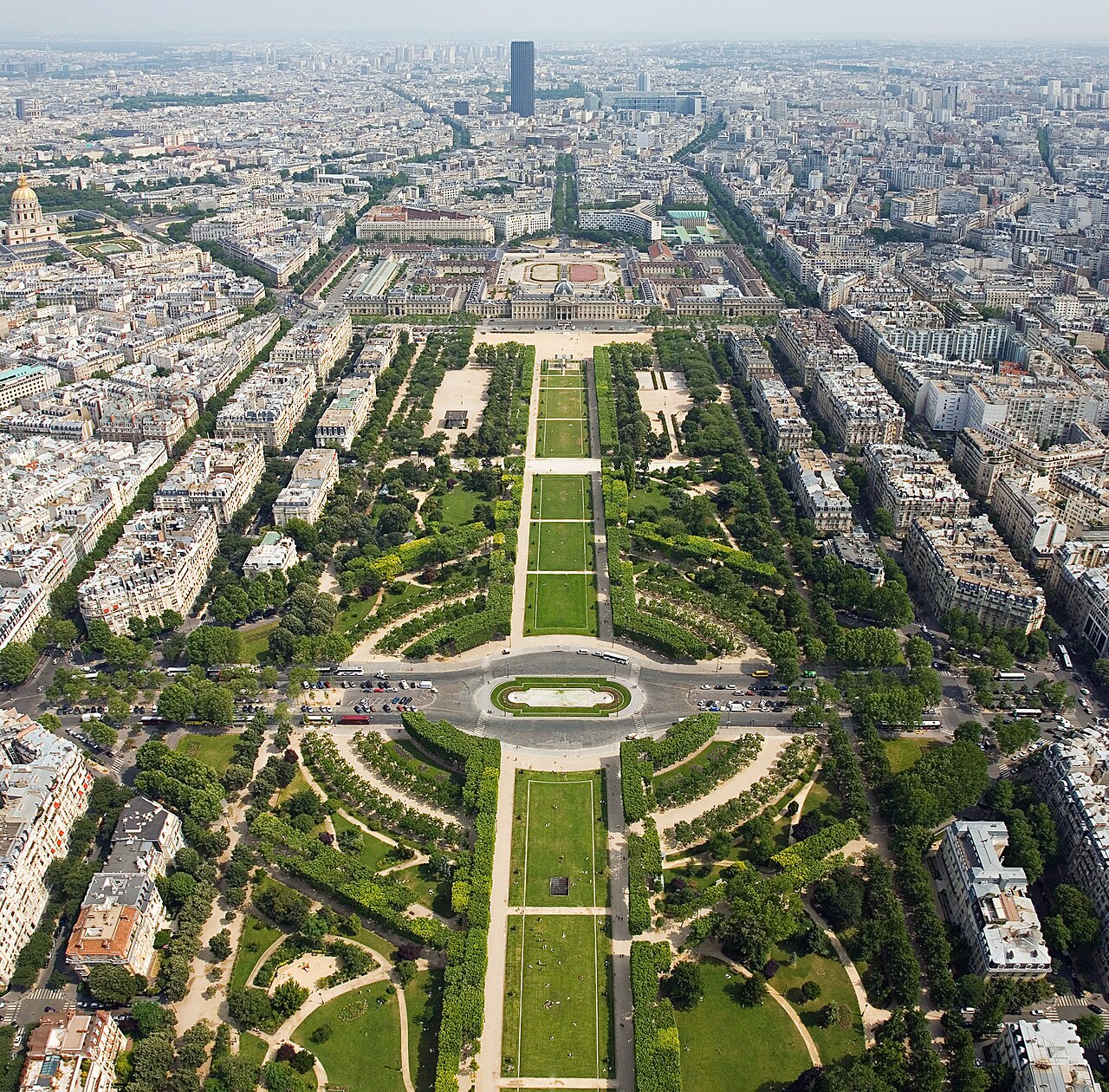
A long green lawn running from the Eiffel Tower's feet to the École Militaire — Paris' go-to spot for a picnic with a tower view, especially in the early evening when locals spread out blankets. Unlike most Paris gardens it's never gated, so it stays open day and night.
- 12:15Lunch Les Cocottes
A cast-iron 'cocotte' bistro a few doors from where the original Café Constant used to be (that spot has since changed hands and names). Hearty South-West-leaning dishes — braised beef cheek, veal blanquette, country pâté — arrive in the pot they were cooked in. Open continuously all day, every day, from noon to around 11pm, so it's a reliable option outside the strict French lunch/dinner windows. Reservations are recommended for dinner, but walk-ins are generally accommodated.
- 13:15Musée du Quai Branly – Jacques Chirac (World Cultures Museum)
Jean Nouvel's building holds an outstanding collection of indigenous and non-Western art and artefacts from Africa, Asia, Oceania and the Americas, displayed thematically along one long suspended gallery above a lush garden. Closed Mondays (it opens on Mondays only during spring school holidays); Thursday evenings run until 10pm, the rest of the week until 7pm. Timed-entry tickets are best booked online in advance; the museum is fully step-free with lift access throughout.
- 15:30
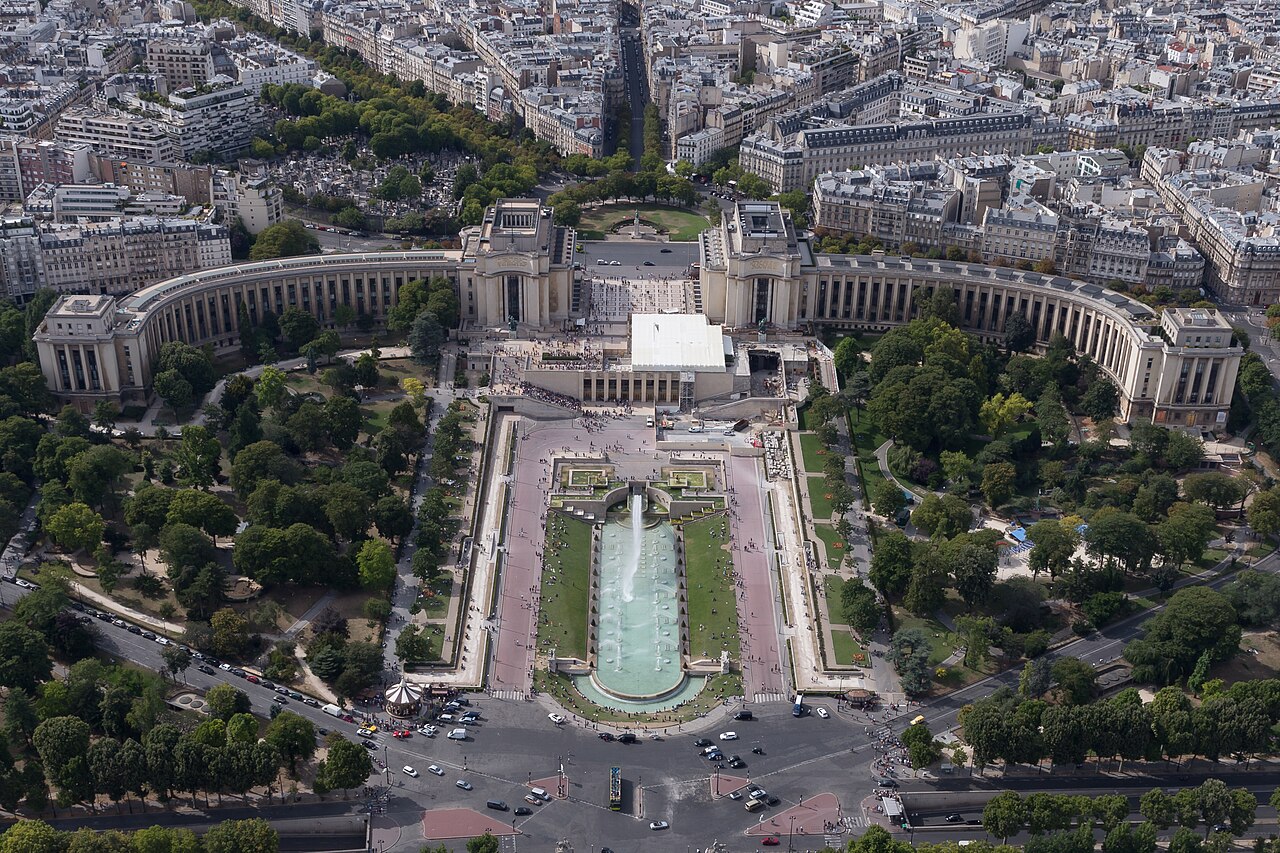
The terrace between the Palais de Chaillot's two curved wings delivers the classic head-on Eiffel Tower photo, especially at sunset and after dark when the tower sparkles on the hour. The palace itself houses the Cité de l'Architecture and the Musée de la Marine; the esplanade and gardens below are free and open around the clock.
- 16:20Rue Cler (Market Street)
A three-block pedestrian street lined with butchers, fishmongers, cheesemongers, greengrocers, bakeries and wine shops — the quintessential Paris market street to graze rather than sit down at. Busiest (and most photogenic) on Saturday mornings and Sunday until early afternoon, when Parisian families shop for the week's lunch; many stalls close or run reduced hours on Mondays. There's no entry fee — just wander, snack, and watch the neighbourhood at work.
- 17:30Dinner La Fontaine de Mars
A red-and-white-check-napkin bistro open since 1908, tucked on a small square just off Rue Cler, serving South-West French classics like duck confit, cassoulet and foie gras. Popular enough that a reservation is essential, especially for dinner.


Day 6Opéra & Grands Boulevards & nearby — a museum dayParis, 8 stops
Charles Garnier's opulent opera house anchors a quarter of glass-roofed 19th-century shopping passages — Galerie Vivienne's mosaic floors, Passage des Panoramas' oldest gaslit arcade — and the domed, stained-glass tea room atop Galeries Lafayette. By day it's Haussmann-era grand boulevards and department-store window shopping; by evening, the opera crowd fills the surrounding brasseries.
- 08:30Passage des Panoramas
Paris's oldest covered passage (built 1800), and the first public space in the city lit by gas, back in 1817. Wander past stamp and postcard dealers, engravers, and small restaurants tucked into its branching side-galleries (Feydeau, Montmartre, Saint-Marc). Free to enter and open long hours daily, but many of the individual shops close on Sundays.
- 09:20Galerie Vivienne
The most elegant of Paris's 19th-century covered passages, its mosaic-tiled floor and skylit glass roof dating to 1826, with Jean Paul Gaultier's boutique among the tenants since the 1980s revival. Free to walk through at any time during opening hours; quietest in the early morning before the passage's cafés and bookshops open.
- 10:00
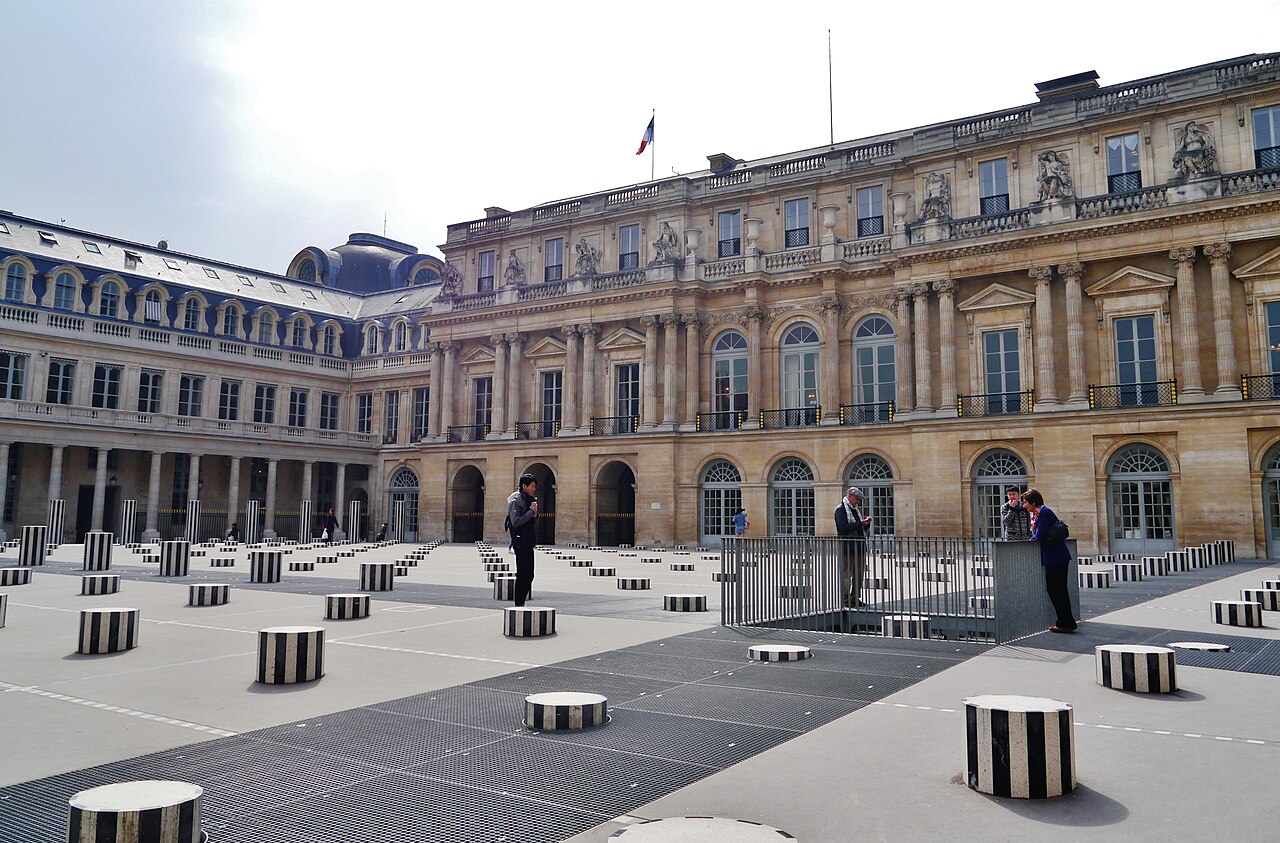
A quiet arcaded garden one block north of the Louvre, framed by uniform 18th-century galleries and shopping arcades. In the entrance courtyard, Daniel Buren's 1986 Colonnes de Buren — 260 black-and-white striped columns of varying height — is one of the most photographed contemporary art installations in Paris. Free entry, open daily from 7am.
- 11:00Museum of Decorative Arts
One of the world's largest decorative-arts collections — over a million objects of furniture, fashion, glass, jewellery and graphic design — housed in the Louvre's own Marsan wing on Rue de Rivoli. Closed Mondays; Thursday evenings run late until 9pm. All galleries are elevator-accessible and wheelchairs are available free at the cloakroom on request.
- 12:45Lunch Chez Georges
A wood-panelled, mirror-lined classic bistro near Place des Victoires, serving rich standards like veal head, herbed poultry liver terrine, and a well-known grilled turbot — best paired from the deep wine list. Reserve ahead, as tables are tight and the small dining room fills fast; closed Saturday and Sunday, plus roughly three weeks every August.
- 13:45
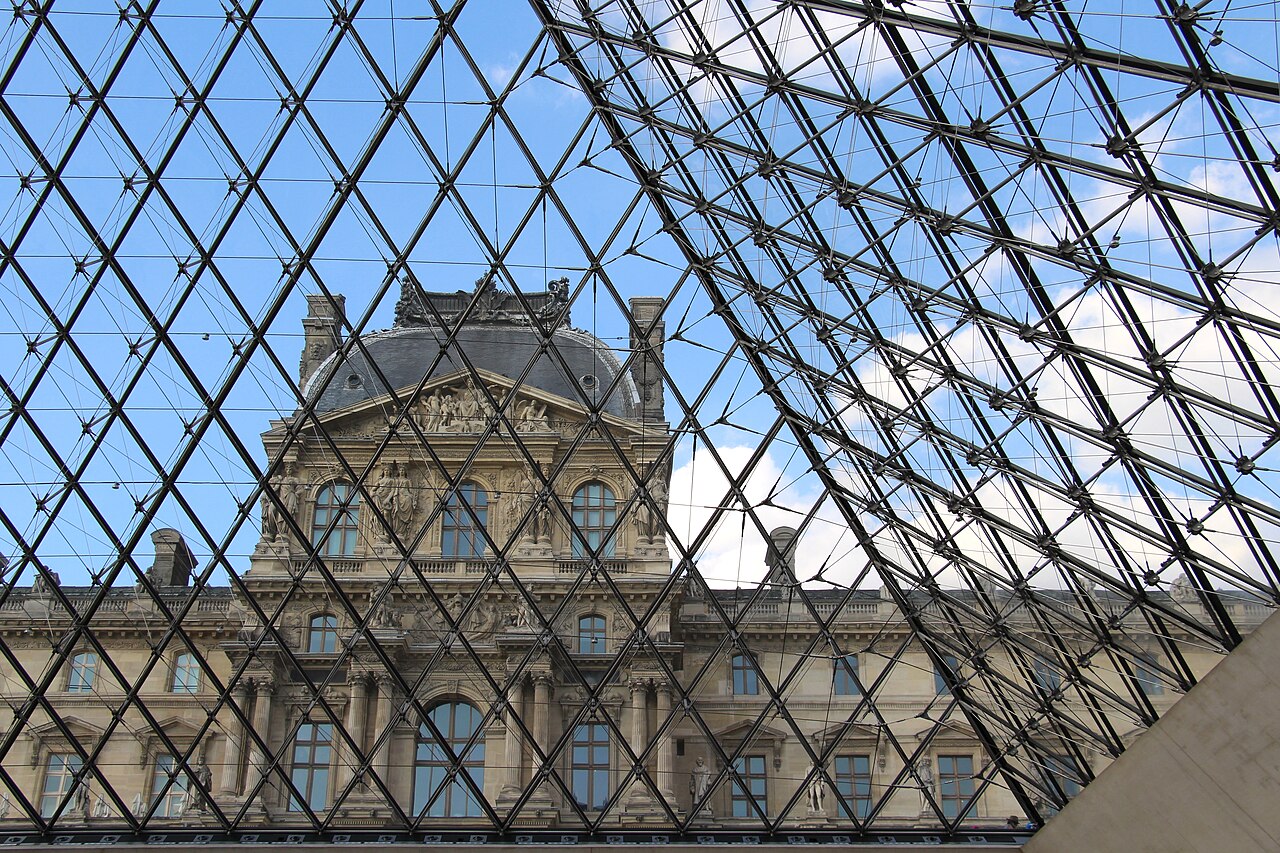
The world's most-visited museum, home to the Mona Lisa, the Venus de Milo and I.M. Pei's glass pyramid entrance in the Cour Napoléon. Closed every Tuesday; book a timed-entry ticket online well ahead, especially in high season, to skip the queue at the pyramid.
- 16:00
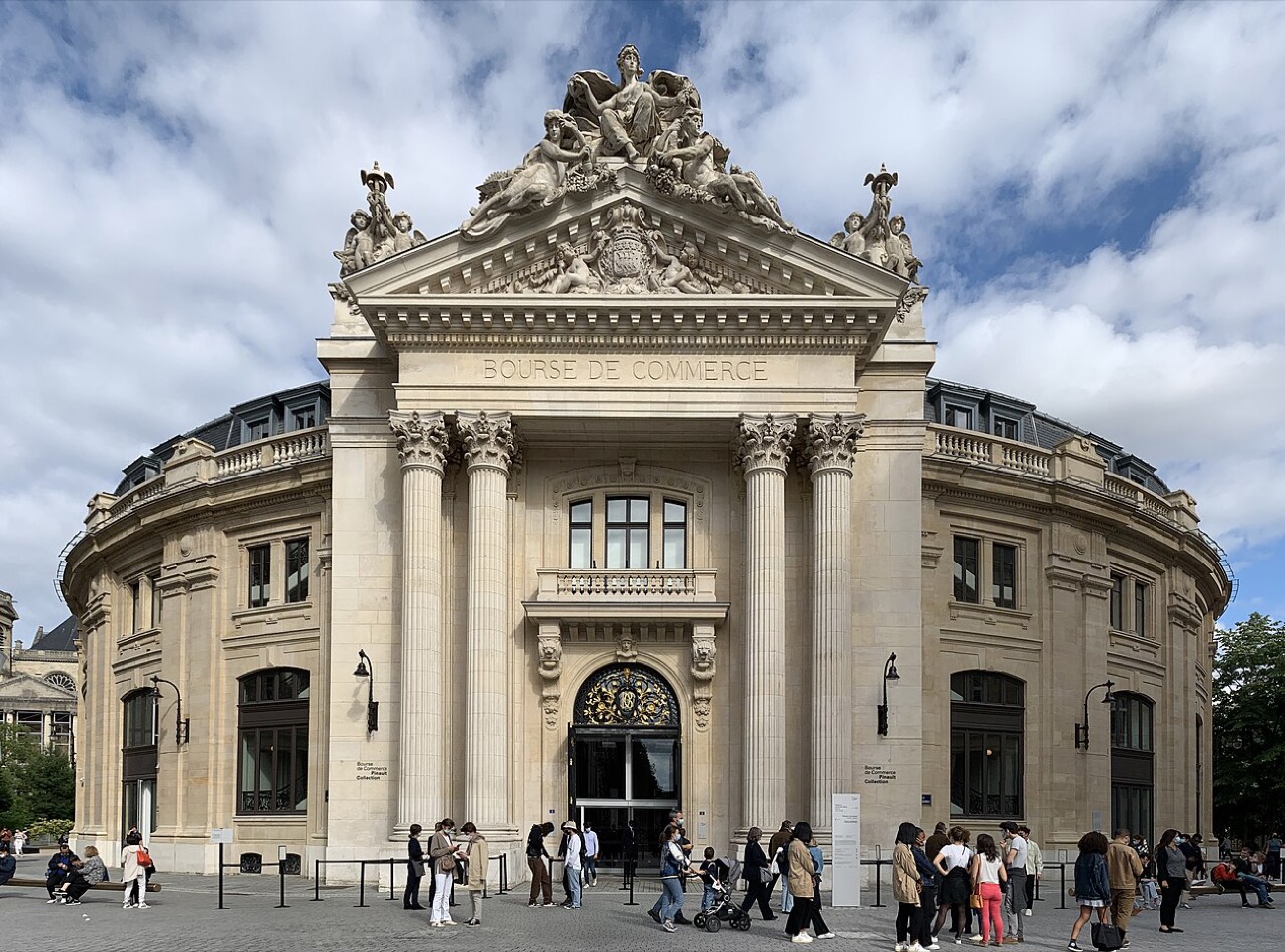
François Pinault's contemporary art collection inside the domed 18th-century former grain exchange, its glass rotunda and circular fresco restored around rotating installations by artists like Urs Fischer and David Hammons. Closed Tuesdays; open until 9pm on Fridays, with a free late opening the first Saturday of each month. Fully wheelchair accessible with equipment (wheelchairs, folding stools) available at the welcome desks.
- 17:45Dinner Caffè Stern
A refined Italian trattoria inside the former Stern engraving workshop, its gilt-framed mirrors, painted ceilings, and marble counter left largely untouched since the 19th century. The seasonal, Venetian-leaning menu (risotto, house-made pasta) draws a Michelin Guide mention. Closed Sunday and Monday, plus a few weeks in August — book ahead regardless.


Day 7Montmartre — a sights dayParis, 10 stops
A hilltop artists' village of steep cobbled stairways and café terraces, crowned by the Sacré-Cœur's white domes and Paris's finest skyline view.
- 07:40Check out of your stay
- 08:00Breakfast Ten Belles
The original outpost of one of Paris's best-regarded specialty coffee roasters, a corner spot a block from the canal with a handful of pavement tables. Single-origin espresso, sourdough pastries, and a small daily menu of salads and focaccia sandwiches with a genuine vegan option most days. Small and often standing-room only at weekend brunch hours.
- 08:30
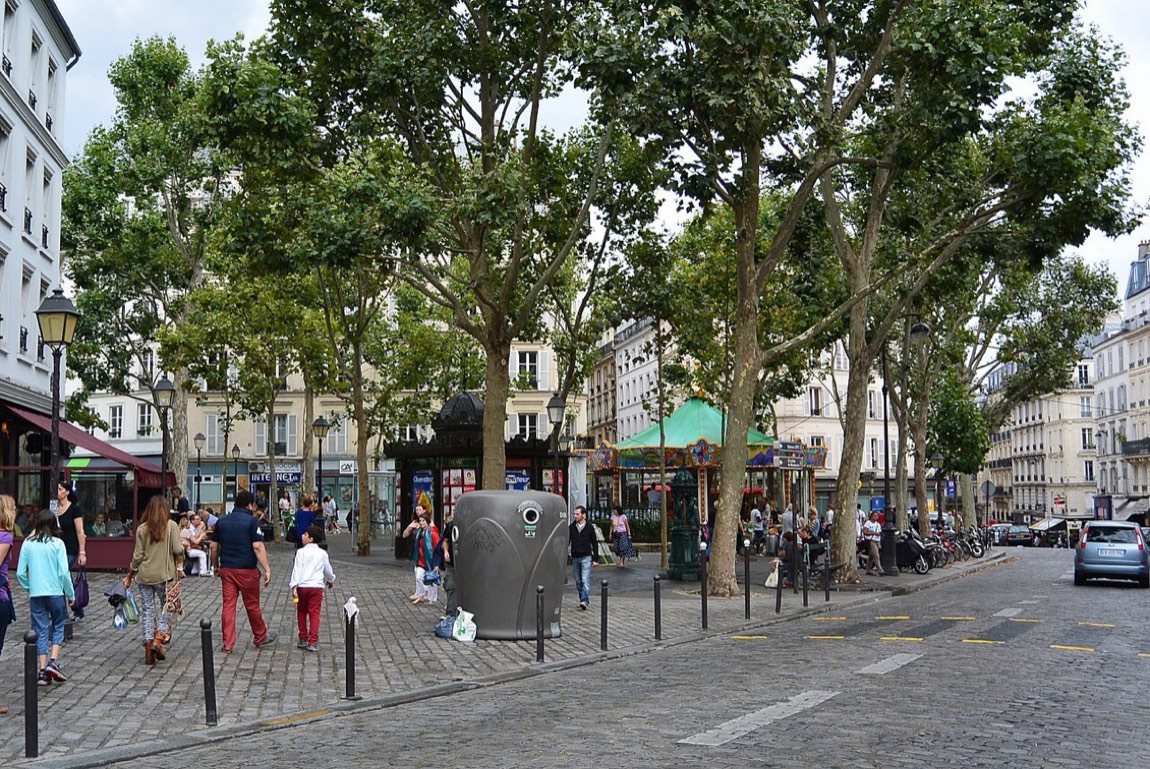
The square at the foot of the Montmartre hill, framed by one of only two surviving original Hector Guimard Art Nouveau glass canopies on the whole Paris Métro network (Abbesses station) — instantly recognisable from countless postcards and from the film Amélie. A vintage carousel, a Wallace drinking fountain and café terraces make it an easy, free spot to pause on the way up or down the Butte. The square itself is flat and paved and reachable step-free from street level; the Métro platforms below are among the deepest in Paris and only reachable by the two lifts, not the spiral stairs.
- 09:05
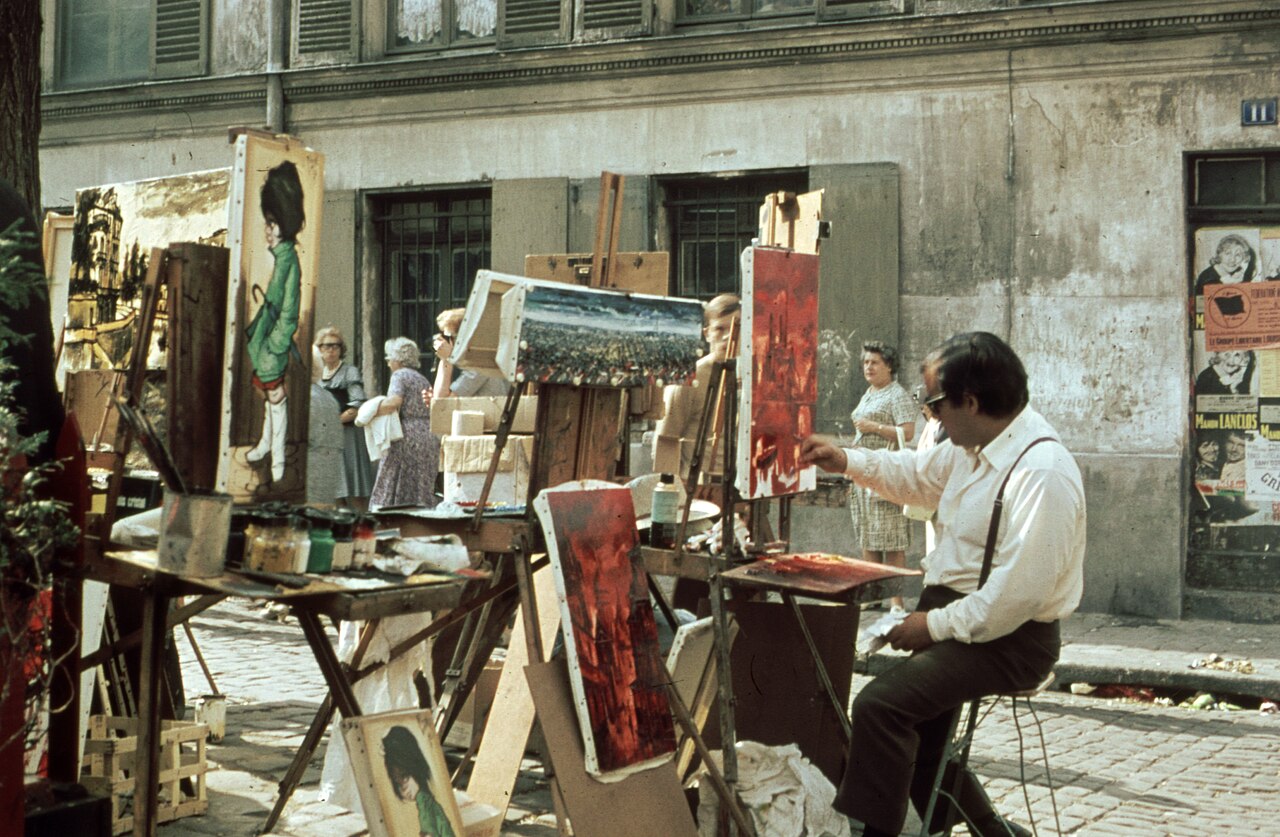
Montmartre's old village square, ringed by around 140 licensed street artists sketching portraits and painting canvases at their easels, much as they have since the Belle Époque. Go early morning to see the artists set up before the tour groups and restaurant touts take over the square.
- 09:50
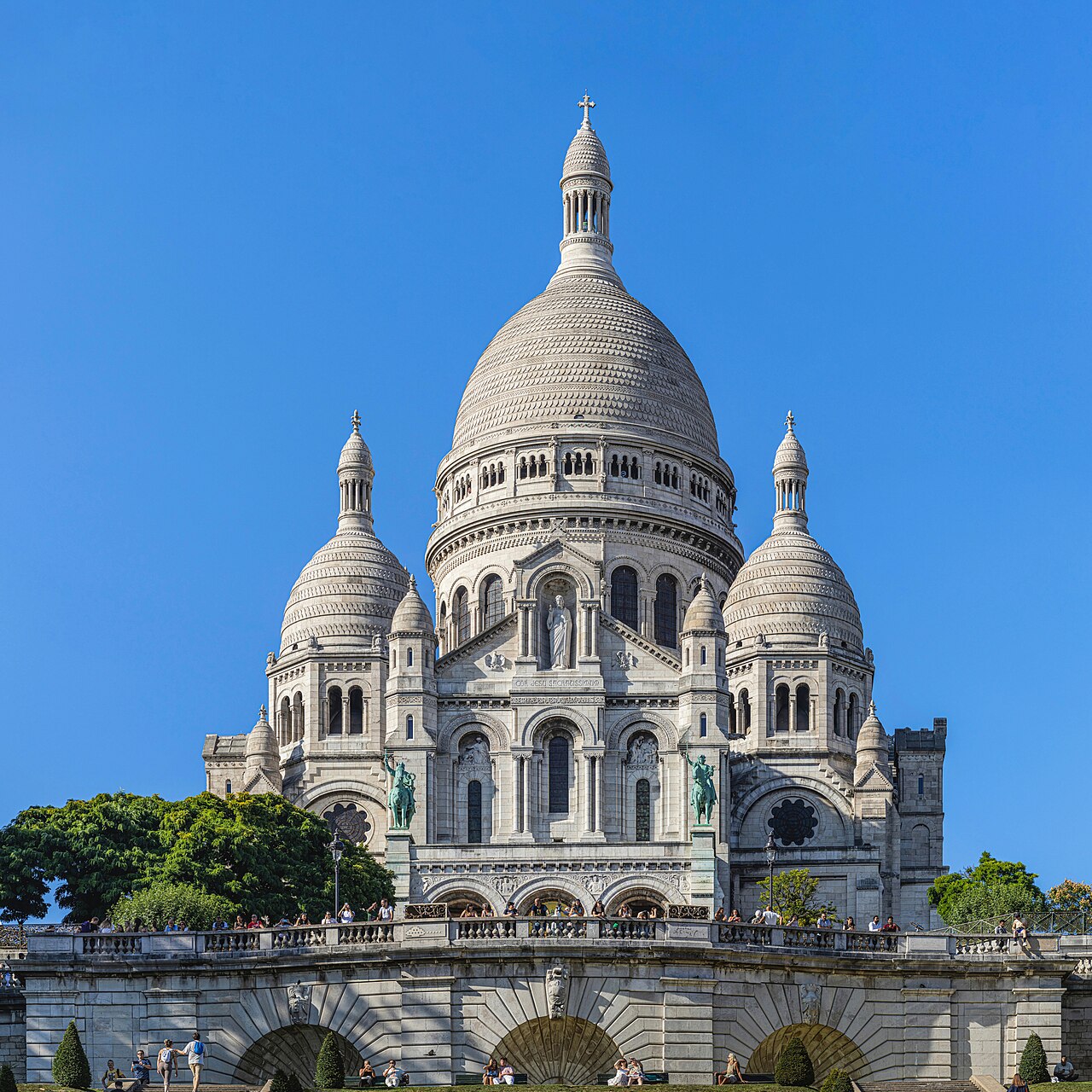
Paris's second-most-visited landmark, its white travertine domes crowning the Butte de Montmartre with a free panorama over the whole city from the front steps. Entry to the basilica itself is free; climbing the 300 steps to the dome costs extra and keeps separate, shorter seasonal hours.
- 10:50
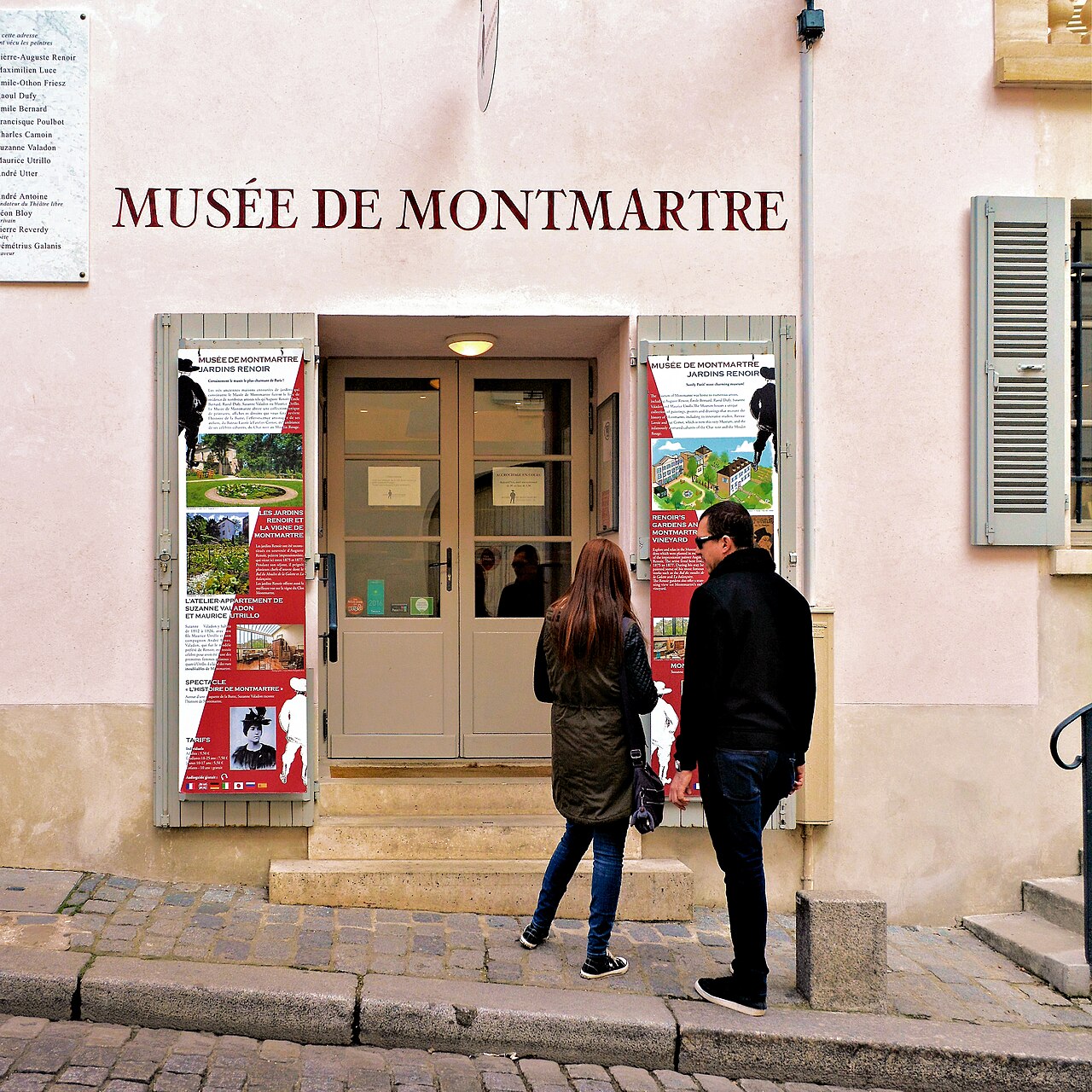
The 17th-century manor house where Renoir and Utrillo once lived and painted, telling Montmartre's bohemian art history around a garden the Impressionists themselves painted. Open every day, unlike most Paris museums; steps at the main entrance mean only the garden and temporary galleries are reachable for wheelchair users (ask staff to open the side door).
- 12:35Lunch La Maison Rose
Montmartre's most photographed building — a pale-pink 1900s house on a cobbled corner, once a haunt of Picasso and Utrillo, now a bistro serving a short seasonal French-Italian menu with vegan and gluten-free options. It's tiny and famous, so reserve a table on the website days ahead; walk-ins are usually turned away. Closed Monday and Tuesday.
- 13:35Rue de l'Abreuvoir & the Montmartre Vineyard
Widely considered Montmartre's prettiest lane: a cobbled slope of ivy-covered walls and old street lamps leading past La Maison Rose, with Sacré-Cœur's dome visible over the rooftops. The Clos Montmartre vineyard runs along the parallel Rue des Saules — its vines are visible over the fence but the plot itself is locked and only opens to visitors during the October grape-harvest festival or on Heritage Days, otherwise via a paid guided tour booked through the Musée de Montmartre. The cobbles and slope make this a walk best done in flat shoes; there's no step-free route.
- 14:10
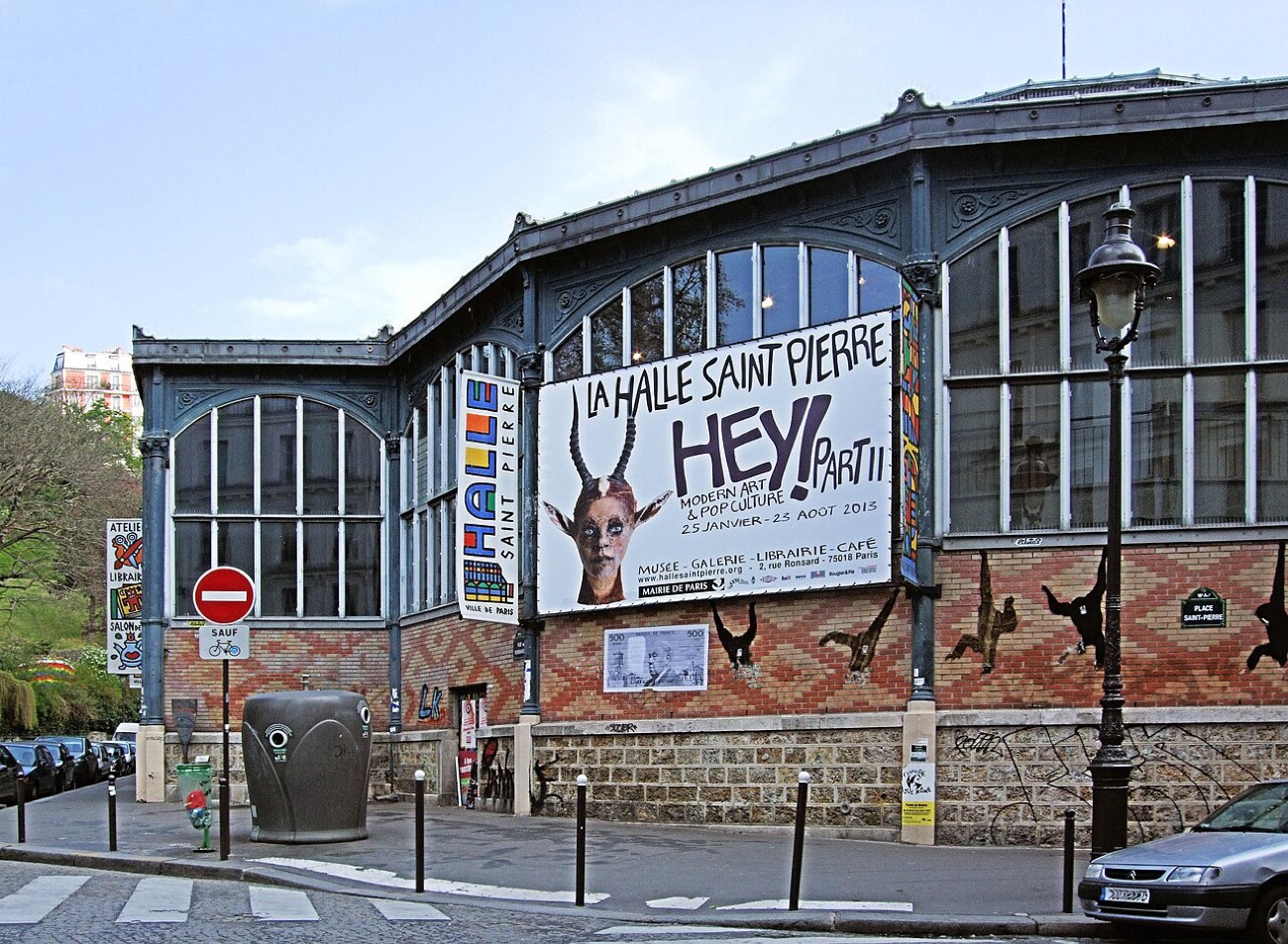
An iron-and-glass 19th-century market hall at the foot of the Montmartre butte, now Paris's home for art brut (outsider art), naive art and pop-culture-themed exhibitions — a striking contrast to the neighbourhood's Impressionist-tourist image. Unusually for a Paris museum it opens every day of the year with no weekly closure; the ticket desk and café stop serving an hour before closing time, so arrive with that in mind. Step-free access and an accessible restroom are available, and disabled visitors get a reduced rate.
- 15:55
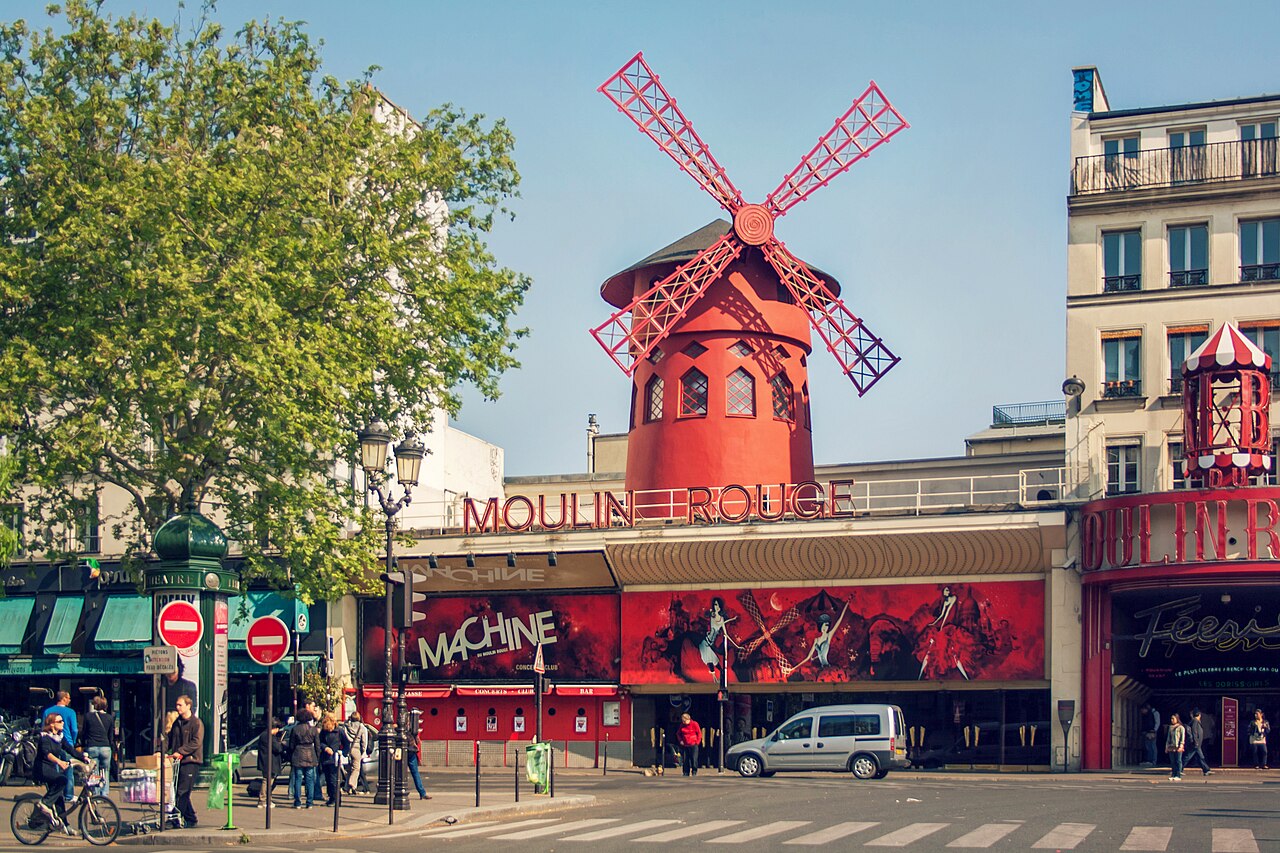
The red windmill and can-can cabaret that has anchored Pigalle's nightlife since 1889 — most visitors just photograph the illuminated facade from the boulevard. The dinner-and-show inside is a separate, pricey, book-ahead affair (from around €100 per person; doors from 19:00, shows at 21:00 and 23:00).
- 17:30Dinner Hôtel du Nord
The canal-side café-restaurant that gave Marcel Carné's 1938 film its name and its listed 1930s façade — still the address most associated with Canal Saint-Martin's cinematic reputation, though the building stopped operating as a hotel decades ago. Live jazz fills the dining room most Friday and Saturday evenings; book ahead for a canal-view table, especially then.


