Kanazawa金沢
Hokuriku's best-preserved castle town, spared wartime bombing — home to Kenrokuen, one of Japan's three great gardens, the gold-leaf and geisha teahouse lanes of Higashi Chaya, the bold 21st Century Museum of Contemporary Art and the bustling Omicho seafood market. The gateway, too, to the UNESCO thatched village of Shirakawa-gō.
Culture Crafts Food Gardens
Verified highlights
Higashi Chaya DistrictHistoric site
Step-free
The largest and prettiest of Kanazawa's old teahouse districts — two-storey wooden 'chaya' with fine wooden lattices along stone-paved lanes, now full of craft shops and cafés.
Omicho MarketFood
Vegetarian options Vegan options Cards OK
Kanazawa's 300-year-old covered market, its stalls heaped with snow crab, sweet shrimp and sea bream from the Sea of Japan, with counters serving fresh 'kaisendon' seafood bowls and grilled oysters.
Kenrokuen GardenGarden
Step-free
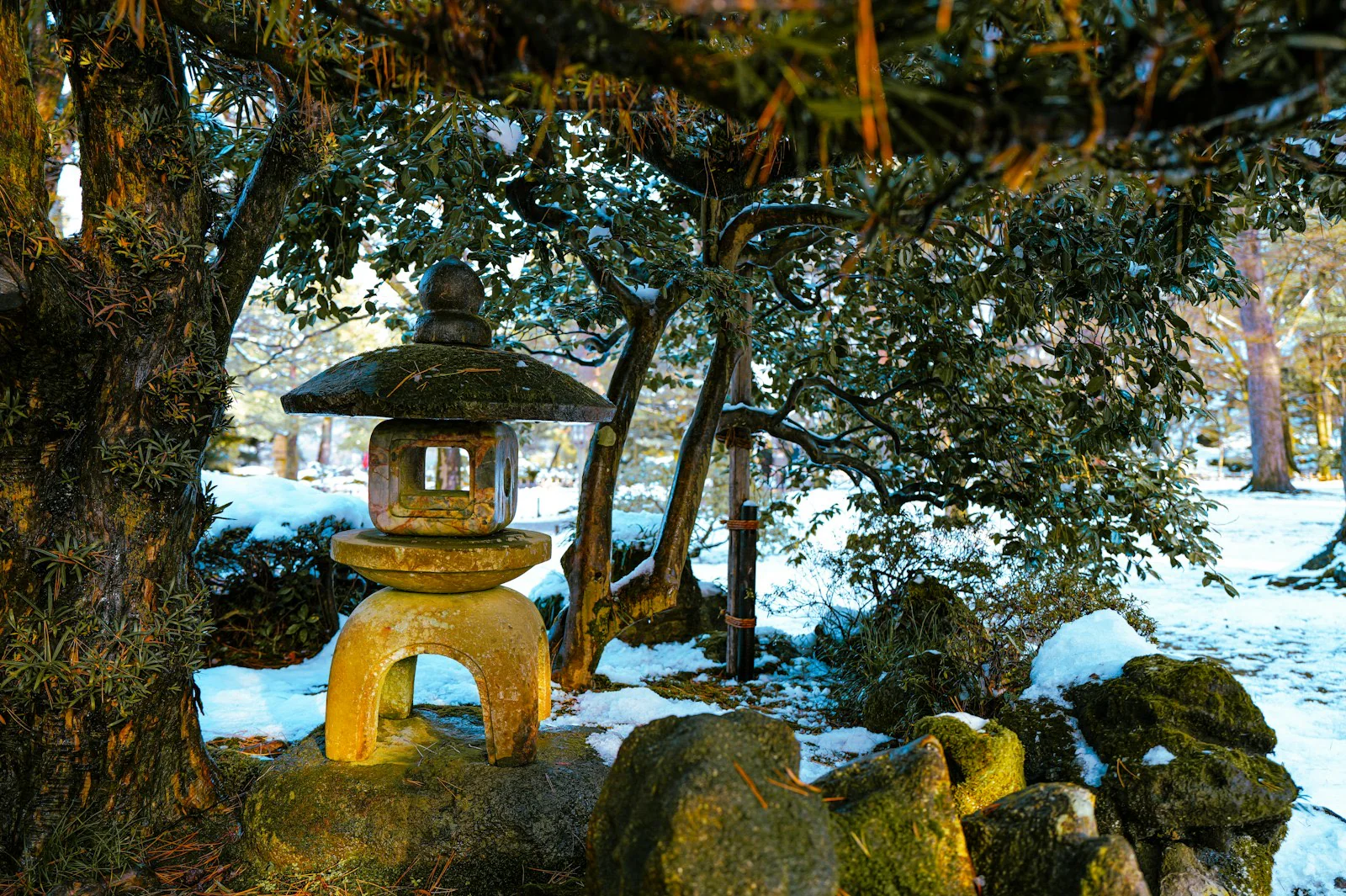
One of Japan's three great landscape gardens — winding ponds, teahouses, the famous two-legged stone lantern and a hillside that flares with plum, cherry and maple by season.
Hakuichi (gold-leaf ice cream)Food
Vegetarian options Alcohol-free Cards OK
The shop famous for its soft-serve ice cream crowned with a whole sheet of edible gold leaf — Kanazawa's most photogenic snack, the city making most of Japan's gold leaf.
Ogimachi VillageLandmark
Step-free
The main UNESCO-listed hamlet of steep-roofed thatched 'gasshō-zukuri' farmhouses among rice paddies and mountains — many still lived in, several open as homes, inns and cafés.
Curio Espresso (specialty coffee)Food
Vegetarian options Vegan options Cards OK
A Seattle-style specialty coffee shop in a townhouse near the market, pulling proper espresso and serving pancakes and bagels — a welcome modern breakfast or coffee stop.
21st Century Museum of Contemporary ArtMuseum
Step-free
A circular, glass-walled contemporary-art museum, home to Leandro Erlich's famous walk-into 'Swimming Pool' illusion and free public art zones.
Akadama Honten (Kanazawa oden)Food
Cards OK
Kanazawa's classic oden izakaya (since 1927) - local specialities like kani-men (crab-stuffed shell) simmer in a generations-old broth.
Neighbourhoods
Kenrokuen, Castle & 21st-C Museum
Kanazawa's cultural core on the central hill — the celebrated Kenrokuen strolling garden, the moated castle park across the road, the playful 21st Century Museum of Contemporary Art and the unusual Oyama Shrine. A walkable day of gardens, history and art.
Higashi Chaya District
Kanazawa's largest geisha teahouse quarter — lattice-fronted wooden 'chaya' along stone-paved lanes, now holding gold-leaf craft shops, cafés and a preserved teahouse you can tour, with the riverside Kazue-machi quarter close by. Beautiful and atmospheric, especially in the evening.
Omicho Market & Downtown
Kanazawa's everyday heart — the covered Omicho seafood market piled with crab and sweet shrimp, the Korinbo–Katamachi shopping and dining streets, and the earthen-walled Nagamachi samurai district with its preserved villas just to the south. Where you eat, shop and base yourself.
Shirakawa-gō
A UNESCO World Heritage village of steep thatched 'gasshō-zukuri' farmhouses in a mountain valley, ~75 minutes by bus from Kanazawa — wooden homes you can step inside, a hilltop viewpoint over the whole hamlet, and rice paddies framed by peaks. A full, storybook day-trip, magical under snow.
Where to stay
Omicho Market & Downtown
The Korinbo–Katamachi centre by Omicho market — most hotels, buses in every direction and the city's dining and shopping. The most convenient all-round base.
Higashi Chaya District
Staying near the Higashi Chaya teahouse streets is atmospheric and walkable to the river quarters — quieter and very pretty in the evening.
Some links may earn hi tabi a commission, at no extra cost to you.
Getting there
Kanazawa Station (Hokuriku Shinkansen)
~2h30 from Tokyo on the Hokuriku Shinkansen; the striking Tsuzumi-mon gate fronts the station, and buses fan out to the sights from here.
Komatsu Airport (KMQ)
~40 min south-west by limousine bus, with flights to Tokyo, Sapporo, Fukuoka and Okinawa.
Shirakawa-gō bus (from Kanazawa Station)
For the day-trip: Hokutetsu/Nohi buses run from Kanazawa Station to Shirakawa-gō in ~75–85 min (reserve in peak season). A rental car also works well for the wider Hokuriku region.
FAQ
How do you get to Kanazawa?
The Hokuriku Shinkansen runs direct from Tokyo in about two and a half hours; from Osaka or Kyoto take the Thunderbird limited express with a change at Tsuruga. Komatsu Airport is the flying option, with a direct bus into the city.
When is Kenrokuen at its best?
Every season is staged deliberately — plum and cherry blossom in spring, deep green summer, blazing autumn colour, and the famous yukitsuri snow ropes in winter. Go at opening time: the garden is dramatically quieter before the coach tours arrive.
Should I carry cash in Kanazawa?
Yes — a few of the best small spots, especially around the markets and teahouse districts, remain cash-only. tabi's catalog marks payment per place, so your plan warns you before you queue at a register that won't take your card.
How up to date is this information?
Every place in the catalog is human-checked, and volatile facts — opening hours, closures, payment — sit on a quarterly re-verification cycle. Plans and pages are regenerated with every site release, so what you read reflects the current catalog.