
Vienna & Venice — over the Alps by rail in 7 days
- 7 days, 2 cities
- Balanced pace
- About 30 min walking a day
One of Europe's great rail crossings, and a trip that changes character completely halfway through. Vienna first: Schönbrunn and the Hofburg, Klimt in a baroque palace, and coffee houses where a single cup rents the afternoon. Then the line south over the Semmering — the first mountain railway ever built through terrain like this, and still the way you leave Austria for Italy — down to a city with no cars at all, where the streets are water and getting lost is the point. One district a day in each, every stop human-verified. Two things worth knowing: Venice charges a day-visitor access fee on peak dates, and Vienna's shops shut on Sunday.
Day by day
Day 1Grinzing & Heiligenstadt Wine Villages & nearby — a sights dayVienna, 8 stops
A wine village swallowed by the city but still working, on the vine slopes at the northern edge. Heuriger taverns serve their own new wine from a buffet counter, opening in irregular seasonal stretches rather than to fixed hours. An evening rather than a day, and worth pairing with the ridge walk above it.
- 08:30Grinzing Cemetery
A working cemetery on the vine slopes above the village, and the resting place of Gustav Mahler — his grave carries only his name, cut into a plain stone block at his own request, in group 6, row 7. Quiet, wooded gravel paths make it as much a green pause as a sight. Free to enter; the hours are the longer April to September window, and shrink to roughly 08:00-17:00 in winter.
- 09:30St Joseph's Church (Kahlenberg)
The chapel where King Jan III Sobieski is remembered for breaking the 1683 Ottoman siege of Vienna, inside a church that has stood on this summit since the 1630s. It is currently under restoration, so only the Sobieski Chapel is open to the public — Saturdays 09:00-13:00 and 14:00-18:00, Sundays and holidays 14:00-18:00; other days are group visits by advance booking only. Free to enter, and a short walk from the Kahlenberg viewpoint and its bus 38A stop.
- 10:15Kahlenberg Viewpoint
The terrace at 484 metres with the whole city below and the Danube running through it — the view Vienna puts on postcards, and free. Bus 38A climbs here from Heiligenstadt. Bring a layer: it is reliably colder and windier than the city, and there is little shelter.
- 11:30Leopoldsberg
The next hill along from Kahlenberg, with a ruined castle church and a quieter terrace looking straight down the Danube. The ridge walk between the two takes about forty minutes through the woods and is the reason to come up here rather than just for the view.
- 13:00Lunch Mayer am Pfarrplatz
A working Heuriger in the house Beethoven rented in 1817, where he worked on the Ninth Symphony — his rooms are still up the stairs from the terrace. Its own wine, served with a cold buffet you order at the counter. Opens daily from noon. Heuriger closing times move with the season and the crowd, so treat the evening end as approximate.
- 14:00Brunnenmarkt
The longest street market in Vienna and almost entirely a local one — Turkish and Balkan greengrocers, butchers and bakeries down a pedestrian street, at a fraction of Naschmarkt prices. Weekday mornings are the real thing. Closed Sundays like all Austrian retail.
- 15:15
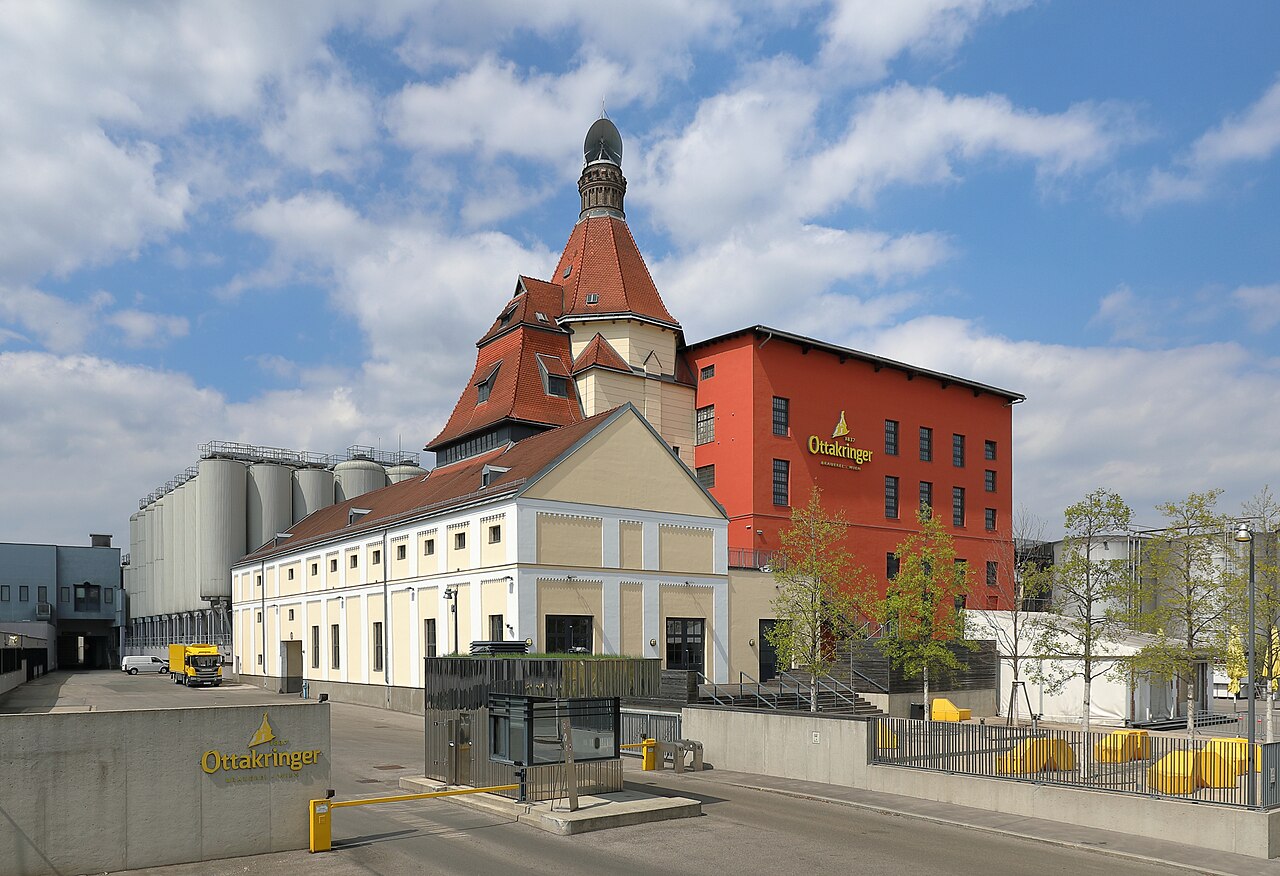
Vienna's last big independent brewery, still working in the district it is named after, with tours and a taproom. It is a working plant rather than a museum, so tour times are fixed and limited — book rather than turn up.
- 17:30Dinner Feuerwehr Wagner
One of Grinzing's best-known Heuriger, with a shaded natural garden for 450 and a buffet that explicitly lists vegetarian, vegan and gluten-free dishes next to the usual roasts — unusual for this style of place. Genuinely set up for children, with kids' portions, high chairs and a playground. Cash and card are both accepted. Hours follow the same ausg'steckt pattern as every Heuriger in Grinzing — irregular seasonal opening rather than a fixed calendar — so treat them as the general shape and check before a special trip.

Day 2Innere Stadt & Stephansdom — a sights dayVienna, 9 stops
The medieval core inside the Ring, built around the cathedral's tiled roof. Graben and Kohlmarkt for the grand shopfronts, narrow lanes behind them for the old coffee houses. Everything here is walkable and everything here is priced accordingly — eat a street back from the main squares.
- 08:00Breakfast Demel
The imperial court confectioner, still making cakes behind a glass kitchen you can watch from the room. Open daily 10:00–19:00. It closes earlier than most Viennese cafés, so it is an afternoon stop rather than an evening one, and the queue at the front counter moves faster than the seated room.
- 09:00St Peter's Church
A domed baroque church tucked behind the Graben, dim and gilded inside and almost always emptier than the cathedral two minutes away. Free to enter, donations welcome, and there is a free organ concert daily at 15:00.
- 09:45
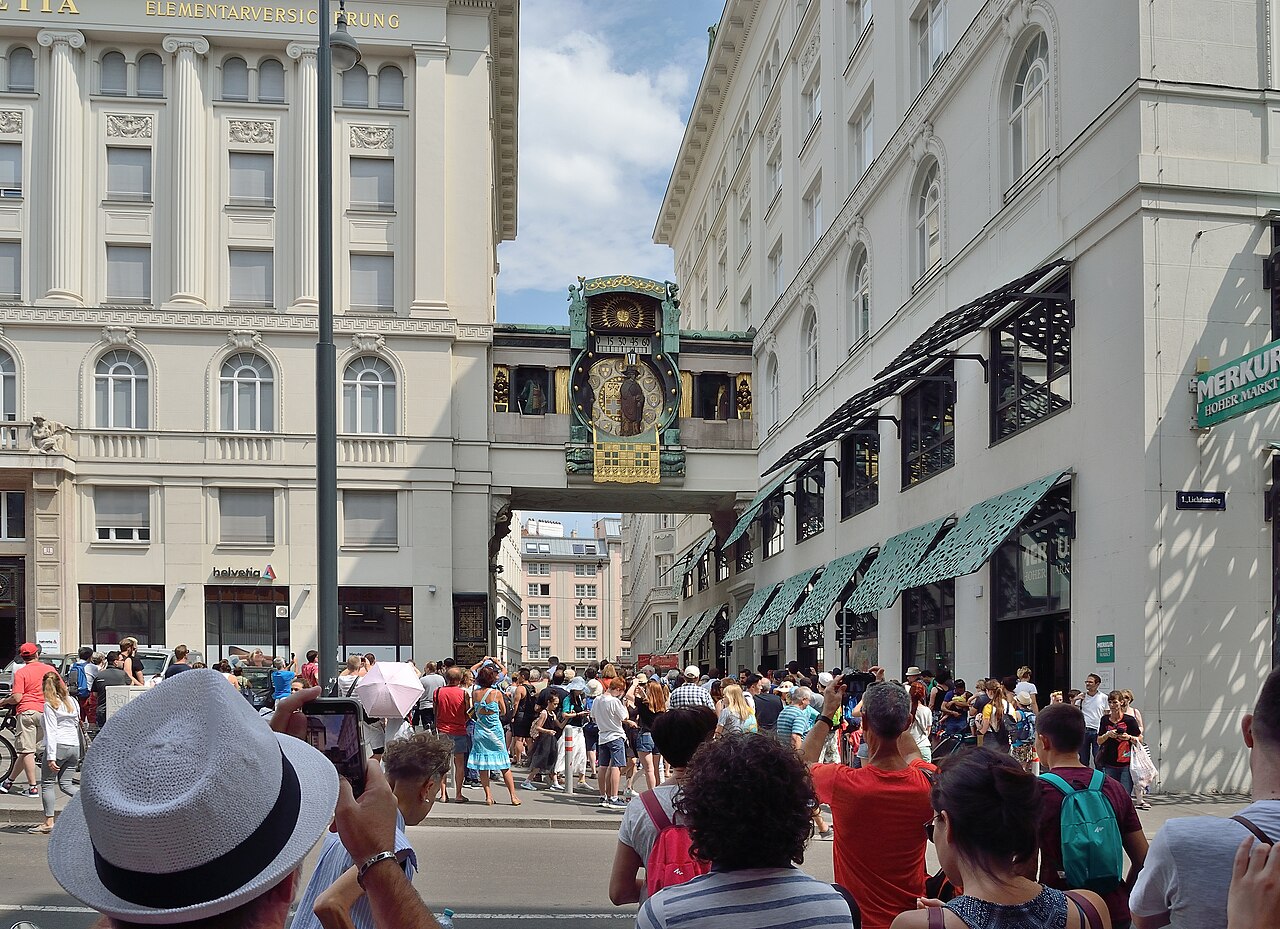
An Art Nouveau clock bridging two buildings, across which twelve figures from Vienna's history move one per hour. At noon all twelve parade in sequence with music — that is the thing to see, and it draws a crowd on the pavement below.
- 10:20Mozarthaus Vienna
The only one of Mozart's Vienna apartments still standing, where he wrote The Marriage of Figaro. Open daily 10:00–19:00. The flat itself is on the first floor and is smaller than the ticket price suggests; the two floors below set the city he worked in.
- 12:00Lunch Trzesniewski
Open sandwiches the size of a palm, twenty-odd spreads, eaten standing at a counter since 1902 — Kafka is said to have been a regular. Two or three plus a small beer is lunch for a few euros, and it is the fastest honest meal in the first district.
- 13:00Haus der Musik
An interactive sound museum over five floors — you conduct the Vienna Philharmonic on a screen and it plays back your tempo. Open daily 10:00–22:00 with last entry at 21:00, which makes it one of the few museums in the city usable in the evening. €19 adult, €8 under 12.
- 14:45
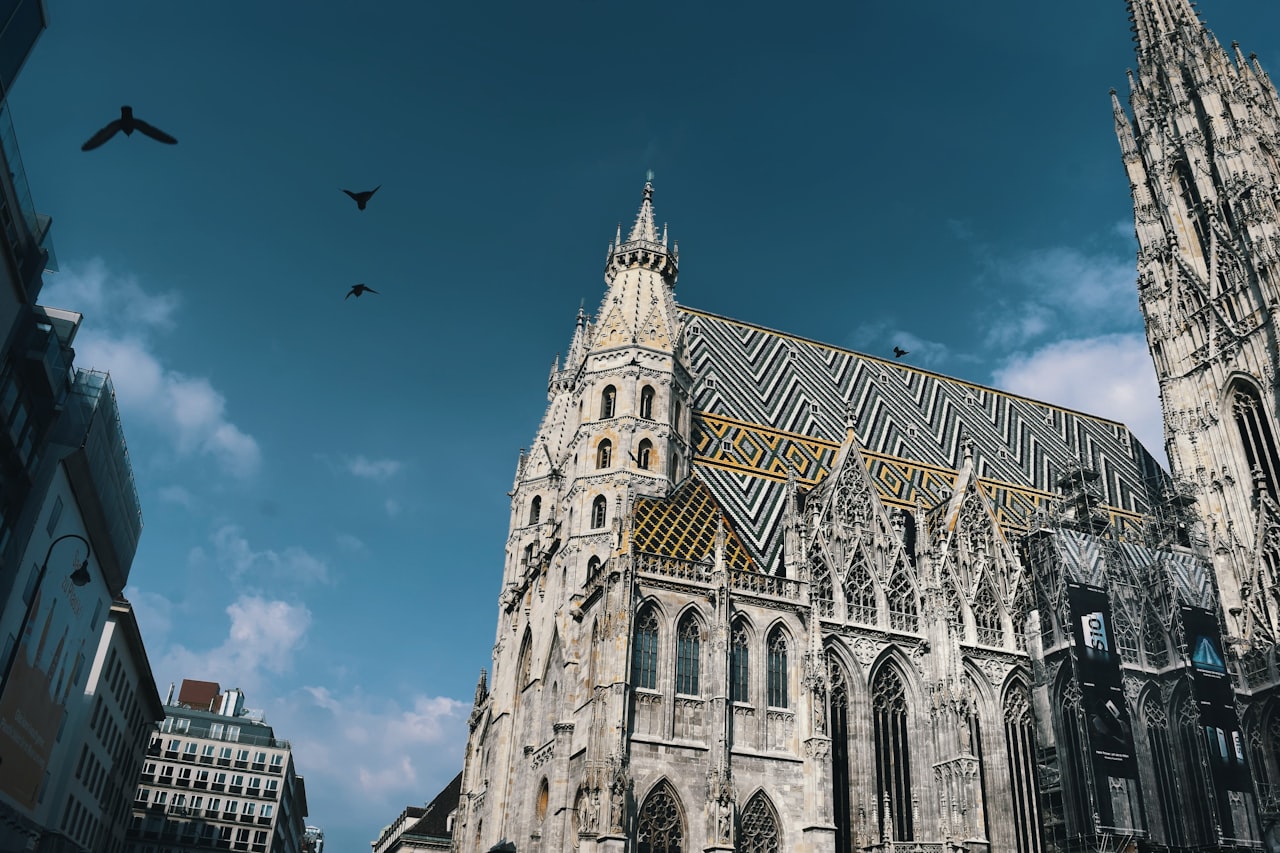
The cathedral is open from 06:00 to 22:00 for prayer, but sightseeing is confined to 09:00–11:30 and 13:00–16:30 on weekdays and Saturdays, and afternoons only on Sundays and holidays — services occupy the gaps. The nave is free to enter; the towers and catacombs are ticketed separately.
- 16:00
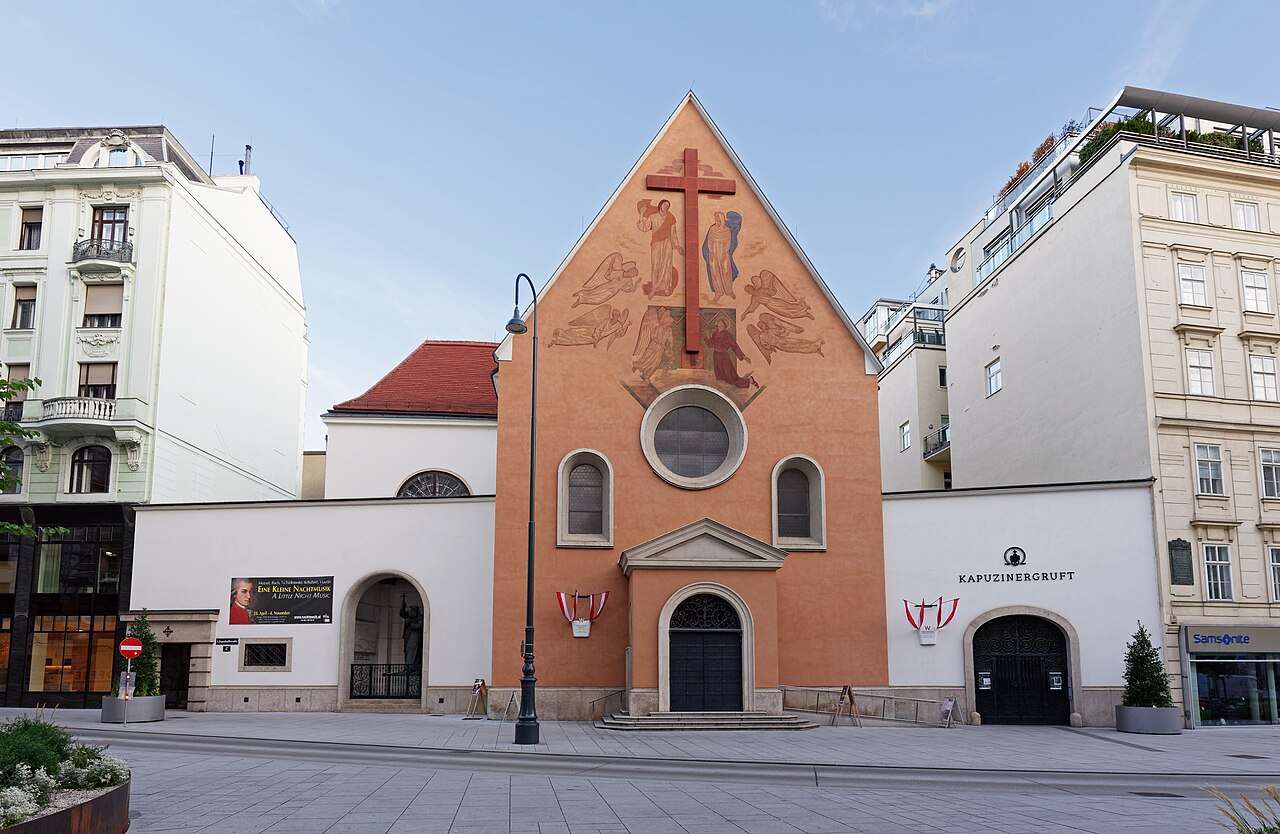
The Habsburg burial vault beneath the Capuchin church — 150 members of the family in tin coffins that get steadily more elaborate as the dynasty goes on. Open daily 10:00–18:00 with last entry at 17:30; €15 adult, reduced with the Vienna City Card. Holiday hours differ.
- 17:30Dinner Figlmüller (Wollzeile)
The schnitzel most visitors come for — pounded wider than the plate, breaded and fried in a lane off Stephansplatz since 1905. Open daily 11:00–22:30 but the kitchen stops at 21:30. It does not take reservations for small groups at busy times and the queue is part of the experience; go early or late.


Day 3Schönbrunn Palace & Gardens — a sights dayVienna, 5 stops
The summer palace, its formal gardens climbing to the Gloriette, and the world's oldest surviving zoo in the same grounds. This is a full day on its own and should be planned as one — palace tickets are timed, the gardens are free, and the walk up to the Gloriette view is longer than it looks.
- 08:00Breakfast Café Gloriette
A café inside the Gloriette itself, at the top of the park with the palace and the whole city below the window. You are paying for the position and it is busy — but it is the reward at the end of the climb, and the terrace outside is the best seat in Schönbrunn.
- 08:30Schönbrunn Gardens & Gloriette
Formal parterres rising to the Gloriette on the ridge, with the best view back over the palace and the city behind it. The park opens at 06:30, long before the palace, which is the quietest hour to walk it. Several enclosures inside the park — the maze, the privy garden, the Gloriette terrace — are ticketed separately from the park itself. The garden is reached step-free by the ramp to the right of the palace as you face it — but the Gloriette viewing terrace, the maze platform and the Privy Garden are reachable only by stairs.
- 10:15Imperial Carriage Museum
The Habsburg court's carriages, sleighs and the black funeral coach that carried emperors, in a hall beside the palace. Quieter than the state rooms and a good pairing with them — the imperial car park, essentially.
- 11:30Schönbrunn Zoo
The oldest zoo still operating anywhere, founded in 1752 inside the palace grounds, with the original baroque pavilion at its centre. Opens daily at 09:00; closing moves with the season, as late as 18:30 from April to September and as early as 16:30 in midwinter, with last entry half an hour before.
- 14:45
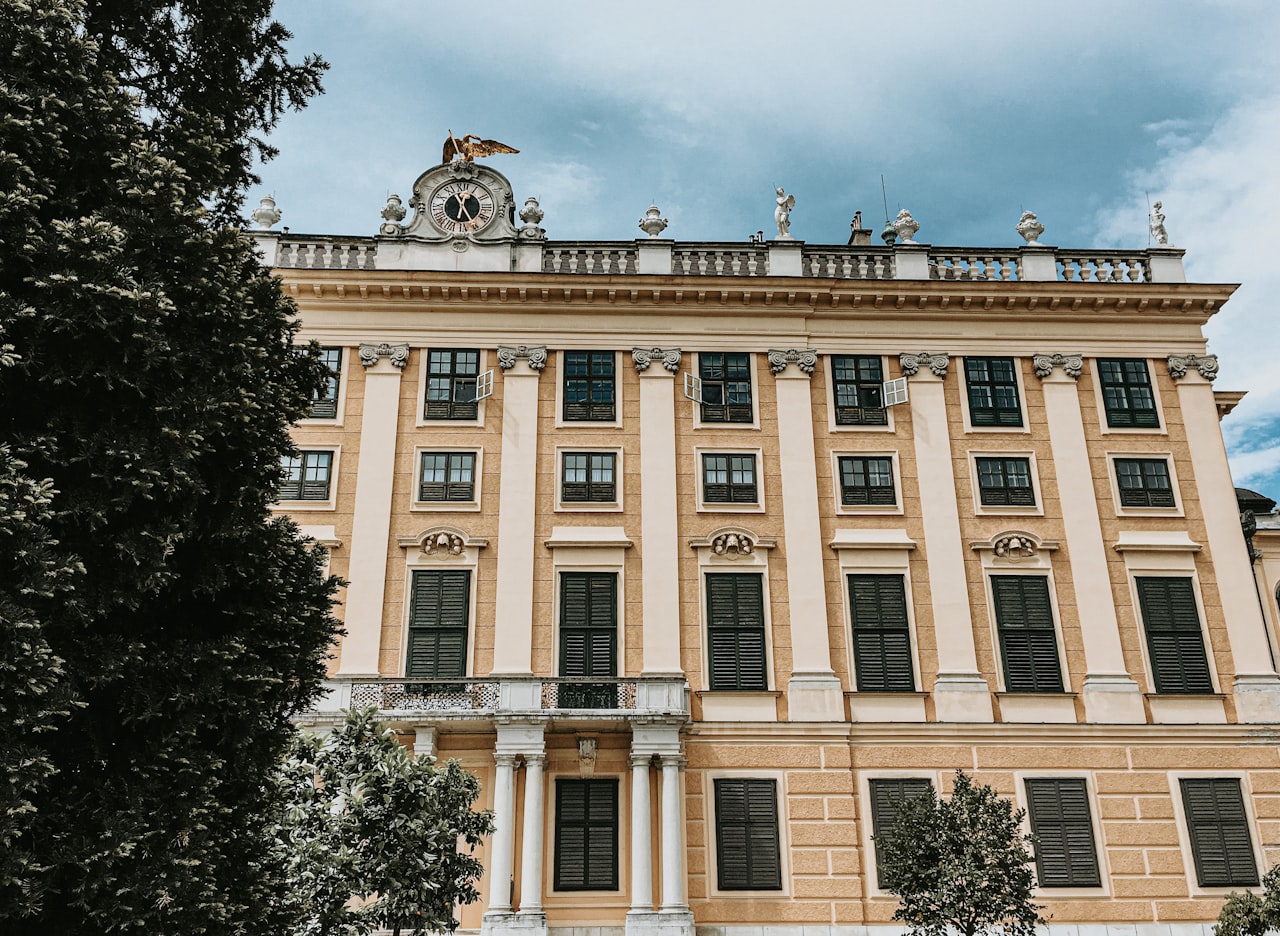
The Habsburgs' summer residence, 1,441 rooms of which about forty are shown. Open daily 08:30–18:00. Tickets are timed and the palace states they are sold online only — buy ahead rather than at the gate, both to get a slot and to avoid the counterfeit sellers it warns about. The State Apartments ticket is the short visit; the Grand Tour adds the older rooms. Every display room is step-free by ramp or lift, and wheelchairs are lent free at the turnstile against ID.

Day 4Naschmarkt & Karlsplatz — a sights dayVienna, 6 stops
The long market strip and the streets either side of it, running down from Karlsplatz where the Secession's golden dome and Karlskirche sit almost opposite each other. This is where Vienna eats — market stalls, Levantine food, and the Saturday flea market at the far end.
- 09:00Wien Museum
The city's own museum, retelling Vienna from the first settlement to now — and the permanent exhibition is free, with no ticket needed. Closed Mondays. Thursdays it stays open to 21:00, one of the few late museum evenings in the city. Also closed 1 January, 1 May and 25 December.
- 10:45
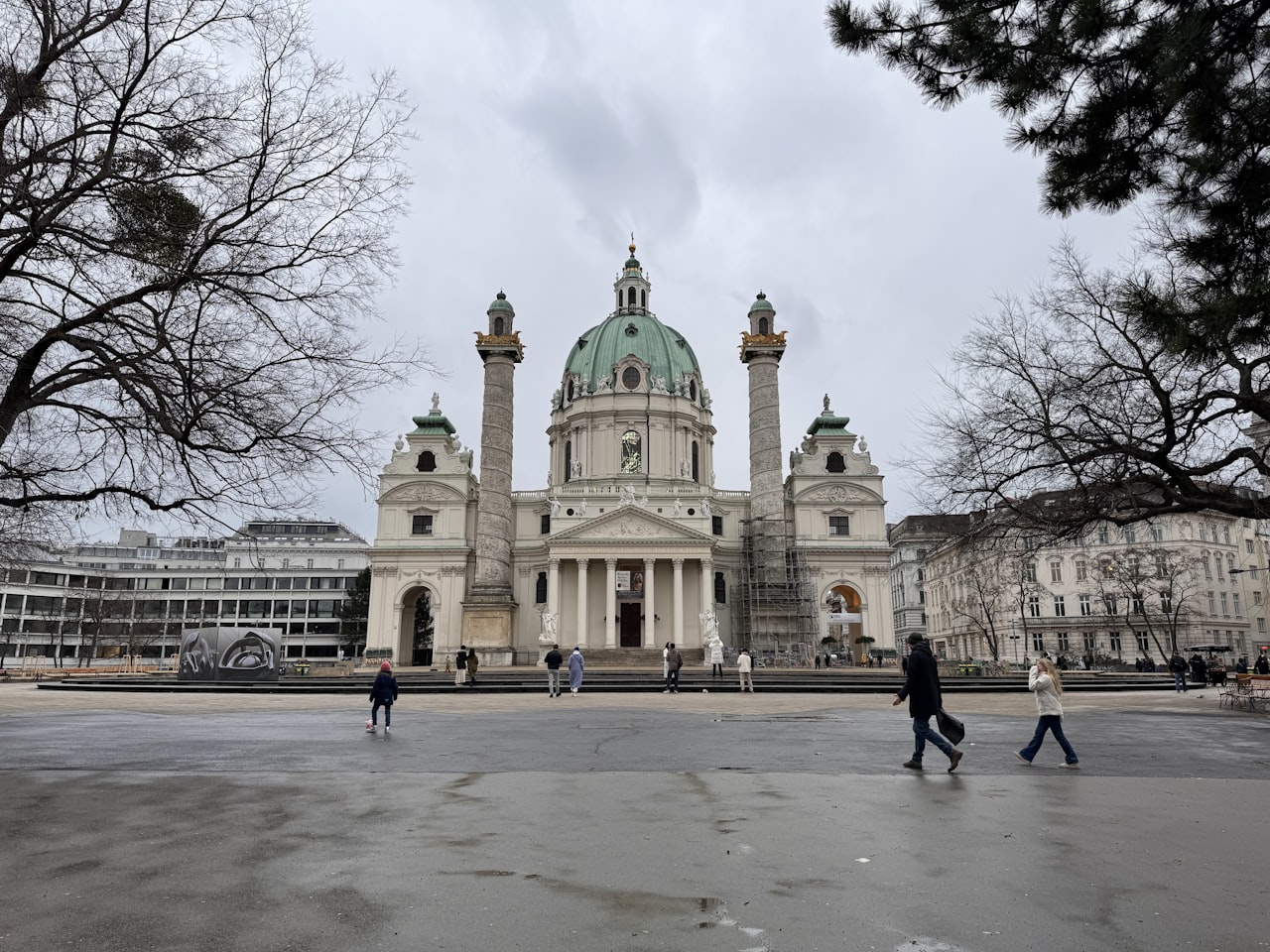
A domed baroque church with two Trajan-style columns, set behind a reflecting pool at the end of Karlsplatz. Ticketed visits run Monday to Saturday 09:00–18:00, and Sundays and holidays only from 11:45 after services. The lift up into the dome is the draw — it puts you level with the ceiling fresco.
- 12:00Lunch NENI am Naschmarkt
Open every day including Sunday, which is unusual for Vienna. Breakfast and mezze run into the late morning and the place gets busy, especially weekend mornings — worth booking ahead for a group. There is a market-facing terrace as well as the upstairs dining room; ask for whichever suits the weather.
- 13:00Secession Building
The gilded dome the Viennese call the golden cabbage, built in 1898 as a manifesto against the academy. Klimt's Beethoven Frieze is in the basement and is the reason most people come. Closed Mondays — open Tuesday to Sunday 10:00–18:00.
- 14:15Naschmarkt
Vienna's long market strip — produce and spice stalls at the Karlsplatz end, sit-down places the further you walk. Stalls keep their own hours but the market follows Austrian retail law: roughly 06:00 to 19:30 on weekdays, closing earlier on Saturday, and shut on Sundays. The flea market at the far end runs Saturdays only.
- 17:30Dinner Glacis Beisl
A garden Beisl tucked into the back of the MuseumsQuartier, on the old glacis where the city walls once stood — shaded tables and Austrian cooking a few minutes from the museums. Open daily from noon to midnight, but the kitchen stops at 22:30 and at 21:30 on Sundays.

Day 5San Marco & nearby — a sights dayVenice, 6 stops
The ceremonial heart — Byzantine gold inside the basilica, the Doge's palace of pink marble, and the piazza Napoleon called Europe's drawing room. Dazzling at 8am, dense by 11.
- 07:30Check out of your stay
- 07:46Flight
- 11:00Drop your bags at your stay
- 11:30Rialto Market
Venice's working market for eight centuries, split across two adjoining campi right at the foot of the Rialto Bridge on the San Polo side. The erberia (fruit and vegetable stalls, spilling onto Campo Cesare Battisti and along the Grand Canal) runs Monday-Saturday roughly 7:30-13:30; the pescheria (fish market, under a distinctive early-1900s neo-Gothic loggia on Campo della Pescaria) keeps shorter hours, Tuesday-Saturday 7:30-12:00, and is closed both Sunday and Monday -- plan a Tuesday-to-Saturday morning visit if the fish stalls are the draw. Come before 10:00 for the market at its most active, when boats are still unloading crates lagoon-side and stallholders outnumber tour groups; by early afternoon most stalls have packed up regardless of posted hours. It's free to wander -- budget only for what you buy -- and the surrounding calli hold the handful of bacari (All'Arco, Cantina Do Mori) built to feed the market's own workers, still the best reason to time a visit for the morning.
- 12:30Lunch Cantina Do Mori
Venice's oldest bacaro, pouring wine on this spot since 1462 and a reputed favourite of Casanova -- a narrow, standing-room cantina with a double entrance from two hidden calli, hanging copper pots overhead, and a wooden counter serving cicchetti and the tiny francobolli ("stamp") sandwiches it's known for. Open Monday-Friday roughly 8:00-19:30 and Saturday 8:00-15:00, closed Sunday -- the longest weekday hours of the classic Rialto bacari, useful if an evening glass of wine near the market is the goal, though it's still a stand-and-go format, not a sit-down meal. No chairs, no table service, no reservations; order at the counter and eat standing, as generations of market workers have. Reviews are more mixed here than at neighbouring All'Arco -- some find the food inconsistent day to day -- but the 560-year-old room itself, unchanged in spirit, is as much the draw as what's on the counter.
- 13:30
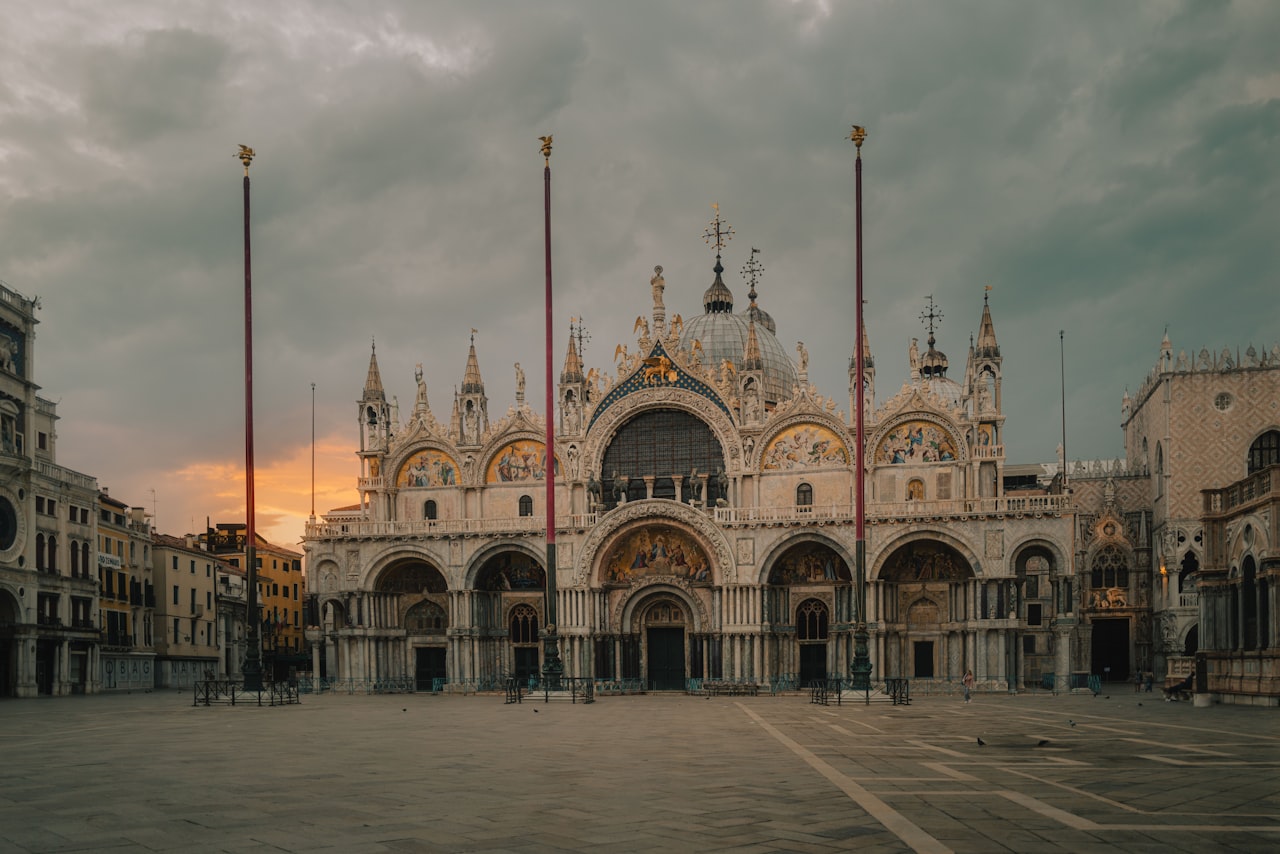
Venice's Byzantine-domed cathedral on Piazza San Marco ended nearly a millennium of free entry in 2023 — a basic ticket to the nave, its shimmering gold-ground mosaics overhead, now costs €10, booked in a timed slot on the basilica's own site (on-site ticket counters closed for good on 1 July 2025, so buy online in advance). Two paid add-ons layer on top: the Pala d'Oro, a jewel-encrusted gold altarpiece behind the high altar, and the Loggia dei Cavalli museum and terrace with its close-up view of the bronze horses looted from Constantinople and a rare vantage over the piazza — each adds around €10 to a combined ticket, or pay €30 for everything at once. A ramped entrance at Porta dei Fiori on the left flank gives wheelchair access to the nave, though the upper museum and terrace involve stairs. St Mark's Square is the lowest point in the city and the basilica's narthex floods before almost anywhere else — glass barriers installed in 2022 now keep the interior dry up to about 110cm of tide, but the square outside can still submerge under raised walkways during autumn and winter acqua alta. Dress modestly (shoulders and knees covered) and expect bag checks at the door; free admission does not extend to general skip-the-line entry, so budget queue time even with a booked slot.
- 14:45
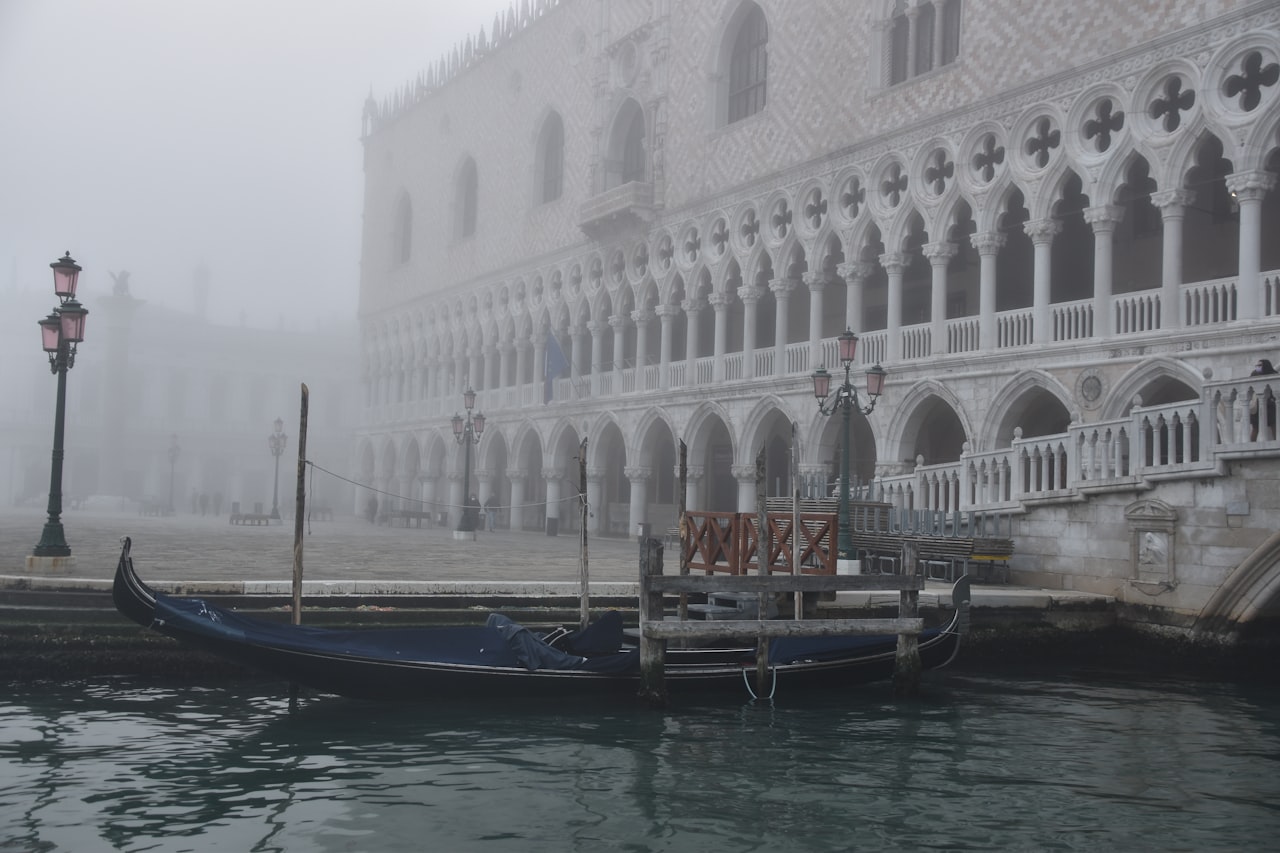
The doges' seat of power for seven centuries, its Gothic lace facade opening onto grand council chambers, the Bridge of Sighs and the cells where prisoners once crossed from courtroom to jail. Entry is via the single Musei di Piazza San Marco ticket (€35 full price, €30 if booked at least 30 days ahead online, €15 reduced), which also covers the Museo Correr, the Archaeological Museum and the Marciana Library's monumental rooms in the same square — plan a half-day if you want all four. Open daily 9:00-19:00 (last entry 18:00) year-round, with an extra treat from 1 May to 26 September: the palace and Correr stay open until 23:00 every Friday and Saturday, a good way to see the Golden Staircase and the Salone del Maggior Consiglio without the daytime crush. Wheelchair users can use a dedicated step-free entrance near the exit with staff assistance and a lift to the upper floors, though the old prisons and armoury remain inaccessible; entry is free for disabled visitors and one companion. Occasional evening closures for state events do happen so a quick hours check is worth it if your visit falls on a weekend evening.
- 17:00
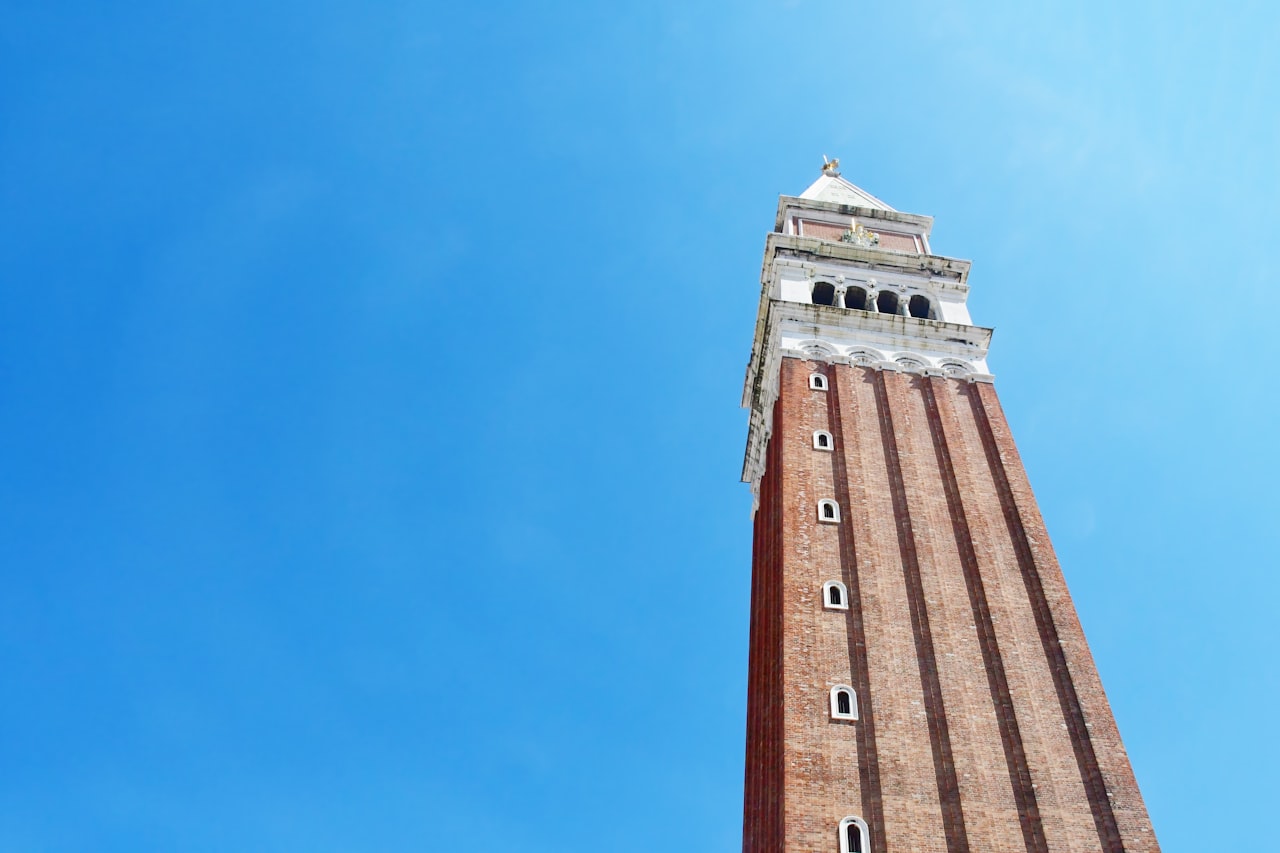
The freestanding red-brick bell tower on Piazza San Marco, rebuilt in 1912 after the original collapsed overnight in 1902 (no injuries, on the exact spot it had stood since the 12th century), topped with an open-air belfry giving the best panoramic view over Venice's rooftops, the lagoon and, on a clear day, the distant Dolomites. Tickets cost €15 for anyone over age 6 (free under 6) and, unlike the basilica, an elevator does the climbing for you — no stairs, just a short wait for the lift, making it one of the more wheelchair- and stroller-friendly viewpoints in the city. Open daily 9:30-21:15 from April to October and 9:30-17:30 the rest of the year, with last entry 15 minutes before closing; the tower occasionally closes on short notice in high wind or lightning, since it's the tallest structure in Venice. Buy tickets online or at the counter in the piazza — queues build fast by mid-morning, so an early visit, or a slot booked alongside the basilica, avoids the worst of it.
- 17:55Dinner Antiche Carampane
Tucked into the former red-light district the restaurant is named for, a sign at the door reading "no pizza, no lasagne, no menù turistico" sets the tone -- a serious, locals-favoured seafood kitchen with no concessions to the tourist trade despite being a five-minute walk from the Rialto Bridge. The menu runs through raw and cooked lagoon seafood, squid cooked in its own ink, and pasta with crab or scampi; there's no fixed menu, so expect a la carte pricing (roughly €22-27 per course). Open Tuesday-Saturday, lunch 12:30-14:00 and dinner in two seatings (19:30 and 21:30), closed Monday and Sunday, and closed for its full summer break from 21 July to 17 August. Reservations are essential -- call or book directly, since the room is genuinely cramped and always full -- and note the venue's own cancellation policy: free until midnight the day of the booking, a €35-per-person charge for a no-show or late cancellation after that.


Day 6Murano, Burano & Torcello & nearby — a sights dayVenice, 8 stops
A full lagoon day by vaporetto — furnace-blown glass on Murano, Burano's crayon-box houses and handmade lace, and Torcello's thousand-year mosaics where Venice began.
- 08:30
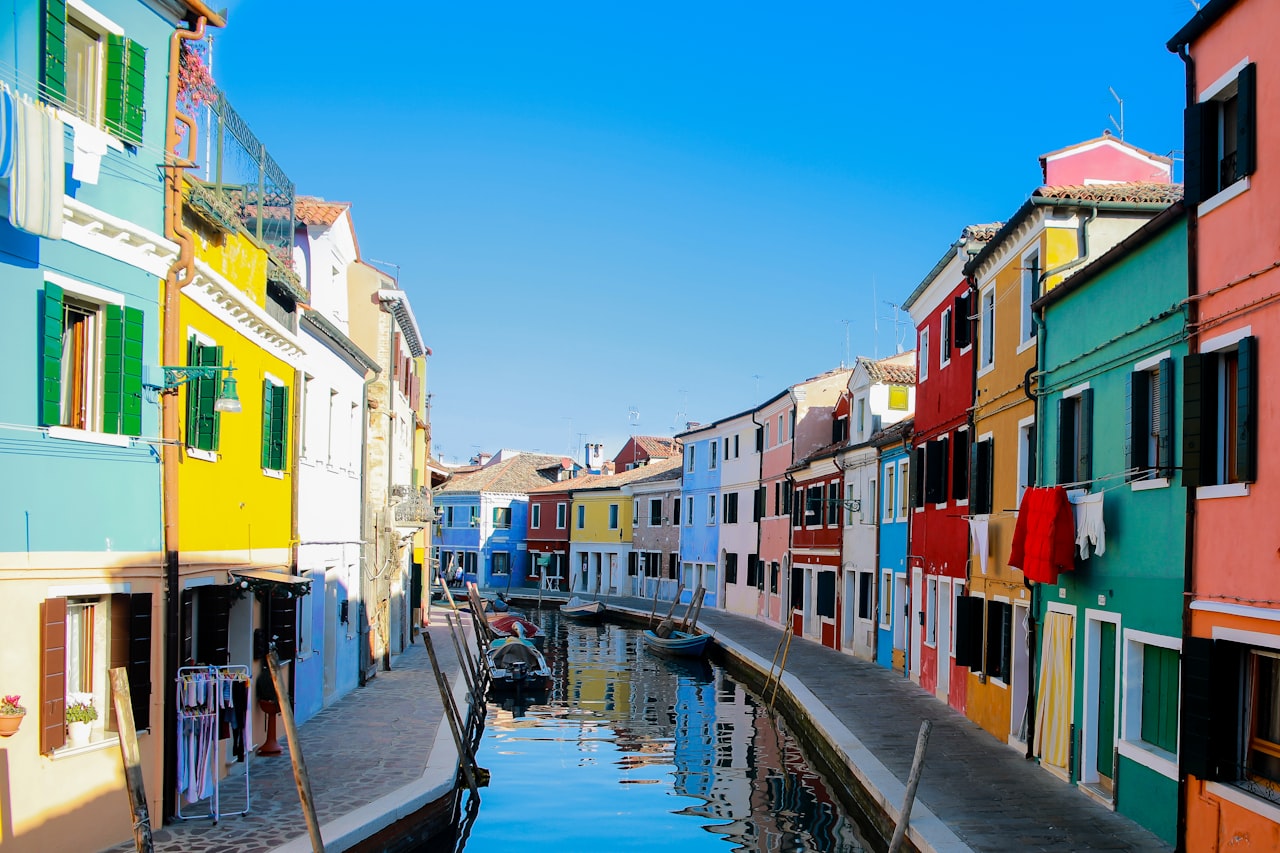
Every house on this fishing island is painted a different saturated colour under a municipal permit system said to trace back to helping fishermen spot home through lagoon fog — the free, wander-and-photograph anchor of the lagoon day, best worked as a loop past Via Baldassare Galuppi's shopfronts and the smaller side canals a few streets back from the main drag. The leaning bell tower of the Chiesa di San Martino, tilted enough to earn comparisons to Pisa, rises over the main square (Piazza Baldassare Galuppi). Folded into the same stop: the Museo del Merletto (lace museum), on the same piazza, tells the story of the handmade needle-lace tradition that made Burano famous — €5 full / €3.50 reduced (ages 6-14, students 15-25, over-65s, ISIC/Rolling Venice), open Tuesday-Sunday 10:00-16:00 (last entry 15:30, extending to 17:00 on Friday/Saturday from 1 May to 26 September 2026), closed Mondays plus 25 December/1 January/1 May; note the museum's own interior is not wheelchair accessible even though the island streets largely are. Getting here: vaporetto line 12 from Fondamente Nove runs roughly every 20 minutes in the day (every 30 minutes early/late), reaching Murano in 10-15 minutes and Burano in about 45; a single 75-minute ticket is €9.50 but only covers one direction within that window — re-boarding at Murano, Burano and Torcello on the same day easily needs three or more separate rides, which already costs more than the €25 24-hour pass, making the pass the better buy for a full island day. For photos without the crowds, day-trip boats bunch arrivals between roughly 11:00 and 16:00 — come on an early boat or linger past 17:00 once the tour groups have thinned out. The island itself is mostly flat and stroller/wheelchair-friendly; where the main canal bridge has steps, a flat wooden ramp alternative sits alongside it.
- 10:30
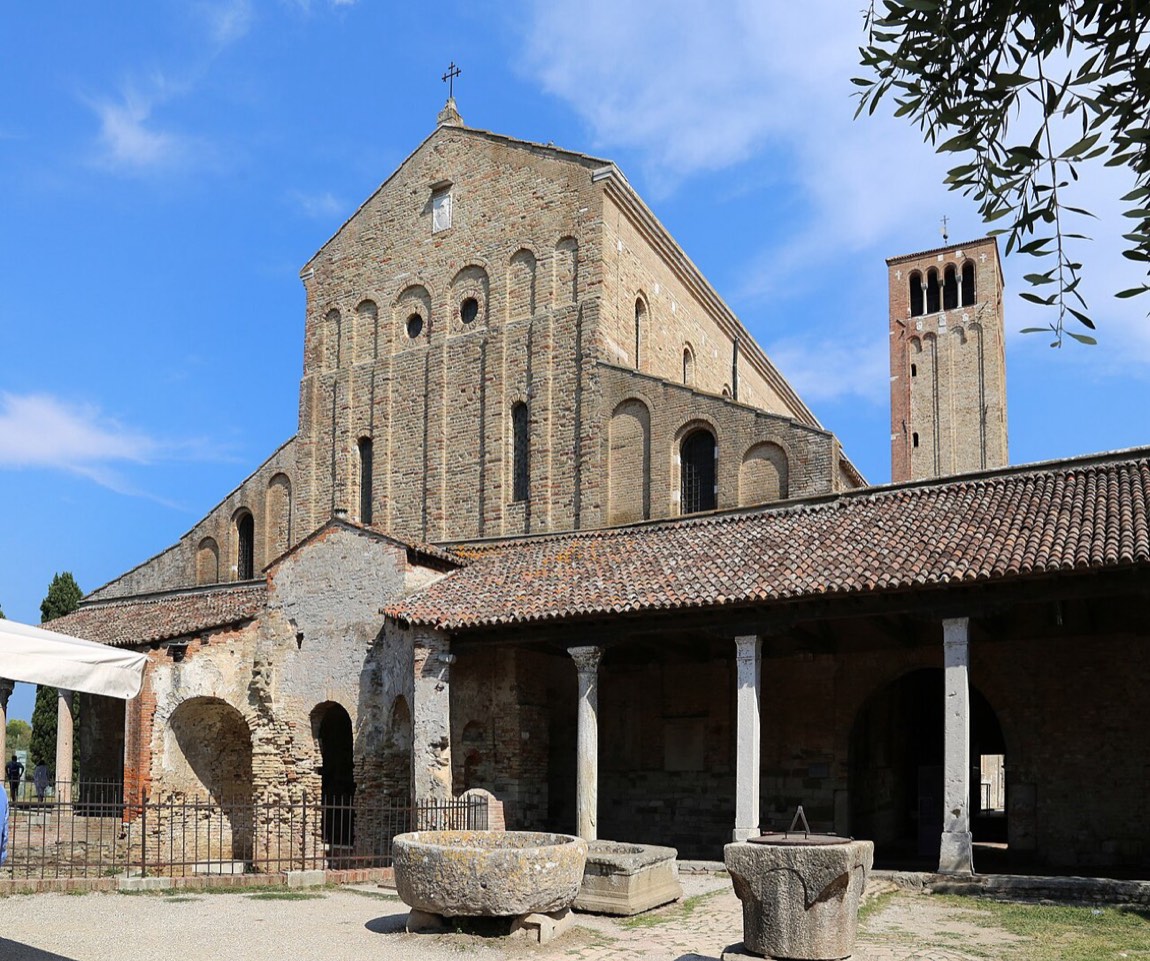
Founded in 639 AD by the Byzantine exarch Isaac of Ravenna, this is the oldest standing building in the Venetian lagoon — predating Venice itself as a settlement, from the centuries when Torcello, not Venice, was the region's leading town. The mosaics are the reason to come: an 11th-century Virgin Hodegetria stands alone against gold leaf in the apse, and the entire west wall is covered by a mid-12th-century Last Judgement in tiers — Christ harrowing hell to free Adam and Eve, angels waking the dead with trumpets, and the Virgin flanked by the Archangel Michael weighing souls. A 2026 ticket costs €5 for the basilica alone, €5 for the campanile (bell tower, stairs only, no lift) alone, or €9 combined with an audioguide (reduced tickets €4/€4/€8); free for children under 10, clergy and Patriarchate residents. Open 10:30-18:00 (last entry 17:30 for the basilica, 17:00 for the tower) from March to October, and 10:00-17:00 (last entry 16:30/16:00) November to February; closed only 25 December and 1 January. Getting here from Burano: in the main season a dedicated line 9 shuttle makes the Burano-Torcello hop roughly every 15-20 minutes in about 5 minutes; off-season Torcello is served directly by line 12, whose stop here is request-only, so flag the crew or call ahead. Don't expect a 5-minute stroll from the dock to the basilica — it's a genuinely peaceful 10-minute walk along the island's single canalside path, passing the legendary stone 'Throne of Attila' and the old stone bridge nicknamed the Devil's Bridge.
- 12:00Lunch Trattoria al Gatto Nero
Founded in 1965 by chef Ruggero Bovo and now run by his son Massimiliano, a family-run canalside institution that's the reason many visitors plan a Burano stop around lunch. The dish to book a table for is risotto di gò (also called risotto alla buranella) — a lagoon goby-based risotto unique to Burano and rarely done this well elsewhere; tagliolini with spider crab and a mixed grilled-fish plate are the other regulars order. It's genuinely reservation-only with no walk-ins accepted, so call ahead (+39 041 730120) — days or weeks in advance in peak season — rather than turning up and hoping. Closed every Monday; open Tuesday-Sunday for lunch (12:30-15:00) and dinner (19:30-22:30). Be honest about the cost before booking: this sits toward the top of what the lagoon islands charge — fish is often priced by weight (roughly €12 per 100g) and some first courses are portioned for two sharing at around €30, so a full meal with wine can run €70-90+ per person. Reviewers overwhelmingly say it's worth the splurge for the setting and the risotto, but come with that budget in mind rather than casual-trattoria expectations. The menu does list non-seafood dishes, so vegetarian diners can eat here, though the whole point of the destination is the lagoon fish.
- 13:00Murano Glass Museum
Housed in the former Palazzo Giustinian on Murano's Grand Canal, a millennium of the island's own glassmaking laid out chronologically from medieval beads to 20th-century Venini pieces — the honest, no-sales-pitch way to understand the craft before shopping for it. A standard ticket is €15 (reduced €7.50 for ages 6-14, students 15-25, over-65s and Rolling Venice cardholders; free under 6, Venice residents and disabled visitors plus one companion). If Burano's lace museum and Torcello's basilica are also on the day's route, the combined Island Museums ticket (€20 full, €10 reduced, valid 3 months) covers all three and is cheaper than paying separately. Open every day of the year except 25 December, 1 January and 1 May: 10:00-18:00 April-October (last entry 17:00), 10:00-17:00 November-March (last entry 16:00), with Friday/Saturday hours stretching to 20:00 from 1 May to 26 September 2026. A lift connects the floors, so it's wheelchair accessible despite the historic building. Be honest with yourself about the 'free furnace tour' touts working the vaporetto stop outside: the boat and the glass-blowing demo really are free, but the visit is structured to end in a showroom with heavy sales pressure, and some of what's on sale is mass-produced glass from China or the Czech Republic rather than Murano work. This museum is the reliable way to see real historic pieces with no pitch attached; if you also want to watch a furnace in action without the funnel, Vetreria Murano Arte (VMA) on Calle San Cipriano runs a genuine working furnace with masters at work, charges a token €3 entry (deducted from any purchase, no obligation to buy), needs no advance booking, and is consistently described as pressure-free.
- 14:30
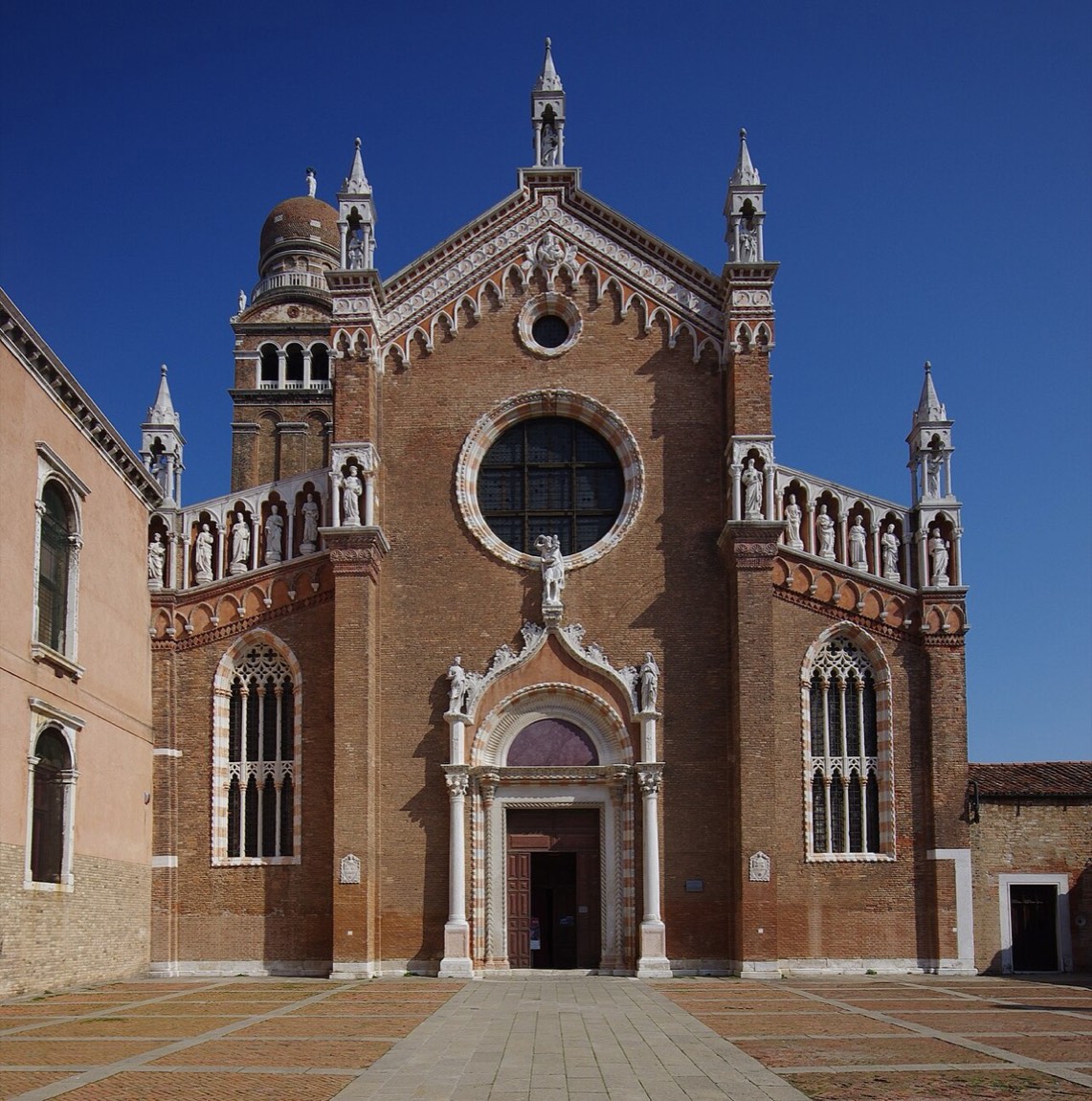
Tintoretto's own parish church for roughly thirty years, its Gothic brick facade opening onto a quiet campo at the northern edge of Cannaregio, well off the route most day-trippers ever walk. Inside, several of his major canvases remain exactly where he painted them for the space — including the towering Last Judgement and Worship of the Golden Calf flanking the choir — and the artist himself is buried in the chapel to the right of the high altar alongside his father-in-law and two of his children. Part of the Chorus circuit, a single ticket is €3.50 (or use a Chorus Pass, €14 full/€10 reduced, if combining with other churches); open for visits Monday to Saturday 10:30-17:00, with the ticket office and last admission ten minutes before closing. As with the other Chorus churches, Sunday is reserved for Mass (11:30) rather than tourist visits, so plan a weekday morning if this is on the itinerary. It pairs naturally with a wander down the Fondamenta della Misericordia or Ormesini afterward, both a few minutes' walk south.
- 15:15
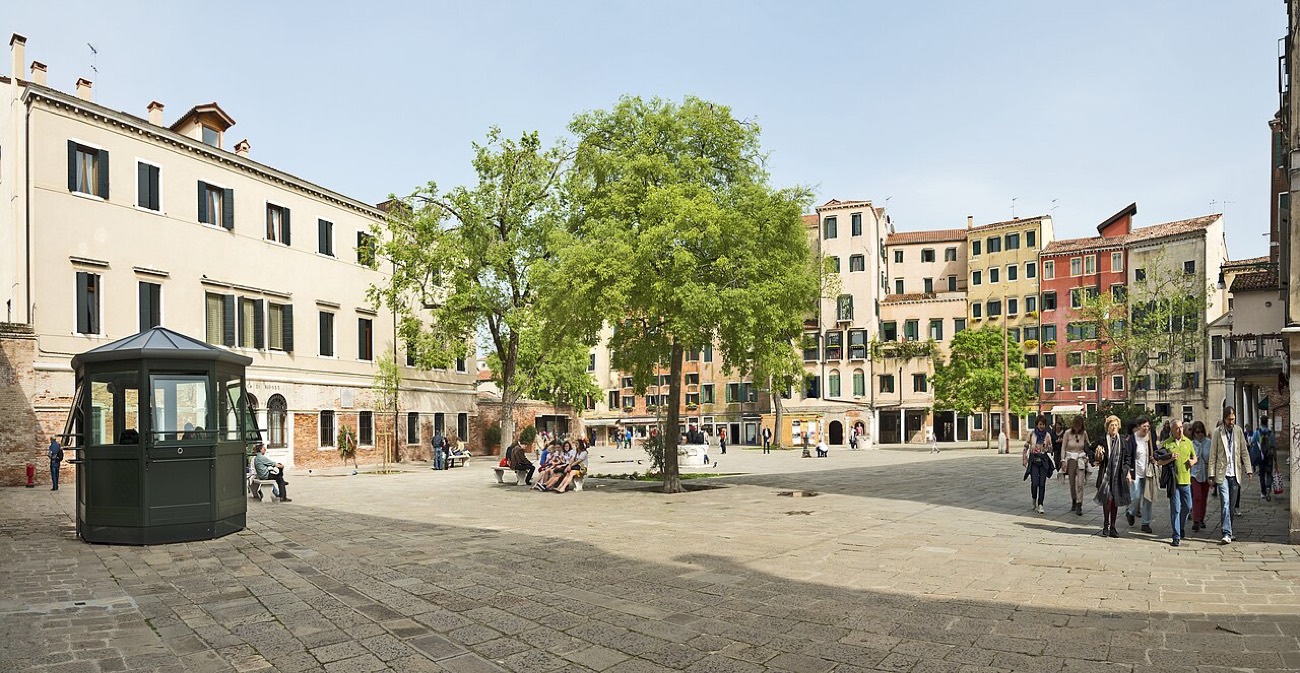
Established in 1516 on the site of a former foundry — a geto in Venetian dialect, the origin of the word 'ghetto' worldwide — this was Europe's first Jewish ghetto, and the six- and seven-storey buildings ringing the campo, the tallest in the city, still trace that history of a walled community forced to grow upward rather than outward. The historic Museo Ebraico building on the square remains closed for a multi-year renovation, but a temporary museum and ticket office has reopened a short walk away at Calle del Forno 1107 in the Ghetto Vecchio, running guided tours into the historic synagogues — the Levantine and Spanish schools Sunday through Thursday, the Spanish synagogue and Cohanim prayer room on Fridays — for around €10 (reduced €8, Venetians €7); it's closed Saturdays for Shabbat. Even without booking a synagogue tour, the campo itself is free and open around the clock: two bronze relief panels by Arbit Blatas memorialise the roughly 200 Venetian Jews deported in 1943-44, and the German and Canton synagogues' unadorned facades face directly onto the square. Because it's a five-minute walk from Venezia Santa Lucia station, day-trippers without an overnight stay should check whether their visit date falls on one of Venice's Contributo di Accesso registration days each spring, since the fee applies to entry into the historic centre generally, not just the marquee sights. Book the synagogue tour a day or two ahead in high season — English tours run on a fixed hourly schedule and group slots are limited.
- 16:15Santa Maria dei Miracoli
Pietro Lombardo's 1481-1489 masterpiece is Venice's marble jewel box — a single barrel-vaulted nave sheathed almost entirely in inlaid coloured marble, its coffered ceiling holding fifty painted saints, built to house a miracle-working image of the Madonna still displayed over the altar. It's part of the Chorus circuit of Venice's parish churches: a single ticket costs €3.50, or use a combined Chorus Pass (€14 full, €10 reduced) if visiting several churches. Open for visits Monday to Saturday 10:30-17:00 (ticket office and last admission ten minutes before closing); like most Chorus churches it isn't open for tourist visits on Sundays, reserved for Mass. So small that it comfortably takes only 15-20 minutes, but it's genuinely one of the most photographed interiors in the city and a favourite wedding venue for Venetians, so a quiet weekday morning avoids both crowds and any ceremony in progress. The nearest vaporetto stops are Rialto or Ca' d'Oro, a short walk through the surrounding calli either way.
- 17:30Dinner Vino Vero
Opened in 2014 as Venice's first wine bar dedicated purely to natural wine, this canal-side spot on Fondamenta della Misericordia — Cannaregio's liveliest strip for an evening aperitivo — pours an unusually deep and well-chosen natural-wine list by the glass alongside a daily cicchetti display of both meat and vegetarian small plates. Nothing vegan is pre-made and on display, but staff will put together a few vegan cicchetti on request if you ask at the counter. No reservations are taken and phone calls go largely unanswered — turn up in person, or reach the bar by email or Instagram for questions. Open Monday 16:00-24:00, Tuesday-Thursday and Sunday 11:00-24:00, and Friday-Saturday 11:00-01:00, with no closing day through the week; standing room by the canal fills up fast after about 18:00, so an earlier glass gets you an actual spot to lean. Card and cash are both accepted.


Day 7Castello & nearby — a sights dayVenice, 8 stops
The largest and least polished sestiere — the Arsenale's walls, laundry over Via Garibaldi, the Biennale gardens, and Venice's everyday life carrying on beyond the crowds.
- 07:40Check out of your stay
- 08:30
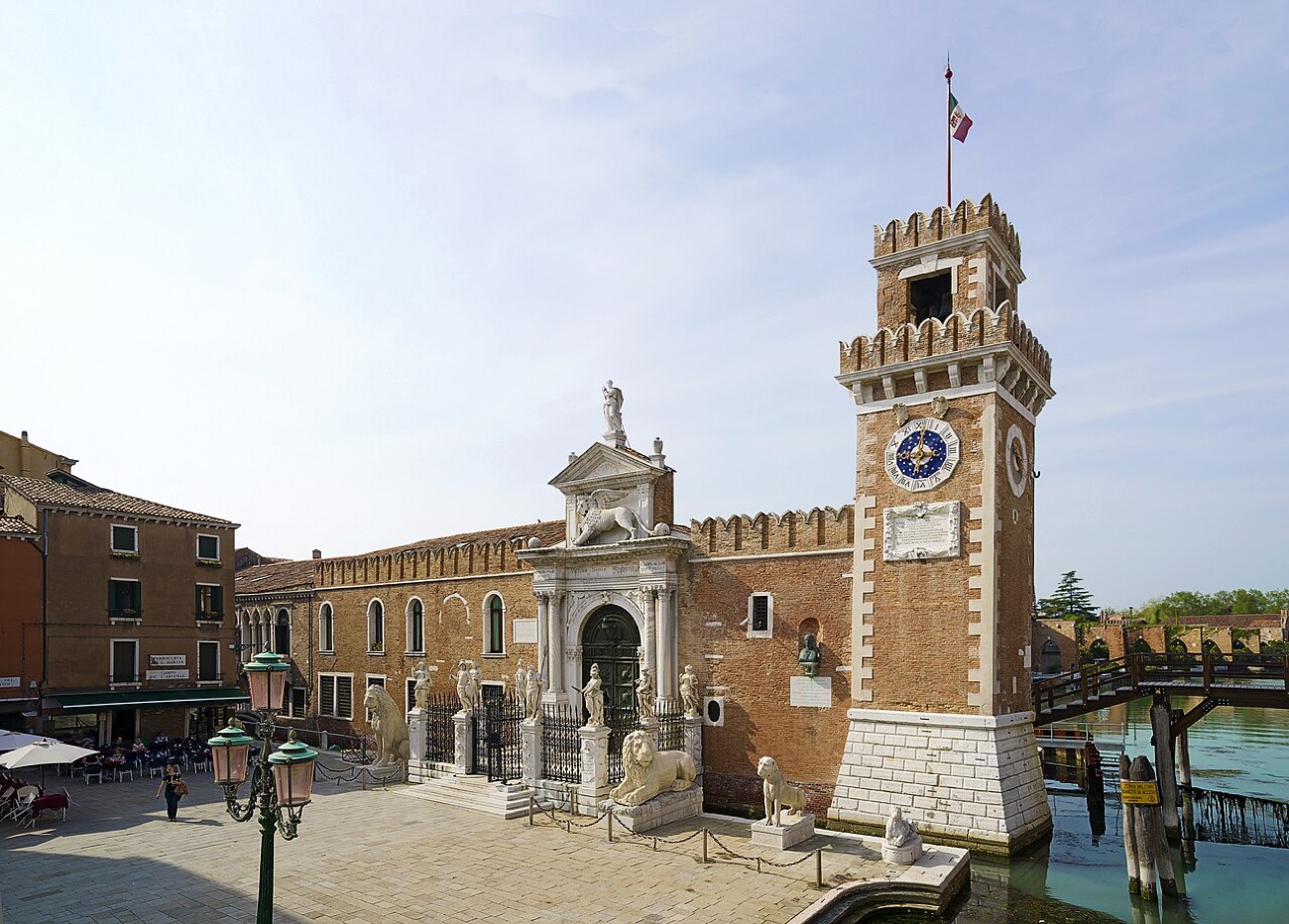
Once the largest industrial complex in pre-industrial Europe -- at its 16th-century peak the Republic's shipyard could reportedly launch a fully fitted war galley in a single day, employing thousands of arsenalotti workers whose skill underwrote Venice's naval power for six centuries. Almost all of the walled complex itself stays closed to casual visitors outside exhibitions, but the exterior is the real free sight: the Porta Magna (Venice's earliest Renaissance-style gateway, built around 1460) and the four looted marble lions flanking it -- war trophies shipped from Piraeus and Athens after a 1687 campaign, one still bearing runic graffiti carved by Viking mercenaries centuries earlier. Free, unticketed, viewable any time from the Campo della Tana or the bridge over the Rio dell'Arsenale. During the Biennale (Art years including 2026, 9 May-22 November, closed Mondays with exceptions) a paid ticket (from €30) unlocks the Corderie and Artiglierie halls inside for the exhibition -- otherwise those interiors stay off-limits.
- 09:10Via Garibaldi & Giardini della Biennale
Castello's real high street -- one of the only broad, dead-straight thoroughfares in a city built on a maze, filled in over a medieval canal and lined with everyday bars, produce stalls and neighbourhood shops rather than souvenir stands. It runs from Campo San Pietro di Castello east toward the water, feeding into the tree-lined Giardini della Biennale, Napoleon-era public gardens that host the Art or Architecture Biennale's national pavilions every other year (2026 is an Art Biennale year, 9 May-22 November) but are otherwise a free, quiet lagoon-side park to walk any time the gates are open, roughly dawn to dusk. Via Garibaldi itself comes alive from about 18:00 with aperitivo crowds spilling from doorways -- a genuine slice of residential Venice rather than a sight built for visitors. No ticket needed for the street or the park paths; a Biennale exhibition ticket (from €30) is only required to enter the fenced pavilion grounds when an exhibition is running.
- 10:25
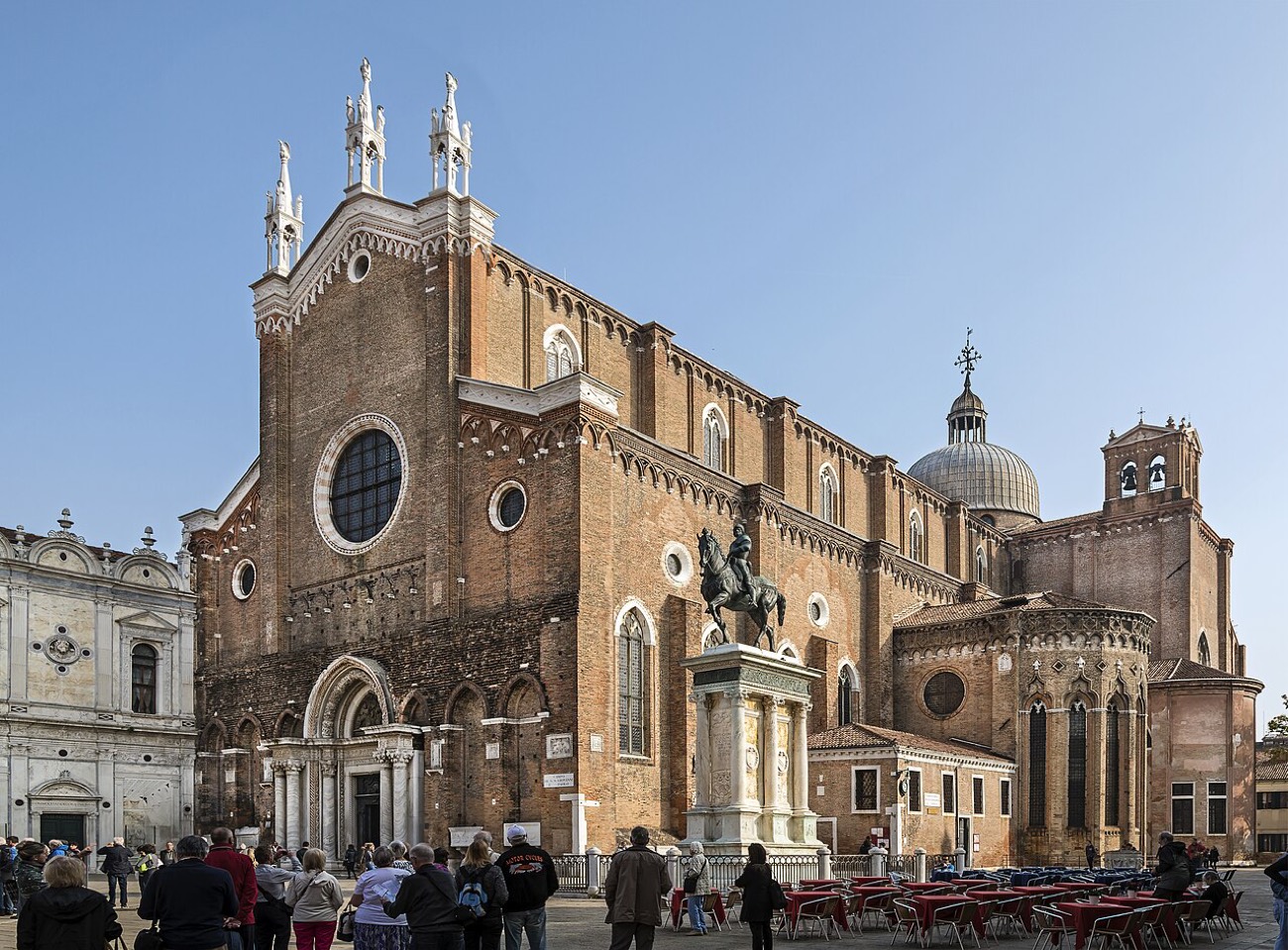
Venice's largest church and its unofficial pantheon of doges -- 27 are buried inside, more than any other Venetian building, giving it a civic-memorial role comparable to Rome's Pantheon or Westminster Abbey. Venetians call it "San Zanipolo" in dialect rather than the Italian name; outside, Verrocchio's bronze equestrian statue of the condottiero Bartolomeo Colleoni is one of the finest Renaissance monuments in the city. Entry is €3.50, open Monday-Saturday 9:00-17:45 and Sunday/holidays 12:00-17:45 (mornings reserved for worship on Sundays). The basilica's scale rewards unhurried wandering -- side chapels hold work by Giovanni Bellini and Veronese -- and it sits directly on the walking route between the Rialto and the Fondamente Nove vaporetto stop for Murano, making it easy to fold into an island-bound morning.
- 11:25
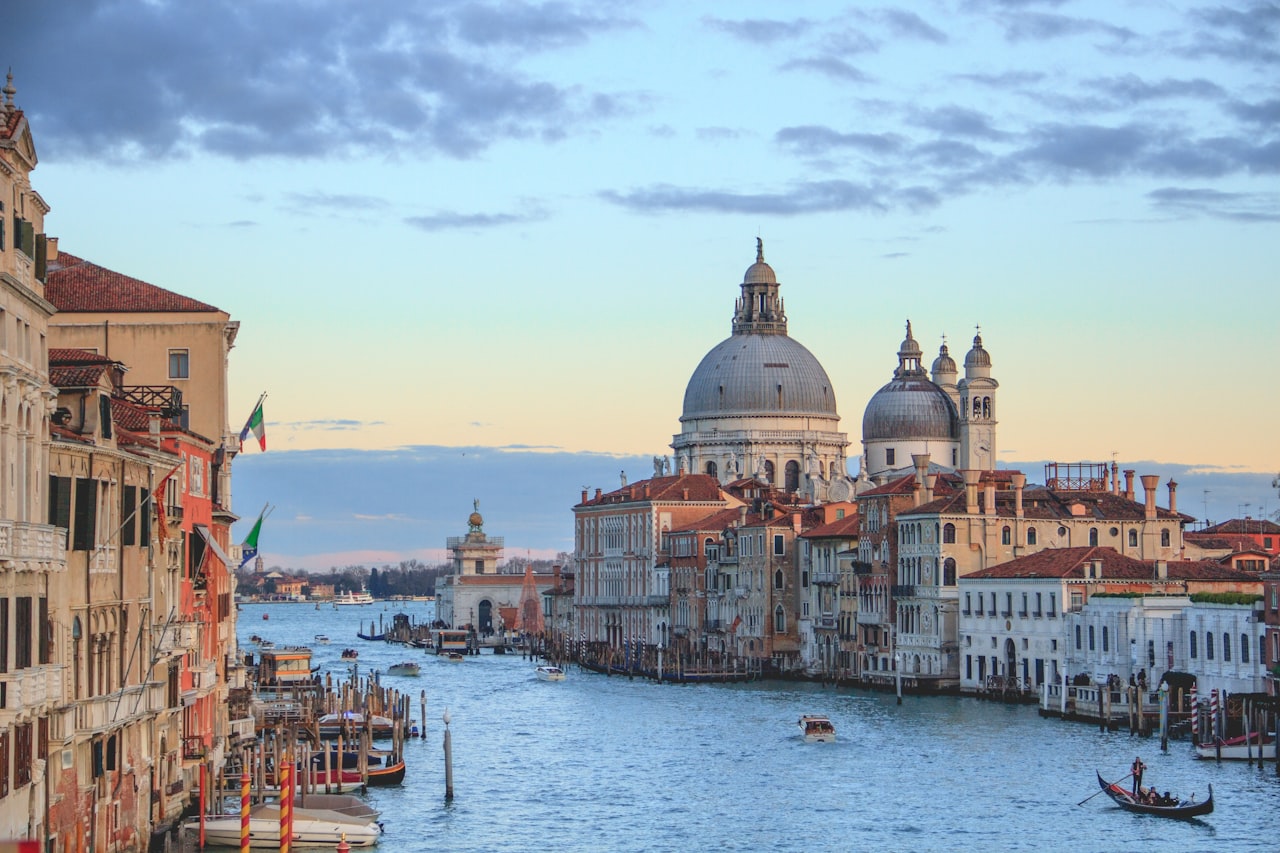
Longhena's white-domed Baroque votive church at the mouth of the Grand Canal, built after a 1630-31 plague killed roughly a third of Venice's population, its octagonal plan and giant volute scrolls visible from across the water at San Marco. The nave is free to enter during opening hours, no ticket needed; only the sacristy, a small paid add-on (€6), holds the real draw for art lovers — Titian ceiling paintings and his early Saint Mark Enthroned altarpiece, plus a Tintoretto Marriage at Cana. Hours run daily 9:00-12:00 and 15:00-17:30 from April to October, shifting slightly to 9:30-12:30 and 15:00-17:30 from November to March — the midday closure catches visitors who assume a major church stays open straight through lunch. It's a level, step-free walk from the vaporetto stop right outside, though the church hasn't published a formal wheelchair-access statement, so check at the door if mobility is a specific concern; 21 November's Festa della Salute, when Venetians cross a temporary pontoon bridge over the Grand Canal to give thanks for the plague's end, is the one day the whole city visits at once.
- 12:10Lunch Osteria Al Squero
A tiny standing-room bacaro directly across the canal from the Squero di San Trovaso, one of the last working boatyards where gondolas are still built and repaired by hand — order a plate of cicchetti (€1-4 per piece depending on size, tuna with caramelized onion and baccalà among the standouts) and a €3-5 spritz, then watch the shipwrights work from the fondamenta outside. Seating is scarce and mostly outdoors along the canal; it's built for a quick stop rather than a lingering meal, three minutes on foot from the Accademia gallery. Open Monday-Friday 10:00-20:30, Saturday until 15:00 only, closed all day Sunday — plan a weekday visit if the squero view matters to you. Card payment is accepted alongside cash; go at an off-peak hour (mid-afternoon works well) since the counter draws a genuine queue at lunch and early evening despite its small size.
- 13:10
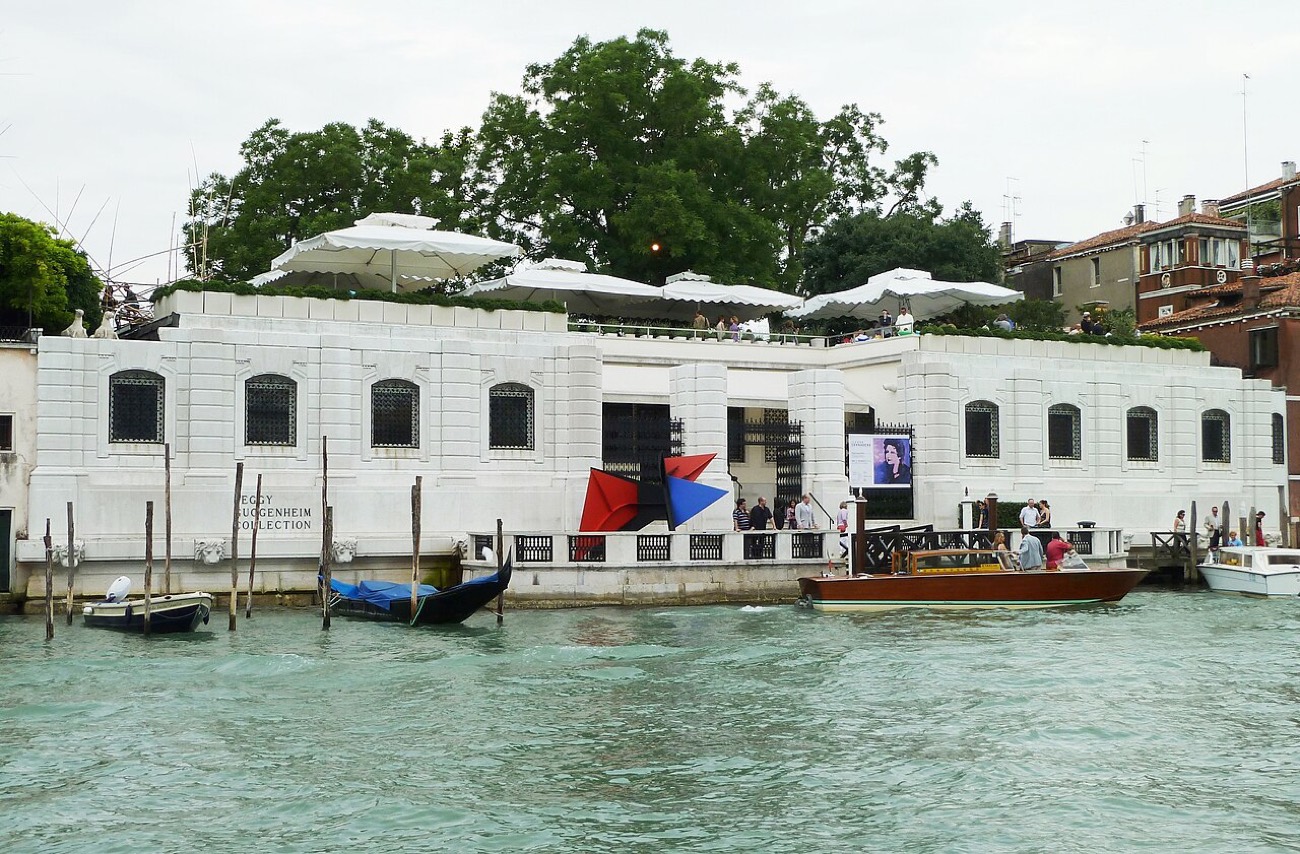
Peggy Guggenheim's own unfinished 18th-century palazzo on the Grand Canal, now the single best collection of European and American modern art in Italy — Picasso, Pollock, Kandinsky, Magritte and Calder's silver bedhead, plus a sculpture garden along the water where Peggy and her dogs are buried. Standard admission is €18 (family ticket €25 for two adults plus any children under 18; students under 26 and under-18s €9; free under 10 and for visitors with disabilities plus one companion). Open Wednesday-Monday 10:00-18:00 (last entry 17:00), closed every Tuesday and 25 December — a useful pairing with the Accademia, which is open on Mondays when this is closed, or vice versa. Free wheelchairs are available on-site, and a series of platform lifts, each with a handful of steps either side, connect the garden, the palazzo's main collection rooms, the café and the temporary exhibition galleries; museum staff operate the lifts and can talk you through the route in advance.
- 14:55
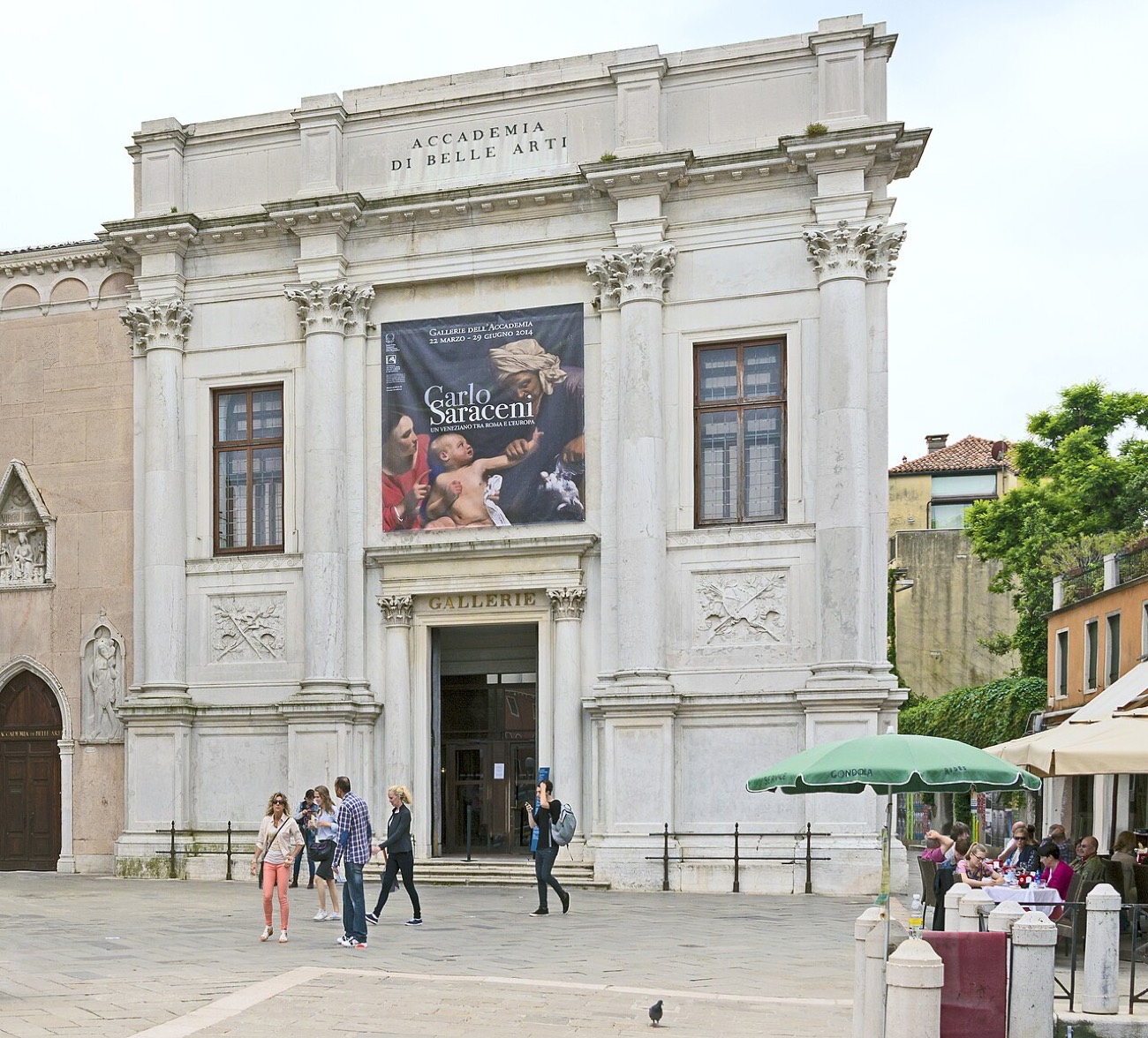
Venice's grandest collection of Venetian painting, housed in a former convent and scuola across the Grand Canal from San Marco — Bellini, Titian, Tintoretto, Veronese's enormous Feast in the House of Levi, and Giorgione's enigmatic Tempest, largely unchanged in feel since these paintings were the ceilings and altars of the city's own churches and confraternities. Full price is €9 plus a non-refundable €1.50 online booking fee (reduced €6 for EU citizens 18-25); free entry on the first Sunday of every month, which is also by far the most crowded day to go. Hours run Tuesday-Sunday 8:15-19:15 (ticket sales stop at 18:15), but Monday is a shortened day, 8:15-14:00 only (tickets until 13:00) — plan around that if Monday is your only free morning. The gallery is fully wheelchair accessible via a barrier-free side entrance, lifts to the upper floor and lift platforms between halls; staff can advise on any platform out of service on the day.
- 17:30Dinner Corte Sconta
A Castello institution since 1980, tucked down a quiet calle behind a converted bottle factory and best known for the vine-covered courtyard where most tables sit in warmer months. The kitchen sources fresh Adriatic seafood daily from the Rialto and Chioggia markets -- moeche (soft-shell lagoon crabs, in season) and simply grilled whole fish are the reason regulars keep returning, alongside seafood pasta. Open Tuesday-Sunday, lunch 12:30-14:00 and dinner 19:00-21:30, closed Monday, and closed for its summer break from 15 July to 15 August -- check current-year dates if visiting in that window. Budget around €80 for two with wine; the seafood antipasti tasting runs €25-30 alone. Reservations are confirmed only by email reply, not just a submitted form, so allow time for a response before counting on a table; the restaurant went through a rough patch in service quality some years back but reviews describe a clear recovery under newer management.


