Kamakura鎌倉
The seaside ancient capital an hour south of Tokyo — the great bronze Buddha of Hase, the Tsurugaoka Hachimangū shrine and Komachi food street, the Zen temples and June hydrangeas of Kita-Kamakura, and the island shrine of Enoshima, all linked by the nostalgic Enoden tram along the coast.
Temples History Coast Day trip

Also works as a day trip from Tokyo.
Verified highlights
Tsurugaoka HachimangūShrine
Step-free
Kamakura's most important shrine, the spiritual heart of the old samurai capital, approached up a broad cherry-and-azalea avenue and a final flight of steps to the vermilion main hall.
Kosuzu (soba & warabimochi)Food
Vegetarian options Cards OK
A refined soba house on the Dankazura shrine approach, equally famous for its hon-warabi warabi-mochi.
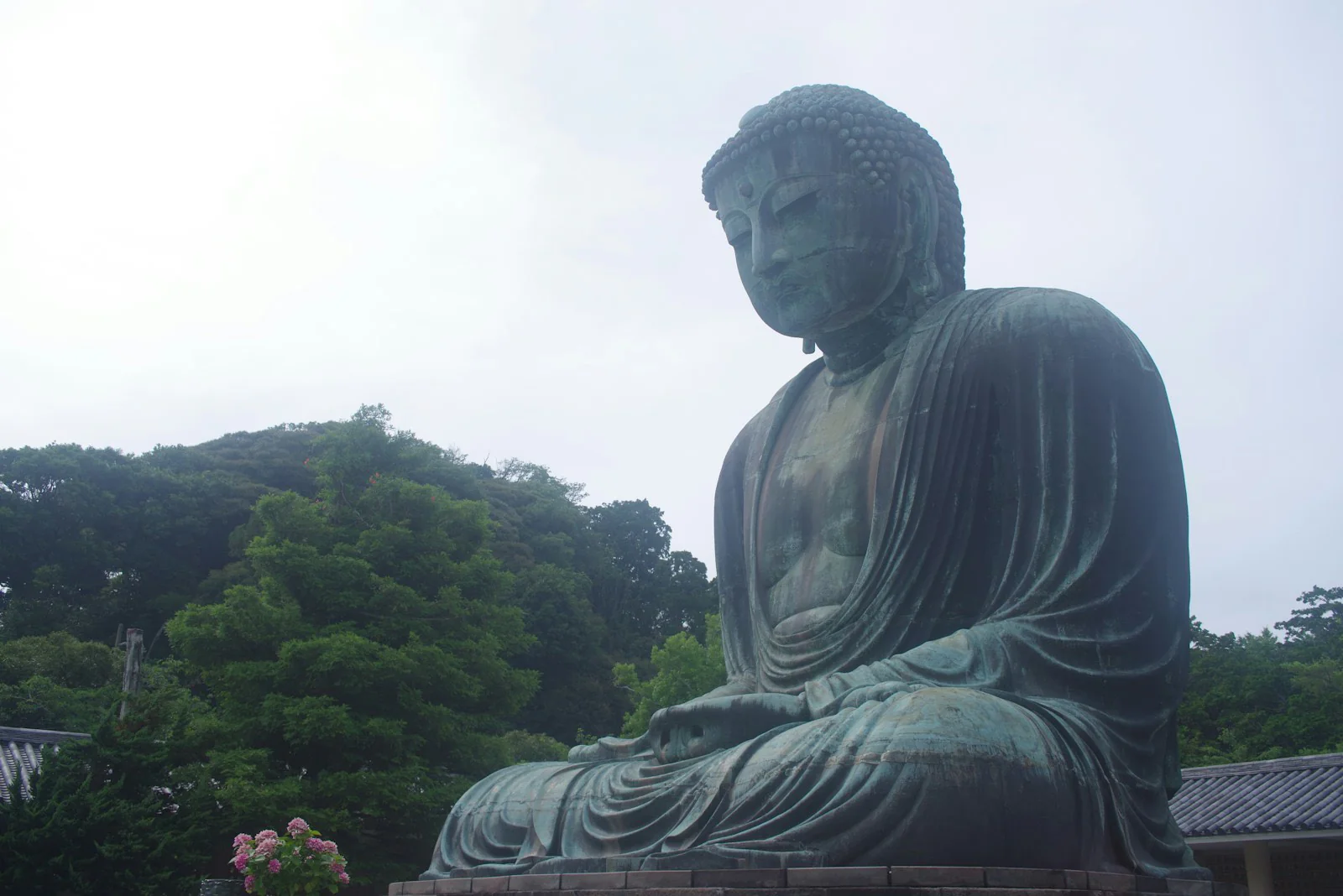
Great Buddha of Kamakura (Kōtoku-in)Historic site
Step-free
The serene 13-metre bronze Buddha of 1252, sitting in the open air ever since a tsunami swept away its hall — Kamakura's defining sight.
Tobiccho (shirasu / whitebait)Food
Cards OK
A hugely popular spot on the island for 'shirasu' — fresh and boiled whitebait piled over rice — and other local seafood.
Enoshima Sea Candle (observation tower)Viewpoint
Step-free
A lighthouse-style observation tower in the clifftop Samuel Cocking Garden, with a 360° deck looking back to Mt Fuji, the bay and the coast — beautiful at sunset and lit up in winter.
Chirashiya (vegetable sushi)Food
Vegetarian options Vegan options Cash only
All-vegan vegetable sushi across from Tokei-ji — bell pepper stands in for tuna, konnyaku for squid.
Yuigahama BeachLandmark
Step-free
Kamakura's main sweep of grey-gold sand, busy with swimmers and beach houses in summer and quiet surf-and-sunset walks the rest of the year.
Iwata Coffee (retro kissaten)Food
Vegetarian options Cards OK
A beloved old-school kissaten by the station, famous for towering, wobbling hotcakes (allow 20-30 min).
Neighbourhoods
Hase (Great Buddha & Coast)
The coastal temple quarter on the Enoden line — home to the open-air Great Buddha of Kōtoku-in, the hillside Hasedera with its hydrangeas and sea views, and the sands of Yuigahama beach a short walk south. A relaxed half-day of temples and ocean air.
Kamakura Center (Hachimangū & Komachi)
The town's lively heart — the grand Tsurugaoka Hachimangū shrine at the end of its cherry-lined approach, the buzzing Komachi-dōri street of snacks and crafts, the quirky money-washing Zeniarai Benten and the bamboo grove of Hōkoku-ji. Where you arrive, eat and shop.
Kita-Kamakura (Zen Temples)
A hushed wooded valley of great Zen temples one stop north — Engaku-ji and Kenchō-ji among Kamakura's five greatest, the hydrangea-framed round window of Meigetsu-in and the serene Tōkei-ji. Best walked between temples at a slow pace, glorious in the June rains.
Enoshima
A little shrine-island at the Enoden's end, climbed by lanes of shops to a clifftop garden, an observation tower with Mt Fuji views and sea caves at the base. Famous for fresh 'shirasu' whitebait and whole-octopus crackers; a breezy half-day of coast and views.
Where to stay
Kamakura Center (Hachimangū & Komachi)
By Kamakura Station and Komachi street — the most connected base, walkable to the shrine and a short Enoden hop to Hase and the coast. Most visitors day-trip from Tokyo, but staying lets you enjoy the temples after the crowds leave.
Hase (Great Buddha & Coast)
Near the Great Buddha and Yuigahama beach — quieter and close to the sea, lovely for a relaxed coastal stay.
Some links may earn hi tabi a commission, at no extra cost to you.
Getting there
Kamakura Station (JR Yokosuka / Shonan-Shinjuku line)
~1 hour from Tokyo Station on the JR Yokosuka line, or direct from Shinjuku on the Shonan-Shinjuku line. An easy day-trip; a JR/Enoden pass pays off if you tour widely.
Enoden (Enoshima Electric Railway)
The nostalgic single-track tram linking Kamakura, Hase and Enoshima, rattling between houses and along the shore — a sightseeing ride in itself. Buy the 'Noriorikun' day pass to hop on and off.
FAQ
How do you do Kamakura as a day trip from Tokyo?
Take the JR Yokosuka or Shonan-Shinjuku line about an hour south, then use the little Enoden railway to string together the Great Buddha at Hase, the coast and the temples. Start at Kita-Kamakura's Zen temples and walk down to the station area to do it in one natural line.
When do the hydrangeas bloom in Kamakura?
June, during the rainy season — Kita-Kamakura's temples are famous for them and draw serious weekday-morning crowds. It's the prettiest and busiest time of year; for quiet temples come in winter instead.
Is the Great Buddha stroller- and wheelchair-friendly?
The Kōtoku-in grounds around the Great Buddha are step-free and easy with wheels, as is Yuigahama Beach's promenade — though many of the hillside Zen temples involve stairs. tabi marks which places are step-free so you can route around the climbs.
How up to date is this information?
Every place in the catalog is human-checked, and volatile facts — opening hours, closures, payment — sit on a quarterly re-verification cycle. Plans and pages are regenerated with every site release, so what you read reflects the current catalog.