
Seoul to Busan — Korea's classic week by KTX
- 7 days, 2 cities
- Balanced pace
- About 25 min walking a day
Korea's classic first trip pairs its two biggest cities with one fast train ride between them. Four days in Seoul cover the palace quarter, the markets, and a night neighbourhood or two; the KTX then runs south in under three hours to Busan for beaches, hillside murals and Korea's best seafood. Every stop below is human-verified — hours, closing days, dietary facts — and the whole plan works offline once saved.
Day by day
Day 1Seongsu — sights morning, shopping afternoonSeoul, 7 stops
Converted warehouses turned café-and-design quarter beside Seoul Forest — red-brick roasteries, galleries in old factories, fashion flagships.
- 08:00Breakfast Cafe Onion Seongsu
The original flagship of the Onion bakery-café chain, opened inside a disused 1970s factory building and widely credited with kicking off Seongsu's converted-warehouse café wave. Exposed brick, soaring ceilings and rusted industrial fixtures surround an open bakery counter; the cream-cheese garlic bread and croissants are the signature order. Weekday hours are 08:00-22:00, weekend 10:00-22:00, last order 21:30 daily. Payment methods and dietary options aren't posted, so ask at the counter if either matters.
- 08:30
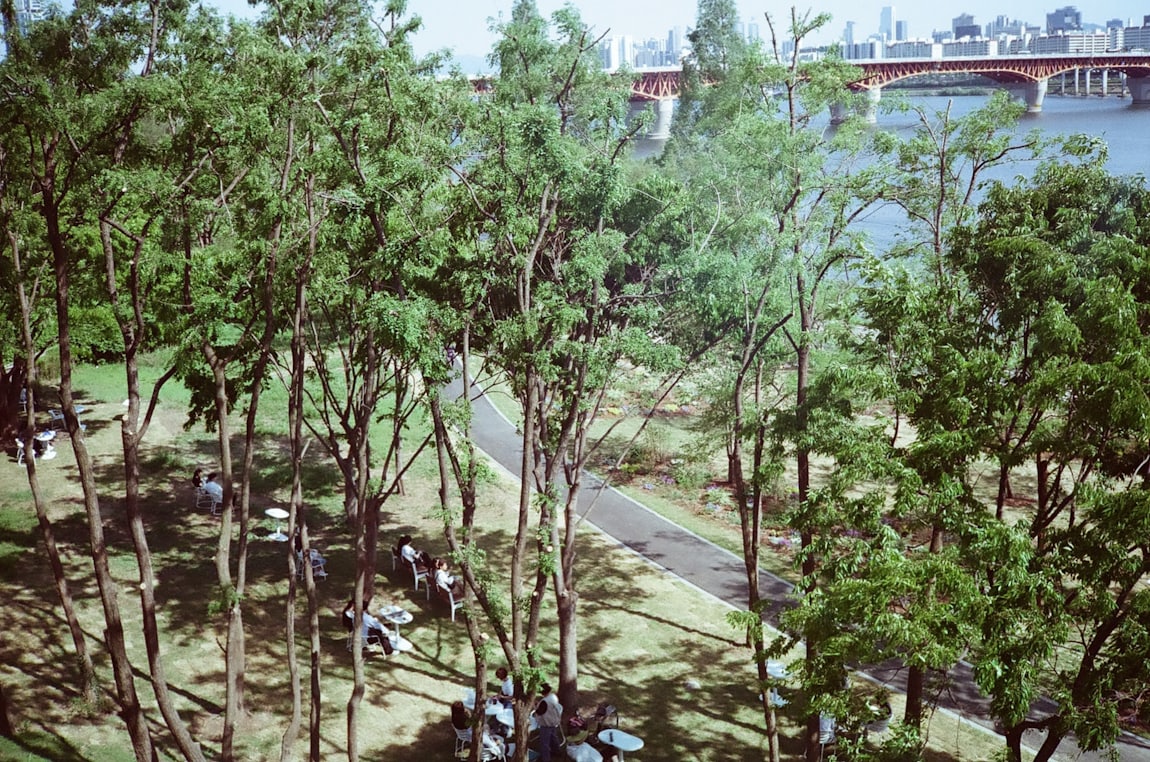
Seoul's largest urban park (~1.2 million m²), a former water-treatment and racecourse site redeveloped in 2005 into four zones: Culture & Art Park, Nature Ecology Forest (with a deer enclosure, open 05:30-21:30), Nature Experience Learning Center and a wetland/Han-riverside area. The park itself never closes and entry is free; the insect botanical garden and butterfly garden inside it run shorter seasonal hours (10:00-17:00 or 10:00-16:00, closed Mondays). Step-free deck paths run throughout and free wheelchair and stroller loans are available at the visitor center. It is big enough that the entrance matters — aim for the Ttukseom-ro main gate.
- 10:45Seongsu Yeonbang
A 1970s chemical-factory complex reborn as a three-storey retail-and-culture cluster across two sky-bridge-linked wings, home to the Thingool lifestyle store, Index Caramel, a jewelry shop and the rooftop greenhouse café Cheonsang Gaok. An open central plaza and outdoor terrace host rotating brand pop-ups.
- 12:15Lunch Daelim Changgo Gallery
A red-brick former 1970s rice mill converted into a cavernous café, gallery and event space — one of the earliest and most-photographed of Seongsu's warehouse conversions, with soaring ceilings, exposed rafters and rotating art and photo exhibitions inside. Open daily 11:00-22:00. The main entrance is step-free and chair-height tables are available. It is also booked for private events and weddings on some dates, which can close the café to walk-ins, so check before making the trip.
- 13:15Ader Space
Ader Error's flagship concept store, renewed for the brand's 10th anniversary: an immersive, sculptural interior — a sinkhole room, an archive room and a cobalt-blue gravity room — built around the fashion label's collections rather than a conventional shop floor. A short walk from Daelim Changgo Gallery and Seongsu Yeonbang.
- 14:15Musinsa Standard Seongsu
The flagship physical store for Musinsa's own basics-and-casualwear label, spanning two floors of a building inside the Musinsa Campus complex on Yeonmujang-gil — fitting rooms and self-checkout for the affordable, minimalist pieces the brand is known for online.
- 15:30LCDC Seoul
A four-floor converted-factory retail platform in Seongsu-dong 2-ga: a ground-floor café, a curated fashion-lifestyle shop on the 2nd floor, a corridor of small independent brand doors on the 3rd, and a rooftop bar on top. Closed January 1 and the Lunar New Year/Chuseok holidays.

Day 2Euljiro & Ikseon-dong & nearby — a shopping daySeoul, 9 stops
Ikseon-dong's cobblestone hanok lanes hide dessert cafés and hanbok-rental shops behind lattice doors, while ten minutes south Euljiro's postwar printing and hardware alleys moonlight after dark as 'Hipjiro' — Seoul's most atmospheric bookstores, beer halls and rooftop-deck markets.
- 08:30Ikseon-dong Hanok Village
A pocket of roughly 118 hanok houses built before the 1930s, reinvented as a maze of narrow, cobblestoned lanes lined with dessert cafés, hanbok-rental shops and bars behind lattice doors. The lanes run north into Nakwon Arcade and are at their most atmospheric after dark, when strings of lanterns light the eaves.
- 10:15Nakwon Musical Instrument Arcade
Over 300 independent stores stacked through a 1968 apartment-and-arcade block, selling everything from guitars and keyboards to traditional Korean instruments, sheet music and repair services. A handful of shops open Sundays, but most close for the week.
- 11:10Sewoon Plaza (Sewoon Sangga)
A raw 1967 megastructure whose ground and basement floors still hum with independent electronics, tools and custom-parts stalls — the trade that made Sewoon Sangga Korea's original DIY-repair hub. An elevated pedestrian deck links the block toward Cheonggyecheon, framing views over Euljiro's low-rise rooftops. Most stalls keep daytime hours and close Sundays; Saturday hours vary by shop.
- 12:10Lunch Cheong Su Dang
An aquatic-themed hanok café built around a small bamboo courtyard, known for square castella and fromage cakes baked in pottery moulds. One of Ikseon-dong's most photographed cafés — expect a wait on weekends.
- 13:10Normal A
Run by design studio 131WATT on the fourth floor of a converted Euljiro building, Normal A stocks independent art books, zines and studio-made stationery — walk in past the working print shops on the lower floors that give the neighbourhood its 'Hipjiro' nickname. Closed Sundays and public holidays.
- 13:55
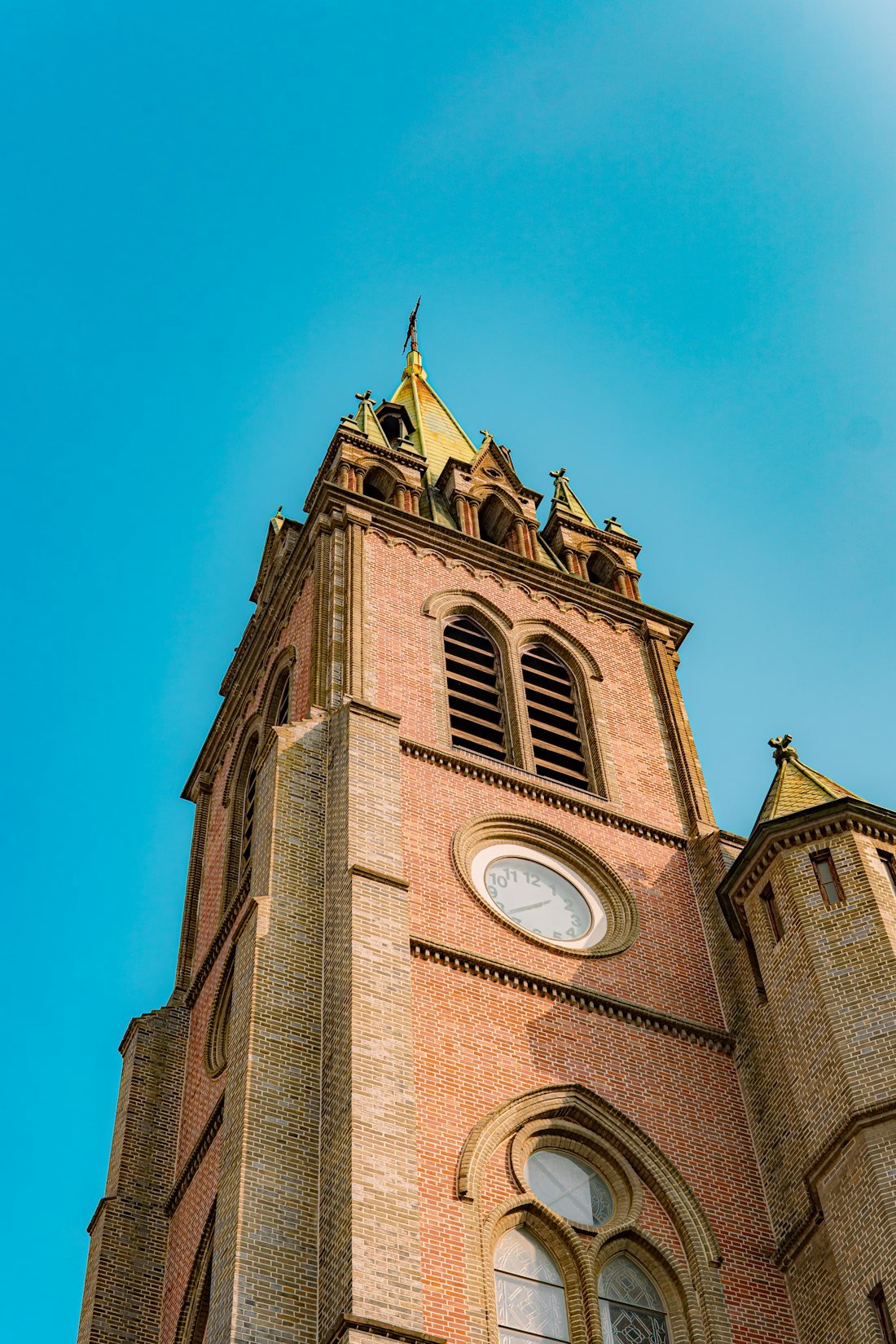
Completed in 1898, Myeongdong Cathedral is the birthplace of Korean Catholicism and a national symbol of the pro-democracy movement (it sheltered protesters during the 1987 uprising). It is a working parish, not a museum — general sightseeing hours are flagged above as unresolved between two conflicting sources, and access likely narrows around the Mass schedule. No admission fee; a small museum and the basement martyrs' crypt are also on site.
- 14:40Myeongdong Shopping Street
Seoul's best-known fashion/cosmetics shopping district, a dense pedestrian grid centered on Myeongdong-gil between Myeongdong Station and the Lotte Department Store/Young Plaza block, packed with K-beauty flagship stores, fast fashion, and street-food carts (hotteok, tteokbokki, skewers). No single official hours source exists since it is hundreds of independent shops on open public streets; treat the district as generally active roughly 10:30–22:00.
- 16:55
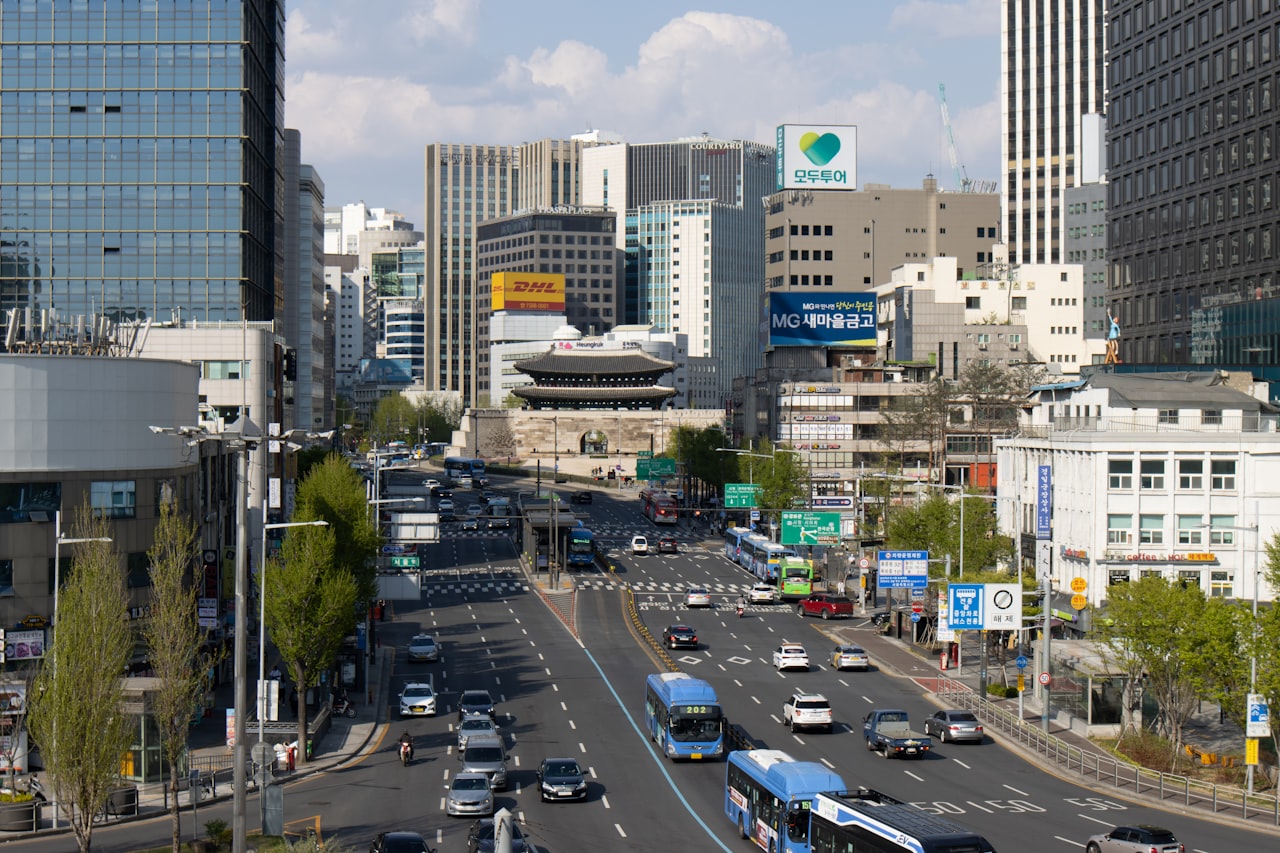
A disused 1970 highway overpass above Seoul Station's rail yard, converted in 2017 into a ~1 km elevated pedestrian park lined with plants, cafés and viewpoints, running roughly from Seoul Station toward Namdaemun Market/Hoehyeon-dong. Open 24 hours with no closing day. Free to walk, step-free, and one of the few things in the area usable late at night.
- 17:55Dinner Myeongdong Kyoja (Main Branch)
Open since 1966/1970 (sources vary on the founding year) and widely credited as the originator of Myeongdong-style kalguksu, this four-item noodle-and-dumpling shop has held a Michelin Bib Gourmand every year since 2017. Kalguksu, mandu, bibim guksu and kong guksu (~12,000–13,000 KRW each) are the whole menu; expect a queue at peak lunch. Last order effectively 21:00 (closes at 21:00) — not an evening-late option, but the area's best-documented single-institution food stop. Note: temporarily relocated to Toegye-ro 129 while the main building is rebuilt — check the Naver listing before visiting.


Day 3Jongno & Gwanghwamun — an old-town daySeoul, 6 stops
The palace quarter: Gyeongbokgung and Changdeokgung, Bukchon hanok lanes, Insadong craft streets and the Cheonggyecheon stream walk.
- 09:00
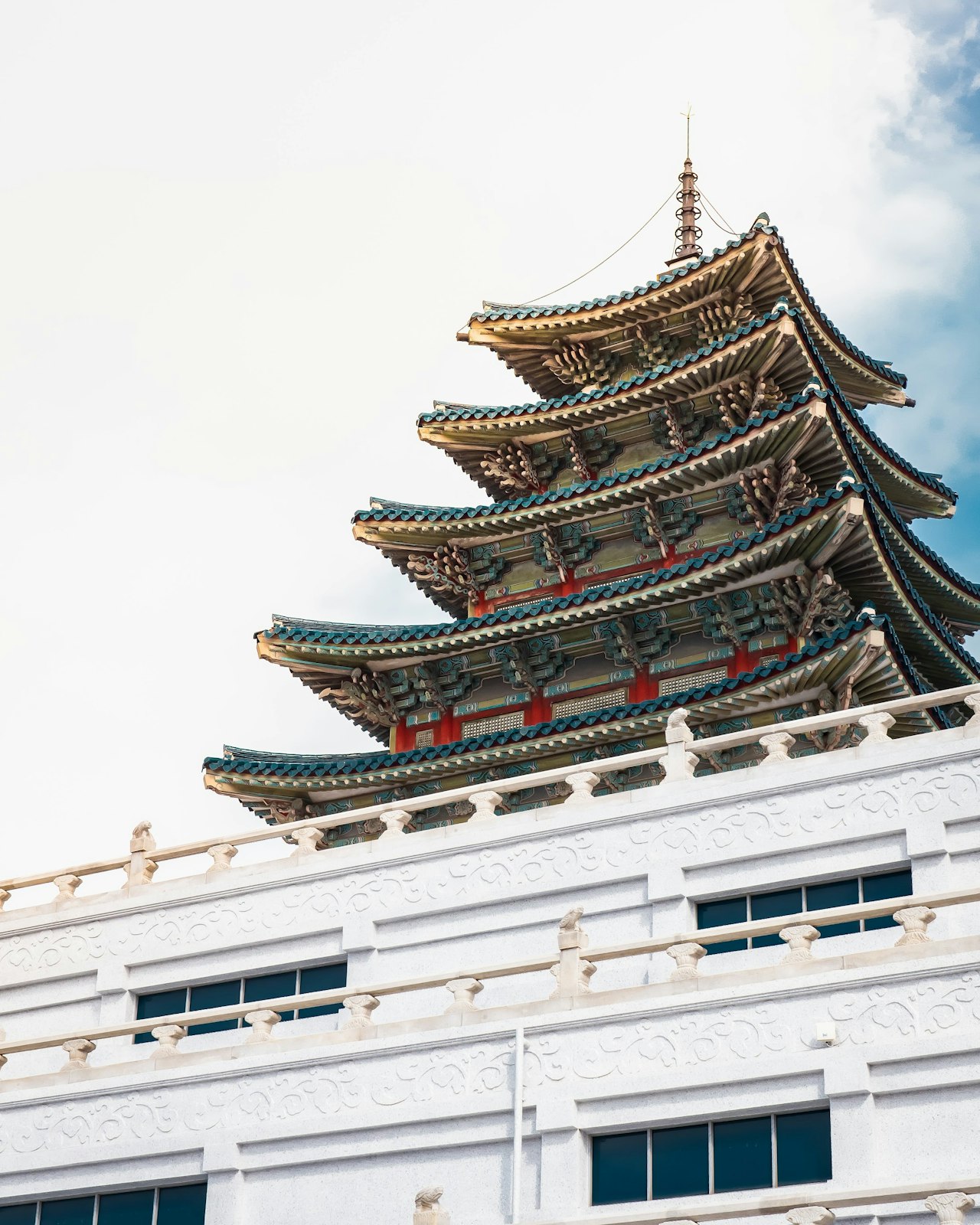
Sitting on the Gyeongbokgung palace grounds, this free museum traces everyday Korean life from prehistory through the mid-20th century, including a reconstructed 1960s–70s 'Street of the Past.' Unlike most Seoul museums it has no weekly closing day, and stays open late until 20:00 on Wednesdays in season.
- 10:45Ssamzigil
A four-storey crafts and design mall in the heart of Insadong, built around a single continuous spiral ramp — rather than stairs or escalators — that winds visitors past roughly 70 small shops, galleries and eateries up to a rooftop garden. It opened in 2004 and has since become one of Insadong's most-photographed pieces of architecture in its own right, entry is free.
- 12:00
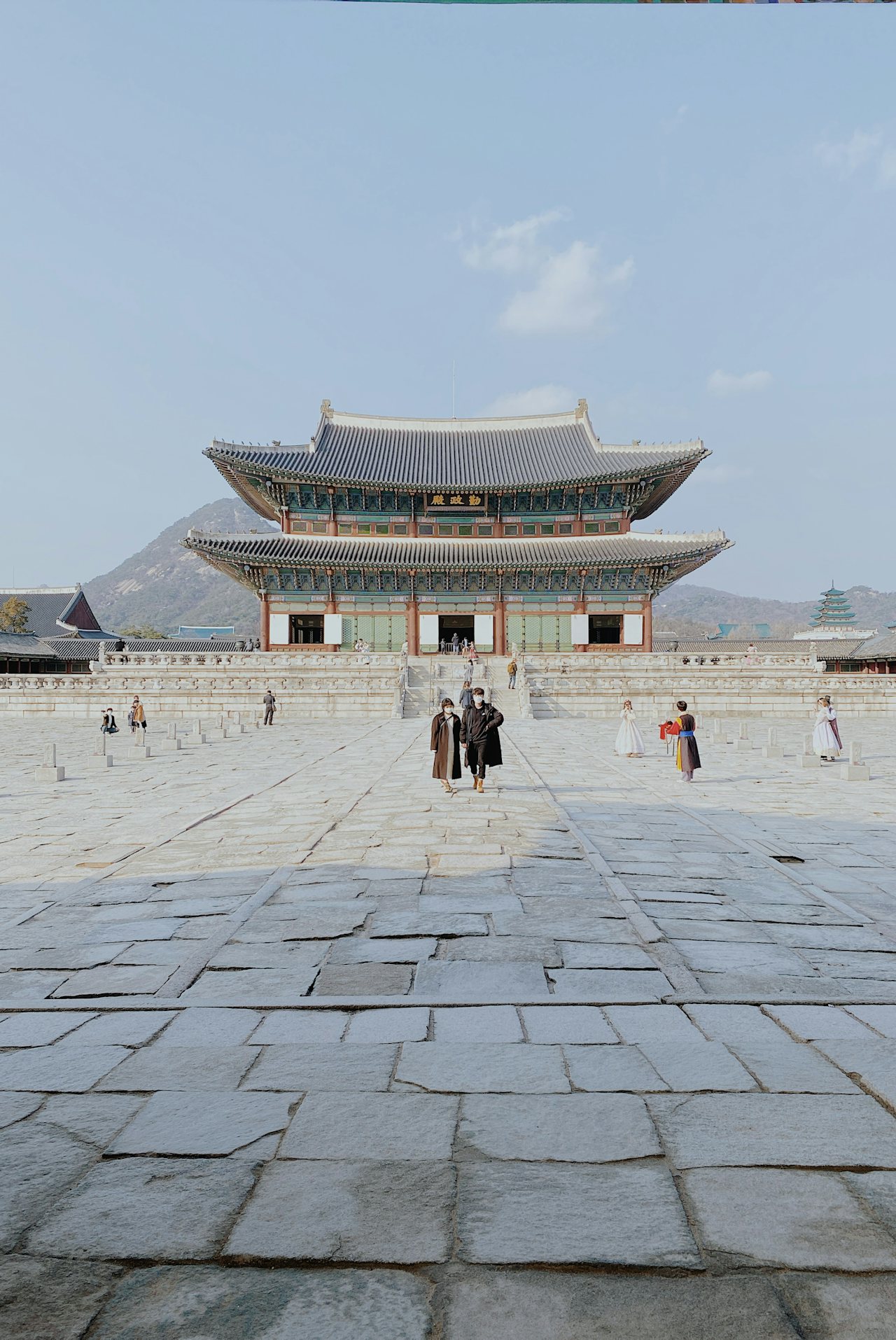
The largest and grandest of Seoul's five Joseon-dynasty palaces, Gyeongbokgung was first completed in 1395 and today hosts the National Palace Museum grounds plus a twice-daily Royal Guard Changing Ceremony at Gwanghwamun Gate. Adult admission is 3,000 KRW, the palace is closed every Tuesday, and opening hours shift with the season.
- 14:15
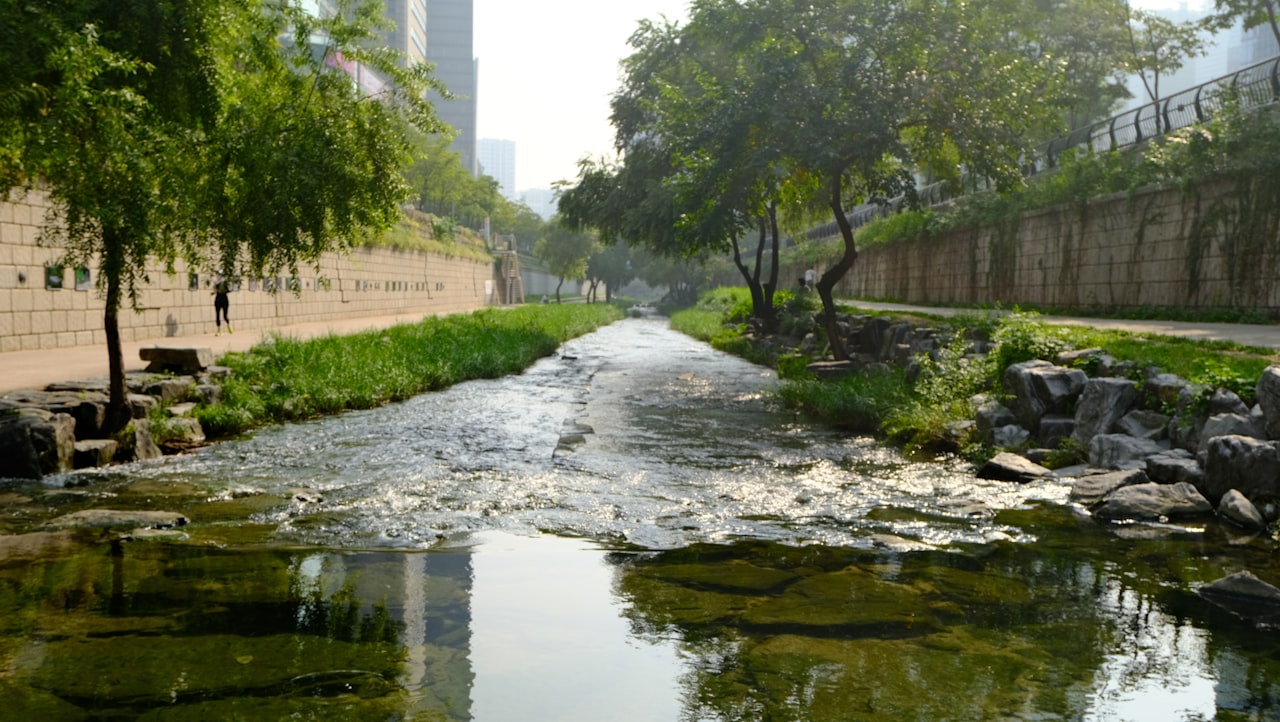
A restored waterway running through downtown Seoul, Cheonggyecheon starts at Cheonggye Plaza right by Gwanghwamun Station and runs below street level along a lit, landscaped walking path. The promenade has no gate and is open 24 hours, making it one of the few things to do in the palace quarter after everything else closes for the night.
- 15:15
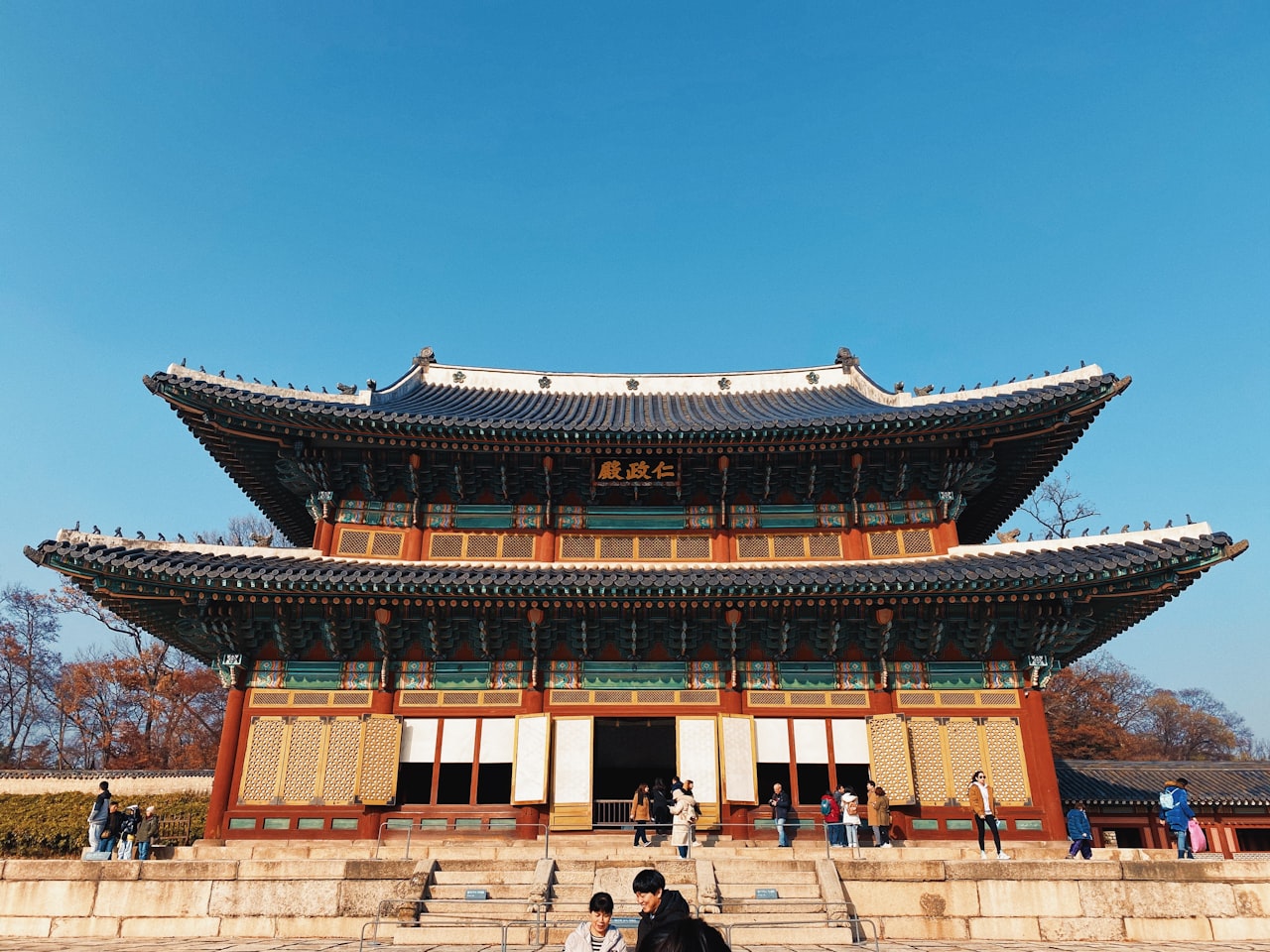
A UNESCO World Heritage palace whose buildings were laid out to follow the natural hillside rather than a rigid grid, Changdeokgung is the best-preserved of Seoul's five Joseon palaces and is closed every Monday. Its rear Huwon (Secret Garden) — 300-year-old trees, ponds and pavilions arranged 'as nature intended' — can only be seen on a separately-ticketed guided tour that must be booked online in advance.
- 18:00Dinner Tongin Market Dosirak (Yeopjeon Lunchbox) Cafe
At this Seochon neighbourhood market a few minutes' walk from Gyeongbokgung's west side, visitors buy a set of brass 'yeopjeon' coins (~₩5,000) and use them to assemble their own lunchbox from the market's food stalls, then eat it at the market's central Dosirak Cafe. Vegetarian choices are limited since many stall broths use anchovy or meat stock — ask before ordering — and the cafe itself is closed every Tuesday plus the third Sunday of each month.


Day 4Hongdae & Yeonnam & nearby — a park daySeoul, 8 stops
The indie-youth quarter: buskers on the walking street, the Gyeongui Line park cutting through Yeonnam's café lanes, design at SangsangMadang, beer alleys past midnight.
- 08:00Breakfast Cafe Layered Yeonnam
A European-style scone bakery cafe, the Yeonnam-dong flagship of the Layered chain (also in Bukchon, Busan and Hyundai Seoul department store), 838 m from Hongik Univ. Station Exit 3. Menu runs sweet and savoury scones — cinnamon pecan, Earl Grey, strawberry compote, blueberry compote, jambon-beurre and the best-selling spring onion cream cheese scone — at ₩5,000–7,000 each, plus cake slices (red velvet, dark chocolate, carrot, pumpkin cheesecake, matcha cheesecake) and coffee/tea drinks; the whole menu is meat-free bakery fare with no alcohol. Open daily 10:00–22:00.
- 08:30Gyeongui Line Forest Park (Yeontral Park)
Nicknamed 'Yeontral Park' (a portmanteau of Yeonnam-dong and Central Park), this is the Yeonnam-dong stretch of the 6.3 km Gyeongui Line Forest Park, a linear greenway built over a decommissioned rail line that once ran to Gajwa Station. This section runs from Hongik Univ. Station Exit 3 north through Yeonnam-dong, lined on both sides with cafes, bars, boutiques and picnicking locals — it's the neighbourhood's default hangout lawn on a sunny afternoon or evening. Free, unenclosed public greenway with no fixed entry hours or ticket.
- 10:00Olive Young Hongdae Town
CJ Olive Young's flagship K-beauty experience store for the Hongdae district — a 3-floor, roughly 991 m² 'Town' format store (a step up from a standard Olive Young outlet) with expanded try-on space and pop-up brand collaborations, open daily 10:00–23:00. Like other large Olive Young branches, it offers Korea's standard instant tax refund for foreign tourists (passport required, purchases over ₩15,000).
- 10:45Yeouido Hangang Park
A wide riverside park stretching along the south bank of the Han River, with cycling paths, picnic lawns, a floating stage and sweeping views back toward the Mapo and Wonhyo bridges. Rent a bike, spread a mat on the grass, or just watch the sunset over the water — the classic Seoul river afternoon. Step-free main entrances, accessible restrooms and a wheelchair/stroller loan point are at the visitor centre.
- 12:30Lunch Junghwa Bokchun
Run by owner-chef Nam Bok-chun, this is the accessible 'Classic' branch of the Junghwa Bokchun modern-Chinese group (172 m from Hongik Univ. Station Exit 3), sister to a 'Gold' and a high-end 'Salon' branch elsewhere in Yeonnam-dong. Sharing-style signature plates include cotton-fluff cream shrimp (₩45,000), cotton-fluff yuxiang eggplant (₩50,000), Bokchun chili chicken (₩50,000), Suzhou lotus-leaf braised pork belly (₩85,000) and a crispy three-treasure rice dish (₩100,000) — priced per shared dish for a table rather than per person, so a couple splitting two dishes lands well under the sticker prices. Open daily 11:30–22:00 with a 15:30–17:00 break, last order 21:10; closed only for Lunar New Year's Day and Chuseok. As with its sister branches, wine and Chinese spirits are on the drinks menu. Group bookings and waiting-area reservations are common via CatchTable, worth doing ahead on weekend evenings.
- 13:30KT&G SangsangMadang Hongdae
Opened in 2007 above Hongik Univ. Station Exit 1, this KT&G-funded 'Dream Plaza' is a 7-storey independent-culture complex — a design store and gallery, an art-house cinema (CineLab), a live performance hall, artist studios and a rooftop cafe — built to support young Korean designers and indie filmmakers and musicians. Browsing the design shop and gallery floors is free; the cinema, concerts and workshops are separately ticketed, and hours vary a little by floor (the cafe runs to 22:00, the Art Market/Gallery from 13:00–22:00, Art Square 12:00–23:00) around the 11:00–21:00 general-access window used here. The building is step-free from the main entrance with a disabled-accessible elevator, an accessible restroom and wheelchair rental on site.
- 15:15
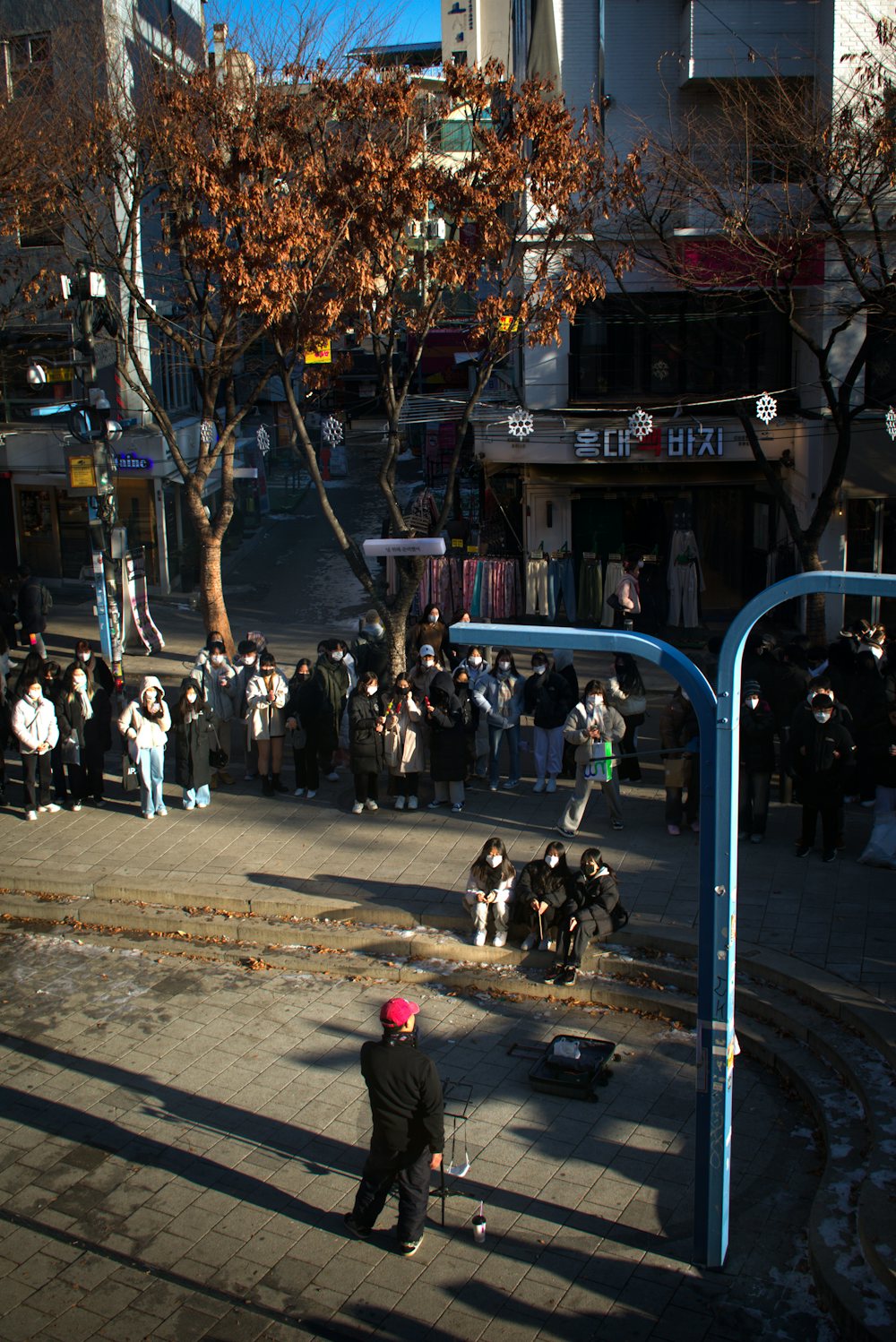
Officially named Hongdae R2 Busking Street by the Seoul city tourism board — the pedestrian corridor along Eoulmadang-ro, about 170 m from Hongik Univ. Station Exit 8 — this is where Hongdae's open-air performance culture concentrates: indie bands, dance crews and idol-trainee buskers under a prior-registration system, organised by Mapo-gu into four 'Smart Busking Zones' along a roughly 2 km stretch. There's no fixed performance timetable; the street is always open, but the busking itself is heaviest on Friday and Saturday evenings into the night. Free to watch, no ticket.
- 17:30Dinner The Place (IFC Mall)
A bright, high-turnover Italian restaurant on IFC Mall's L3 dining floor, connected to Yeouido Station Exit 3 — wood-fired margherita and five-cheese pizzas, pastas and risottos, with a ricotta-fruit salad for a lighter, vegetarian-friendly option. Reservations are recommended around peak lunch and dinner hours. Last order 21:00.

Day 5Yeongdo Island & nearby — a sights dayBusan, 4 stops
Cross Yeongdo Bridge from downtown Busan and the city gives way to cliffs: pine-forested Taejongdae's cliff-face tram and lighthouse at the island's southern tip, the pastel stairstep houses of Huinnyeoul teetering over a free coastal boardwalk, and a working port town's roastery cafés and milmyeon shops squeezed between the shipyards in between.
- 09:40Check out of your stay
- 10:00Train
- 13:56Drop your bags at your stay
- 14:26
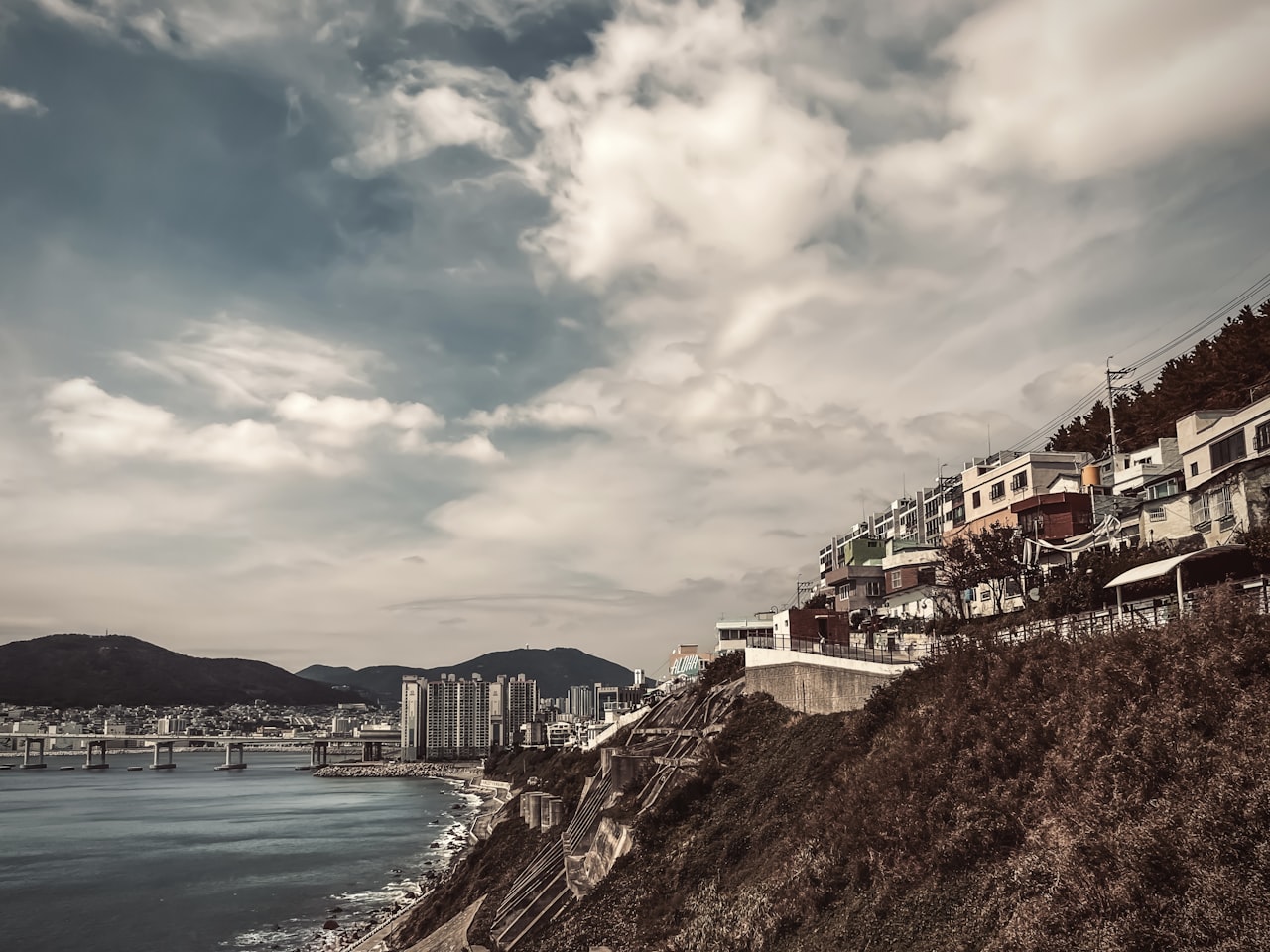
A cliffside row of pastel and white houses stacked above the sea, rebuilt from a postwar refugee settlement into Busan's most photographed village — also a filming location for 'The Attorney' and 'Nameless Gangster.' Steep stairways and narrow lanes wind between small cafés and murals; the village itself is free and open around the clock, but the terrain is not stroller- or wheelchair-friendly.
- 15:56Jeoryeong Coastal Walk
A free, round-the-clock coastal boardwalk that drops down from Huinnyeoul's cliff base and traces the rocky shoreline for about 3 km — once a restricted military zone, now ranked among Yeongdo's 'Eight Scenic Sites.' Expect sea-spray views, tunnels and stairways rather than a flat stroll; morning or sunset light is best, and allow 1.5–2 hours for the full route.
- 17:41Dinner Halmae Gaya Milmyeon
A long-standing Nampo-dong institution for milmyeon — Busan's wartime wheat-noodle answer to naengmyeon — served either in an icy beef-and-anchovy broth (mul-milmyeon) or tossed in spicy gochujang sauce (bibim-milmyeon), traditionally cut at the table with scissors. Open daily, no closing day.
- 18:56
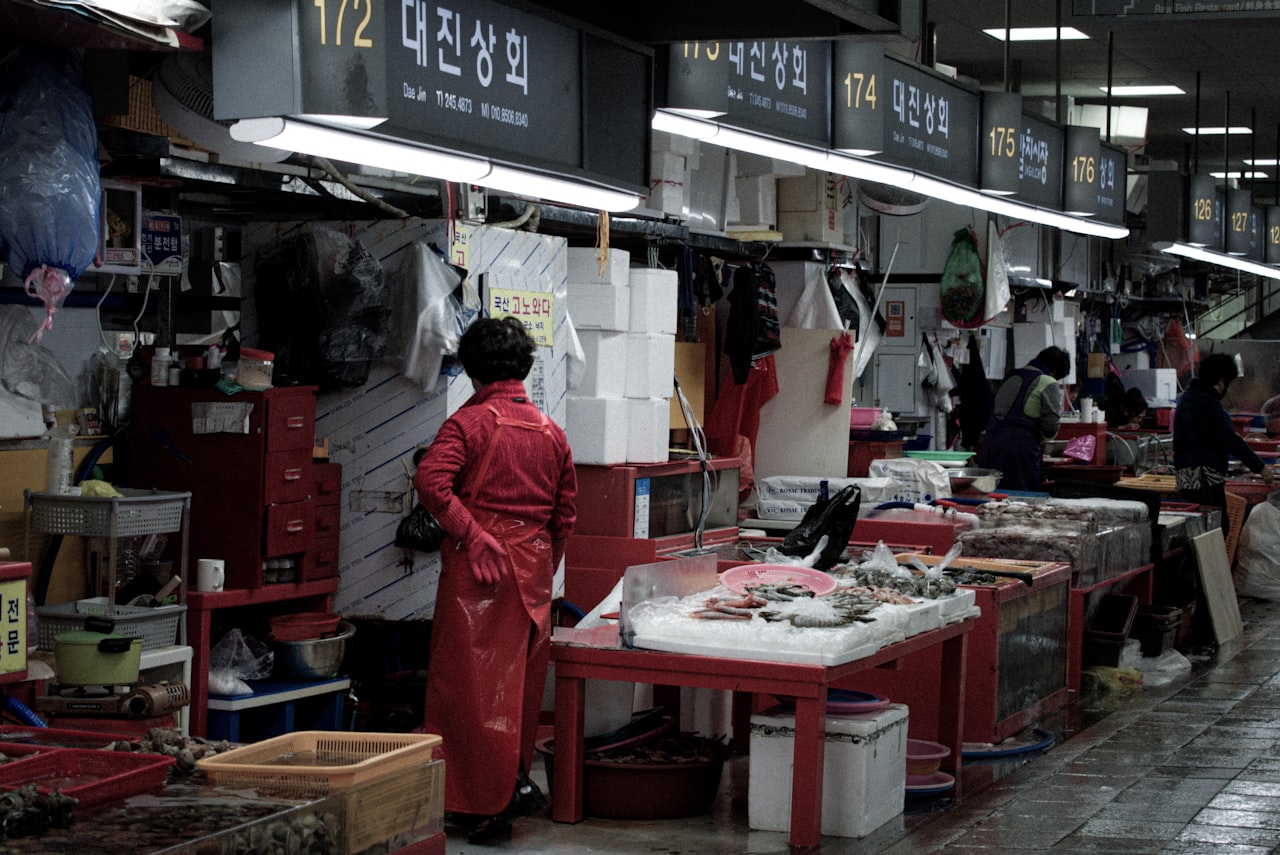
Busan's largest seafood market fills a modern indoor hall and the surrounding waterfront stalls, where live octopus, rockfish and shellfish sold by the kilo on the ground floor can be carried straight upstairs to be sliced into sashimi at a seated restaurant for a small preparation fee. Closed the first and third Tuesday of each month.


Day 6Gwangalli & Millak & nearby — a sights dayBusan, 9 stops
A 1.4-kilometre city beach that stares straight down the barrel of the lit-up Gwangan Bridge, where a free drone show fills the sky most Saturday nights and the Millak waterfront next door trades sand for a fish market where you pick your catch downstairs and eat it as sashimi upstairs.
- 08:00Breakfast Hollys Coffee – Gwangan Beach
A branch of Korea's Hollys Coffee chain right on the Gwangalli seafront, with window seats looking straight over the sand to Gwangan Bridge — a reliable spot for a coffee break or to watch the Saturday night drone show without fighting for space on the beach itself.
- 08:30Millak Waterside Park
A grassy waterfront strip pressed right against the southern foot of Gwangan Bridge — Busan's first park to combine open shoreline with public rest and leisure space. Tiered picnic steps face the bridge dead-on, making this the closest, least crowded spot to watch it light up at night; free and open around the clock.
- 09:45Gwangalli Beach Theme Street
A 1.25km promenade behind the sand, split into three themed stretches — Romantic Street, Sunrise Square and Youth Street — lined with palm trees, sculptures and benches. The clearest reason to walk it after dark is the unobstructed view of the lit Gwangan Bridge; a fireworks festival usually lights up the same stretch in early November.
- 10:45Millak Raw Fish Town
A 10-storey building where the ground floor is a live seafood market and floors 2–10 are restaurants: buy your fish, flatfish or octopus downstairs, carry it up, and a kitchen slices it into hoe (raw fish) and plates it with banchan and dipping sauces for a small preparation fee. Upper-floor tables get a wide window view straight across to Gwangan Bridge. Effectively open from morning into the small hours.
- 12:15Lunch Haeundae Market
A one-block covered alley two minutes off the sand, best known for its seed-stuffed hotteok stalls (a queue forms outside the busiest one) alongside skewered odeng, fried twigim, sundae and cheap raw-fish snack cups. Open year-round, 09:00–22:00, though individual stalls keep their own hours and a few close one day a week.
- 13:15
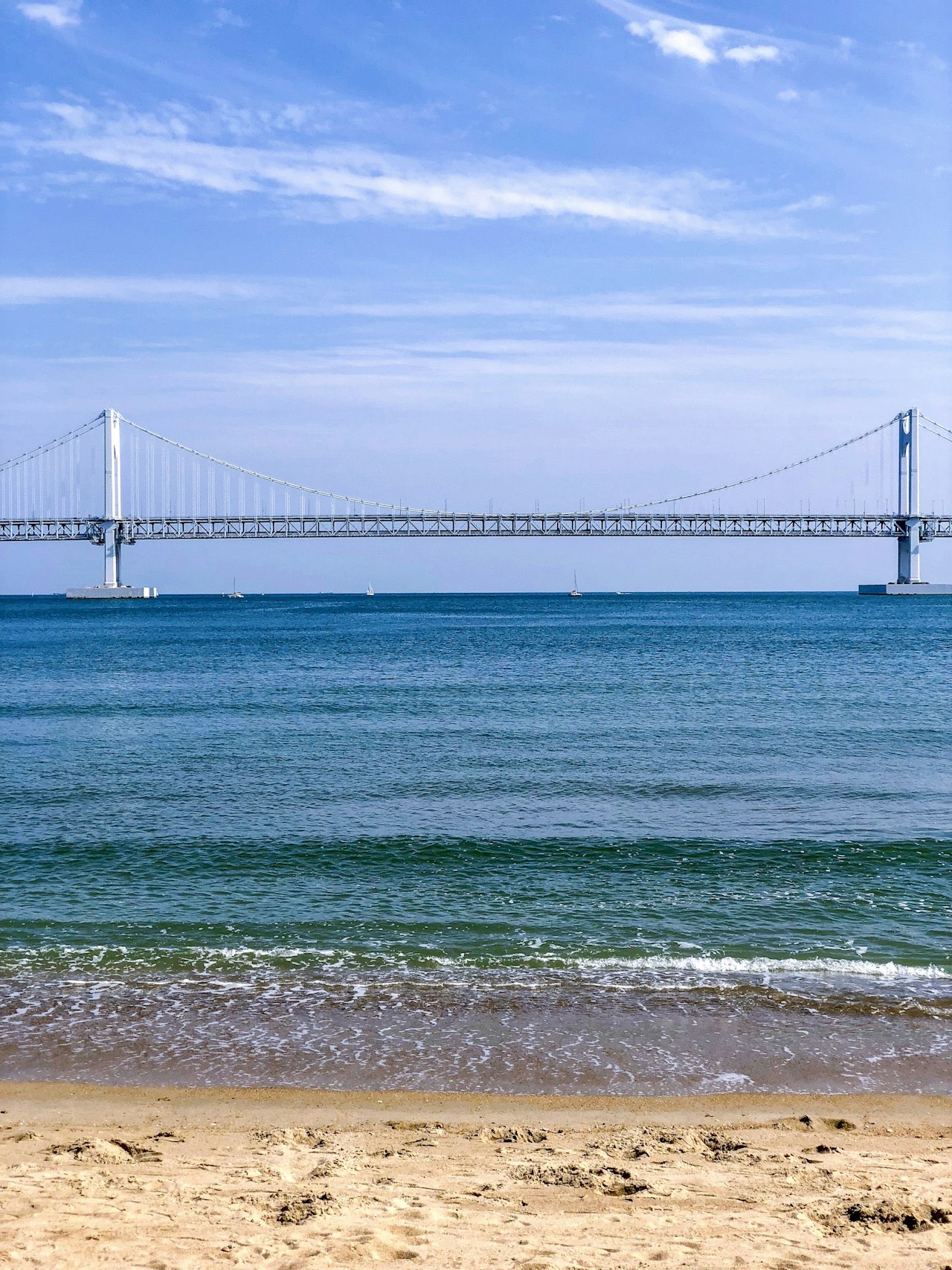
Busan's best-loved city beach — 1.4km of sand facing the lit Gwangan Bridge, packed with locals swimming, picnicking and walking the promenade after dark. Korea's first permanent drone show fills the sky over the water most Saturdays year-round (about 12 minutes, free, visible from anywhere on the sand): 8pm & 10pm March–August, 7pm & 9pm October–February. Supervised swimming runs roughly June–August.
- 15:00
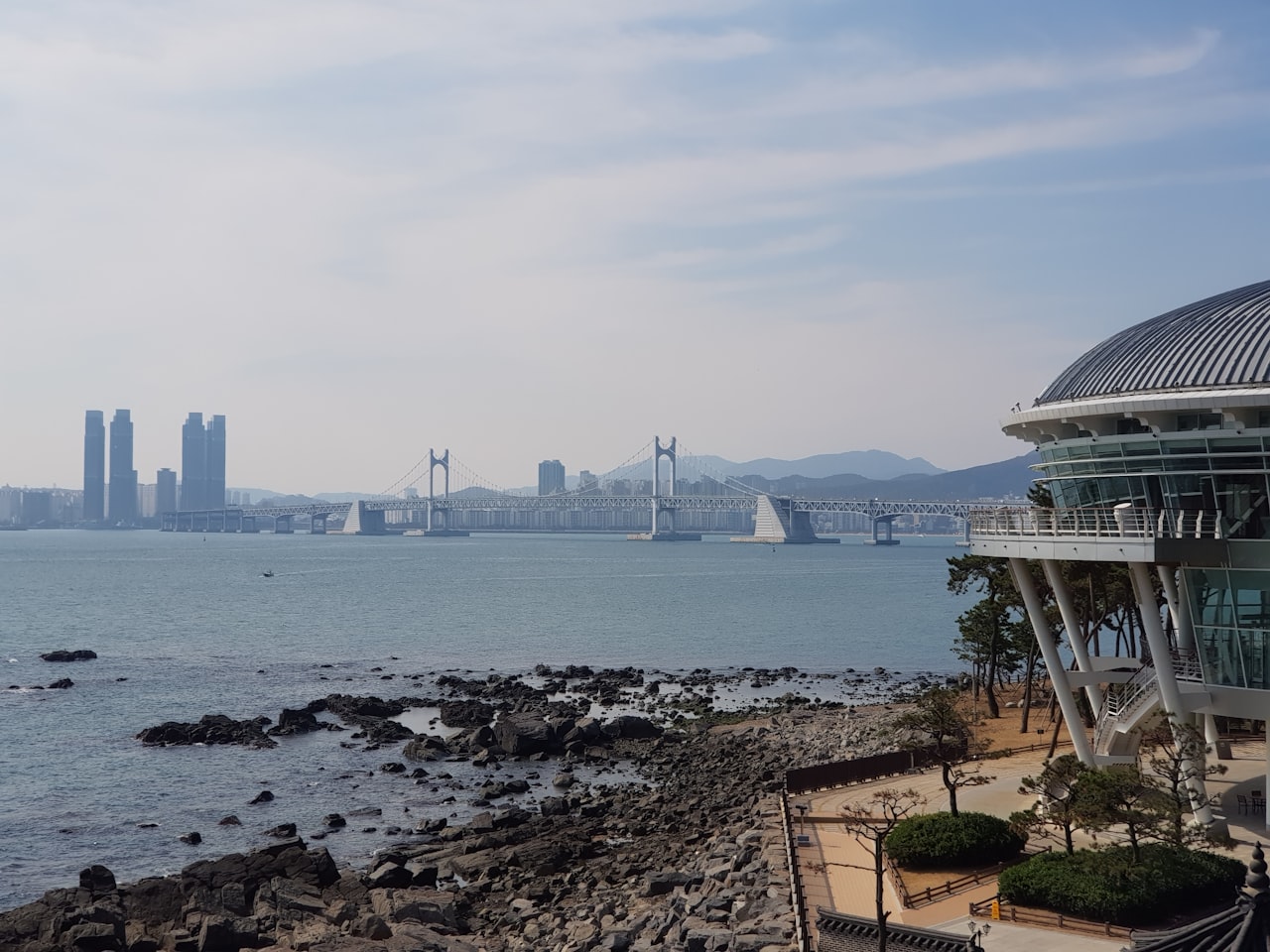
A pine-covered headland at the west end of Haeundae Beach, circled by a roughly 900-metre paved coastal trail past the Mermaid (Hwangoksin) statue and a 1997 lighthouse. At the tip stands Nurimaru APEC House, the traditional-pavilion-style building that hosted the 2005 APEC Busan summit; its interior is open for free viewing daily 09:00–18:00 (last entry 17:00), closed the first Monday of each month. The loop is lit and walkable well into the evening.
- 16:15
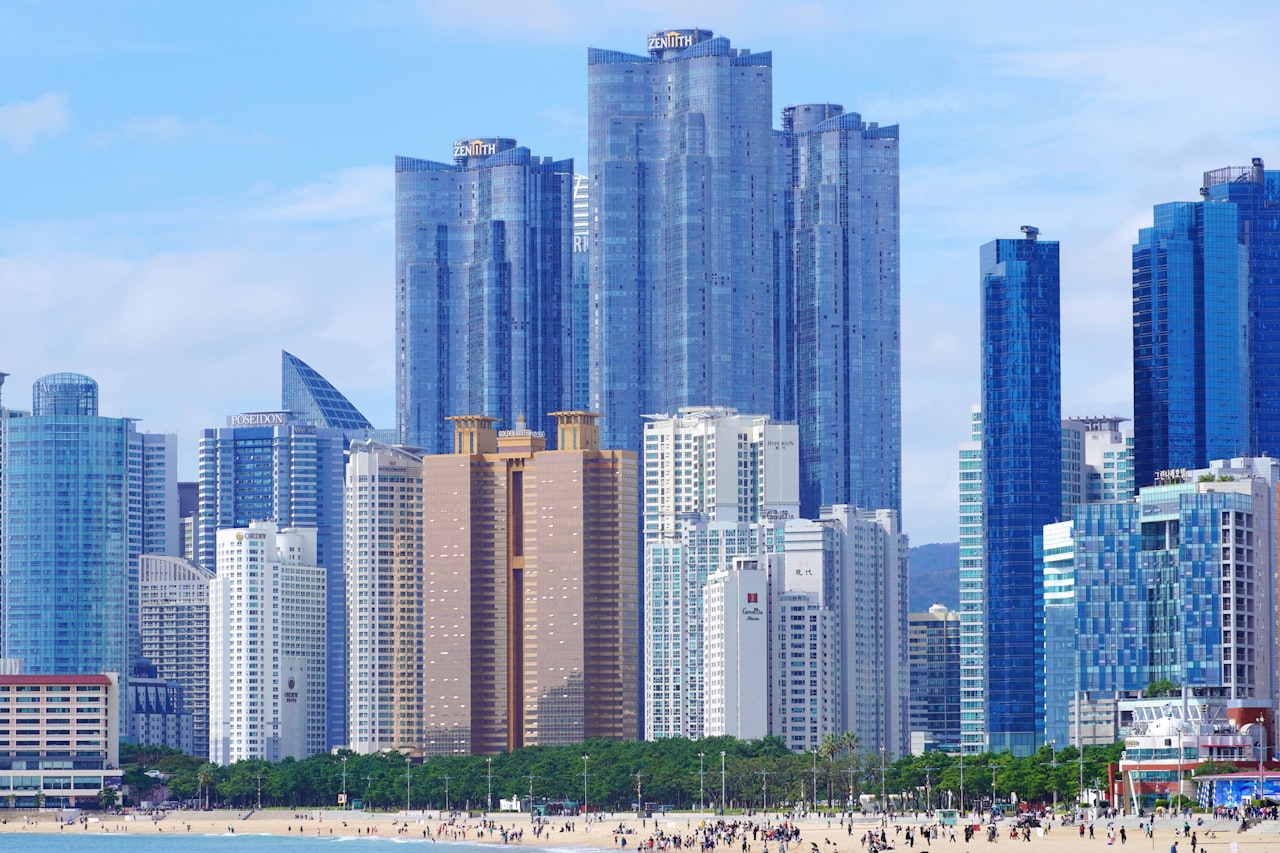
A 1.5-kilometre crescent of fine white sand in the heart of the city, backed by hotel towers and framed by Dongbaekseom to the west and the Blueline Park cliffs to the east. The official lifeguard-patrolled swimming season runs roughly early June to late August; outside those months the wide boardwalk still draws walkers, joggers and sunset photographers year-round.
- 17:30Dinner Vegenarang
A dedicated vegan and vegetarian Korean kitchen at the Millak end of the beach, cooking oshinchae-free set meals — mushroom and root-vegetable dishes, rice bowls, rolls and noodles — with a small sky-lounge room looking out at Gwangan Bridge. Kitchen runs lunch and dinner with an afternoon break; a rare fully plant-based option in an otherwise seafood-heavy neighbourhood.


Day 7Gamcheon & Songdo — a skyline dayBusan, 6 stops
The hillside culture village day: a pastel maze of Korean War-era refugee housing turned open-air gallery, followed by a short taxi to Songdo's 1913 beach, its sea-crossing cable car and a swaying glass-floored bridge out to a tiny offshore islet.
- 07:40Check out of your stay
- 08:30
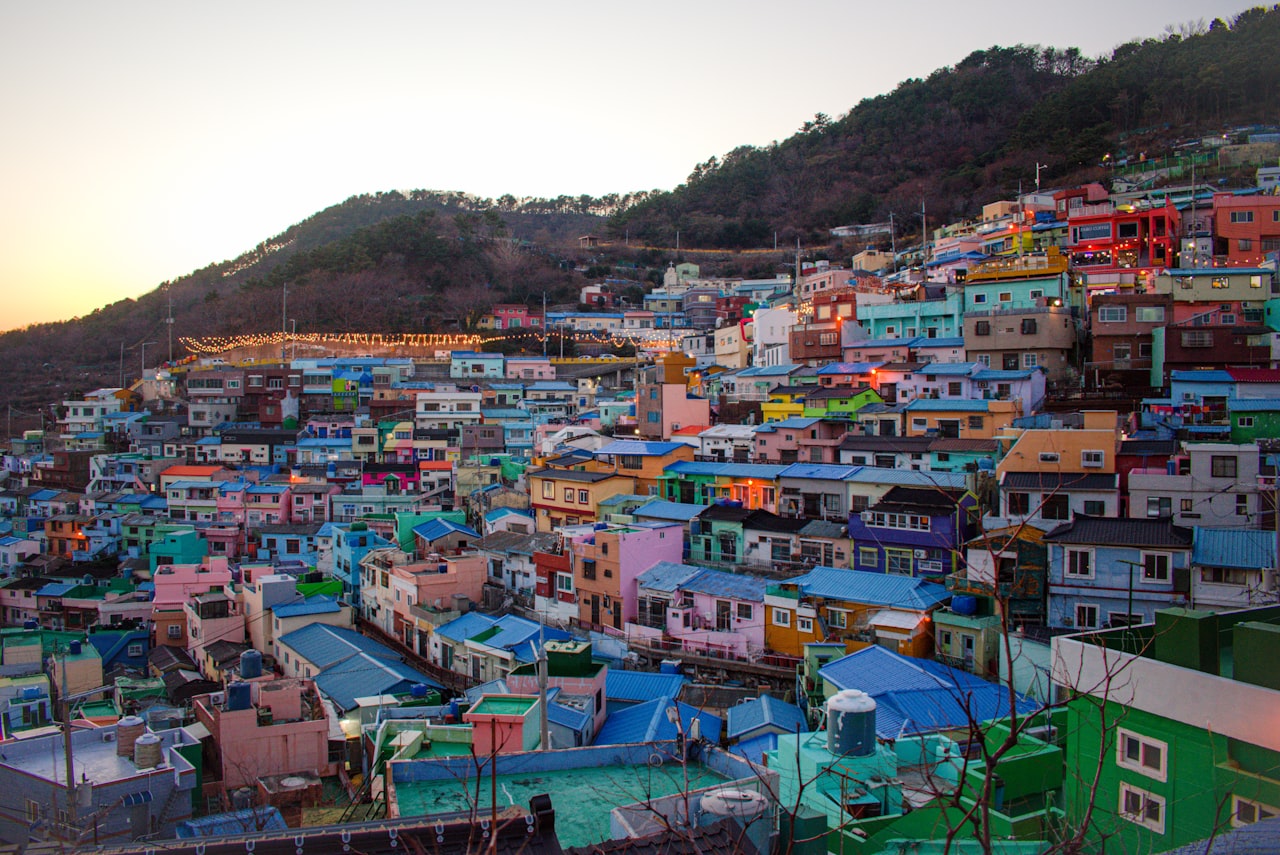
A hillside maze of pastel-painted houses built by refugees after the Korean War, now threaded with murals, sculpture and small galleries along stepped alleys. Pick up a 2,000-won stamp map at the village info centre (daily 09:00–18:00) to route past the Little Prince photo spot and the Haneul Maru summit deck — mornings and early evenings dodge the worst of the weekend queues.
- 10:45
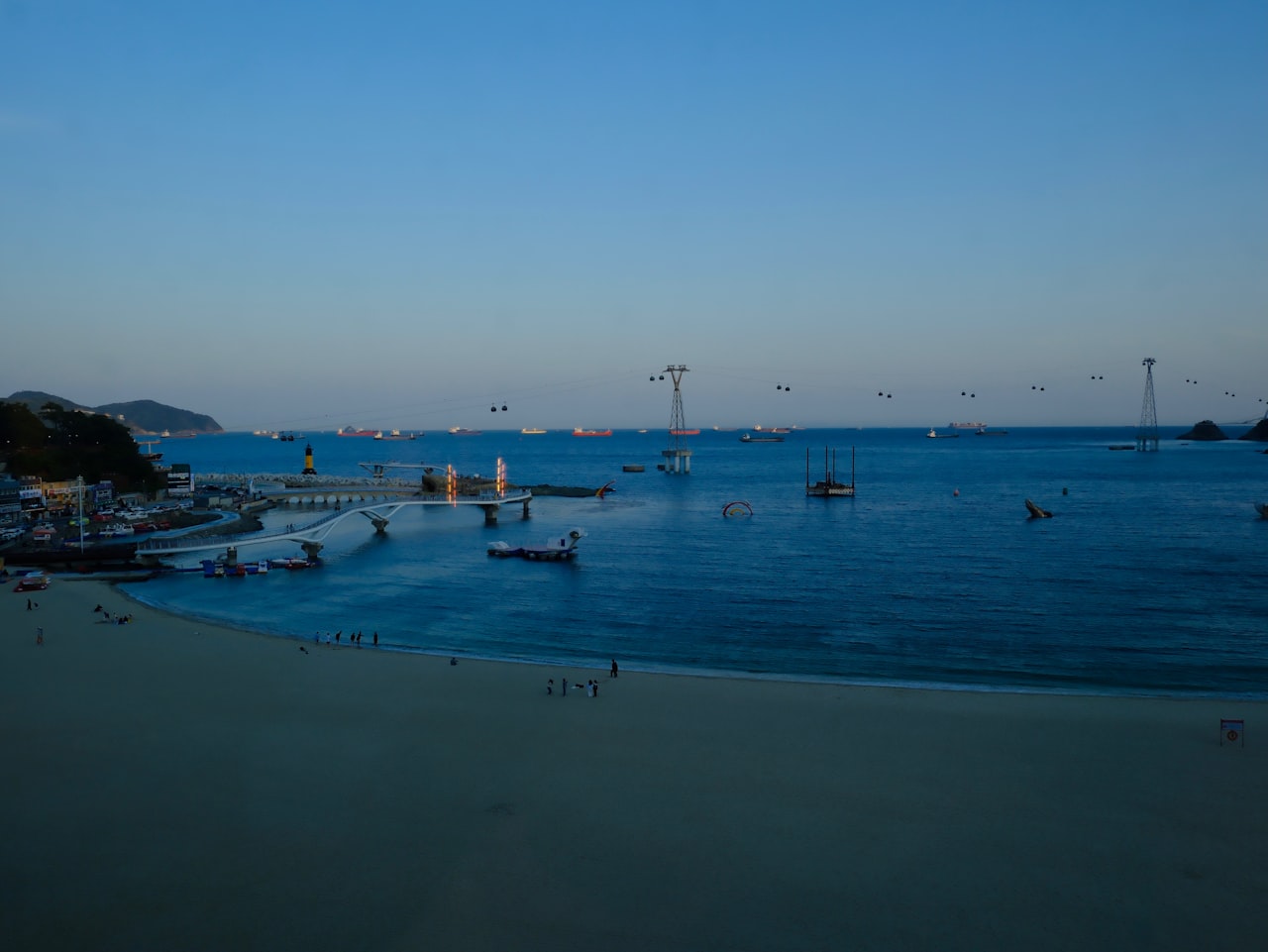
Korea's first designated public beach (opened 1913), rebuilt with a wide sand crescent, a seaside boardwalk and a floating pier, backed by pine-covered Amnam headland. Swimming is supervised only in the July–August season; year-round it's a calm sunset stroll linking straight into the cable car and suspension-bridge walks further along the coast.
- 12:00Lunch Post Cafe
A postcard-and-letter-themed café built into the hillside, its small windows framing a postcard-perfect sweep of Gamcheon's rooftops. Order a drink to claim a window or rooftop seat — the short food menu runs to fries and squid-and-octopus skewers alongside coffee, ade and beer.
- 13:00
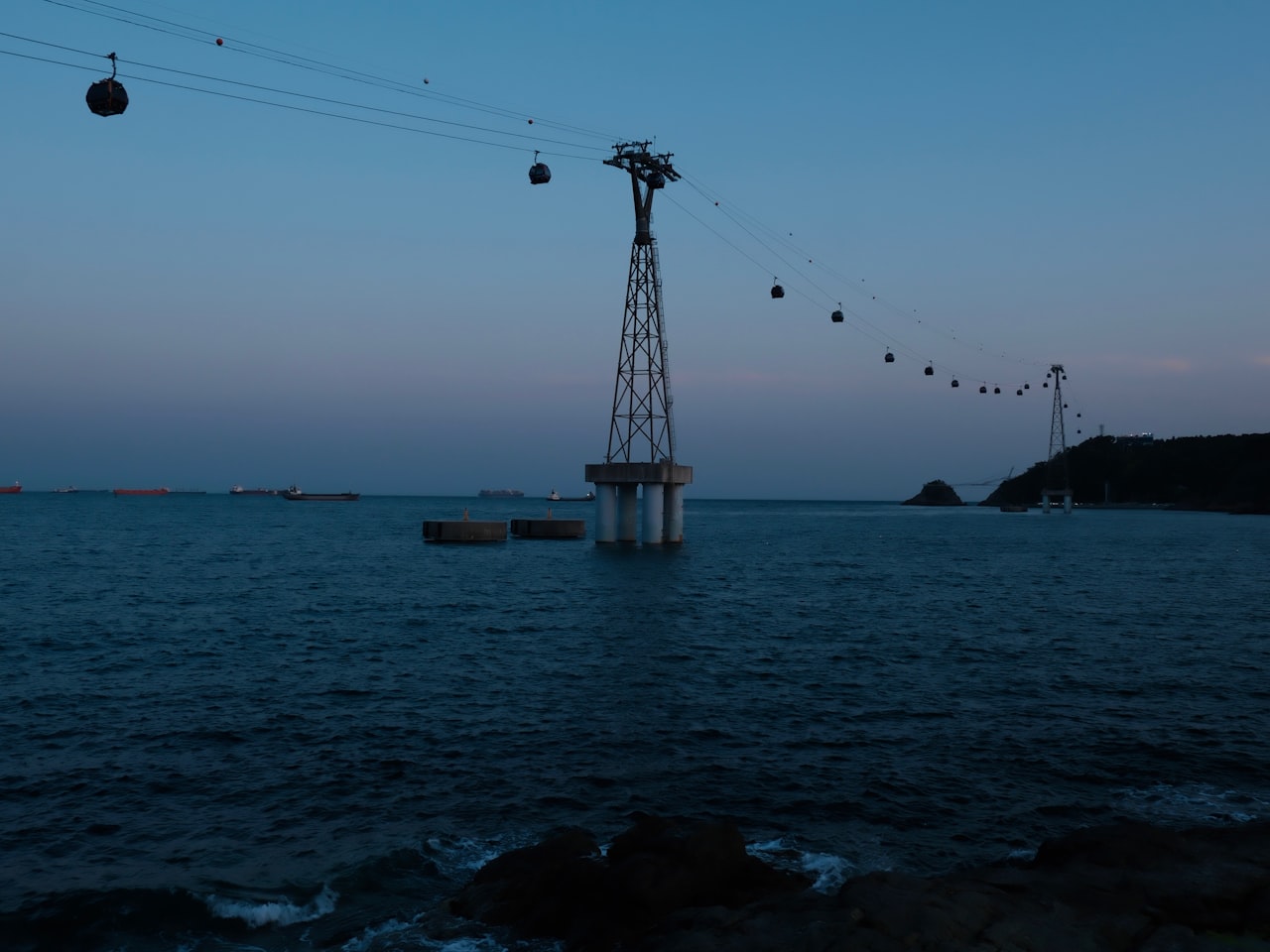
A 1.62km sea-crossing cable car linking Songdo Beach to Amnam Park, with standard cabins and glass-floor 'crystal cruise' cabins for an extra fee. Manual wheelchairs can ride aboard (rent one at the boarding station; electric wheelchairs must transfer to a manual one) — last boarding is 30 minutes before closing, which stretches to 22:00 in July–August and pulls back to 20:00 in December–February.
- 14:15Songdo Yonggung Suspension Bridge
A 127m pedestrian suspension bridge swaying out from Amnam Park to the small islet of Dongseom, glass-panelled underfoot for a straight drop to the waves below. Entry is a token 1,000 won; it's closed the first and third Monday of each month plus Lunar New Year and Chuseok, and shuts early in high wind. Hours run 09:00–18:00 March–September and 09:00–17:00 October–February, last entry 30 minutes before close.
- 17:30Dinner Haebyeon Hoetjip (Beachside Sashimi House)
A two-storey raw-fish house standing directly on Songdo's beachfront road, with second-floor tables looking straight out over the sand and cable car line. The assorted sashimi platter is the house order — big enough to share — alongside a solo-friendly sashimi rice bowl and a spicy fish stew. Closed the second and fourth Tuesday of each month.


